
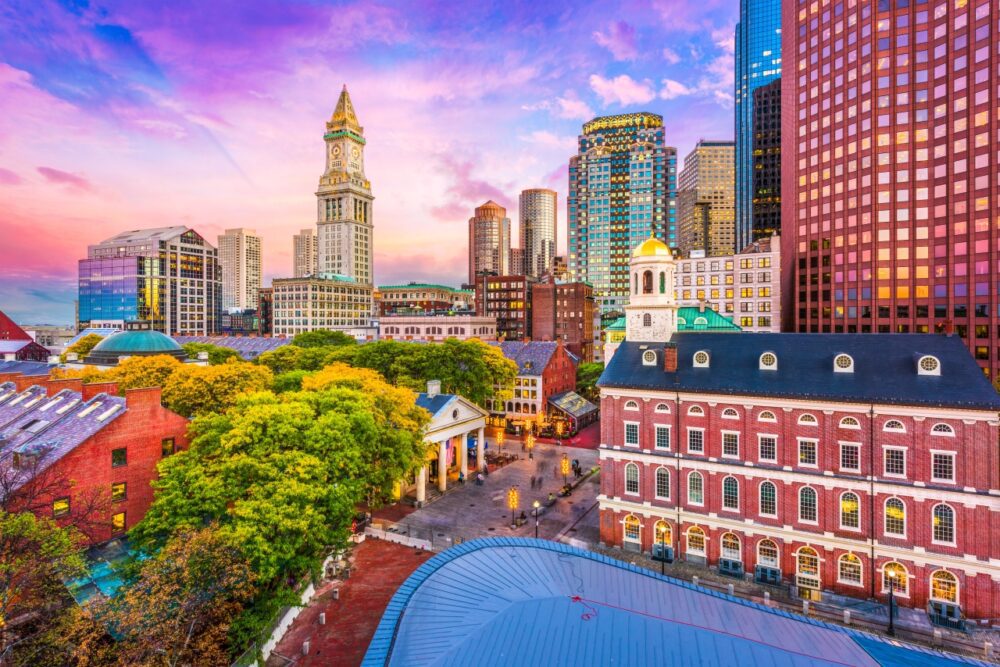
I visited Boston for four days in autumn, deliberately timed around the fall foliage season after a few too many people told me I was missing out by only ever visiting the US in summer. It was one of the better travel decisions I’ve made. The city, already full of history and old brick architecture, took on a completely different character with the trees along the Charles River turning proper shades of orange and red, and I understood fairly quickly why people plan entire trips around this specific window.
Four days gave me enough time to properly walk the Freedom Trail, spend a full day across the river in Cambridge, and still have room for a slower, wandering day around the North End and Beacon Hill without feeling rushed. Boston is a genuinely compact city by American standards, and that compactness, combined with its density of history, made it one of the easier cities on my wider US travels to actually get a handle on in a short stay.
So if you’re asking “is Boston worth visiting,” my answer, after four days there in what I’d now call close to ideal conditions, is a fairly confident yes. It combines a walkable, historic core with genuinely excellent food, strong museums and an academic energy from Harvard and MIT that gives the city a different feel from most other places I’ve visited in the US. Here’s what that trip actually taught me.
Table of Contents
Pros – Reasons Boston is Worth Visiting
1. The Freedom Trail Makes History Genuinely Accessible
Walking the Freedom Trail, a 2.5-mile red-brick path connecting 16 historically significant sites across the city, gave my first full day in Boston a clear structure without needing to overthink the itinerary. Stops like the Old North Church and Paul Revere’s House brought American Revolutionary history to life in a way that felt genuinely tangible rather than abstract, and having it all connected by a single, well-marked path made it easy to follow without constant map-checking.
2. Fall Foliage Season Adds a Completely Different Layer to the City
This was the whole reason I timed my trip the way I did, and it fully delivered. Walking along the Charles River Esplanade with the trees turning proper autumn colours, and later through the Boston Public Garden with a similar effect, gave the entire city a warmth and visual richness that I don’t think summer visits quite match. If your schedule allows any flexibility, I’d genuinely recommend prioritising a late September or October visit for this reason alone.
3. Cambridge and Harvard Add a Genuine Academic Energy
I spent a full day across the river in Cambridge, walking through Harvard Yard and the surrounding streets, and it gave the trip a noticeably different atmosphere from Boston’s more historic core. The mix of centuries-old academic buildings alongside genuinely good independent bookshops and cafes made for a relaxed, intellectually stimulating day that felt distinct from anything else on the itinerary.
4. The Food Scene, Particularly Seafood, Is Genuinely Excellent
I’m generally cautious about “must-try” food recommendations in tourist cities, but Boston’s seafood earned its reputation during my visit. A proper lobster roll from a spot in the North End, and a bowl of clam chowder that put every other version I’d had to shame, were genuine highlights of the trip. The North End’s Italian food scene, a dense cluster of family-run restaurants, added another strong layer beyond the seafood.
5. The Museum of Fine Arts and Isabella Stewart Gardner Museum Are Both Outstanding
I hadn’t expected Boston’s museum scene to impress me quite as much as it did. The Museum of Fine Arts has a genuinely broad, well-curated collection, but it was the smaller Isabella Stewart Gardner Museum, built around the personal collection of its namesake and still displayed largely as she arranged it, that stuck with me most. The building itself, centred around a genuinely beautiful indoor courtyard, made the visit feel distinct from a typical museum trip.
6. It’s a Genuinely Walkable City by US Standards
Compared to several other American cities I’ve visited, Boston’s compact, dense layout made it easy to cover most of my planned sights on foot. I didn’t rent a car at any point during the four days, and aside from occasional public transport use to reach Cambridge or further-flung neighbourhoods, walking got me almost everywhere I wanted to go, a genuine rarity among the US cities on my wider travels.
7. Beacon Hill Offers Some of the Prettiest Streets I’ve Seen in the US
Wandering through Beacon Hill on a slower afternoon, past narrow cobblestone streets, gas lamps and rows of well-preserved 19th-century townhouses, was one of my favourite unplanned parts of the trip. It’s a small, quiet neighbourhood that doesn’t take long to walk through, but the sheer consistency and preservation of its architecture made it worth a proper, unhurried visit rather than a quick pass-through.
Cons – Things to Consider Before Visiting Boston
1. It’s an Expensive City, Particularly for Accommodation
Boston’s hotel prices, especially during the fall foliage season I’d specifically chosen, were noticeably higher than I’d budgeted for based on similarly sized US cities. I’d recommend booking accommodation well in advance if you’re visiting during autumn or any other peak period, since prices and availability both tightened noticeably the closer I got to my actual travel dates.
2. Winters Are Long and Genuinely Harsh
I didn’t experience this firsthand, having visited in autumn, but everyone I spoke to in the city was clear that Boston winters are long, cold and prone to heavy snow, often extending well into March. If your visit is flexible, I’d avoid the deep winter months unless you specifically want that experience, and factor in more indoor time and warmer clothing if a winter visit is your only option.
3. Some Areas Require More Careful Navigation Than Others
Boston’s street layout, particularly in the older parts of the city, is notoriously confusing, a legacy of the city growing organically rather than on a planned grid. I got genuinely lost more than once, even with a map, particularly around the North End and parts of downtown. It’s not a major issue if you build in a bit of flexibility, but it’s worth knowing before you arrive expecting the kind of easy, grid-based navigation you might get in a city like Chicago.
Things to Do in Boston
- Walk the Freedom Trail – A well-structured way to see the city’s major historical sites in one connected route, ideal for a first full day.
- Visit during fall foliage season if your schedule allows – Late September through October adds a genuinely different visual layer to the whole city.
- Spend a day in Cambridge and Harvard Yard – A distinct academic atmosphere, good bookshops and cafes, well worth a full day across the river.
- Eat a proper lobster roll in the North End – A genuine Boston specialty, and worth seeking out a well-regarded, less touristy spot.
- Visit the Isabella Stewart Gardner Museum – A genuinely unique museum experience, built around a personal collection and centred on a beautiful indoor courtyard.
- Walk through Beacon Hill – Cobblestone streets, gas lamps and well-preserved 19th-century townhouses, best explored slowly on foot.
- Explore the Boston Public Garden and Charles River Esplanade – Particularly striking in autumn, but pleasant in any season for a riverside walk.
- Visit the Museum of Fine Arts – A broad, well-curated collection, worth a half-day if you enjoy art museums.
- Try clam chowder at a proper seafood spot – A Boston classic, and genuinely worth comparing a couple of different versions across your stay.
- Wander through the North End’s Italian restaurants and bakeries – A dense, atmospheric neighbourhood, good for an evening meal or a slower afternoon of exploring.
Where to Stay in Boston
- Back Bay – Central, walkable and close to the Public Garden and good shopping, a solid base for first-time visitors despite the higher price point.
- Beacon Hill – Charming and quiet, close to downtown and the Public Garden, a good choice if atmosphere matters more to you than nightlife.
- North End – Full of character and excellent food, a good base if you want to be within walking distance of some of the city’s best Italian restaurants.
- Cambridge – A quieter, more academic alternative across the river, good if you want easy access to Harvard and MIT alongside a straightforward transit connection back into Boston itself.
Getting Around Boston
Walking covered the vast majority of what I wanted to see across my four days, particularly around the Freedom Trail, Beacon Hill and the Public Garden, all of which sit close enough together to move between comfortably on foot. Boston’s compact core made this far easier than several other US cities I’ve visited on wider trips.
For reaching Cambridge and a couple of other areas slightly further out, I used the MBTA, Boston’s subway system, locally known as the T. It’s one of the older transit systems in the US, and it showed in a few places, but it was reliable enough for my needs and considerably cheaper and less stressful than renting a car for a city this walkable. I didn’t rent a car at any point during the trip and didn’t feel like I missed out because of it, which is a genuine rarity among the US cities I’ve covered on this blog.
Conclusion
So, is Boston worth visiting? Based on four days there timed around fall foliage season, I’d say yes, and it left a stronger impression on me than several other US cities I’ve visited with far bigger reputations. The combination of genuinely accessible history along the Freedom Trail, the academic energy of Cambridge, and food that lived up to its reputation gave the trip real depth without needing to rely on a car at any point.
The cost, particularly around accommodation during peak season, the confusing street layout in places, and the genuinely harsh winters worth avoiding if you have flexibility, are all real factors worth planning around. But weighed against the walkability, the quality of the museums, and just how much richer the whole experience felt with the autumn colours in play, I think Boston earns a strong place on a US travel list. If you’re deciding whether to add it to your 2026 plans, my honest advice is to aim for a late September or October visit if you possibly can, and don’t be afraid to get a little lost around the North End, it’s part of the experience.
Related Posts
- Is Atlanta Worth Visiting? Pros, Cons and Travel Tips (2026)
- Is Austin Worth Visiting? Pros, Cons and Travel Tips (2026)
- Is Boston Worth Visiting? Pros, Cons and Travel Tips (2026)
- Is Chicago Worth Visiting? Pros, Cons and Travel Tips (2026)
- Is Dallas Worth Visiting? Pros, Cons and Travel Tips (2026)
- Is Denver Worth Visiting? Pros, Cons and Travel Tips (2026)
- Is Honolulu Worth Visiting? Pros, Cons and Travel Tips (2026)
- Is Houston Worth Visiting? Pros, Cons and Travel Tips (2026)
- Is Las Vegas Worth Visiting? Pros, Cons and Travel Tips (2026)
- Is Los Angeles Worth Visiting? Pros, Cons and Travel Tips (2026)
- Is Miami Worth Visiting? Pros, Cons and Travel Tips (2026)
- Is Nashville Worth Visiting? Pros, Cons and Travel Tips (2026)
- Is New Orleans Worth Visiting? Pros, Cons and Travel Tips (2026)
- Is New York City Worth Visiting? Pros, Cons and Travel Tips (2026)
- Is Orlando Worth Visiting? Pros, Cons and Travel Tips (2026)
- Is Phoenix Worth Visiting? Pros, Cons and Travel Tips (2026)
- Is San Diego Worth Visiting? Pros, Cons and Travel Tips (2026)
- Is San Francisco Worth Visiting? Pros, Cons and Travel Tips (2026)
- Is Tampa Worth Visiting? Pros, Cons and Travel Tips (2026)
- Is Washington DC Worth Visiting? Pros, Cons and Travel Tips (2026)