
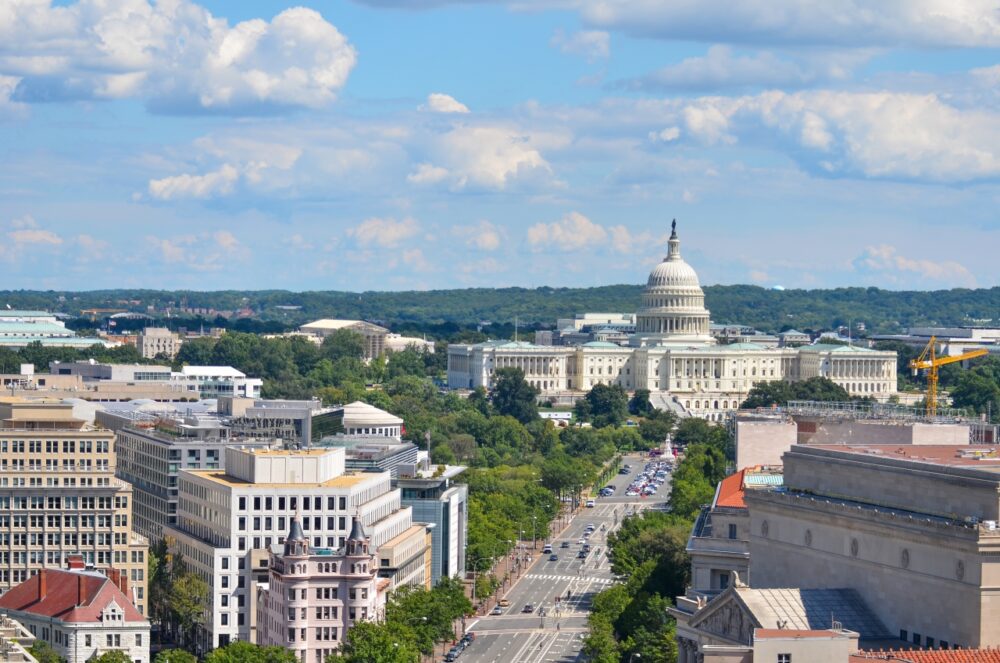
I spent five days in Washington DC in early spring, timed deliberately, like a lot of visitors do, around the cherry blossoms along the Tidal Basin. It’s a trip that gets recommended constantly, and I went in slightly wary that it might be overhyped, a city built more around its reputation as a must-see capital than genuine day-to-day appeal. Five days in, that concern had mostly disappeared.
What struck me most was just how much genuinely excellent, free content the city offers. Between the Smithsonian museums, the monuments and the general density of history packed into a fairly compact core, DC gave me more high-quality sightseeing per day than almost any other US city I’ve visited, and a lot of it didn’t cost a thing. I split my time between the National Mall, a proper walk through Georgetown, and a slower day in some of the quieter neighbourhoods further from the tourist core, which gave me a much fuller picture than I think a rushed two-day visit would have.
So if you’re asking “is Washington DC worth visiting,” I’d say yes, confidently, and it’s one of the stronger answers I’ve given across this whole series. It combines serious historical weight, an unusually high concentration of free, world-class museums, and a walkable core, though it also has some real practical considerations worth knowing before you go. Here’s what five days there actually taught me.
Table of Contents
Pros – Reasons Washington DC is Worth Visiting
1. The Smithsonian Museums Are Genuinely World-Class and Free
This was the single biggest thing that changed my view of the city. The Smithsonian operates a cluster of museums along the National Mall, and every single one I visited, the National Air and Space Museum, the National Museum of Natural History, and the National Museum of African American History and Culture in particular, was genuinely excellent, and none of them charge admission. I don’t think I’ve experienced this level of museum quality, at this scale, entirely free, in any other city I’ve visited.
2. The National Mall Ties Everything Together in a Genuinely Walkable Way
Having the Lincoln Memorial, the Washington Monument, the Capitol and most of the major Smithsonian museums arranged along a single connected green space made planning genuinely simple. I spent an entire day just walking the length of the Mall, stopping at whatever caught my attention, and never needed to think much about logistics. Few cities pack this much significant sightseeing into a single, walkable stretch.
3. The Cherry Blossoms Add a Genuinely Spectacular Seasonal Layer
I timed my trip specifically for this, and it fully delivered. Walking around the Tidal Basin with the cherry trees in full bloom, framing views of the Jefferson Memorial, was one of the most visually striking mornings I’ve had on any US trip. The blossoms typically peak in late March or early April, though the exact timing shifts year to year, so it’s worth checking projections before booking if this is a priority for you.
4. The Monuments Carry Genuine Emotional Weight
I went in expecting the monuments to feel like fairly standard photo-stop attractions, and several of them, particularly the Vietnam Veterans Memorial and the Lincoln Memorial at night, hit far harder than I anticipated. Visiting the monuments after dark, when they’re lit and the crowds thin out considerably, gave the whole experience a more reflective, less rushed atmosphere than a typical daytime visit.
5. Georgetown Offers a Genuinely Charming, Historic Contrast
A day spent wandering Georgetown, away from the government and monument-heavy core, gave the trip a different texture entirely. Cobblestone streets, well-preserved historic architecture, and a good mix of independent shops and restaurants along the waterfront made for a genuinely relaxed, pleasant day that contrasted well with the more formal, monument-focused parts of the trip.
6. The City’s History Extends Well Beyond Government Buildings
Beyond the Capitol and White House area, DC’s neighbourhoods carry genuine layered history, including a strong African American cultural heritage, particularly around the U Street Corridor, historically nicknamed “Black Broadway” for its jazz-era significance. Exploring that side of the city gave me a much fuller understanding of DC’s identity beyond its role as the seat of government.
7. It’s a Genuinely Efficient City for a Focused, History-Heavy Trip
Between the compact core, strong public transport, and the sheer density of high-quality, free attractions, DC delivered more substantial sightseeing per day than almost anywhere else I’ve visited on this series. For travellers who want to maximise genuinely worthwhile activity within a limited number of days, few US cities are as efficient.
Cons – Things to Consider Before Visiting Washington DC
1. Peak Cherry Blossom Season Brings Serious Crowds
The same timing that made my trip visually spectacular also brought genuinely significant crowds, particularly around the Tidal Basin during peak bloom, and noticeably higher hotel prices than I’d budgeted for. If the blossoms are a priority, I’d recommend visiting on a weekday morning as early as possible, and booking accommodation well in advance given how far ahead prices tend to rise.
2. Security Measures Can Slow Down Certain Visits
Several of the more significant sites, including the Capitol and certain Smithsonian museums, involve security screening that added noticeable time to my visits, particularly during busier periods. I’d recommend building extra time into your schedule around these stops rather than planning too tightly, since queues varied significantly depending on time of day and season.
3. Some Neighbourhoods Require More Awareness Than Others
As with several other major US cities on this list, certain areas of DC further from the main tourist core have had genuine safety concerns worth being aware of, particularly at night. I stuck to well-populated, well-lit areas after dark and had no issues across my five days, but it’s worth doing a bit of research on specific neighbourhoods before wandering too far off the main tourist routes in the evening.
Things to Do in Washington DC
- Walk the full length of the National Mall – Ties together most of the city’s major monuments and museums in one connected, walkable stretch.
- Visit the Smithsonian museums, all free – The Air and Space Museum and National Museum of African American History and Culture were particular highlights during my visit.
- See the cherry blossoms around the Tidal Basin, if timing allows – Genuinely spectacular in late March or early April, best visited early on a weekday morning to avoid the worst crowds.
- Visit the monuments after dark – A noticeably more reflective, less crowded experience than a typical daytime visit, particularly at the Lincoln Memorial.
- Spend a day exploring Georgetown – Cobblestone streets, historic architecture and a good mix of shops and restaurants, a pleasant contrast to the monument-heavy core.
- Walk the U Street Corridor – A strong sense of the city’s African American cultural history, including its jazz-era significance, well worth the detour from the main tourist route.
- Tour the Capitol, with advance booking – Genuinely worthwhile, though I’d recommend booking well ahead and building extra time in for security screening.
- Visit the National Archives to see the founding documents – A short but genuinely worthwhile stop, particularly if American history interests you.
- Walk through Arlington National Cemetery, just across the river – A sobering, well-maintained site, worth a half-day if you have the time.
- Explore Eastern Market on a weekend – A good spot for local food and crafts, a nice change of pace from the more formal sightseeing elsewhere in the city.
Where to Stay in Washington DC
- Dupont Circle – Central, walkable and close to good restaurants, a solid base for reaching both the Mall and Georgetown without too much reliance on transport.
- Capitol Hill – Convenient for the Capitol and Eastern Market, with a quieter, more residential feel than some other central options.
- Georgetown – Charming and historic, though slightly further from Metro access, a good choice if atmosphere and easy access to the waterfront matter most to you.
- Foggy Bottom – Close to the National Mall and well connected by Metro, a practical, if less characterful, option for first-time visitors.
Getting Around Washington DC
DC’s Metro system was genuinely reliable and easy to navigate across my five days, and I relied on it heavily for reaching areas slightly further from the National Mall, including Georgetown and the U Street Corridor. It’s clean, well signposted, and considerably less confusing than some other US transit systems I’ve used on this series.
Walking covered most of what I wanted to see around the National Mall itself, given how compact and connected that stretch is, and I’d genuinely recommend budgeting a full day just for walking it slowly rather than rushing between stops. Georgetown isn’t directly served by Metro, so I used a mix of walking from a nearby Metro station and the occasional rideshare to get there and back, which worked well without needing a full rental car for the trip.
Conclusion
So, is Washington DC worth visiting? Based on five days there timed around the cherry blossoms, I’d say yes, and more confidently than I expected going in. The sheer quality and quantity of free, world-class museums along the National Mall alone would justify the trip, and the emotional weight of the monuments, particularly after dark, gave the visit a depth I hadn’t fully anticipated.
The crowds and higher costs during peak cherry blossom season, the added time security measures can bring to certain visits, and the need for a bit more awareness in some neighbourhoods are all real, practical factors worth planning around. But weighed against the walkability, the historical depth, and just how much substantial, worthwhile sightseeing fits into a single trip, I think Washington DC earns one of the strongest recommendations on this whole list. If you’re deciding whether to add it to your 2026 plans, my honest advice is to check cherry blossom projections if that’s a priority, book accommodation early, and set aside a full day just for the National Mall alone.
Related Posts
- Is Atlanta Worth Visiting? Pros, Cons and Travel Tips (2026)
- Is Austin Worth Visiting? Pros, Cons and Travel Tips (2026)
- Is Boston Worth Visiting? Pros, Cons and Travel Tips (2026)
- Is Chicago Worth Visiting? Pros, Cons and Travel Tips (2026)
- Is Dallas Worth Visiting? Pros, Cons and Travel Tips (2026)
- Is Denver Worth Visiting? Pros, Cons and Travel Tips (2026)
- Is Honolulu Worth Visiting? Pros, Cons and Travel Tips (2026)
- Is Houston Worth Visiting? Pros, Cons and Travel Tips (2026)
- Is Las Vegas Worth Visiting? Pros, Cons and Travel Tips (2026)
- Is Los Angeles Worth Visiting? Pros, Cons and Travel Tips (2026)
- Is Miami Worth Visiting? Pros, Cons and Travel Tips (2026)
- Is Nashville Worth Visiting? Pros, Cons and Travel Tips (2026)
- Is New Orleans Worth Visiting? Pros, Cons and Travel Tips (2026)
- Is New York City Worth Visiting? Pros, Cons and Travel Tips (2026)
- Is Orlando Worth Visiting? Pros, Cons and Travel Tips (2026)
- Is Phoenix Worth Visiting? Pros, Cons and Travel Tips (2026)
- Is San Diego Worth Visiting? Pros, Cons and Travel Tips (2026)
- Is San Francisco Worth Visiting? Pros, Cons and Travel Tips (2026)
- Is Tampa Worth Visiting? Pros, Cons and Travel Tips (2026)
- Is Washington DC Worth Visiting? Pros, Cons and Travel Tips (2026)