
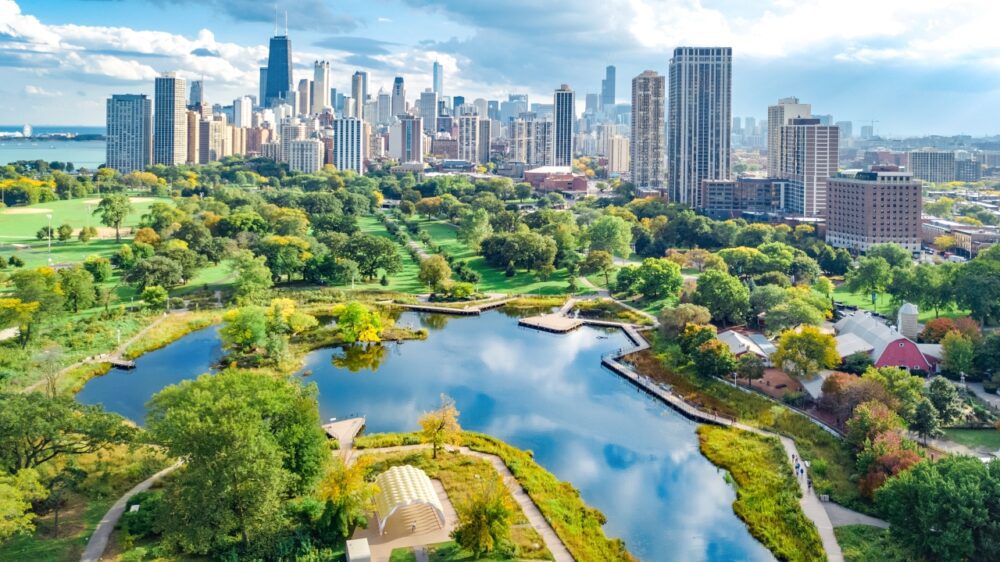
I’ve visited Chicago twice, once in the middle of summer and once in the depths of winter, and honestly, those two trips felt like visiting almost two different cities. The summer trip was full of waterfront walks, rooftop bars and long evenings that stayed light until well past 8pm. The winter trip involved a lot more time indoors, a genuinely brutal wind off the lake, and a completely different, quieter pace to the city. Between the two, I got a much fuller picture of Chicago than a single visit would have given me.
What struck me on both trips was how underrated Chicago seems to be compared to New York or LA when people talk about must-visit US cities. It has a genuinely impressive skyline, some of the best architecture of any American city, and a food scene that goes well beyond its famous deep-dish pizza. It also has a colder, harsher side, both literally and in terms of certain neighbourhoods, that’s worth being upfront about rather than glossing over.
So if you’re asking “is Chicago worth visiting,” my answer, after two very different trips, is a fairly confident yes. It’s a city that holds up well across seasons, though each season changes the experience quite a bit, and it offers a genuinely different flavour of big American city compared to the coasts. Here’s what I found across both visits, the strong points and the parts worth planning around.
Table of Contents
Pros – Reasons Chicago is Worth Visiting
1. The Architecture Is Some of the Best in the US
Chicago’s skyline genuinely impressed me on both trips, but it was the architecture river cruise I took on my summer visit that really drove the point home. Chicago essentially invented the modern skyscraper after the Great Fire of 1871 forced a complete rebuild of the city, and that history is visible everywhere downtown. The guide on the cruise pointed out details in buildings I’d walked past without a second glance, and it completely changed how I saw the rest of the skyline for the remainder of the trip.
2. The Food Scene Goes Well Beyond Deep Dish
Deep-dish pizza gets all the attention, and it’s genuinely worth trying at least once, but it’s far from the whole story. On my winter trip, I discovered Chicago’s strong hot dog culture (properly done, with no ketchup, as any local will tell you), an excellent Italian beef sandwich from a no-frills spot near the Loop, and a genuinely diverse range of ethnic food across neighbourhoods like Pilsen and Chinatown. The food scene has real depth once you look past the single dish the city is most famous for.
3. Millennium Park and the Lakefront Are Genuinely Impressive
The Bean (officially Cloud Gate) gets all the photos, and it’s worth seeing, but Millennium Park as a whole, along with the wider lakefront path, gave me some of my favourite moments on both trips. In summer, I walked and cycled long stretches of the lakefront trail with genuinely stunning skyline views back towards the city. Even in winter, with snow along the path and steam rising off Lake Michigan, the lakefront had its own stark beauty.
4. The Museum Scene Rivals Any US City I’ve Visited
The Art Institute of Chicago is genuinely world-class, and I spent the better part of a full day there on my winter trip specifically because the weather pushed me indoors, which turned out to be a good excuse rather than a compromise. The Field Museum and the Museum of Science and Industry are both excellent too, and having a full “Museum Campus” with several major institutions close together made planning a museum-heavy day straightforward on both visits.
5. Chicago Handles Big-City Energy Without New York’s Intensity
Compared to New York, which can feel relentless even for a seasoned traveller, Chicago had a slightly calmer, more manageable big-city energy on both my trips. The grid layout downtown made navigation genuinely easy, even as a first-time visitor, and the pace of the city, while still clearly a major metropolis, felt a notch more relaxed than Manhattan. For visitors who want proper city energy without the full intensity of somewhere like New York, Chicago strikes a good balance.
6. The Neighbourhoods Have Genuine Character
Beyond the downtown Loop, neighbourhoods like Wicker Park, Logan Square and Pilsen each had a distinct identity that I found genuinely worth exploring on both trips. Wicker Park’s independent shops and music venues gave my summer evenings a good mix of things to do away from the more touristy downtown core, and Pilsen’s Mexican food and street art added a completely different flavour to the winter trip.
7. It’s a Genuinely Good City for Sports and Live Events
Both my trips happened to overlap with major sporting events, a baseball game in summer and a basketball game in winter, and Chicago’s passion for its sports teams was obvious both times. Wrigley Field in particular has a genuine old-school charm that newer stadiums in other cities don’t match. Even if sport isn’t usually a travel priority for you, catching a game here adds a genuinely local, atmospheric evening to a trip.
Cons – Things to Consider Before Visiting Chicago
1. Winters Are Genuinely Harsh
My winter trip involved wind chills that made even short walks between buildings uncomfortable, and Chicago’s reputation as the “Windy City,” while technically debated as to its origin, felt entirely earned once that lake-effect wind hit. If you’re visiting between December and February, pack far more seriously than you might for other US cities, and expect to spend more time indoors than you would in summer, which does change the character of a trip.
2. Certain Neighbourhoods Require More Awareness Than Others
This is a genuinely important point to address honestly. Chicago has areas with real safety concerns, and while the main tourist areas, downtown, the Loop, Millennium Park, the Museum Campus, felt safe and well-populated on both my visits, it’s worth doing proper research before venturing into neighbourhoods further from the typical tourist route, particularly at night. Sticking to well-reviewed areas and using rideshares after dark worked well for me on both trips.
3. Summer Brings Its Own Crowds and Costs
My summer trip, while genuinely enjoyable, also came with noticeably higher accommodation prices and busier attractions than my quieter winter visit. If you’re chasing the best weather along with the lakefront activities, expect to pay more and deal with bigger crowds at spots like Millennium Park and the Museum Campus, particularly on weekends. Shoulder season visits, spring or early autumn, might offer a reasonable middle ground I’d consider trying on a future trip.
Things to Do in Chicago
- Take an architecture river cruise – Genuinely changed how I saw the rest of the skyline for the remainder of my summer trip, and well worth the ticket price.
- Walk or cycle the lakefront trail – Stunning skyline views in any season, and one of the best free ways to spend a few hours in the city.
- Visit the Art Institute of Chicago – A genuinely world-class collection, worth a full day if you can spare one, and a good option for a rainy or cold day.
- See The Bean up close in Millennium Park – Touristy, but genuinely worth the short visit, especially early morning before the crowds build up.
- Eat a proper Chicago-style hot dog – Skip the ketchup, as any local will remind you, and try it from a no-frills local spot rather than a tourist-focused one.
- Explore the Museum Campus – The Field Museum and Museum of Science and Industry are both excellent, and their proximity makes for an easy museum-focused day.
- Walk around Wicker Park in the evening – Independent shops, good bars and live music venues, a good contrast to the more corporate downtown core.
- Catch a game at Wrigley Field – Genuine old-school stadium charm and a proper local atmosphere, worth it even if baseball isn’t usually your thing.
- Try Mexican food in Pilsen – A genuinely strong, authentic food scene with excellent street art nearby, well worth the short trip from downtown.
- Visit Navy Pier – Touristy, but the Ferris wheel views over the lake and skyline are worth a short visit, particularly at sunset.
Where to Stay in Chicago
- The Loop – Central and convenient for first-time visitors, close to major sights and the Museum Campus, though it can feel quiet in the evenings once offices close.
- River North – A lively option close to good restaurants and nightlife, and within easy walking distance of Millennium Park and the Magnificent Mile.
- Wicker Park – A more local, artsy feel with good bars and shops, a good base if you want to be away from the busiest tourist areas while still well connected.
- Lincoln Park – A quieter, more residential option close to the zoo and lakefront, good for a calmer stay with easy access to outdoor activities.
Getting Around Chicago
The ‘L’ train system, Chicago’s elevated and underground rail network, was genuinely useful on both trips and covers most of the areas a typical visitor would want to reach. I bought a reloadable transit card on arrival each time and found it easy to navigate, even during my winter trip when I was keen to spend as little time as possible waiting outdoors for transport.
Walking worked well within downtown and nearby neighbourhoods, particularly in summer when the lakefront path added a genuinely pleasant way to cover longer distances on foot. In winter, I relied much more heavily on the ‘L’ and rideshares to avoid extended time outside in the cold. Chicago also has a solid bike-share scheme, which I used during my summer trip specifically for the lakefront trail, though I wouldn’t recommend it during the colder months given the conditions I experienced on my winter visit.
Conclusion
So, is Chicago worth visiting? Based on two trips in genuinely different seasons, I’d say yes, and it left me with a stronger impression than I expected from a city that sometimes gets overlooked in favour of the US coasts. The architecture, the food scene beyond deep-dish pizza, and the lakefront in particular gave both trips real substance, even though the two visits felt quite different in character.
The harsh winters, the need for a bit more awareness around certain neighbourhoods, and the higher costs and crowds that come with peak summer are all real factors worth planning around. But weighed against the quality of the museums, the architecture, and how manageable the city felt to navigate as a visitor, I think Chicago earns a strong place on a US travel list. If you’re deciding whether to add it to your 2026 plans, my honest advice is to visit in a milder shoulder season if your schedule allows, and don’t skip the architecture cruise, it’s one of the best orientation activities I’ve done in any city.
Related Posts
- Is Atlanta Worth Visiting? Pros, Cons and Travel Tips (2026)
- Is Austin Worth Visiting? Pros, Cons and Travel Tips (2026)
- Is Boston Worth Visiting? Pros, Cons and Travel Tips (2026)
- Is Chicago Worth Visiting? Pros, Cons and Travel Tips (2026)
- Is Dallas Worth Visiting? Pros, Cons and Travel Tips (2026)
- Is Denver Worth Visiting? Pros, Cons and Travel Tips (2026)
- Is Honolulu Worth Visiting? Pros, Cons and Travel Tips (2026)
- Is Houston Worth Visiting? Pros, Cons and Travel Tips (2026)
- Is Las Vegas Worth Visiting? Pros, Cons and Travel Tips (2026)
- Is Los Angeles Worth Visiting? Pros, Cons and Travel Tips (2026)
- Is Miami Worth Visiting? Pros, Cons and Travel Tips (2026)
- Is Nashville Worth Visiting? Pros, Cons and Travel Tips (2026)
- Is New Orleans Worth Visiting? Pros, Cons and Travel Tips (2026)
- Is New York City Worth Visiting? Pros, Cons and Travel Tips (2026)
- Is Orlando Worth Visiting? Pros, Cons and Travel Tips (2026)
- Is Phoenix Worth Visiting? Pros, Cons and Travel Tips (2026)
- Is San Diego Worth Visiting? Pros, Cons and Travel Tips (2026)
- Is San Francisco Worth Visiting? Pros, Cons and Travel Tips (2026)
- Is Tampa Worth Visiting? Pros, Cons and Travel Tips (2026)
- Is Washington DC Worth Visiting? Pros, Cons and Travel Tips (2026)