
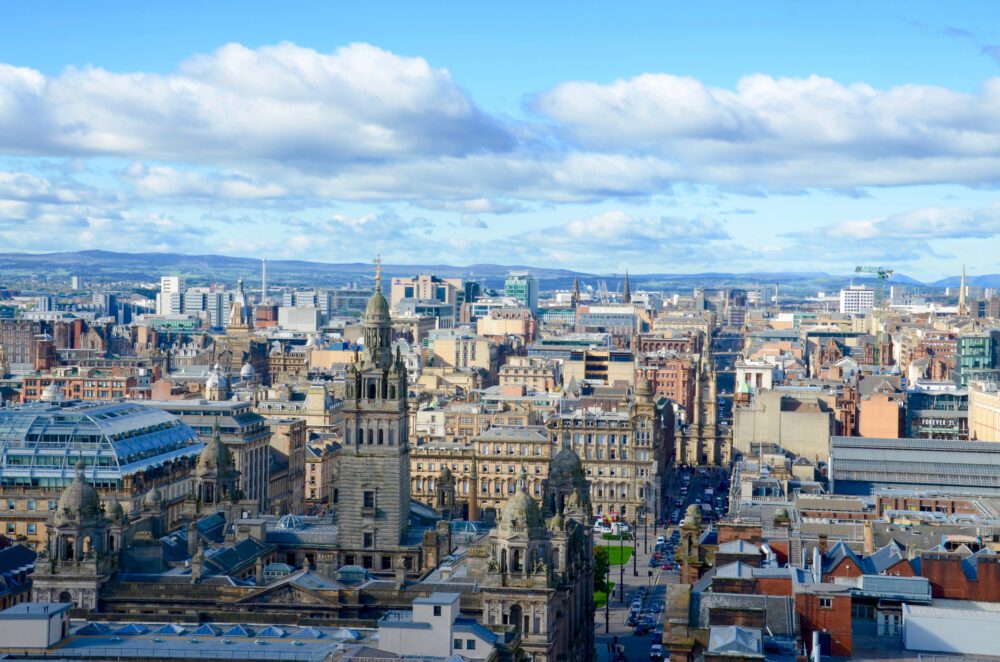
Glasgow tends to get overshadowed by Edinburgh in most people’s Scotland plans, and I think that’s a mistake. I’ve visited several times over the years, for football, for music, and just to wander a city that doesn’t try nearly as hard to impress tourists as its neighbour does. So when people ask me if Glasgow is worth visiting, or if it’s just a rougher, less photogenic version of Edinburgh, I tell them straight: it’s a different city entirely, and it earns its own trip.
What struck me on my first visit was how the city felt lived-in rather than staged. The Victorian architecture along Buchanan Street doesn’t get the same postcard treatment as Edinburgh’s Old Town, but it’s arguably just as impressive once you actually look up while walking. I’ve spent evenings in small music venues that felt like they hadn’t changed in decades, and mornings in the West End that felt more like a proper neighbourhood than a tourist trail.
This guide gives you the honest version, built from repeated visits rather than a rushed weekend. By the end, you’ll know whether Glasgow is worth visiting for your trip, what’s genuinely worth doing while you’re there, where to base yourself, and how to get around a city that’s more walkable than its reputation suggests.
Table of Contents
Pros – Reasons Glasgow is Worth Visiting
1. Genuinely Impressive Victorian Architecture
Glasgow’s Victorian buildings don’t get talked about enough. The city grew wealthy during the industrial era, and that wealth went into serious architecture, particularly around Buchanan Street, George Square, and the Merchant City area. I’ve walked past the same buildings a dozen times and still notice new details in the stonework each visit.
Charles Rennie Mackintosh’s influence runs through much of this too, with buildings like the Glasgow School of Art showing a completely different architectural style to what you’ll find in most UK cities. I’ve done a self-guided Mackintosh walking trail before and came away properly impressed by how much of his work survives across the city, once you know where to look.
2. One of the Best Live Music Scenes in the UK
Glasgow has produced and hosted serious music talent for decades, and the scene is still active today. I’ve caught gigs at King Tut’s Wah Wah Hut, a small venue famous for giving early opportunities to bands who later became huge names. The sound and atmosphere in these smaller rooms beats a lot of bigger venues I’ve been to elsewhere.
Beyond the small venues, Glasgow also hosts major touring acts at bigger arenas, giving you a genuine mix depending on what you’re after. I’ve talked to locals who go to multiple gigs a month without it being unusual, and that level of casual, ongoing music culture is hard to find at this scale outside of a handful of UK cities.
3. Genuinely Friendly, Direct Locals
Glasgow’s reputation for friendliness isn’t exaggerated. I’ve had strangers strike up conversations on buses, in pubs, and even just walking down the street, and it’s rarely felt forced or unwelcome. People here seem genuinely happy to help if you look lost, and the humour tends to be quick and self-deprecating rather than standoffish.
This matters more than people expect when they’re weighing up a trip. I’ve had better, more memorable conversations with locals in Glasgow over a single weekend than in cities I’ve visited for much longer. It adds a warmth to the trip that guidebooks tend to undersell, and it’s one of the clearer answers to whether Glasgow is worth visiting if you care about atmosphere as much as sights.
4. Free World-Class Museums and Galleries
Glasgow keeps its major museums free, and the quality genuinely surprised me the first time I visited. Kelvingrove Art Gallery and Museum holds an excellent collection, from natural history to fine art, and I’ve spent a full afternoon there without getting bored. The building itself is worth the visit before you even get to the exhibits.
The Riverside Museum, focused on transport history, is another strong free option, and it’s genuinely engaging even if transport isn’t normally your thing. I’ve taken visiting friends there who claimed no interest in the subject and watched them get properly absorbed in the exhibits within twenty minutes. Between the two, you can fill a couple of days without spending anything beyond food and coffee.
5. A Strong, Independent Food and Coffee Scene
Glasgow’s food scene has grown substantially over the past decade, particularly in the West End and around Finnieston. I’ve had genuinely excellent meals in small independent restaurants that don’t get anywhere near the recognition they deserve, likely because Glasgow doesn’t market its food scene as aggressively as some other UK cities do.
Finnieston in particular has become known for its restaurants and bars, and I’ve spent whole evenings moving between small plates and cocktail bars there without needing to leave a few streets. The coffee culture is strong too, with independent cafes doing proper specialty coffee across the West End, which makes for a good, relaxed start to any day of sightseeing.
6. Football Culture on a Genuinely Serious Scale
Glasgow is home to Celtic and Rangers, two clubs with one of the most intense rivalries in world football. Even if you’re not a fan of either club, experiencing the atmosphere around an Old Firm match day gives you a real sense of how deeply football runs through the city’s identity. I’ve done a stadium tour at Celtic Park and came away with a genuine appreciation for the history involved.
Beyond match days, football conversations come up naturally in pubs and on public transport, in a way that’s hard to avoid and honestly part of the charm. If sport is any part of your travel interests, Glasgow delivers an intensity that’s difficult to match, and it’s a solid answer to anyone questioning whether Glasgow is worth visiting for something beyond the standard tourist trail.
7. Easy Access to Loch Lomond and the Trossachs
Glasgow works well as a base for reaching some of Scotland’s best scenery without needing a long drive. Loch Lomond is under an hour away, and the Trossachs National Park isn’t much further, making both realistic day trips. I’ve done this straight from a Glasgow hotel more than once, without needing to relocate for a night.
This gives Glasgow an edge for travellers who want city amenities at night and genuine Scottish countryside during the day, without constant hotel changes. I’ve come back from a day trip on Loch Lomond and been in a Finnieston restaurant within the hour, which is a genuinely convenient combination for a shorter trip.
Cons – Things to Consider Before Visiting Glasgow
1. It Doesn’t Have Edinburgh’s Postcard Appeal
Glasgow’s charm is real, but it’s less immediately obvious than Edinburgh’s castle-and-skyline setup. Some areas of the city, particularly parts of the city centre away from Buchanan Street, feel more industrial and less polished, and first-time visitors sometimes come away underwhelmed if they expected something more visually dramatic.
My advice after several visits is to adjust expectations before you arrive. Glasgow rewards you more through its atmosphere, food, music, and people than through dramatic scenery within the city itself. If you go in expecting an Edinburgh-style visual experience, you’ll likely miss what actually makes Glasgow worth the trip.
2. Weather is Wet and Grey for Much of the Year
Glasgow sits on the west coast of Scotland, and it rains here more than in Edinburgh, in my experience across multiple visits. I’ve had entire weekends where the sky barely cleared, and outdoor plans needed constant rearranging around the forecast. It’s not unique to Glasgow, but it’s worth being realistic about before you pack.
Bring proper waterproof layers rather than relying on an umbrella, since wind off the Clyde tends to make umbrellas useless fairly quickly. Build indoor backup options into your itinerary, particularly around the free museums, since they give you a solid alternative when the weather turns.
3. Some Areas Require Awareness, Especially at Night
Like most large UK cities, certain parts of Glasgow feel less comfortable to walk through late at night, particularly around some areas east of the city centre. This isn’t unique to Glasgow, but it’s worth basic awareness rather than assuming every neighbourhood feels the same after dark.
Sticking to well-populated areas like the West End, Merchant City, and the main city centre at night has never given me any issues across several visits. Use normal city-travel common sense, take a taxi if you’re unsure of an area late at night, and you’ll have no real problems.
Things to Do in Glasgow
- Visit Kelvingrove Art Gallery and Museum – free entry and one of the best museum collections in Scotland, housed in a genuinely stunning building.
- Explore the West End around Ashton Lane – cobbled lanes, good restaurants, and a relaxed, local feel away from the main tourist strip.
- Tour Celtic Park or Ibrox Stadium – even non-football fans get real value from the history and access behind the scenes.
- Wander the Riverside Museum – a surprisingly engaging transport museum, free to enter and well worth an hour or two.
- Catch a gig at King Tut’s Wah Wah Hut – a legendary small venue that’s launched several major bands over the decades.
- Follow the Charles Rennie Mackintosh trail – a self-guided architecture walk covering some of the city’s most distinctive buildings.
- Eat and drink around Finnieston – one of the best concentrations of independent restaurants and bars in the city.
- Visit Glasgow Cathedral and the Necropolis – a genuinely atmospheric historic site, especially the hillside graveyard behind it.
- Browse the Barras Market – a proper, slightly chaotic market experience with genuine local character, best visited on a weekend.
- Take a day trip to Loch Lomond – realistic within a day, and a completely different landscape from the city itself.
Where to Stay in Glasgow
- West End – the best choice for food, independent shops, and a relaxed, residential atmosphere near the university and Kelvingrove.
- City Centre – ideal for short stays or business trips, with easy walking access to Buchanan Street and the main shopping areas.
- Merchant City – a good middle ground with strong architecture, good restaurants, and easy access into the centre.
- Finnieston – close to the best restaurant and bar scene in the city, with a short walk into the centre.
- Southside – a quieter, more local option with good transport links, well suited if you want a calmer base away from the busiest areas.
Getting Around Glasgow
Glasgow’s city centre is genuinely walkable, and I’ve covered most of a weekend trip on foot alone, particularly around the centre, Merchant City, and into the West End. The distances are shorter than they first appear on a map, and walking gives you a better sense of the city’s character than transport does.
The Glasgow Subway, one of the oldest underground systems in the world, is a quick and useful option for longer cross-city journeys, particularly out to the West End or Southside. Buses cover most other gaps well and run frequently, though I find them slower during rush hour compared to the Subway. For day trips out to Loch Lomond or the Trossachs, renting a car gives you the most flexibility, though organised tours and trains both run reliably if you’d rather skip the driving. Get a contactless card ready for the buses and Subway before you arrive, since it saves time over working out ticket machines at each stop.
Conclusion
So, is Glasgow worth visiting? Based on several visits over the years, my honest answer is yes, and it deserves more attention than it usually gets sitting in Edinburgh’s shadow. The architecture, the music scene, the food, the football culture, and the easy access to Loch Lomond make it a genuinely well-rounded city break, not a lesser alternative to its more famous neighbour.
The cons are worth knowing about rather than ignoring. It lacks Edinburgh’s immediate postcard appeal, the weather stays wet and grey for much of the year, and certain areas require the same basic awareness you’d use in any large city at night. None of that changes the overall verdict, but going in with realistic expectations makes a real difference to how much you get out of the trip.
If you pack for rain, adjust your expectations away from dramatic scenery and toward atmosphere and culture, and use common sense at night like you would anywhere, Glasgow delivers a genuinely rewarding trip. That’s the honest take after multiple visits, and it’s a city I’d happily keep going back to.