Is Paris Worth Visiting? Honest Pros and Cons (2026)
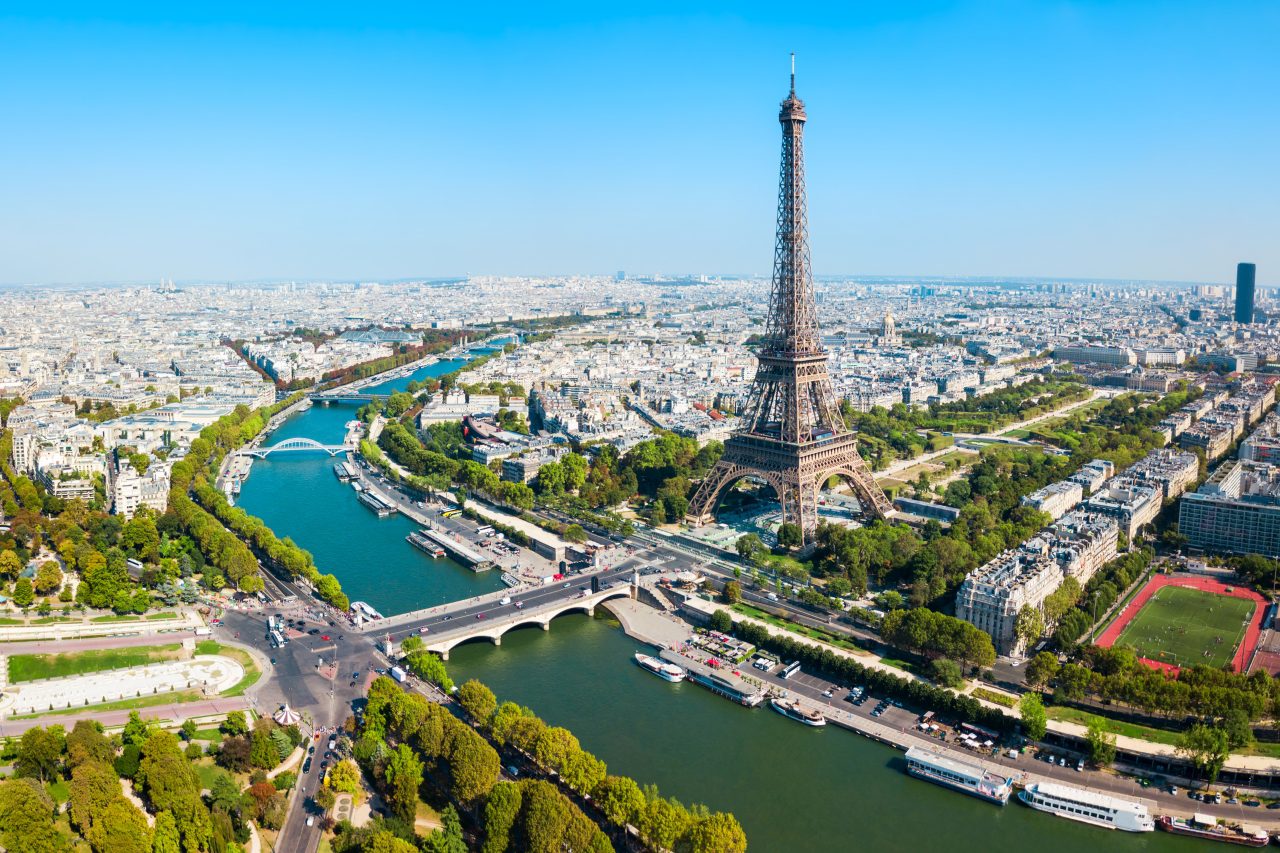
Paris has been called the most romantic city on Earth so many times that it’s easy to roll your eyes. I did, a little, before I went. Then I spent three days one winter walking from the Champs-Élysées to the Louvre and up the hill to Montmartre, and the clichés started to look like understatements.
Paris is the capital of France, and it’s a city of grand boulevards, world-class museums, riverside walks and some of the best food in Europe. It’s big, busy and expensive, but the main sights sit close together and the Metro is excellent. Paris is worth visiting if you love art, history and long café lunches, and you can handle queues and high prices.
Below, I’ll cover the best reasons to go and the drawbacks you should plan around. After that, you’ll find the best areas to stay, the tours worth booking, the right season, how many days to allow and the easiest ways to get around. By the end, you’ll know whether Paris suits your plans.
Pros of Visiting Paris
1. The Eiffel Tower
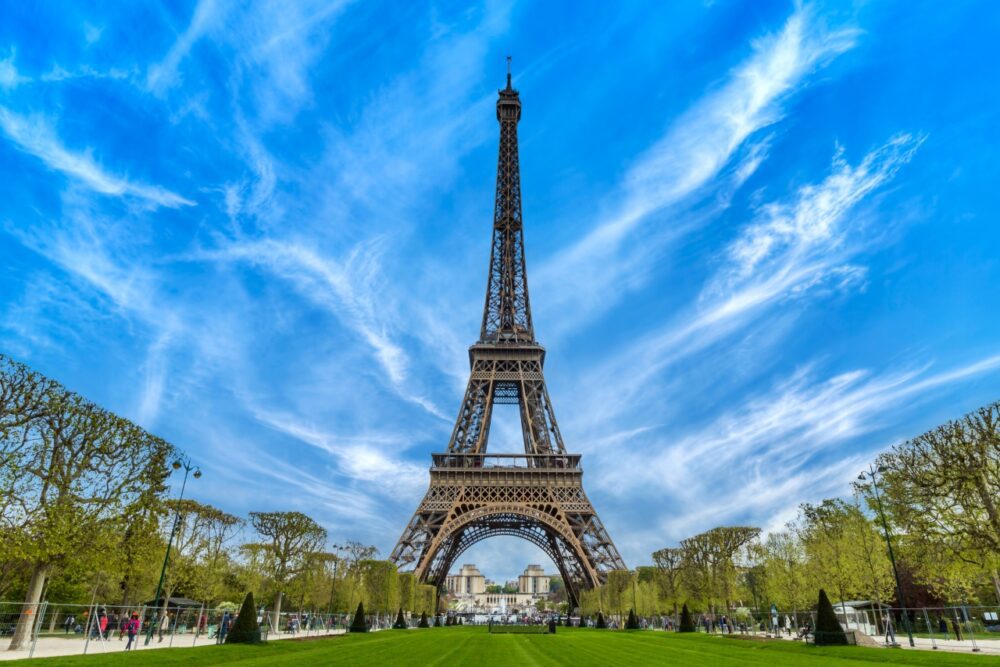
The Eiffel Tower is the first thing most people picture, and it lives up to the hype. Gustave Eiffel’s iron tower opened in 1889, and it’s open daily from 9:30 am to 11 pm, so you can go up by day or after dark. Stair tickets to the second floor cost €14.80, and the lift to the top costs €36.70. I’d pay for the summit on a clear day, because the view from the Eiffel Tower is wider than anything else in the city.
Booking ahead matters. A reserved-access ticket comes with a host who meets you at a shop on Avenue de Suffren and walks you to the lift. That saves you a long wait in the ticket queue. For photos, skip the base and cross the river to Trocadéro. The tower looks best from there, and it sparkles for five minutes on the hour after dark. Bring a warm layer, because the top is windy.
2. The Louvre
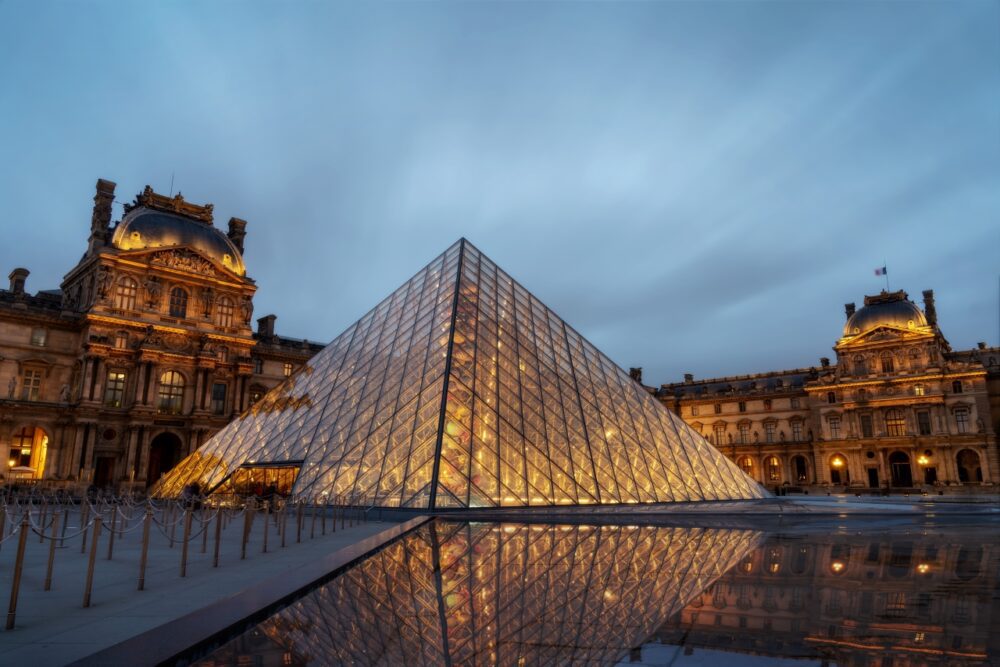
The Louvre is the biggest art museum in the world, and it sits inside a former royal palace. The Mona Lisa draws the crowds, but the Venus de Milo and the Winged Victory of Samothrace are just as striking. The Louvre is open from 9 am to 6 pm and closed on Tuesdays. It stays open until 9 pm on Wednesdays and Fridays, which is the best time to go. Adult tickets cost €22 for EU and EEA visitors and €32 for everyone else.
You can’t see it all in a day, so pick a few highlights. I’d book a guided Louvre tour to head straight for the big names. It includes reserved entry through a dedicated entrance, and a certified guide leads you along an orientation route that covers the Mona Lisa and Liberty Leading the People. It meets beside the Arc de Triomphe du Carrousel, right by the glass pyramid.
3. Notre-Dame and Île de la Cité
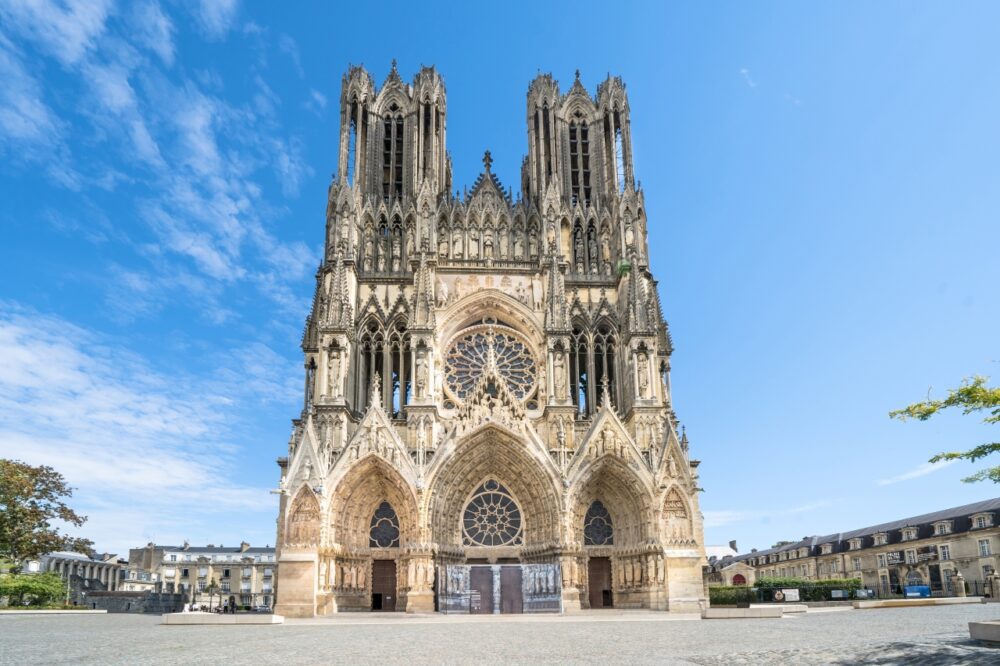
Notre-Dame reopened in late 2024 after the fire in 2019, and the restored interior is worth the wait. Entry is free, though booking a slot online saves time in busy periods. Step inside Notre-Dame for the Gothic stained glass, the pale cleaned stonework and the soaring nave. The towers have a separate paid ticket and a climb of 424 steps, which gets you close to the gargoyles. The square in front of the cathedral is open and worth a slow look.
The island holds more history. Sainte-Chapelle is a small 13th-century chapel with walls of stained glass that glow on a bright day, and tickets cost €22. Next door, the Conciergerie was a royal palace and later a prison. The Sainte-Chapelle, Conciergerie and Notre-Dame tour covers all three in two hours, with pre-reserved tickets for the chapel and the Conciergerie. Finish by walking across Pont Neuf, the oldest standing bridge in the city.
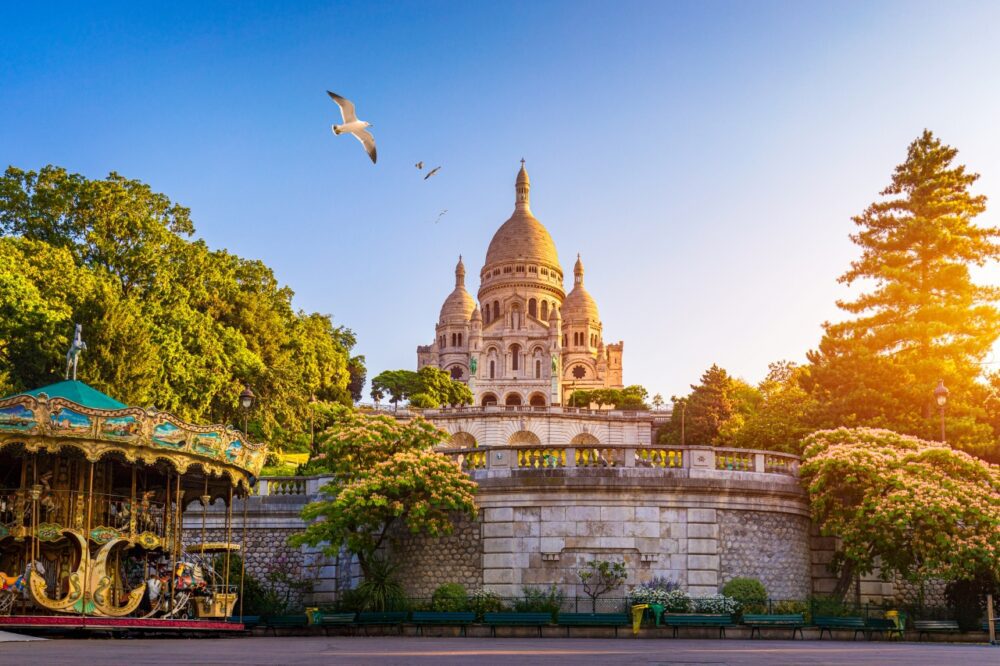
4. Montmartre and Sacré-Cœur
Montmartre still feels like a village on a hill. Picasso, Van Gogh and Toulouse-Lautrec all lived here, and the steep lanes, vineyards and cafés keep that bohemian spirit alive. The white-domed Sacré-Cœur crowns the hill, and entry to the basilica is free. It’s open daily from 6:30 am to 10:30 pm. The view from the steps is free too, and it’s one of the best in Paris.
Place du Tertre is full of street painters, but it’s very touristy, so I’d keep moving. Wander down Rue de l’Abreuvoir instead and find the Clos Montmartre vineyard. A Montmartre walking tour starts beneath the Moulin Rouge and passes the Bateau-Lavoir, Au Lapin Agile and the Moulin de la Galette before finishing at Sacré-Cœur. The streets are steep, so wear comfortable shoes. Come early for quiet lanes. Weekday mornings are calmer, and the back streets stay peaceful long after the crowds reach the basilica.
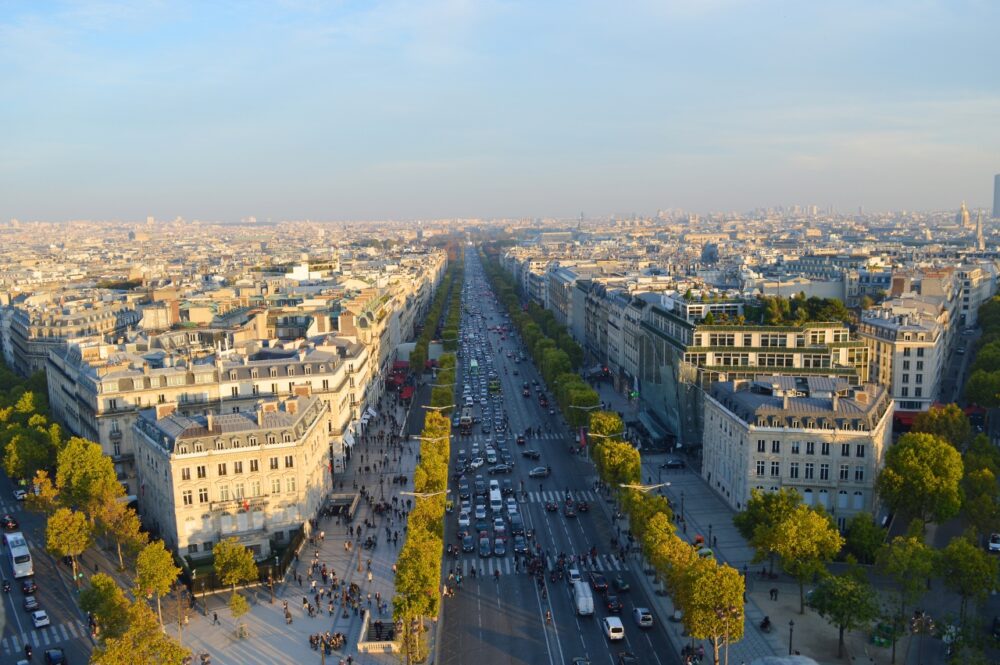
5. The Champs-Élysées and the Arc de Triomphe
The Champs-Élysées is one of the most famous avenues in the world. It runs for about 1.9 km from Place de la Concorde up to the Arc de Triomphe, lined with flagship stores, cafés and theatres. I stayed close by, so I walked it several times, usually in the evening when it’s busy but relaxed. Napoleon ordered the Arc de Triomphe in 1806, and it stands in the middle of a roundabout where twelve roads meet.
The Arc de Triomphe has a rooftop terrace with a 360-degree view down the avenue. Reach it through the underpass, not by crossing the traffic. The climb is 284 steps, so allow some energy. A rooftop ticket is timed, and you need photo ID. At the base lies the Tomb of the Unknown Soldier, where the flame is rekindled every evening at 6:30 pm. Visitors under 26 from the EU enter free.
6. Musée d’Orsay and Paris Museums
Art lovers are spoiled in Paris. The Musée d’Orsay sits in a former railway station and holds the best Impressionist collection in the world. Monet, Renoir, Degas and Van Gogh share the walls beneath a huge glass roof and a giant clock. It’s open Tuesday to Sunday from 9:30 am to 6 pm, with late opening until 9:45 pm on Thursdays. It closes on Mondays. Tickets cost around €16. Plan at least two hours here, and more if you love art.
Across the river, the Musée de l’Orangerie shows Monet’s huge Water Lilies in two oval rooms, and an hour is enough. The Rodin Museum has The Thinker in a quiet garden. If you plan several visits, the Paris Museum Pass covers more than 60 museums and monuments, including the Louvre, Orsay and Versailles. You choose 2, 4 or 6 consecutive days, and it gives skip-the-line access at many sites.
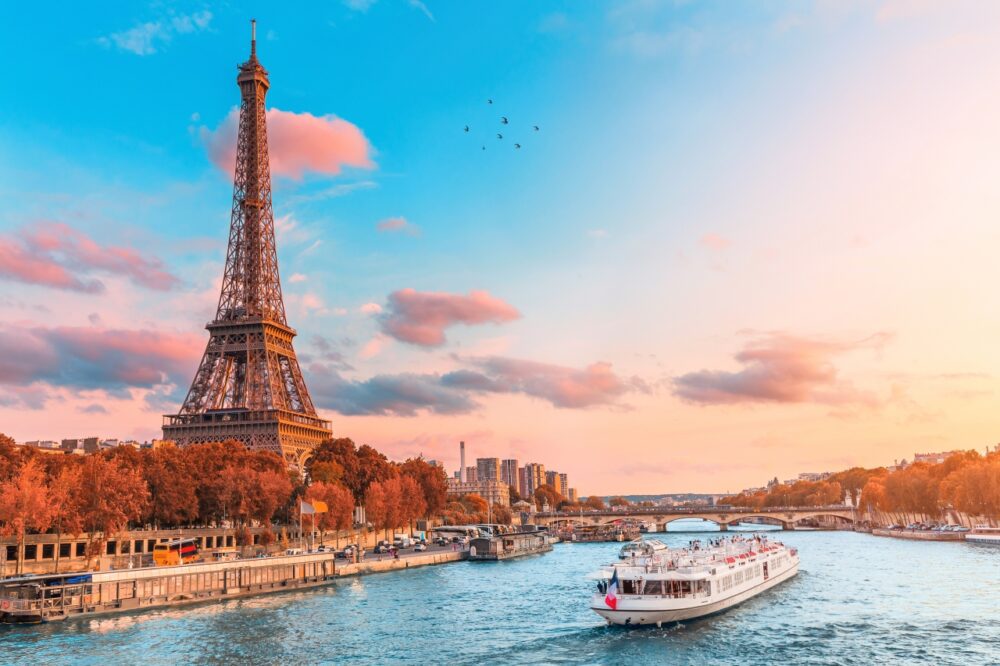
7. Seine Cruises and Bridges
The Seine is the heart of Paris, and its banks are a UNESCO World Heritage Site. Stone quays line the water, and 37 bridges cross the river within the city. Pont Alexandre III is the most ornate, with gilded statues and lamps. Walking the quays costs nothing, and you can browse the green boxes of the bouquinistes, the riverside booksellers who have sold old books and prints here for centuries.
A cruise gives you a different angle. The Bateaux Mouches cruise leaves near Pont de l’Alma and lasts one hour. Tickets have no fixed date or time, so you can pick the moment. You scan a QR code and listen to commentary in 12 languages. The boat passes Notre-Dame, the Louvre and the Eiffel Tower. Sit on the open top deck if the weather is dry. Evening sailings show the bridges and monuments lit up after dark.
8. French Food and Cafés
Eating well is a big part of a Paris trip. Start the day at a boulangerie with a buttery croissant or a pain au chocolat, which usually cost about €1.50 to €2. A fresh baguette is around €1.30. Lunch brings classic bistro dishes such as French onion soup, steak frites, duck confit and croque monsieur. Finish with crêpes, macarons or an éclair. Take your time over it. Many bistros offer a set lunch menu, called a formule, for roughly €15 to €25.
For local flavour, head to Le Marais. Marché des Enfants Rouges is the oldest covered market in Paris. The Le Marais food tour mixes more than ten tastings with wine, and it includes lunch at a traditional bistro. Do as the locals do and order your coffee at the bar. It’s cheaper than sitting at a table, and you’ll get a quick lesson in Parisian manners.
9. Charming Neighbourhoods and Gardens
Paris rewards wandering. Le Marais has medieval lanes, Jewish bakeries and Place des Vosges, the oldest planned square in the city. The Latin Quarter around the Sorbonne is full of bookshops and student cafés. Saint-Germain-des-Prés has the famous literary cafés, Café de Flore and Les Deux Magots. Every neighbourhood has its own character, and you can cross most of them on foot in under an hour.
When you need a break, Paris has beautiful green spaces. The Tuileries Garden stretches from the Louvre to Place de la Concorde, and it has metal chairs you can drag wherever you like. The Luxembourg Gardens are a local favourite, with a central pond where children sail toy boats. Both gardens are free to enter. Grab a pastry, pick a chair and watch the city go by. It costs nothing, and it’s one of my favourite ways to spend an hour.
10. Day Trips to Versailles and Giverny
Paris makes an easy base for day trips. Versailles is the big one, about 40 minutes away on the RER C. The Palace of Versailles has the Hall of Mirrors, the royal apartments and enormous gardens with fountains, and it’s closed on Mondays. Allow a full day. A Versailles tour includes round-trip coach transport and skip-the-line entry, which keeps the logistics simple.
For something quieter, go to Giverny and Auvers-sur-Oise. Monet’s house and lily pond are in Giverny, and Van Gogh’s last home and grave are in Auvers. The Giverny and Van Gogh village tour covers both in a day, with coach transport from near the Arc de Triomphe. Monet’s gardens open in spring and close for winter. Book early for either trip, since both are popular, and the day starts easily from central Paris. Fontainebleau, Disneyland Paris and Reims are also easy to reach by train.
Cons of Visiting Paris
1. Long Queues and Crowds
Paris is one of the most visited cities in the world, and the queues prove it. The Eiffel Tower, the Louvre and Notre-Dame all draw long lines, and the Mona Lisa room is a crush of raised phones. Walk-up tickets can mean an hour or more outside before you even get in. The Metro and the streets around Sacré-Cœur get packed in the middle of the day. It can feel like everyone in Europe has the same plan as you.
Reserve everything in advance. Book timed tickets for the Louvre and the Eiffel Tower, and go first thing in the morning or on the late openings. The Louvre stays open until 9 pm on Wednesdays and Fridays. The Paris Museum Pass gives skip-the-line access at many museums. I booked my big sights ahead and rarely waited long. A little planning keeps Paris well worth it.
2. Pickpockets and Scams
Pickpockets are a real problem in Paris. They work crowded spots such as the Metro, Sacré-Cœur, the Louvre queue and the base of the Eiffel Tower. Common tricks include a friendly stranger tying a bracelet on your wrist, someone asking you to sign a petition and a “found” gold ring. Most are harmless if you stay alert, but a stolen phone can ruin a day.
A few habits keep you safe. Carry a zipped cross-body bag, keep your phone in a front pocket and never leave it on a café table. If someone approaches you with a petition or a bracelet, say a firm “non, merci” and keep walking. On the Metro, stay away from the doors in a crowded carriage. Violent crime against visitors is rare, and with basic care I never felt unsafe. Paris is still worth it.
3. High Prices
Paris isn’t cheap. Hotel rooms near the main sights cost a lot, even for small rooms, and a sit-down dinner in the centre quickly reaches €35 to €50 a head. A coffee on a terrace can cost €5 or more, and a beer at a café is often €7 to €9. Add museum tickets and Metro fares, and the daily total climbs fast.
There are plenty of ways to cut costs. Order coffee at the bar, which is cheaper than a table. Eat a set lunch menu for €15 to €25, or grab a sandwich from a boulangerie for €5 to €8. Many of the best things cost nothing, including Notre-Dame, the Sacré-Cœur basilica, the Seine quays and the city’s parks. Use the late openings at museums too. You can still enjoy Paris on a sensible budget, and it’s still worth it.
4. Tourist Trap Restaurants
Some restaurants near the big sights are built for visitors, not locals. Places on the Champs-Élysées, around the Eiffel Tower and on Place du Tertre in Montmartre often have laminated photo menus, a waiter outside pulling you in and mediocre food at high prices. A bad meal is an easy mistake to make when you’re tired, hungry and standing on a famous street.
Walk two or three streets away from the landmarks and the quality improves. Look for short menus with seasonal dishes, full dining rooms with French voices and a handwritten board. Booking a table for dinner is smart too. If you’d rather skip the guesswork, a Montmartre food tour leads you to seven tasting stops with a local guide. It’s an easy way to find good spots, and Paris is still worth it.
5. Grey, Wet Weather
The weather can be gloomy. Paris gets rain throughout the year, and the grey skies sometimes last for days. In December, the sun sets before 5 pm, and temperatures often sit between 3°C and 8°C. The damp wind off the river makes it feel colder. On a murky day, the viewpoints are less rewarding. Short days also leave less time for sightseeing.
Plan around the weather. Pack a waterproof jacket, an umbrella and comfortable shoes, and save the viewpoints for dry spells. The Louvre, the Orsay and the Orangerie are perfect for rainy days. A Musée d’Orsay guided tour fills a wet morning with a small group of up to six. Warm cafés are never far away. Paris looks atmospheric in the rain, and it’s still worth it.
Where to Stay
Champs-Élysées and the 8th: I stayed near the Champs-Élysées for three days, and it’s a polished, central base. The Arc de Triomphe was a short walk from my hotel, and Metro line 1 runs straight to the Louvre, the Marais and Bastille. The streets are wide and safe, but prices are high, the crowds are big and authentic restaurants are thin on the ground, so walk toward Rue La Boétie or Rue du Faubourg Saint-Honoré to eat. Arc Elysées is a budget-friendly 3-star on Rue Washington with soundproof rooms and family rooms. Hôtel du Rond-point des Champs-Élysées is a mid-range 4-star with an indoor heated pool and a hammam, and Hotel Marignan Champs-Elysées is an upscale 5-star with a restaurant, a terrace and massage treatments.
Le Marais and Bastille: Le Marais is the best area for atmosphere, with medieval lanes, galleries, boutiques and great cafés, and Place des Vosges is close by. Many sights are walkable, and Metro line 1 serves the area. Rooms are small and prices are high, while Bastille next door is a little cheaper but noisier at weekends. ibis Paris Bastille Opera is a budget-friendly 3-star near Bastille with a restaurant and a terrace. Hotel Saint-Louis Marais is a mid-range 3-star with soundproof rooms and family rooms, and Le Petit Beaumarchais Hotel & Spa is an upscale 4-star on the edge of the Marais with an indoor saltwater pool and a sauna.
Latin Quarter and Saint-Germain: These two Left Bank areas have narrow streets, bookshops, bistros and the Luxembourg Gardens, and Notre-Dame, Sainte-Chapelle and the Musée d’Orsay are all within walking distance. Students keep the area lively, so late nights can be noisy, and restaurants near Notre-Dame cater to tourists, so walk a few streets away to eat. Hôtel Oratio is a budget-friendly 3-star with soundproof rooms and air conditioning. Hotel Left Bank Saint Germain is a mid-range 3-star in the heart of Saint-Germain with a 24-hour front desk, and Select Hotel is an upscale 4-star on Place de la Sorbonne with a bar and room service.
Montmartre: Montmartre is the best choice for a village feel, with cobbled lanes, cafés and viewpoints close by and hotels that cost less than in the centre. The downsides are the steep hills, the crowds around Sacré-Cœur and Place du Tertre, and the rowdy streets near Pigalle at night. It’s also further from the Louvre and the Eiffel Tower, so you’ll use the Metro a lot. Hotel Audran is a budget-friendly 2-star with soundproof rooms and room service. Timhotel Montmartre is a mid-range 3-star on Place Émile Goudeau, in the heart of the old village, with a coffee house on site. Appart’hôtel Odalys City Paris Montmartre is an upscale 4-star aparthotel with a spa, a hammam and a garden.
Eiffel Tower and the 7th: The 7th arrondissement is elegant, quiet and safe, and families like it. Rue Cler is a lively market street full of cheese shops and bakeries, and the Eiffel Tower, Les Invalides and the Musée d’Orsay are all close. Nightlife is limited, many restaurants close early and budget options are scarce. Hôtel de la Tour Eiffel is a budget-friendly 2-star with air conditioning and family rooms. Cler Hotel is a mid-range 3-star right on Rue Cler with a garden and a terrace, and Almarine Eiffel Hotel & Spa by Malone is an upscale 4-star with an indoor heated pool and a spa.
Best Things to Do
Paris has far more to do than any trip can fit. These are the experiences I’d put on a shortlist.
- Eiffel Tower reserved access: A 1 to 1.5-hour visit with pre-booked lift tickets to the first and second floors, plus an optional summit upgrade. A host meets you at a shop on Avenue de Suffren and walks you to the tower.
- Louvre guided tour with reserved entry: A guided orientation through a dedicated entrance. It covers the Mona Lisa, the Venus de Milo and Liberty Leading the People, and you meet at the Arc de Triomphe du Carrousel.
- Seine River guided cruise: A one-hour cruise from the Square du Vert-Galant by Pont Neuf. A live guide speaks English and French as you pass Notre-Dame, the Louvre and the Eiffel Tower, and the boat has an open-air terrace.
- Musée d’Orsay Impressionist tour: A 1.5-hour small-group tour with admission included. The guide explains how the Impressionists broke the rules of painting, and you meet opposite the museum.
- Sainte-Chapelle, Conciergerie and Notre-Dame tour: A two-hour walk around Île de la Cité with pre-reserved tickets for Sainte-Chapelle and the Conciergerie. Groups are limited to eight, and you see Notre-Dame from the outside.
- Montmartre walking tour: A two-hour tour that begins at Blanche Metro station, beneath the Moulin Rouge. It passes the Bateau-Lavoir, Au Lapin Agile and the Clos Montmartre vineyard, and finishes at Sacré-Cœur.
- Arc de Triomphe rooftop tickets: A timed ticket to the rooftop terrace, reached by a 284-step climb. The view runs down the Champs-Élysées, and the ticket is valid for one day.
- Le Marais food tour: A three-hour small-group walk, with up to 12 people, and more than ten tastings plus two half glasses of wine. It includes lunch at a traditional bistro and a stop at the oldest covered market.
- Paris Catacombs entry with audio guide: A one-hour visit to the underground ossuary beneath the city streets. The audio guide comes in four languages.
- Moulin Rouge dinner show: A 4.5-hour evening with a three-course dinner, the Féerie show and half a bottle of champagne. Return transport to five central areas is included, and you meet at the ticket office on Boulevard de Clichy.
- Versailles tour with skip-the-line entry: A half-day trip of 6 to 8.5 hours by air-conditioned coach. A guide covers the State Apartments, the Hall of Mirrors and the Queen’s apartment, and you get free time in the gardens.
- Giverny and Van Gogh village day trip: A full-day coach trip to Auvers-sur-Oise and Giverny. Tickets for the Van Gogh House and Monet’s house and gardens are included, and it departs near the Arc de Triomphe.
Best Time to Visit
Winter (December to February): My trip was in winter, and Paris was magical in the cold. Days are short, with the sun setting before 5 pm in December, and temperatures sit between 3°C and 8°C. In return, the Champs-Élysées and the department stores are covered in lights, and the Christmas market in the Tuileries Garden runs from mid-November until early January. Museums are quieter, hotels are cheaper outside the holidays and the sales start in early January. An evening Seine cruise is a lovely way to see the lights.
Spring (March to May): Spring is one of the best times to go. Temperatures climb from around 8°C in March to the high teens by May, and the chestnut trees come into bloom. Terraces fill up again, and Versailles and Giverny open their gardens. Easter brings crowds, and showers are common, so carry an umbrella. The French Open tennis starts at Roland-Garros in late May.
Summer (June to August): Summer is warm and long, with highs around 25°C and daylight until after 9 pm. Fête de la Musique on 21 June fills the streets with free concerts, and Bastille Day on 14 July ends with fireworks at the Eiffel Tower. Paris Plages puts sand along the Seine in July and August. It’s also the busiest and hottest season, and some small restaurants close in August.
Autumn (September to November): Early autumn is mild, with highs of 15°C to 20°C in September. The leaves turn gold in the Tuileries and the Luxembourg Gardens, and crowds thin out after the summer rush. Fashion Week pushes hotel prices up around late September and early October. By November, it gets cool, grey and wet, so pack layers and a waterproof jacket.
How Long to Spend
1-2 Days: With one or two days, you can cover the icons. See the Eiffel Tower, take a Seine cruise, visit Notre-Dame and Sainte-Chapelle and walk the Champs-Élysées to the Arc de Triomphe. Pick one museum, ideally the Louvre. It’s a rush, but a guided tour makes it manageable.
3-4 Days: This is the ideal length, and it’s what I did, with three days. You have time for the Louvre, the Musée d’Orsay, Montmartre and Le Marais without hurrying. With a fourth day, you can add a trip to Versailles. Leave an evening for a long dinner in Saint-Germain or a Moulin Rouge show.
5-7 Days: With a week, you can slow down and see more of France. Add Giverny, Fontainebleau or Disneyland Paris as day trips. If you want to explore further, use Paris as a starting point. Lyon, Strasbourg, Marseille, Nice and Bordeaux are all reachable by high-speed train, and Rouen and the Normandy coast are easy to reach too.
Getting Around
On foot: Central Paris is made for walking. You can stroll from the Louvre through the Tuileries Garden to Place de la Concorde and up the Champs-Élysées to the Arc de Triomphe, a route of roughly 3 km. I walked far more than I expected. Wear comfortable shoes, because the pavements are uneven and you’ll cover plenty of kilometres.
Bike hire: Vélib’ is the city’s bike-share system, with stations across Paris. A classic 24-hour pass costs €5, and the first 30 minutes of each mechanical bike ride are included. After that, it’s €1 for every extra 30 minutes. Electric bikes cost extra. Bike lanes now run along the Seine and Rue de Rivoli, so the central routes are easy to ride.
Metro, trams and buses: Île-de-France Mobilités runs the Metro, RER, trams and buses. A single ticket costs €2.55 on a Navigo Easy card or your phone, and the Metro reaches almost every sight within a few minutes’ walk. Line 1 connects the Champs-Élysées, the Louvre and the Marais. A weekly Navigo pass costs €32.40, but it only runs Monday to Sunday, so it’s only worth it if you start on a Monday. Strikes sometimes cut services, so check the app on the morning of your trip.
Taxis and ride-hailing: Uber, Bolt and G7 all work in Paris, and you can see the price before you book. Taxis are useful late at night or with luggage. Fixed fares apply from Charles de Gaulle Airport, at €56 to the Right Bank and €65 to the Left Bank. Use the official taxi rank outside arrivals, and ignore anyone who approaches you inside the terminal.
To and from the airport: Charles de Gaulle Airport is about 25 km north-east of the centre. The RER B reaches Gare du Nord and Châtelet–Les Halles in around 35 minutes, and airport journeys cost a flat €14. Metro line 14 now runs to Orly Airport. If you’d prefer a driver, a private CDG transfer has the driver waiting in arrivals with your name on a sign. For Orly, the shared shuttle runs around the clock to central hotels. For the way back, line up the same type of transfer for your departure, or take the RER B.
So, is Paris Worth Visiting?
Yes, and it’s an easy one to recommend. Paris gives you the Eiffel Tower, the Louvre, the Seine and a café on every corner, all in a city you can mostly cover on foot. The icons are as good as the photos suggest, and the quieter streets are even better. I never ran out of things to do in three days.
It isn’t perfect. Queues are long, prices are high, pickpockets work the busy spots and some restaurants near the landmarks are built for tourists. The weather can be grey and wet, too. Each of these has a simple workaround, so none of them should put you off.
If you’re planning a first trip, book three or four days and stay in Le Marais, the Latin Quarter or near the Champs-Élysées. Reserve your Eiffel Tower and Louvre tickets in advance, climb to Sacré-Cœur for the view and eat a long lunch at a small bistro. Add a day trip to Versailles if you have time. Paris rewards patient travellers, and I’d happily go back.