Is Amalfi Coast Worth Visiting? Honest Pros and Cons (2026)
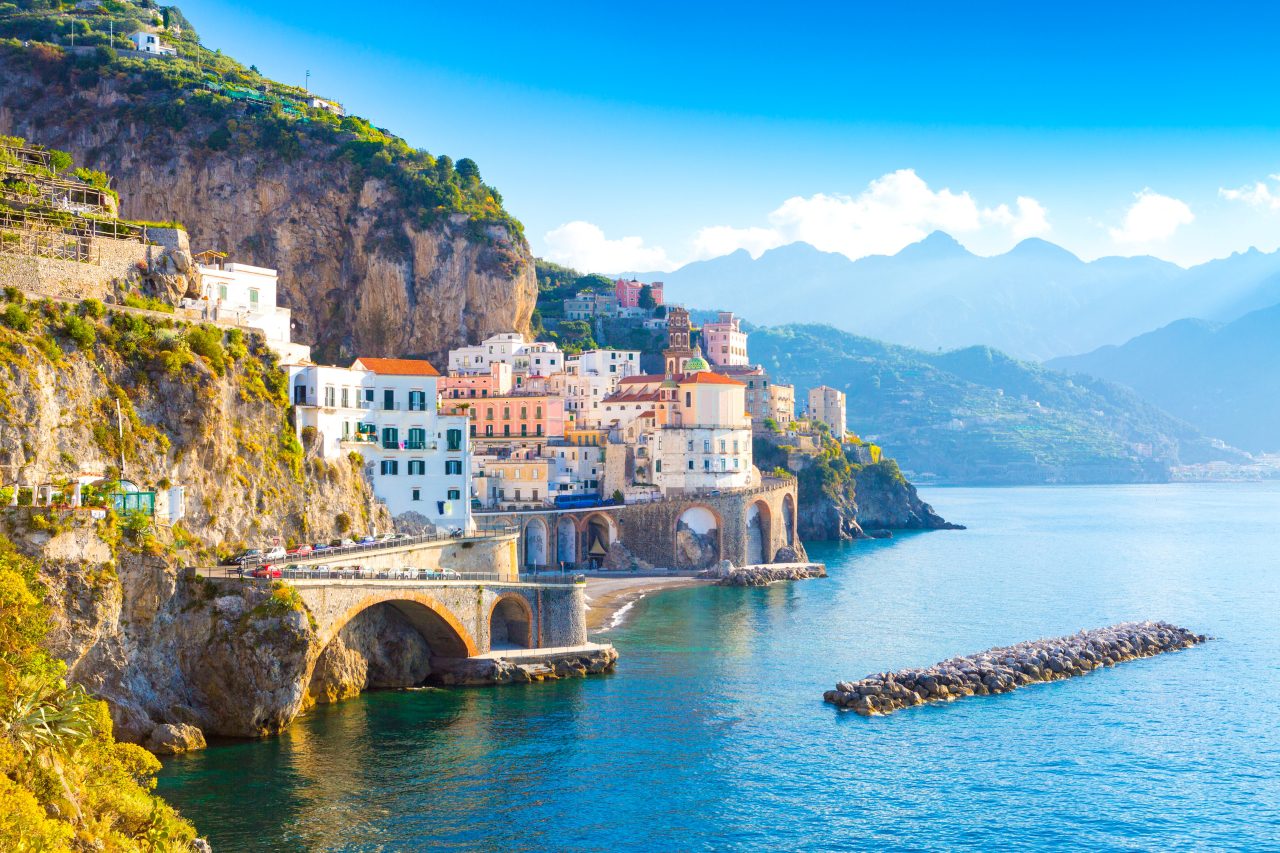
The Amalfi Coast looks almost too good to be true in photos. Pastel houses stack up steep cliffs, lemon trees hang over the road and the sea is a deep, ridiculous blue. I wasn’t sure the real thing could match it. Then I spent four nights here one autumn, and I understood the fuss. This stretch of southern Italy is a UNESCO World Heritage Site, and it runs for about 50 km along the southern side of the Sorrento Peninsula.
So is the Amalfi Coast worth visiting? Yes, as long as you go in with the right expectations. You get some of the best scenery in Europe, a string of villages that each feel different, gardens that hang over the water and food that tastes better than it has any right to. It’s not cheap, it’s not quiet in the busy months and getting around takes planning. But the views are worth the effort.
This guide covers the pros and cons of the Amalfi Coast, where to stay, and what to book. You’ll also find tips on when to go, how long you need, and getting around, so you can decide whether it suits your kind of trip.
In a Rush? Here Are Our Favourite Hotels in Amalfi Coast Italy
⭐️⭐️⭐️ Hotel Antiche Mura – Click here for rates & availability
⭐️⭐️ Hotel Villa Gabrisa – Click here for rates & availability
Pros of Visiting Amalfi Coast
1. Coastline Views
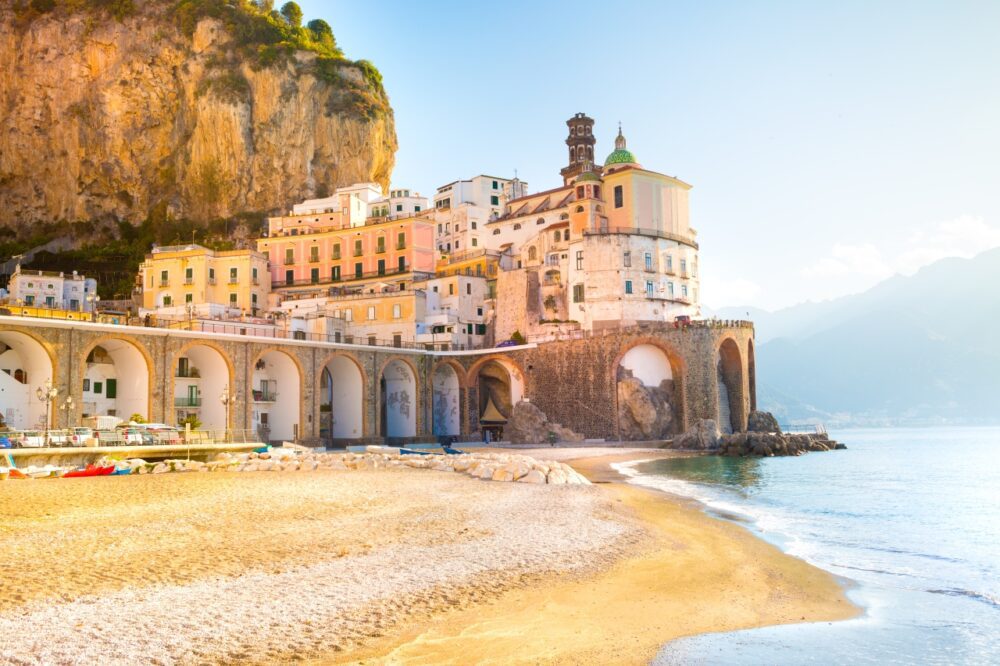
The coast road is the star here. The SS163 was cut into the cliffs in the 1840s, and it twists above the sea for mile after mile. Every bend opens up a new view of terraced lemon groves, tiny beaches and villages clinging to the rock. UNESCO listed the whole area in 1997, and it’s easy to see why. The mix of mountains, sea and human-made terraces is hard to find anywhere else. Even a short bus ride feels like a scenic tour.
You don’t need to drive it, and I’d say you shouldn’t. Take the bus from Sorrento towards Amalfi and grab a seat on the right-hand side, where the sea is. Or see the whole coast from the water on a boat. The Positano and Amalfi boat trip with transfer lasts about eight hours and includes prosecco and snacks on board, plus swim stops. The coast looks even better from below.
2. Positano
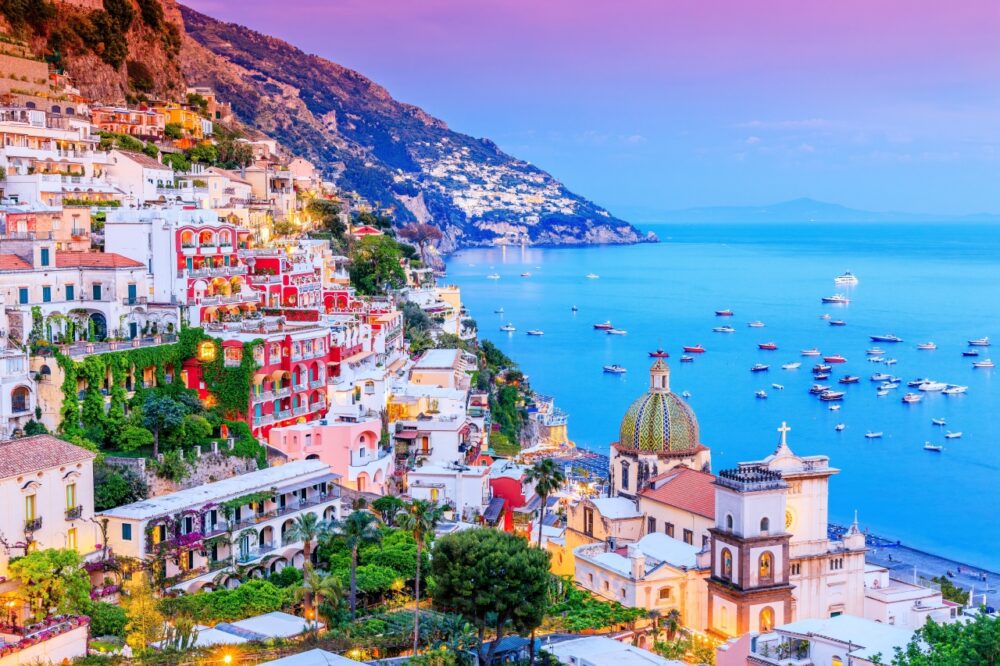
Positano is the classic town, and it earns the fame. Colourful houses tumble down to the water in stacked layers, and the dome of the Santa Maria Assunta church, covered in glazed tiles, sits right in the middle. The main beach, Spiaggia Grande, is pebbly and lined with umbrellas. Fornillo beach, a short walk west, is calmer and has a few simple beach restaurants. The lanes in between are full of linen shops, sandal makers and lemon-themed souvenirs!
Be ready for steps, and for prices. Almost everything in Positano is up or down a staircase, and a seafront coffee costs far more than it does in Sorrento. I came for a few hours and loved the wander, then went back to my base for dinner. The Amalfi Coast and Positano boat tour with snorkelling and drinks takes small groups of up to 12 and gives you the best view of the town from the water.
3. Amalfi Town
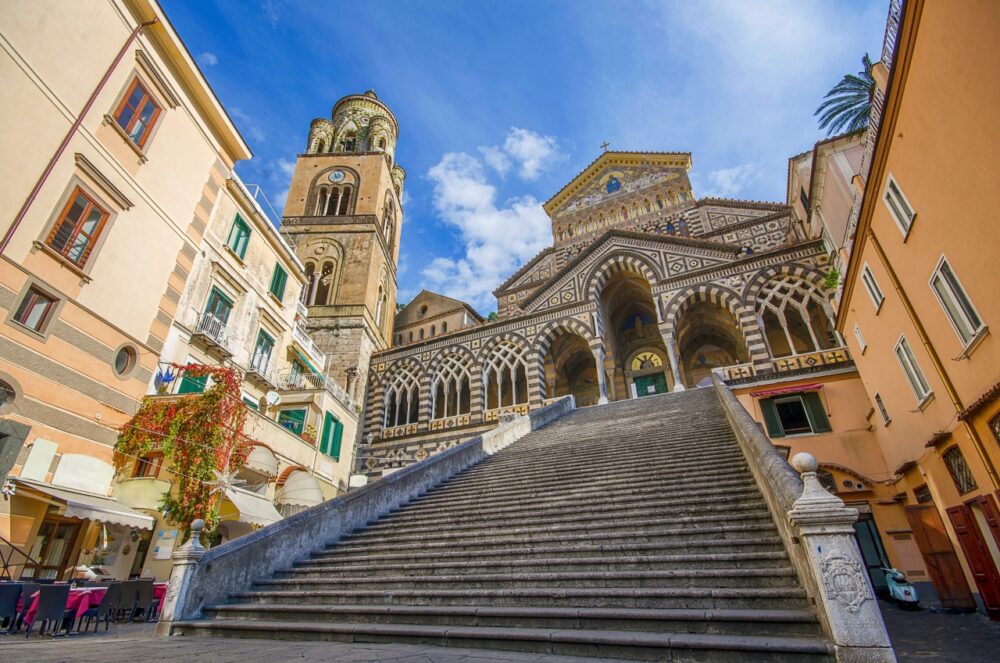
Amalfi is smaller than it sounds, but it was once a powerful maritime republic, and you can feel the history. The star is the Duomo di Sant’Andrea (with its striped black-and-white façade) Arab-Norman details and a golden mosaic gable. You climb a wide staircase to reach it, and inside the Cloister of Paradise has pale arches and palm trees. The bronze doors were cast in Constantinople in the 11th century. Try to go early, before the tour groups arrive, and you’ll have the square almost to yourself.
Behind the main square, the lanes climb into the valley, where paper was made for centuries. You can still visit an old paper mill. The town also has lemon gardens above the centre. The Amalfi Monumental Garden tour lasts one to two hours and ends with lemonade, lemon cake, and limoncello. Amalfi is also the easiest town to use as a hub, since buses and ferries all pass through.
4. Ravello Gardens
Ravello sits about 350 metres above the sea, and it feels like a different world from the busy coast. It’s calm, green and a little bit grand. The two big gardens are the reason to go. Villa Rufolo dates from the 13th century and has Moorish-style towers and flower terraces. Richard Wagner visited in 1880, and it inspired his garden scene in Parsifal. The views from the edge are among the best on the whole coast. The terraces are full of flowers, and the sea sits far below.
Villa Cimbrone is a short walk away and ends with the Terrace of Infinity, a row of marble busts above a drop to the sea. It’s the most famous view in Ravello. I’d give the town a few hours at least. The Amalfi Coast and Villa Rufolo tour with optional boat lasts about eight hours and fits Ravello into a day from Sorrento.
5. Path of the Gods
The Path of the Gods is the best walk on the coast. It runs from Bomerano, a village above Agerola, to Nocelle, high above Positano. The trail follows the cliff edge for around 7 km, and it takes three to four hours with photo stops. Most of it is flat or downhill. You look down on the sea, the Li Galli islands and, on a clear day, all the way to Capri!
From Nocelle you can take a shuttle or walk the stairs down to Positano, and there are more than a thousand steps, so be ready for tired legs. Wear proper shoes and carry water, since there’s little shade and no shops on the way. If you don’t want to work out the buses, the Path of the Gods hike from Agerola is a guided 4.5-hour walk with views of Capri, the Convent of San Domenico and the Gulf of Salerno.
6. Lemons and Local Food
Lemons are everywhere here. The local variety, the sfusato amalfitano, is big, knobbly, and sweet-smelling, and the groves climb the hillsides in wooden-framed terraces. You’ll find the fruit in limoncello, in granita and in delizia al limone, a sponge dome filled with lemon cream. I had at least one lemon dessert every day. For savoury, try scialatielli ai frutti di mare, a fat fresh pasta with seafood, and anything with anchovies from Cetara.
Food costs less when you step away from the main squares. A coffee at a bar counter costs around €1.50 to €2, and a pasta lunch in a small trattoria is often €15 to €20. For a real taste of the lemon terraces, walk them. The Path of the Lemons tour from Maiori takes 2.5 hours, follows the old stairs between the groves and includes tastings of local products. For something shorter, try the limoncello tour and tasting near Sorrento.
7. Sorrento as a Base
I based myself in Sorrento, and I’d do it again. It sits on the northern side of the peninsula, so it isn’t strictly on the Amalfi Coast, but it’s the easiest place to start. The town is flatter than the cliff villages, with a lively square in Piazza Tasso, narrow shopping lanes and clifftop terraces looking over the Bay of Naples. Rooms cost less than they do in Positano, and restaurants are plentiful. It’s easy to walk everywhere, which suits a trip with lots of early starts. Evenings are lively too.
The location is the real bonus. The Circumvesuviana train links Sorrento to Pompeii and Naples. Ferries leave the port for Capri, Positano and Amalfi. Buses run along the coast road. That means you can sleep in one place and see everything. The ferry ticket from Sorrento to Amalfi and Positano gives you a hydrofoil day with free time in each town.
8. Boat Trips
The best way to see the Amalfi Coast is from a boat. From the water, you see the full height of the cliffs, the hidden coves and the villages in a way the road never shows you. It was my favourite way to spend a day. Most tours pass the Li Galli islands, once owned by Rudolf Nureyev, and the Fjord of Furore, a narrow gorge with a tiny beach and a stone bridge high above. Many include a swim stop, with the sea clear enough to see the bottom. Bring a hat and sunscreen, as there’s little shade on deck!
The trips come in all sizes. Large boats are cheaper, while small-group boats let you stop in quieter spots. The Amalfi Coast boat tour with caves and drinks covers the Furore Fjord and the Lovers’ Arch, and leaves from Amalfi. For a short option from Sorrento, the coast cruise with limoncello tasting takes about an hour.
9. Capri
Capri is close enough to be part of the trip. The ferry from Sorrento takes around 25 minutes, so you can get there and back in a day without any stress. The island has two sides. Marina Grande and Capri town are busy and polished, with a famous square and a funicular. Anacapri, higher up, is calmer, with a chairlift to the top of Monte Solaro for views over the whole island. Book the first ferry out if you want the island to yourself for an hour.
The Blue Grotto is the big draw. You swap onto a small rowing boat and slip through a low opening into a cave where the water glows bright blue. It closes when the sea is rough, so don’t count on it. The Capri, Anacapri and Blue Grotto full-day trip from Sorrento lasts about eight hours and includes a guide. If you want to go it alone, book the Sorrento to Capri ferry.
10. Day Trips to Pompeii and Vesuvius
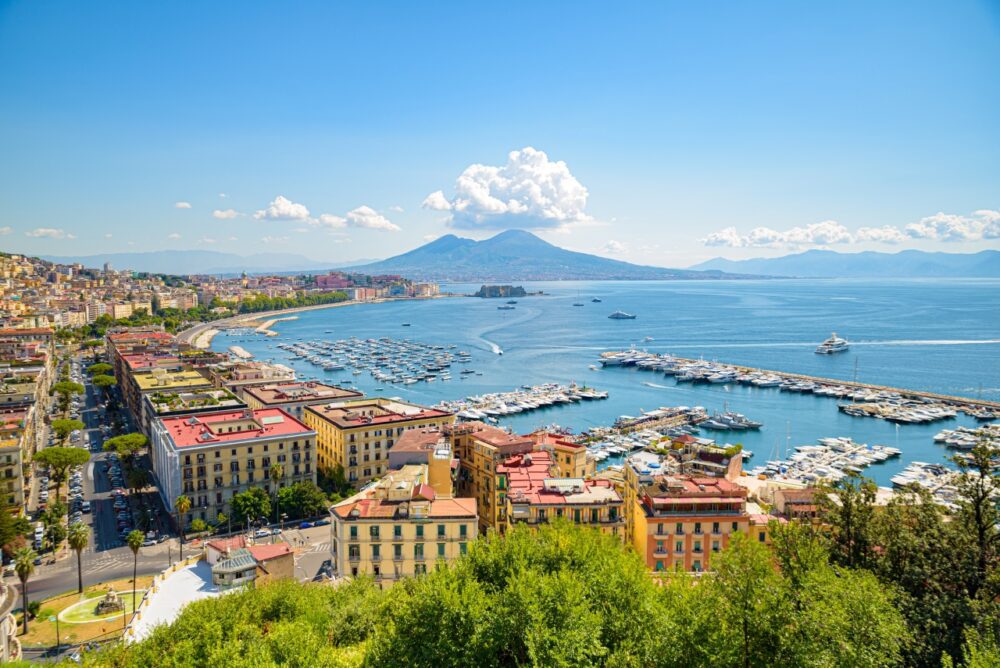
Pompeii and Mount Vesuvius are an easy add-on, especially from Sorrento. The Roman city was buried by ash in 79 AD, and walking its streets is one of the most striking things you can do in Italy. You see paved roads with chariot ruts, bakeries, bathhouses and frescoes that still have their colour. The official Pompeii site is huge, so give it at least three hours and wear a hat. Bring water, as there’s very little shade on site.
Vesuvius sits right behind, and a short climb takes you to the crater rim for views across the bay. The two fit well in one day. The Pompeii and Vesuvius guided tour with lunch runs about nine hours and includes pizza on the slopes of the volcano. A guide helps a lot at Pompeii, because the ruins make more sense once someone explains what you’re looking at. Closed shoes help on the uneven stones.
Cons of Visiting Amalfi Coast
1. High Prices
The Amalfi Coast is one of the most expensive parts of Italy. Positano is the worst. Hotel rooms there cost far more than in nearby towns, and a seafront meal with drinks adds up fast. Many restaurants add a cover charge (coperto) of a few euros per person, and sunbed rental on the beaches can run to €20 or more for the day. Taxis and private drivers are pricey too!
You can keep costs down with a few choices. Stay in Sorrento or Praiano rather than Positano, where you’ll get more for your money, like Hotel Sorrento City. Eat a block or two back from the waterfront, and grab picnic food from a local shop. Use buses and ferries instead of taxis. I found the coast still felt worth the money, because the best parts, the views and the walks, are free.
2. Slow Roads and Crowded Buses
The coast road is narrow, and it carries buses, scooters, taxis and tour coaches in both directions. Traffic builds up fast, and a trip that looks short on the map can take an hour or more. The public buses get packed, with passengers standing in the aisle on the bends. Drivers sometimes skip stops when a bus is full. If you get motion sickness, the endless hairpins can be rough.
Plan around it. Travel early in the day, and book your seat on the right-hand side for the views. Use the water where you can, since ferries skip the traffic entirely. The ferry from Sorrento to Amalfi and Positano is a calm alternative. I still took the bus for the experience, and the views made up for the squeeze.
3. Steps Everywhere
The towns were built on cliffs, and that means stairs. Positano has hundreds of steps between the beach and the upper streets, Ravello and Amalfi have plenty more, and many hotels are reached only on foot. Dragging a big suitcase over cobbles and up staircases is miserable. Some people find it hard going, especially anyone with limited mobility or a stroller. The paths between villages, like the Path of the Gods, add even more.
Pack light and bring a soft bag if you can. Pick a hotel with a lift, which is common in Sorrento, or one close to a bus stop. If you want to skip the heavy lifting, a door-to-door private transfer from Sorrento to Positano or Amalfi drops you as close as the road allows. The effort is part of the experience, and it keeps you fit.
4. Crowds at the Big Names
Positano, Amalfi and Ravello draw huge numbers of day-trippers, especially around midday. Tour buses and boats arrive at the same time, and the narrow lanes fill up fast. Photo spots get queues, restaurants around the main squares feel rushed and the beaches are packed shoulder to shoulder. It can feel like you’re part of a conveyor belt rather than a quiet seaside escape!
Beat it by changing your timing. Visit the popular towns early in the morning or late in the afternoon, when the day groups leave. Spend midday at a quieter place like Praiano, or on a boat. A small-group option such as the Positano, Amalfi and Ravello tour in a Mercedes van takes a maximum of eight people and keeps things relaxed. The crowds are real, but the scenery still wins.
5. Seasonal Closures
The coast shuts down for part of the year. In the off-season, ferries run less often or stop on some routes, and many hotels, beach clubs and restaurants close until spring. Rain can also cancel boat trips and make trails slippery. If you plan a trip around ferry hopping, you may find the timetable thinner than you expected, and that catches many people out.
It’s easy to sort. Check the latest times on the Travelmar site or the ferry operators before you go, and keep a bus as your backup. Sorrento stays open all year, so it’s the safest base outside the main months. I had a few closed doors and reduced ferries, and it still worked well. You can always switch a boat day for a bus day or a long lunch.
Where to Stay
Sorrento: I stayed in Sorrento for four nights, and it was a smart base. Piazza Tasso is the heart of town, the Circumvesuviana station is a short walk away and the port has ferries to Capri, Positano and Amalfi. It’s also the best value on this list. The downside is that you need a bus or boat to reach the Amalfi Coast proper. AE Home|Studio is a guest house on Via San Francesco with a lift, air conditioning and a tour desk. Hotel Antiche Mura is a 4-star hotel by Piazza Tasso with an outdoor pool, a garden and soundproof rooms. Hotel Sorrento City is a 3-star hotel on Corso Italia with a garden, a terrace and a lift.
Positano: Positano is the dream stay, with views from almost every room and the beach below. It’s also the priciest area, and the results I saw were all upscale. Expect lots of stairs, and book a place with a lift if you can. Hotel Villa Gabrisa is a 4-star hotel on Via Pasitea with a restaurant, a bar and a terrace. Villa Santa Chiara Positano Suites is a 4-star property with a garden, a terrace and soundproof rooms. La Maliosa Positano is a B&B with a garden, a bar and a terrace.
Praiano: Praiano sits between Positano and Amalfi, and it’s far quieter than both. It has small beaches, sunset views and a local feel. The downside is that you rely on buses or boats, and there are fewer restaurants. Hotel Margherita is a 4-star hotel with an outdoor pool, a restaurant and a terrace. MIja Sunset Home is a beachfront apartment with a bar and a terrace. Villa Marea is a holiday home on Via Umberto I with an outdoor pool and a hot tub!
Amalfi: Amalfi is the most practical stop on the coast. Buses and ferries pass through, and you can walk from the harbour to the Duomo in minutes. The downside is the daytime crowds, which thin out after the last boats leave. Hotel La Ninfa is a 3-star beachfront hotel with a bar and a terrace. Hotel Lidomare is a 3-star hotel on Largo Piccolomini with a 24-hour front desk and soundproof rooms. La Bambagina is a guest house with a concierge and a tour desk.
Ravello: Ravello is the place to stay if you want calm. It sits high above the coast, and the evenings are peaceful once the day people leave. The downside is the winding bus ride to the beach, which takes about 25 minutes. Sea View Ravello is a B&B with an outdoor pool and a terrace. Hotel Parsifal is a 3-star hotel in a former convent from 1288, with a garden and a terrace. Hotel Bonadies is a 4-star hotel on Piazza Fontana Moresca with a pool, a restaurant and a terrace.
Best Things to Do
- Positano and Amalfi Boat Trip: This eight-hour trip leaves from Sorrento and includes transfers. You get prosecco and snacks on board, swim stops and limoncello.
- Small-Group Boat Tour with Snorkelling: A group of up to 12 sails along the coast with time for snorkelling and drinks. It can leave from Amalfi, Positano, Sorrento or Salerno.
- Boat Tour with Caves and Drinks: This one departs from Amalfi and visits the Furore Fjord and the Lovers’ Arch. There’s time to swim and drinks on board.
- Sorrento Coast Cruise with Limoncello: A short one-hour cruise from Sorrento with a swim and a limoncello tasting. It’s a good pick if you only have a free evening.
- Capri, Anacapri and Blue Grotto: An eight-hour guided day trip from Sorrento. You see both Capri and Anacapri, with the Blue Grotto as the highlight.
- Positano, Amalfi and Ravello by Van: A small-group tour of up to eight people in a Mercedes van. It covers all three towns in about eight hours, with free time in each.
- Villa Rufolo and Ravello: This eight-hour day from Sorrento takes in the coast and Villa Rufolo, with an optional boat ride. It’s the easiest way to see the Ravello gardens.
- Ferry from Sorrento to Amalfi and Positano: A hydrofoil ticket with free time in each town. You plan your own day, which suits independent travellers.
- Path of the Gods Hike: A 4.5-hour guided hike from Bomerano to Nocelle. The views cover Capri, the Convent of San Domenico and the Gulf of Salerno.
- Path of the Lemons Walk: A 2.5-hour guided walk through the lemon terraces near Maiori. You learn how the lemons are grown and taste local products.
- Vineyard, Wine Cellar and Lemon Grove: A two-hour guided tour with a tasting of wine, olive oil and limoncello. It ends with a local aperitivo.
- Pompeii and Vesuvius with Lunch: A guided day from Sorrento that covers the Pompeii ruins and the Vesuvius crater. Lunch is pizza on the volcano’s slopes.
Best Time to Visit
Autumn: Autumn is my pick for the Amalfi Coast. The sea stays warm enough for a swim early in the season, the days are still sunny and the heat of summer has gone. Crowds thin out, prices drop and the light is beautiful on the cliffs. Rain showers get more common as the weeks go on, and ferries and some restaurants start to wind down towards the end.
Spring: Spring is a great second choice. The hillsides turn green, flowers bloom and temperatures are comfortable for walking, which makes it ideal for the Path of the Gods. Ferries and hotels reopen around Easter, which is pretty busy. The sea is still cold, so swimming isn’t really on the table.
Summer: Summer is the classic beach season. It’s hot, often above 30°C, and the sea is at its warmest, which is perfect for boat days. July and August are the busiest months, with packed roads, full buses and the highest prices. Book hotels and boats well ahead!
Winter: Winter is pretty quiet and cheap, but a lot is closed. Many hotels, beach clubs and restaurants shut, and ferries run at a minimum. Rain and wind are common. Sorrento stays open and feels festive in December, so it works as a base if you want to visit outside the main months.
How Long to Spend
1-2 Days: With one or two days, pick a single base and see the highlights. Take a boat or a small-group tour to see Positano and Amalfi. The Positano, Amalfi and Ravello tour fits the main towns into one day. It’s rushed, but you’ll see the best of the coast.
3-4 Days: Four nights felt about right for me. I spent one day in Sorrento, one on Capri, one on the coast by boat and ferry and one at Pompeii. You could swap in the Path of the Gods hike or a lemon walk for a slower day. It’s enough time to enjoy the area without constant rushing.
5-7 Days: A week lets you slow down and split your stay between two bases, for example Sorrento and Praiano or Amalfi. Add Ravello, a beach day and a cooking or tasting experience. The Pompeii and Vesuvius tour fits nicely on a day when the weather turns. If you’re building a longer Italy trip around the coast, give Florence, Milan and Venice their own city stays, or plan a separate leg in Sicily.
Getting Around
On foot: Most villages are small enough to walk, but they’re steep. Expect long staircases, narrow lanes, and cobbles. Comfortable shoes matter more than anything else you pack.
Buses: The SITA Sud bus is the main public link, and it runs along the coast road between Sorrento, Positano, Amalfi and Salerno, with a separate line up to Ravello. Check routes and times on the SITA Sud site. Buy tickets at a tabacchi shop or newsstand before you board, since they cost more on the bus. Buses are slow and crowded, so leave extra time!
By boat: Ferries link Sorrento, Positano, Amalfi, Salerno and Capri. Travelmar runs the Salerno to Amalfi and Positano routes, and the Positano ferry timetable lists boats from the main operators. The ferry is calmer than the bus, but check times before you rely on it. You can also book the Naples to Positano ferry or the Sorrento to Capri ferry online.
Taxis and rideshare: Taxis are available at ranks and through your hotel, but they’re expensive on this coast. Agree the price first. For longer trips, a private driver is often better value for a group. A private transfer from Sorrento to Positano or Amalfi is easy to book.
By train: There’s no train along the coast itself. The Circumvesuviana runs between Naples and Sorrento in about an hour, with stops at Ercolano and Pompeii. Trenitalia serves Salerno for connections to Rome and the south.
To and from the airport: Naples is the closest airport. The simplest option to Sorrento is a shuttle, and the Naples Airport shuttle to the Sorrento Coast takes between 75 minutes and 1.5 hours. For the coast, try a private transfer to Positano or Amalfi. Or take the Alibus into Naples and continue by train. A private transfer to Sorrento is the easiest with bags. For the way back, book a Sorrento to Naples transfer in advance.
Final Thoughts: Is Amalfi Coast Worth Visiting?
For me, yes. The Amalfi Coast is one of those places that lives up to the pictures. The scenery is dramatic, the villages are full of character and the food is excellent. Boat days, garden walks and a hike along the Path of the Gods give you a mix of relaxing and active days. Add Capri and Pompeii, and four nights fill up quickly.
It isn’t a perfect trip. Prices are high, the buses are crowded and the steps will test your legs. But a few smart choices fix most of it. Stay somewhere sensible like Sorrento or Praiano, travel early, use ferries when you can and keep your plans loose. I still came away glad I had booked the trip, and I’d happily go back!
If you love sea views, good food and the odd long walk, the Amalfi Coast is a great option. If you want cheap, quiet, and flat, look elsewhere. For everyone else, it’s a trip that justifies the planning and the splurge. Just book the boats, pack light and bring good shoes.