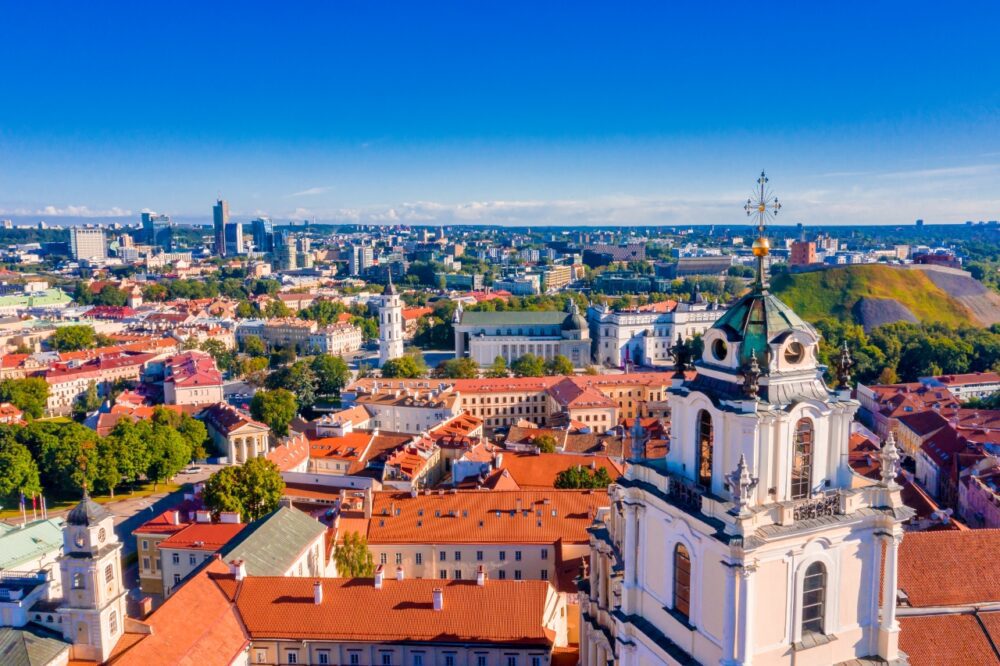
Is Klaipeda Worth Visiting? Honest Pros and Cons (2026)

The wind found me before anything else in Klaipeda. I dropped my bags, stepped onto Theatre Square one spring and had to zip my jacket up to my chin while the smell of salt drifted in from the harbour. Over the next two days, I crossed to a pine-covered sandbar by ferry, watched dolphins perform and tried beer brewed a few streets from where I was sleeping.
Klaipeda is Lithuania‘s third-largest city and its only seaport. It was known as Memel for centuries, and it spent much of that time under Prussian and German rule. That history shows in the Old Town, where timber-framed houses, old warehouses and a boat-filled river feel closer to northern Germany than to the Baltics. Klaipeda is worth visiting if you like sea air, quirky sculptures and relaxed museums. It’s also the perfect gateway to the Curonian Spit.
This guide covers the pros and cons of Klaipeda, where to stay, and what to book. You’ll also find tips on when to go, how long you need, and getting around, so you can decide whether it suits your kind of trip.
In a Rush? Here Are Our Favourite Hotels in Klaipeda Lithuania
⭐️⭐️⭐️ Hotel Reja – Click here for rates & availability
⭐️⭐️ VICTORIA Hotel Klaipėda – Click here for rates & availability
Pros of Visiting Klaipeda
1. Old Town and Theatre Square

Klaipeda’s Old Town is small, but it’s the prettiest part of the city. I started in Theatre Square, where the Drama Theatre faces the Ännchen von Tharau fountain. The statue shows a barefoot girl from a 17th-century love poem by Simon Dach, and locals treat her as the symbol of the city. The original disappeared during the war, and the city unveiled a recreation in 1989. Timber-framed houses and old warehouses line the nearby lanes, especially around Aukštoji and Didžioji Vandens streets.
Two days gave me plenty of time to walk every lane. I’d go early, before the cruise groups arrive, and then join a guide for the backstory. The 1.5-hour Memel Old Town tour is an interactive walk for groups of up to 30 people, and it hunts for the “lost city” of Memel. I came back after dark, and the squares were almost empty.
2. Castle Museum and Memel History
Klaipeda began as a Teutonic Order stronghold called Memelburg, first mentioned in 1252. Not much of the castle survives, but the Castle Museum stands on the site at Priešpilio g. 2. Its Kurtina exhibition sits inside the restored northern wall and displays around 5,000 finds from the 13th to 18th centuries. You can also walk through two original posterns and see Museum 39/45, which covers the Second World War. A ticket costs €6. The museum is open from 10:00 to 18:00, Tuesday to Saturday from mid-September to mid-June and Wednesday to Sunday over the summer!
Two more museums sit nearby. The History Museum of Lithuania Minor (€4) covers the culture of the old Prussian-Lithuanian region. The Blacksmith’s Museum (€3) fills a real blacksmith’s workshop, with a forge, bellows and hand-forged weathervanes. A combined ticket for all three costs €9 and saves you €4. I spent about three hours across them. All three are closed on Mondays.
3. Ferry to Smiltynė

The ferry to Smiltynė is one of my favourite short journeys in Lithuania. Pedestrians and cyclists board at the Old Ferry Terminal on E. Galvanausko bulvaras, close to where the Danė meets the Curonian Lagoon. Boats run every 30 minutes in the warmer months and hourly in the colder season. The crossing takes only a few minutes. I stood on deck with the wind in my face and watched cranes and container ships slide past.
Smiltynė is part of Klaipeda, but it feels like another world. Pine forest paths lead to a wide, natural beach with Blue Flag status, clean sand, changing cabins, and toilets. Kitesurfers gather here on windy days. From the Spit, local buses continue to Juodkrante (€3) and Nida (€6), so the ferry doubles as your first step onto the Curonian Spit. I walked the shoreline for an hour and still made the next boat back.
4. Lithuanian Sea Museum and Dolphinarium

The Lithuanian Sea Museum and Dolphinarium is the city’s top family attraction, and adults enjoy it too. The aquarium has 24 sea tanks and a clear tunnel that lets you walk under the water. You’ll also meet penguins and sea lions. The dolphin and sea lion show lasts 35 minutes, with performances at 12:00 and 15:00 outside the summer months. I spent most of a morning here and didn’t feel rushed.
Check the opening days before you go. From October to March the museum opens Friday to Sunday. From April to September it opens Wednesday to Sunday, and in June, July and August it adds Tuesdays. Entry to the aquarium and museum costs €10 in the colder months and €14 from May to September. A dolphin show costs €12 or €18. From the Spit terminal it’s a 1.6 km walk, or you can ride a paid mini train.
5. Melnragė and Giruliai Beaches

Klaipeda has a proper city-beach scene. Melnragė is the closest, and its sandy beach ends at the Northern Breakwater. I walked out to watch ships pass and found the quirky “A Walk with a Fish” sculpture on the way. Cafés, lifeguards, changing cabins and a surf school sit just behind the sand. The water was far too cold for me, but plenty of people were kitesurfing, and I happily watched them with a coffee in hand!
Further north, Giruliai is calmer and great for families. A paved path crosses the dunes, and a wooden viewing platform is the best spot for sunset. The remains of the Memel-Nord battery and the Dutchman’s Cap landmark are nearby. You can reach the beach by bus, train, or bike. A trail starting near Melnragė runs all the way to Palanga, which makes a beautiful ride on a calm day.
6. Danė River and the Meridianas
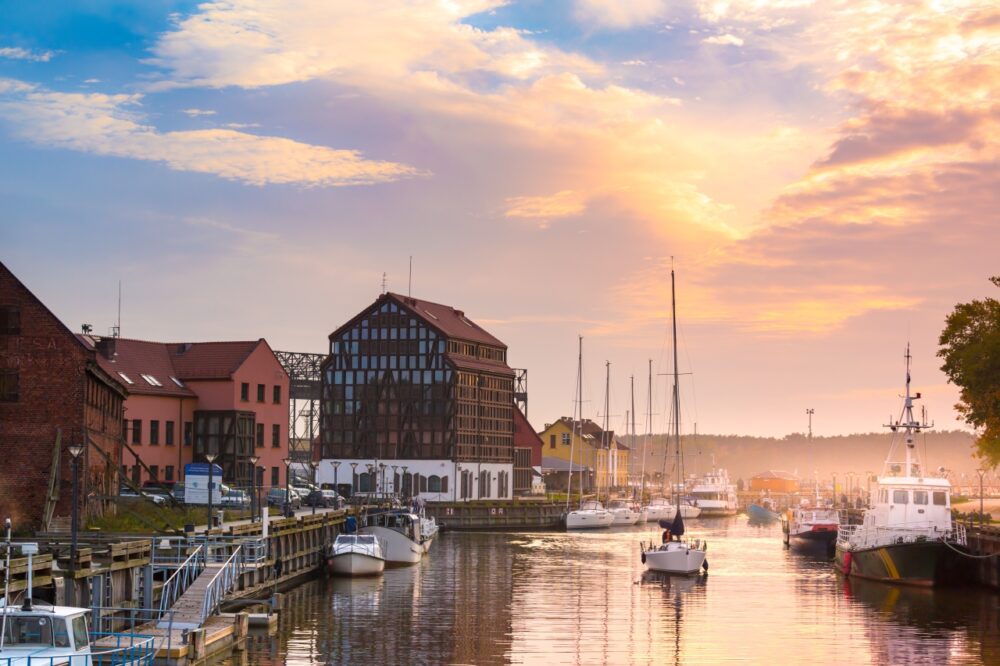
The Danė River runs through the heart of Klaipeda, and its banks are made for slow walks. I followed the left-bank promenade, where bollards with ship emblems are set into the pavement, each one a memorial to a maritime voyage. The old port warehouses on Žvejų g. still stand along the water. The star is the Meridianas, a barquentine built in Finland in 1948 as a training ship. It was restored in 2012 and is now a restaurant, with a glass floor in the main hall that shows the old timbers below.
To see the city from the water, try the 2-hour handcrafted canoe tour. It’s a small-group paddle past the industrial district, the old Memel fortifications and the Meridianas, and pickup is available. The ship is at its best around dusk, when the masts catch the last light. The restaurant is open from 11:00 to 22:00.
7. Sculptures and Sculpture Park
Klaipeda loves its sculptures. In the Old Town, I went hunting for the Old Town Cat, the Magic Mouse and the Black Ghost, and it turned into a fun game. Near the corner of Manto g. and Liepų g., metal scale models show how the old city looked. Every statue has a story, and finding them takes you down lanes you’d otherwise skip. It’s a great way to explore on foot without a plan.
For the big collection, head to the Sculpture Park. It covers about 12 hectares and holds 116 works by 67 Lithuanian artists, on display since 1977. The site was the city’s main cemetery from 1820, so you’ll also find memorials, a monument to people who never came back from the sea and a 1925 obelisk that marked the old border between Lithuania Minor and Lithuania Major. I spent an hour wandering the paths.
8. Local Food and Craft Beer
Klaipeda is a port, so fish is the star of many menus. Smoked fish, herring and fish soup all turn up, and Lithuanian classics like cepelinai are everywhere too. A main course usually costs around €10 to €16. I ate dinner on the Meridianas one night, and the setting made the meal. For a casual evening, Hofas is a cultural venue in a former industrial space, with food, drinks, and events, and it’s a good place to ask locals where to go next!
The city also has a good beer scene. The 1.5-hour craft beer tasting takes place in a working brewery in the Old Town. The brewmaster hosts you personally and pours six beers that you won’t find anywhere else. It’s a relaxed, tasty way to end a day of walking, and it’s wheelchair accessible. I’d book it for the evening, then follow it with dinner nearby.
9. Sea Festival and Jazz
Klaipeda knows how to throw a party. The Sea Festival takes place on the last weekend of July, and it has run since 1934. Expect a colourful parade, concerts, craft fairs and international sailing races, all celebrating the city’s maritime traditions. Admission is free, and the streets get packed, so book your hotel early. The sailing races and tall ships also put the whole harbour on show.
Music fans should look at the Klaipėda Castle Jazz Festival. It takes place in late June, with concerts in Theatre Square, the conservatoire and other venues around the city, plus a few events in Nida. The festival’s motto is “Good music for good people”, and it mixes jazz with world music and lighter styles. Together, the two festivals give Klaipeda a lively summer calendar. Outside those weekends, the city stays calm and uncrowded, which suits many travellers just as well.
10. Day Trips from Klaipeda

Klaipeda is a great base for day trips. The Curonian Spit is a UNESCO World Heritage site, and it’s the star. You can visit Juodkrante’s Hill of Witches, with its oak sculptures, and Nida, home to the Parnidis Dune and the Thomas Mann Memorial Museum. The 8.5-hour Curonian Spit group tour covers the sand dunes and Nida in English, and it saves you the bus planning.
Palanga is the other classic trip. This resort town sits about 25 km north, and it has a long pier, a botanical park and the Amber Museum. The 6-hour Palanga and Amber Museum tour is a private guided day that visits the Botanical Park and the Church of the Assumption of the Virgin Mary. You can also cycle there along the coastal trail. Whichever trip you choose, start early, because the days are long and there’s plenty to see. Both destinations are easy to reach from the city, so you don’t need to change hotels.
Cons of Visiting Klaipeda
1. Windy, Unpredictable Weather
The Baltic sets the mood here, and it isn’t always kind. Even on a sunny day, the wind can feel sharp, and the weather changes fast. Summer rarely gets truly hot, and the sea stays cold for most of the year. Winter days are short, grey, and blustery, especially on the breakwater and the beaches, where there’s nothing to block the gusts. Rain can also arrive without much warning!
Pack layers and a windproof jacket, whatever the season. On rainy days, switch to indoor stops like the Castle Museum, the Sea Museum and a cosy café. The 40-minute VR experience “A Long Goodbye” is another dry option for small groups. The wind is part of the city’s character, and Klaipeda is still worth it with a decent coat.
2. Short Museum Opening Days
Many sights have limited days. The Castle Museum, the History Museum of Lithuania Minor and the Blacksmith’s Museum are closed on Mondays. They also close on Sundays outside summer and on Tuesdays in summer. The Sea Museum and Dolphinarium is closed on Mondays too, and for most of the colder season it opens only from Friday to Sunday.
Check the days before you book flights, and plan your museums for the middle of the week. Save Mondays for the outdoor sights. The Old Town lanes, the Danė promenade, the beaches and the Sculpture Park are always there. A guided walk like the Memel Old Town tour also fills a gap nicely, since it runs on days when the museums are shut. It’s a small hassle for what Klaipeda offers.
3. A Busy Working Port
Klaipeda is a real port city, not a polished resort town. Cranes, container ships and industrial areas sit close to the Old Town, and some riverside stretches feel grey. Cruise groups also arrive in the warmer months and fill the lanes around Theatre Square for a few hours, so the busiest streets can feel crowded.
I found the port part of the charm, especially from the water. The canoe tour shows the working side of the city up close, along with the old fortifications. Visit the Old Town early or in the evening to avoid the cruise crowds. Smiltynė and the beaches are a short trip away if you want a break from the industrial views. Klaipeda is still worth it, even with a few cranes in the background.
4. Seasonal Ferries and Beach Services
Smiltynė and the beaches work best in the warmer months. The ferry runs hourly in the colder season instead of every 30 minutes. Some beach cafés and seasonal services close for winter, and the Sea Museum opens fewer days. A trip to the Spit can take longer than you expect if you miss a boat, and the wind can make the wait feel even longer at the exposed terminal!
Check the timetable before you set off, and give yourself plenty of time to get back. In the colder months, bring snacks and a flask, and take the ferry earlier in the day. A guided option like the Curonian Spit private tour includes pickup and handles the transport. It costs more, but it removes the timetable stress.
5. Long Trip From Vilnius
Klaipeda sits on the far western edge of Lithuania, a long way from Vilnius. Getting here takes several hours by road or rail, so it doesn’t work as a quick add-on to a capital city break. If you only have a weekend in Lithuania, you’ll need to choose between the coast and the rest of the country, because the distances add up fast.
The trip is easier if you plan for it. Buses and trains link the city with Vilnius and Kaunas, and you can fly into Palanga Airport nearby. If you’re short on time, the 14-hour Curonian Spit tour from Vilnius or Kaunas gives you a taste of the coast in a single day. For a proper visit, give it at least two nights. It’s worth the journey.
Where to Stay
Old Town: I stayed in the Old Town for both nights, and I’d do it again. Theatre Square, the Danė promenade and the Castle Museum were all a few minutes away. The downsides are cobbled streets for luggage, fewer big hotels and some weekend noise from the bars. Old Town Hotel Bohema is a budget-friendly 3-star on Galinio Pylimo g. with a bar, a lift and soundproof rooms. Old Mill Hotel is a mid-range 3-star on Žvejų g. with a restaurant, a bar and a 24-hour front desk. Hotel Reja is an upscale 4-star on Theatre Square with a restaurant, a terrace and soundproof rooms.
City Centre: The area north of the Danė, around Liepų g., has wider streets, shops and everyday restaurants, and the Old Town is a short walk across the river. It feels less historic after dark. Karoso rezidencija is a budget-friendly apartment hotel with a 24-hour front desk, private parking and family rooms. Dangė Hotel is a mid-range 3-star on Liepų g. with a sauna, a hot tub and soundproof rooms. VICTORIA Hotel Klaipėda is an upscale 4-star with an indoor pool, a spa and wellness centre and a restaurant.
Port and Old Ferry Terminal: The streets near the harbour put you close to the Smiltynė ferry, which is handy for early starts. The Old Town is a 10 to 15 minute walk away. It’s quiet in the evenings, with fewer cafés and more industrial views. 1912 Bed & Breakfast is a budget-friendly stay on Naujoji Uosto g. with a shared kitchen and parking. Dunetton is a mid-range 4-star on Jūros g. with a sauna, free parking and soundproof rooms. KURPIAI Apartments is a mid-range apartment hotel on J. Janonio g. with free parking and soundproof rooms!
Near the Bus and Train Stations: The streets around Priestočio g. and Butkų Juzės g. suit travellers arriving by public transport, since both stations are about a 20-minute walk from the Old Town. Prices are lower, and parking is easy. It’s the least charming area, and the streets feel plain at night. KUBU namai is a budget-friendly guest house on Vilties g. with a sauna, a hot tub and free parking. Red Brick Apartments is a budget-friendly apartment on Priestočio g. with a garden and free parking. Da Home Urban Hotel is a mid-range guest house on Butkų Juzės g. with air conditioning, a shared kitchen and self check-in.
Melnragė and Giruliai: If you want beach time, the northern districts have sand and sea air on your doorstep. Melnragė is about 4 km from the Old Town, and the beaches are great for sunsets and long walks. The downsides are the distance and a quiet feel outside summer. Surf House Dreamers Coast is a budget-friendly beachfront B&B on Nėgių g. with water sports on site. Tako Baras is a mid-range beachfront hotel on Slakių g. with a restaurant, a bar and free parking. Relax Baltic is an upscale beachfront holiday home on Molo g. with a sauna, a hot tub and a terrace.
Best Things to Do
These are the tours and experiences I’d put on a Klaipeda list.
- Memel Old Town tour: A 1.5-hour interactive walk for up to 30 people. Your guide searches for the “lost city” of Memel and shares stories of its history and daily life.
- Handcrafted canoe tour: A 2-hour small-group paddle along the Danė. You pass the industrial district, the old Memel fortifications and the Meridianas, and pickup is available.
- Craft beer tasting: A 1.5-hour session in a working Old Town brewery. The brewmaster hosts, and you taste six beers brewed on site.
- Curonian Spit private tour: A private full-day trip from Klaipeda with pickup. You see the oak sculptures on Witch Mountain in Juodkrante and visit the Thomas Mann Memorial Museum in Nida.
- Amber hunting tour: An 8-hour private tour along the Spit’s Baltic shore. You learn how amber is found, then search for a piece to take home.
- Palanga and Amber Museum tour: A 6-hour private guided trip to Palanga. You visit the Amber Museum, the Botanical Park and the Church of the Assumption of the Virgin Mary.
- Curonian Lagoon yacht tour: A private yacht cruise for up to 8 people. You sail across the lagoon with views of the Spit and the Klaipeda skyline, and a bottle of champagne is included.
- VR experience “A Long Goodbye”: A 40-minute virtual reality story about a 72-year-old pianist named Ida and her husband. It’s a good indoor option on a wet afternoon.
- Lithuanian Sea Museum and Dolphinarium: The aquarium, the underwater tunnel and the dolphin show on the Spit. Allow half a day with the ferry.
- Castle Museum: The story of Memelburg, with an archaeological exhibition and a combined ticket for two more museums nearby.
- Smiltynė beach: A Blue Flag beach reached by a short ferry hop, with pine forest behind it.
- Sculpture Park: An open-air gallery of 116 sculptures by 67 Lithuanian artists, perfect for an hour’s wander.
Best Time to Visit
Spring: I visited in spring, and it suited me well. The Old Town was quiet, I never queued for anything and the museums were open Tuesday to Saturday. The wind was cool, and the sea was far too cold for swimming, but the walks along the promenade and the Northern Breakwater were beautiful. The Sea Museum opens Wednesday to Sunday in April and May. Pack a windproof jacket and layers.
Summer: Summer is the best time for beaches. Temperatures usually hover around 20 to 22°C, the ferry runs every 30 minutes and the Sea Museum opens more days. The Klaipėda Castle Jazz Festival arrives in late June, and the Sea Festival fills the city on the last weekend of July. It’s also the busiest time, and hotels cost more!
Autumn: Autumn is calm and cooler, with fewer people. September is still pleasant for the Old Town, the Danė promenade and Smiltynė, and the Sea Museum keeps its Wednesday to Sunday schedule. As the weather turns wet and windy, the ferry slows to hourly.
Winter: Winter is cold, dark, and blustery. The Sea Museum opens only from Friday to Sunday, except from 16 to 31 December (when it opens Wednesday to Sunday). Hotels are cheaper, and the Old Town is peaceful. Bring a warm coat and plan indoor stops.
How Long to Spend
1-2 Days: Two days was what I did, and it covers the highlights. I spent the first day in the Old Town, with a walk along the Danė, a visit to the Castle Museum and dinner on the Meridianas. On the second day I took the ferry to Smiltynė, saw the Sea Museum and Dolphinarium and walked the beach. A guided walk like the Memel Old Town tour is a quick way to get your bearings.
3-4 Days: This is the ideal length, and it’s what I’d do next time. You can add a full day on the Curonian Spit with Nida and Juodkrante, a trip to Palanga and an evening at Giruliai for the sunset. The Curonian Spit private tour handles the transport for the Spit day, and you’ll still have time for a slow dinner by the river.
5-7 Days: With a week, Klaipeda works as a base for the whole Lithuanian coast. You can add the amber hunting tour, a yacht trip, the Sculpture Park and a cycle ride along the trail to Palanga. Save one slow day for the beach and a long lunch.
Getting Around
On foot: The Old Town, Theatre Square, the Danė promenade and the castle area are all within a 15-minute walk of each other. The terrain is flat, which makes walking easy. I walked almost everywhere, and the cobbles in the Old Town can be slippery after rain!
By bike: Bikes are great for the flat waterfront and the trail from Melnragė to Palanga. Du Ratai by the Old Ferry rents city bikes from €17 a day and e-bikes for €40, and Veloma on Taikos pr. is another option. Bikes can travel on the Old Ferry too. Bolt also runs electric scooters.
Buses and minibuses: City buses and fixed-route minibuses cover the whole city, and the public transport links give you routes and timetables. A single ticket costs around €1 to €1.50, and you can pay the driver or use an e-ticket. Late buses are limited, so a taxi works better after dark. For trips to Vilnius, Kaunas and Nida, buy tickets online or at the bus station.
Ferry and water bus: The passenger ferry from the Old Ferry Terminal takes you to Smiltynė in minutes, and tickets are sold at the terminal. The water bus runs along the Danė from the Castle Bridge past the Old Town to the Botanical Garden, with audio stories about the sights.
Taxis and ride-hailing: Bolt is the easiest option, and rides are cheap. It’s handy late at night, in the rain or on the way to Melnragė and Giruliai.
To and from the airport: Palanga Airport (PLQ) is about 30 km north of Klaipeda. Bus 100 stops outside the terminal and runs via Palanga to Klaipeda bus station in about 35 minutes, and a ticket costs around €2. A taxi takes about 30 minutes and costs around €20. If you fly into Riga instead, the Riga Airport bus transfer runs straight to Klaipeda in about 4 hours. For the way back, bus 100 leaves from the bus station and is timed around flights.
Final Thoughts: Is Klaipeda Worth Visiting?
Yes, and it’s one of the most relaxed city breaks in the Baltics. Klaipeda gives you an Old Town with a real Prussian flavour, a river lined with boats, quirky sculptures and a ferry that takes you to pine forests and dunes in minutes. It also has great museums, a lively festival calendar and an easy link to the Curonian Spit. I left after two days wanting to come back!
It isn’t perfect. The wind can be sharp, it’s a working port, several museums close on Mondays and the ferry slows down in the colder season. Each of these has an easy fix, so none of them should put you off. A windproof jacket, a quick look at opening days and a good tour or two are all you need.
Klaipeda is best for travellers who love the sea, history buffs and anyone who wants a quieter coastal trip. If you’re visiting Lithuania, give it at least two nights. Stay in the Old Town, take the ferry to Smiltynė, book a trip to the Spit and you’ll see why it’s worth it.