Is Nis Worth Visiting? Honest Pros and Cons (2026)

Nis has a tower made of human skulls. It’s a strange place to start a travel post, but it tells you a lot about the city. Nis sits on the road between Europe and Istanbul, and almost every empire that wanted to cross the Balkans fought over it. The Romans, Byzantines, Ottomans and Serbs all left something behind. I spent 2 days here one summer, and it was far more layered than I expected.
Nis is the third-largest city in Serbia, about 240 km south of Belgrade. It’s also the birthplace of Constantine the Great, the Roman emperor who legalised Christianity. You get a huge Ottoman fortress that’s free to enter, Roman mosaics, a lively old tinkers’ alley and some of the best bakery food in the country. If you’re deciding whether Nis is worth visiting, I’d say yes, especially if you like history, cheap eating and cities without the crowds.
This guide covers the pros and cons of Nis, where to stay, and what to book. You’ll also find tips on when to go, how long you need, and getting around, so you can decide whether it suits your kind of trip.
In a Rush? Here Are Our Favourite Hotels in Nis Serbia
⭐️⭐️⭐️ New City Hotel & Restaurant – Click here for rates & availability
Pros of Visiting Nis
1. Niš Fortress

Niš Fortress is the heart of the city, and it costs nothing to enter. It’s open around the clock and covers about 22 hectares on the bank of the Nišava river. The walls you see today were built by the Ottomans between 1719 and 1730. You enter through the Stambol Gate, which dates from 1723. Inside, there’s a 15th-century Turkish bath, the Bali-Bey Mosque and the 1857 Arsenal, which now holds a contemporary art gallery.
I stayed a short walk from the gate, so I wandered in most mornings and evenings. The grounds are shady, full of lawns and dotted with cafés. There are Roman remains here too, including a 4th-century bath complex and an ancient street. Allow at least two hours. It’s a good place to sit with a coffee and watch locals walk their dogs on the old ramparts. The Nišava river flows right beside the walls, which makes the setting even prettier.
2. Skull Tower and Čegar Hill

The Skull Tower (Ćele Kula) is the sight everyone talks about. In 1809, Serbian rebels led by Stevan Sinđelić fought an Ottoman army on Čegar Hill. Sinđelić blew up the gunpowder store rather than surrender. The Ottomans then built a tower from the skulls of the fallen rebels as a warning. It once held 952 skulls, and around 58 remain today inside a chapel built in 1894!
It’s a sobering place. A ticket costs 200 RSD (£1.50), and it’s open from 9:00 am to 7:00 pm every day except Monday. Inside, you can see Sinđelić’s skull at the centre on a pedestal. The visit takes about 20 minutes, so it fits easily into a morning. If you want the full story, take a bus out to the Čegar monument, about 6 km from the centre, where the battle took place. It’s a short trip, but it stays with you long after you leave.
3. Roman Heritage and Mediana

Nis was the Roman city of Naissus, and Constantine the Great was born here in the 3rd century. A memorial to him stands at the start of the bridge leading to the fortress. The best place to see his world is Mediana, an imperial villa complex on the edge of the old city. It reopened after around ten years of restoration work. There are more than 1,000 square metres of floor mosaics here, including one of the river god and another of Medusa.
To put it in context, start at the Archaeological Hall in the centre. It’s a compact museum with a model of Mediana, Roman finds and a portrait of Constantine. I visited the hall first and then Mediana, and the site made much more sense. Wear a hat in summer, because there’s little shade among the ruins. Plan about an hour on site, and take a close look at the Medusa mosaic.
4. Kazandžijsko Sokače
Kazandžijsko sokače, or Tinkers’ Alley, is the last surviving street of old Nis. It was built in the 18th century for coppersmiths, potters, and merchants. Today it’s lined with low houses, cafés, taverns and small hotels. The cobbled lane is closed to traffic, and tables spill out into the street from late afternoon. It’s the best place in the city to spend an evening.
I ate dinner here on my first night. I had grilled meat, shopska salad and a glass of local rakija, all for a fair price. Live music drifts out of the kafanas (traditional taverns) after dark, and it’s easy to wander from one to the next. Come around 7:00 pm for a table, because the busiest places fill up quickly on summer weekends. The alley is also close to the Archaeological Hall, so you can combine the two on one walk. It’s also a beautiful spot for a quiet coffee earlier in the day, when the lane is empty.
5. A Walkable City Centre
Nis is easy to get around on foot. Obrenovićeva Street is the main pedestrian street, and it leads to King Milan Square, the heart of the city. The square has the Monument to the Liberators of Niš from 1937 and a neoclassical mayor’s office finished in 1925. Nearby, the Orthodox Cathedral dates from 1877, and the Small Cathedral next to it from 1819!
A statue of Kalča, a character from a famous Serbian novel, stands in the centre and makes a popular meeting point. The Nišava river runs through town, and its banks are good for a slow evening stroll. You’ll also find a monument to the Roma musician Šaban Bajramović there. I walked almost everywhere during my 2 days. Most of the main sights are within 15 minutes of each other, which keeps a short trip simple. The streets are flat, shaded in places and full of benches, so the walk works well even in the heat.
6. Serbian Food
Nis has one of the best food scenes in southern Serbia, and it’s cheap. The local speciality is Niš burek, a rolled, flaky pastry filled with cheese or meat. Locals say the first round burek was baked here in 1498. A slice usually costs 200 to 300 RSD (£1.50 to £2.25), and most people eat it for breakfast with a cup of yoghurt.
Bakeries are everywhere in the centre, and I ate burek on both mornings. For lunch, try a pljeskavica, a big seasoned meat patty, with creamy kajmak (a dairy spread) and fresh bread. The gastronomy guide covers taverns, wineries and traditional dishes. Finish a meal with rakija, the local fruit brandy, but pace yourself because it’s strong. Vegetarians can fill up on gibanica (a cheese pastry), grilled peppers and salads. Prices are low, so you can eat well all day without worrying about the bill. Look for the bakeries with queues of locals.
7. Nišville Jazz Festival
Nišville is one of the best jazz festivals in the Balkans. It takes place every August on the fortress plateau, and it has run for more than twenty years. The main stage has hosted names such as Billy Cobham, Benny Golson and Incognito, and the programme mixes traditional jazz with Balkan sounds. In 2026, it ran from 13 to 15 August.
Single-night tickets cost around 2,500 RSD (£18), while a full festival pass is 3,500 RSD (£26). Free concerts also pop up at stages across the city, such as the River Stage and the Jam Session stage. It’s a very atmospheric place for live music, with the old walls lit up at night. If you’re planning a trip in August, book your accommodation early. Rooms near the fortress sell out fast, so check the dates before you choose your trip. The line-up is announced months ahead, so you can plan with plenty of time.
8. Wartime Memorials
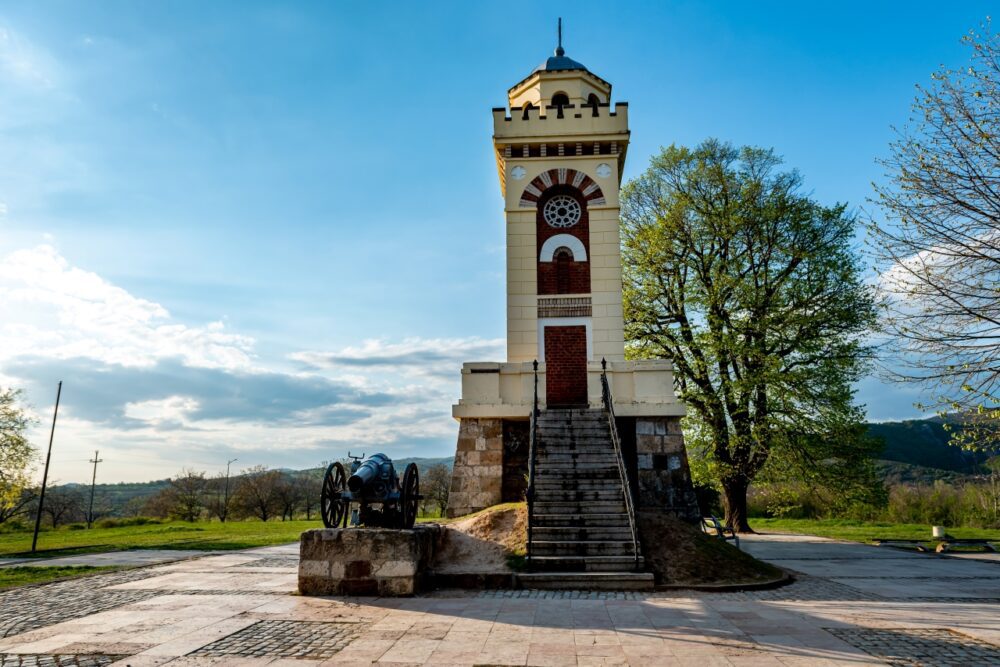
Nis has some of the most important Second World War sites in Serbia. The 12 February Memorial Complex was a German concentration camp, set up in 1941 near the Red Cross railway station. More than 30,000 people passed through. On 12 February 1942, 105 prisoners escaped in what’s considered the first mass escape in occupied Europe. The site is a museum now, with the original guard towers, cells and personal items on display!
Bubanj is a memorial park about 3 km from the centre, where thousands of civilians were executed. A striking monument of three giant fists stands among the trees. Both places are emotional and thoughtful, and they add a lot of depth to a trip. The private history tour covers them together with the Roman and Ottoman sites, which saves a lot of planning. Allow about an hour at the camp, go at a quiet pace and keep your voice low out of respect.
9. Niška Banja Spa
Niska Banja is a spa town about 10 km south-east of Nis, on the road to Sofia. It’s built around five mineral springs, and the water comes out at 36 to 38 degrees Celsius. The town sits beneath the forested Koritnik hill, so it feels peaceful and green. Locals have used the waters for centuries, and many people come for rehabilitation programmes.
You don’t need a medical reason to visit. The Wellness and Spa Sense, run by the main institute, has an indoor thermal pool, a jacuzzi, saunas, and massage. It’s open from 8:00 am to 8:00 pm. I like it as a half-day break from sightseeing, especially after a hot day in the fortress. Getting to Niska Banja by local bus or taxi takes about 20 minutes, and the walks around the town are pretty. Bring flip-flops, a swimsuit and a towel. It’s an easy way to slow down for an afternoon.
10. Easy Day Trips
Nis makes a good base for exploring southern Serbia. Devil’s Town (Đavolja Varoš) is a rock formation of tall earth pillars in the hills south-west of Nis, and the drive takes under two hours. Felix Romuliana, a UNESCO-listed Roman palace, is another popular trip. Both are easiest with a driver, because public transport is limited. Čegar Hill and the Bubanj memorial also work as short trips from the centre. Together they make a full day of sightseeing if you add a long lunch. A private driver costs more than a bus, but it saves hours of waiting at stops.
Nis is also close to other countries. Sofia is about three hours away by road, and Skopje isn’t far either. That makes it a handy stop on a longer Balkan route. If you’re based in Sofia, the Nis day tour from Sofia covers the main highlights in 9.5 hours with pickup. Spend the rest of your time in Nis itself, because the city rewards a slow pace.
Cons of Visiting Nis
1. Getting Here Takes Time
Nis isn’t on the main tourist trail, so reaching it takes some effort. Constantine the Great Airport has a few budget flights to European cities, but most people fly into Belgrade and travel south. The bus from Belgrade takes around three hours, and the train is slower. Book bus tickets early on weekends. Coming from Sofia takes about three hours by road!
A guided day trip is the easiest fix if you’re based in Belgrade or Sofia. The private tour from Belgrade lasts 11 hours and includes pickup, local cuisine and a guide. For a longer visit, take a Niš Ekspres bus, which runs regularly, and book a stay in the city. Once you’ve arrived, the compact centre makes everything easy, and Nis is still worth it.
2. Summer Heat
Nis gets properly hot in summer, and temperatures often reach the mid to high 30s Celsius. Most of the main sights are outdoors, including the fortress, Mediana and the Čegar monument. I was sweating by mid-morning on both days. The pavements hold the heat, so midday sightseeing is tiring. A room with air conditioning makes a big difference at night.
Plan around the weather. Visit the fortress and Mediana in the morning, then spend the middle of the day in the Archaeological Hall, a café or the spa at Niska Banja. Carry water, wear a hat and use sun cream. The evenings are beautiful, with cooler air and busy terraces along Tinkers’ Alley. With an early start and a long lunch, the heat is easy to manage, and Nis is still worth it.
3. Some Sights Are Sombre
Many of Nis’s best sights are about war and loss. The Skull Tower, the 12 February camp and Bubanj are powerful places, but they’re not light. If you’re travelling with young children or you prefer a relaxed holiday, a full day of memorials can feel heavy. I found it moving, and I needed a break afterwards.
The simple fix is to mix it up. Pair one memorial with something relaxed, such as lunch on Tinkers’ Alley, a walk along the Nišava or an afternoon in the fortress grounds. You don’t need to see everything in one day. Many people choose the Skull Tower and skip the rest, and that’s perfectly fine. Take your time at each one. Spacing out the heavy stops makes the trip balanced, and Nis is still worth it.
4. Few Organised Tours
Nis doesn’t have a big tour scene. Most guided tours on booking sites start in Belgrade or Sofia, and there are only a few that begin in the city itself. That means you need to plan a bit more on your own. Opening hours at smaller sites can change, so ask your hotel before you set off!
The private history tour is the best option in town. It runs for 9 hours and brings the Roman, Ottoman and wartime sites together in one day. If you prefer to go alone, the sights are close enough that a taxi and a map are enough. Either way, you’ll avoid the crowds you’d find in bigger cities, and Nis is still worth it.
5. Sights Are Spread Out
The centre and the fortress are compact, but several highlights sit further out. Mediana is a short ride from the centre, Bubanj is about 3 km away, Čegar Hill is 6 km out, and Niska Banja is 10 km away. Walking to all of them in the summer heat isn’t realistic. I took taxis for the farthest sights and enjoyed walking the rest.
The good news is that getting around is cheap. City buses are free to ride, and a taxi across town costs only a few hundred dinars. Group your outer sights into one half-day trip so you don’t keep going back and forth. A ride-hailing app or a hotel call saves time. Check the walking distances on your map before you set off. Plan it well and Nis is still worth it.
Where to Stay
Fortress Area: This is where I stayed, and I’d choose it again. The fortress is a short walk away, the Nišava river runs nearby and the centre is about 10 minutes on foot. Mornings were quiet and the evenings were easy. The downsides are fewer restaurants right at your door and some noise on festival nights in August. The Only One Accommodation is a budget-friendly guest house with a 24-hour front desk, soundproof rooms and private parking. Hotel Sole is a mid-range 3-star with a coffee house on site, a bar and room service. New City Hotel & Restaurant is an upscale 4-star with a restaurant, a spa and wellness centre, a sauna and an airport shuttle.
City Centre: Around King Milan Square and Obrenovićeva Street, you’re in the middle of the shops, cafés and Tinkers’ Alley. It’s the best choice if you want to walk everywhere and eat out every night. The downsides are higher prices and some late-night noise on weekends. Tike Tak Central Residence is a budget-friendly apartment with a lift, air conditioning and private parking. Center Deluxe Garni Hotel is a mid-range 4-star with a garden, a terrace and free parking. Ambasador Hotel is an upscale 5-star on King Milan Square with a restaurant, a spa, a fitness centre and a terrace.
Station and East Side: East of the centre, this area suits you if you’re arriving by train or bus and want lower prices. It’s less pretty and has fewer restaurants, but it’s calm, and practical. The walk into the centre takes about 15 to 20 minutes. Hany Sweet is a budget-friendly apartment with a garden, a terrace and free parking. Garni Hotel Consul is a mid-range 3-star with a terrace, a coffee house on site and a 24-hour front desk. Summit Apartments is a step up, with a hot tub, a terrace and a parking garage!
Niska Banja: Ten kilometres away, this spa town is green, calm and good for a slower trip. It’s popular with couples and anyone who wants thermal baths on their doorstep. The downsides are the 20-minute ride into Nis and fewer places to eat late. Guest House Dimitrije is a budget-friendly stay with a garden, a terrace, a shared kitchen and free parking. Vila Marko is a mid-range stay with a restaurant, a bar, a garden and a 24-hour front desk. Vila Prica is an upscale 4-star with a restaurant, soundproof rooms and free parking.
Best Things to Do
These are the tours and experiences I’d put on your list for Nis.
- Niš History Tour: Roman, Ottoman, Nazi and Socialist Sites: A private 9-hour day tour that links the city’s Roman, Ottoman and wartime layers. It suits small groups of up to three people and saves you from planning the outer sights yourself.
- Niš Fortress: Wander the ramparts, the Stambol Gate and the Ottoman bath. It’s free to enter at any hour, and it’s perfect for a sunset walk.
- Skull Tower: A memorial chapel built around the skulls of 1809 rebels. It’s quick to see and tells a powerful story.
- Mediana: The Roman villa complex linked to Constantine the Great, with beautiful floor mosaics. It’s the best place to see the city’s imperial past.
- Archaeological Hall: A compact museum with Roman finds and a model of Mediana. It’s a great stop on a hot afternoon.
- 12 February Memorial Complex: A former concentration camp turned museum, with original towers and cells. It’s a serious but meaningful visit.
- Bubanj Memorial Park: A wooded memorial park with a monument of three giant fists. Take a bus or taxi from the centre.
- Čegar Monument: The hill where Stevan Sinđelić made his last stand in 1809. It’s free to visit and makes a good half-day with the Skull Tower.
- Niška Banja Spa: A thermal spa town with warm mineral springs, a wellness centre and forest walks. It’s the best way to relax after a few days of sightseeing.
- Nišville Jazz Festival: An international jazz festival on the fortress plateau every August. Free stages also pop up across the city.
- Gastronomy Guide: A guide to Niš burek, kajmak, taverns and wineries. Use it to plan a food crawl through the old town.
Best Time to Visit
Summer: I visited in summer, and it suits Nis well. The days are long and hot, the terraces on Tinkers’ Alley are busy and the fortress is lively until late. August brings Nišville, which fills the fortress plateau with jazz fans. Temperatures often reach the high 30s Celsius, so start early and rest at midday. Rooms get busy during the festival, so book ahead. Pack light clothes and a refillable water bottle.
Spring: Spring is a beautiful time for a visit. The parks turn green, the café terraces reopen and the weather is mild for walking around the fortress and Mediana. It’s also a good time for Čegar Hill and Niska Banja. Crowds are small and rooms are cheaper than in summer. Pack a light jacket for the evenings, because it cools down quickly after sunset.
Autumn: Autumn is calm and golden, with comfortable temperatures for sightseeing. The fortress gardens look beautiful, and the taverns serve hearty food as the weather cools. It’s a good time for a day trip to Devil’s Town or Felix Romuliana. Rain becomes more likely from late October, so pack layers!
Winter: Winter is cold and quiet, but the city has a cosy side. New Year events run from late December into early January, and the taverns on Tinkers’ Alley feel warm and welcoming. Mediana keeps shorter winter hours and opens from 10:00 am to 3:00 pm, closed on Mondays. Pack warm clothes, because the wind can be sharp.
How Long to Spend
1-2 Days: Two days is what I did, and it’s enough for the highlights. Spend the first morning at the fortress and the Skull Tower, then have lunch and visit the Archaeological Hall. Finish with dinner on Tinkers’ Alley. On the second day, head to Mediana, then take a taxi to the 12 February Memorial Complex. Start early in summer, because the heat builds fast.
3-4 Days: With three or four days you can slow down. Add Bubanj, the Čegar monument and a half-day at the Niška Banja spa. You’ll have time for long lunches and a slow walk along the Nišava. This is the length I’d recommend, because you see everything without rushing. A slow morning in the fortress gardens fits in nicely on the third day.
5-7 Days: A week lets you use Nis as a base for southern Serbia. Add Devil’s Town and Felix Romuliana, and keep a slow day or two for the spa. You could also continue to Sofia or Skopje by road. Spread the day trips across the week so each one feels relaxed. Use the first days for Nis itself and save the longer trips for the end. If you’re carrying on through Serbia, give Novi Sad its own stay rather than trying to see it from Nis.
Getting Around
On foot: The centre is flat and compact, so walking is the best way to get around. King Milan Square to the fortress takes about 10 minutes, and Tinkers’ Alley is only a few minutes beyond. The walk from the fortress to the Archaeological Hall is flat and easy. I walked almost everywhere during my 2 days. Wear comfortable shoes, because the cobbles near the fortress and the alley are uneven.
City buses: Public transport inside the city is free, so you can hop on without buying a ticket. The buses reach Bubanj, Čegar and the outer districts, and the city transport website has the routes and timetables. Buses can be slow and crowded at peak times, and they run less often in the evening. Check the last departure before you head out. For the farthest sights, a taxi is easier!
Taxis and ride-hailing: Uber and Bolt don’t operate in Nis, so use Yandex Go or a marked taxi from a local company. A ride in the centre costs about 250 to 500 RSD (£1.90 to £3.75). Make sure the driver starts the meter, or agree on a price first. Avoid unmarked cars. Your hotel will happily call a cab for you.
To and from the airport: Constantine the Great Airport is a short drive from the centre, with a flat taxi fare of around 850 RSD (£6.25). For a fixed price and a driver who meets you, book a private airport transfer. If you arrive from Belgrade, the bus takes around three hours, and the Srbijavoz train is slower. Line up your journey back the day before, especially for early flights.
Final Thoughts: Is Nis Worth Visiting?
Yes, Nis is worth visiting, especially if you want a Serbian city with real depth and very few crowds. In 2 days I walked a free Ottoman fortress, saw Roman mosaics, ate burek for breakfast and spent an evening on Tinkers’ Alley. The prices were low, the people were friendly and nothing felt rushed. It felt like a city that hasn’t changed its habits for people.
It isn’t perfect. Getting here takes time, summer can be properly hot and some of the sights are heavy. A few of the best places also sit outside the centre. But an early start, a cheap taxi and a balanced plan solve most of that.
If you like history, food and relaxed cities, Nis is a great option for a weekend or as a stop on a longer Balkan trip. If you want polished sights and nightlife, spend more time in Belgrade. For me, Nis was one of the most surprising places in Serbia, and I’d happily go back.