Is Novi Sad Worth Visiting? Honest Pros and Cons (2026)

The clock tower on Petrovaradin Fortress shows the time backwards. The big hand points to the hours and the small hand to the minutes, and the whole thing runs fast in summer and slow in winter. Locals call it the Drunken Clock and love it for exactly that reason. It sums up Novi Sad pretty well: relaxed, a little quirky and never in a hurry. I spent 2 days here one summer, and I left wishing I’d booked longer.
Novi Sad is the second-largest city in Serbia and the capital of the Vojvodina province. It sits on the Danube, about 80 km north of Belgrade, and it was a European Capital of Culture in 2022. You get a baroque Old Town, a huge 18th-century fortress, a sandy city beach, wine country on the doorstep and a very easy pace. If you’re deciding whether Novi Sad is worth visiting, I’d say yes, especially if you like places that are calm, walkable and full of character.
This guide covers the pros and cons of Novi Sad, where to stay, and what to book. You’ll also find tips on when to go, how long you need, and getting around, so you can decide whether it suits your kind of trip.
In a Rush? Here Are Our Favourite Hotels in Novi Sad Serbia
⭐️⭐️⭐️ Kombinat Rooms City Center – Click here for rates & availability
Pros of Visiting Novi Sad
1. Petrovaradin Fortress

Petrovaradin Fortress is the reason most people come, and it lives up to the hype. Locals call it the “Gibraltar on the Danube”. It was built between 1692 and 1780, covers 112 hectares and has 10 gates and around 12,000 loopholes. Under the walls, 16 km of tunnels run across four levels. The upper plateau has the City Museum, artist studios, cafés and a terrace with the best view in town. I climbed up in the early evening and watched the river turn orange.
The clock tower is the fortress’s most famous quirk. Its big hand shows the hours and its small hand shows the minutes, so Danube boatmen could read the time from far away. Walking around the grounds is free, while the museum and the guided tunnel tour cost extra. Allow at least two hours. The views stretch over the whole city and the river, and they’re even better when the stone glows at sunset.
2. Liberty Square and the Old Town

Liberty Square (Trg slobode) is the heart of the Old Town. The neo-Gothic Church of the Name of Mary towers 73 metres above it, which makes it the tallest place of worship in the city. Beside it stands the neo-Renaissance City Hall, finished in 1894. I stayed a few minutes’ walk away, so I crossed the square several times a day without even trying. Zmaj Jovina Street starts here, and it’s the main pedestrian street, lined with cafés, bakeries and ice cream stands!
Follow Zmaj Jovina to the far end and you reach the Bishop’s Palace and St George’s Cathedral. Dunavska Street heads the other way, down to the river. It’s one of the oldest streets in town and hides little passages full of shops and pastry places. The walking tour of the centre and fortress is a good way to put names and stories to the buildings. It starts outside the synagogue and lasts two to three hours.
3. Museums and Galleries
Novi Sad is known as the Serbian Athens, and the museums show why. The Museum of Vojvodina on Dunavska Street is the biggest museum in the region, with archaeology, ethnology and history collections. A ticket costs 300 RSD (£2.20) and also covers the nearby Museum of Unification. It’s open from 9:00 am to 7:00 pm Tuesday to Friday and from 10:00 am to 6:00 pm at weekends. It’s closed on Mondays.
If you only have time for one, pick the Gallery of Matica Srpska. It holds one of the richest collections of Serbian art, with paintings from the 18th century onwards. A regular ticket is 400 RSD (£3), and entry is free on Fridays, when it stays open until 10:00 pm. I spent about an hour and a half inside and could have stayed longer. The gallery is a seven-minute walk from Liberty Square, so it slots in easily between coffee stops.
4. Danube Park and the Riverfront

Dunavski Park is a protected green space right behind the Old Town and one of the biggest in the city. It has shady paths, a fountain, busts of local poets and plenty of benches. Concerts and performances pop up here during the year. I escaped the midday heat in the park with an ice cream, and I didn’t want to leave. Dunavska Street ends at its edge, so it’s an easy next stop after the museums.
From here you can follow the riverfront to the Varadin Bridge and walk across to Petrovaradin. The views back towards the Old Town are worth the stroll. The Danube is the city’s main street (with cycle paths) beaches and fish restaurants along its banks. It’s at its best near sunset, when the fortress glows above the water. Wear comfortable shoes, because you’ll probably end up walking further than planned.
5. Štrand Beach
Few European cities have a proper sandy beach on a big river, but Novi Sad does. Štrand has been the city’s summer playground since 1911. It stretches for 700 metres beside the Liberty Bridge, at the edge of the Liman neighbourhood. From May to October it’s open from 8:00 am to midnight, and entry costs 50 RSD (£0.40). Many locals own a beach cabin here, and they treat it as a point of pride!
I went on a hot afternoon and it felt like a small town. There are volleyball and basketball courts, shady lawns, cafés and a playground, plus lifeguards during the season. Order a cold drink and stay until the light goes soft over the water. Outside the season, entry is free and the beach turns into a quiet place for a walk. Bring flip-flops, because the sand gets properly hot by midday.
6. Vojvodina Food
Vojvodina food is rich, hearty and shaped by the Danube. Fish paprikash (fiš paprikaš) is the dish to try. It’s a thick, spicy river-fish stew, usually served with noodles, and the riverside čardas make it best. These are traditional taverns, often with tamburitza music playing in the evening. Ćevapi, gibanica (a cheese pastry) and fresh burek are easy to find in the centre too. I had fish paprikash at a čarda by the water on my first night and happily ordered it again.
For something different, look for a salaš, a traditional farmstead restaurant in the countryside around the city. They serve grilled meat, homemade bread and local wine. Back in town, the Fish Market near Republic Square sells local honey, wine and regional produce, and it hosts food events through the year. Finish a meal with a small glass of rakija, the local fruit brandy, but pace yourself because it’s strong.
7. Fruška Gora Wine
Novi Sad sits at the foot of Fruška Gora, Serbia’s oldest national park and a wine region where the Romans planted vines. Local labels include Riesling, Sémillon and Sirmium. The star is Bermet, a sweet, spiced dessert wine made only in this part of the world. Legend says it was once served on the Titanic. Sremski Karlovci, a baroque wine town about 8 km away, is home to many of the best-known cellars. I tried a glass of Bermet and it tasted like a cross between port and mulled wine.
I’d book a guided tasting rather than organise cellar visits yourself. The private Fruška Gora wine tour picks you up in Novi Sad and visits four wineries, with a wine-paired lunch at a family cellar. You try indigenous grape varieties and biodynamic wines, and your guide handles the driving. It’s the priciest tour in this guide, but a private driver means nobody has to stay sober at the wheel. Allow a full day.
8. Culture and Festivals
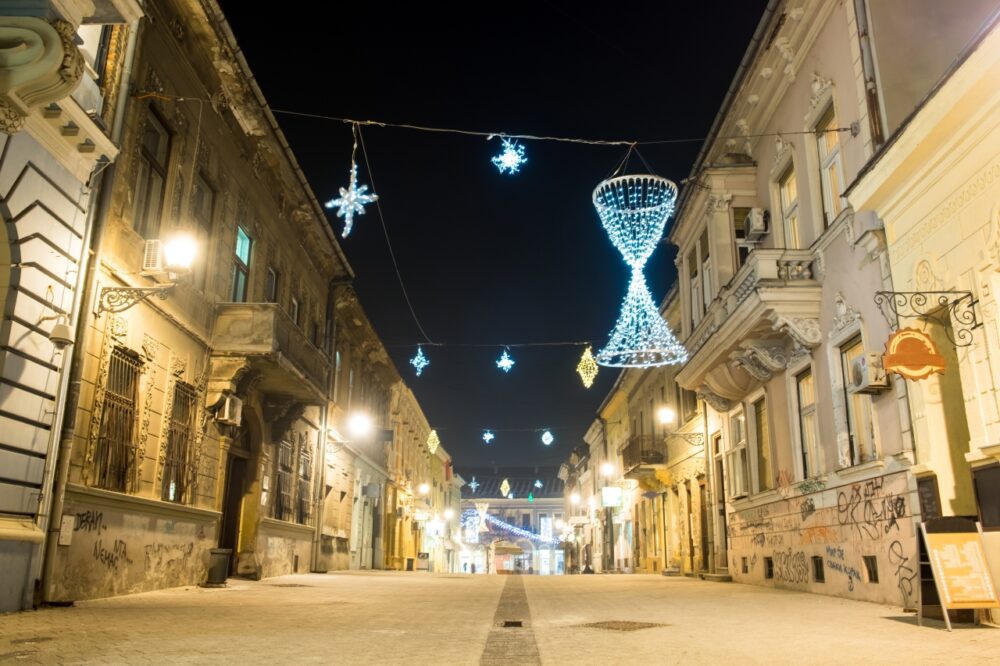
Novi Sad was a European Capital of Culture in 2022, and the cultural scene hasn’t slowed down since. The Novi Sad Synagogue on Jevrejska Street is one of the largest in this part of Europe, a Hungarian Art Nouveau building from 1909. It’s no longer used for services and works as the city’s main concert hall. I stopped to admire the dome on my way to dinner. The Serbian National Theatre, founded in 1861, is a short walk away!
Events fill the calendar all year. The Novi Sad Jazz Festival takes over venues in the centre in summer, a Night Market sets up on selected evenings, and the Zimzolend Christmas market runs from early December to early January. The events calendar is worth a look before you book, because a festival weekend makes the city much livelier. EXIT music festival filled the fortress every July for 25 years, and it has announced a special return there in July 2027.
9. Bike-Friendly Streets
Novi Sad is flat and made for cycling, with around 90 km of bike paths and hundreds of racks. Locals ride everywhere, even in winter. The city’s bike-share, NS Bike, has stations around the centre, at Štrand and near the Spens sports centre. You register with your ID and then rides cost very little. It runs from spring until the start of December.
If you want to have a guide, the guided bike tour lasts 2.5 hours and combines Petrovaradin Fortress, Dunavski Park and Dunavska Street. The guide explains how the Danube, the fortress and Fruška Gora shaped the city. I’d choose it on a hot day, because the breeze helps and you cover more ground than on foot. Bring water and sun cream, and don’t forget a hat. The paths along the river keep you away from traffic, so it’s a relaxed way to see the city even if you haven’t cycled in years.
10. Easy Day Trips
Novi Sad works well as a base for day trips. Sremski Karlovci is just 8 km away, and it’s a baroque town with a pretty main square, the Four Lions fountain, the oldest Serbian grammar school and plenty of places to taste Bermet. Fruška Gora National Park is right next door, with 16 medieval Orthodox monasteries scattered across its wooded ridge. Subotica and Lake Palić are about an hour away by train.
The easiest option is the Sremski Karlovci and Krušedol Monastery tour. It lasts 3 to 4 hours with pickup in Novi Sad, and it covers a walk around Karlovci, a Bermet tasting and the frescoes at Krušedol. If you love monasteries, the 7 monasteries tour is an 8-hour small-group trip. Lunch is optional for an extra €28. Both trips save you the hassle of buses and timetables, and they work well if you only have a spare half-day. Book ahead in summer, because small-group tours fill up quickly.
Cons of Visiting Novi Sad
1. Getting Here Takes Planning
Novi Sad doesn’t have a commercial airport, so most people fly into Belgrade and travel 80 km north. There’s no direct public transport from Belgrade airport to Novi Sad, which means a transfer, a taxi or a change in the city. The train is quick, but trains currently stop at Petrovaradin station while the main station in the centre stays closed. That’s across the river from the Old Town, so you need a bus, a taxi or a 25-minute walk!
The simplest fix is a pre-booked private airport transfer from Belgrade Nikola Tesla Airport. The ride takes about an hour and the driver meets you at arrivals. If you want to save money, take the train from Belgrade Centar (about 35 minutes) and a taxi from Petrovaradin into town. Either way, Novi Sad is still worth it once you arrive.
2. Hot Summers
Summer in Novi Sad is hot, and temperatures regularly climb into the high 30s Celsius. The fortress has little shade, and the walk up in the midday sun is hard work. I was sweating by 10:00 am on my trip. The Old Town streets hold the heat too, so afternoon sightseeing can feel exhausting.
Plan your day around the weather. Visit the fortress early or at sunset, then spend the middle of the day in a museum, a shaded café or at Štrand. Drink plenty of water, wear light clothes and carry a hat. Most cafés and restaurants have air conditioning, so you can always duck inside for a break. The breeze off the Danube helps in the evening, and the terraces stay busy until late. With a flexible plan, the heat is easy to manage, and Novi Sad is still worth it.
3. Museums Close on Mondays
Many of the best sights close on Mondays. The Museum of Vojvodina and the Gallery of Matica Srpska are both shut that day, and opening hours can shift around public holidays. If your trip is short, a Monday can leave you with fewer indoor options than you want. That’s a pain if bad weather hits at the same time. I planned my two days around this, and it saved me from standing outside a locked door.
Check opening days before you build your itinerary. Save Mondays for outdoor highlights such as the fortress grounds, Danube Park, Štrand or a ride on the NS Bike. A guided walking tour is another good way to fill a day, because it focuses on the streets and the fortress rather than museums. Plan around it and Novi Sad is still worth it.
4. Not Many Big-Name Sights
Novi Sad is relaxed rather than packed with headline attractions. Apart from the fortress, the Old Town and a handful of museums, there isn’t a long checklist to work through. If you like to tick off a major sight every hour, you might run out of things to do quickly. The pace here is slow, and the city is more about atmosphere than monuments. Two days was plenty for me, and I spent a good part of it sitting at a café in Liberty Square!
That’s easy to fix. Treat Novi Sad as a slow city: take long lunches by the Danube, rent a bike and add a half-day in Sremski Karlovci. The Karlovci and Krušedol tour fills a spare afternoon nicely. If you want something livelier, Belgrade is only 35 minutes away by train. Novi Sad is a calm base, and that’s still worth it.
5. Steps to the Fortress
Getting up to the fortress takes effort. The walking route from the bridge climbs a long flight of steps, and the cobbled lanes on top are uneven. The upper plateau is exposed, so there’s little shelter from the sun. It’s a tough climb with a pushchair or if you have limited mobility. Some of the lanes inside the fortress are steep as well, so the visit involves more walking than you might expect. Even a fit traveller will feel it on a hot day.
You can avoid most of the climb. A taxi from Petrovaradin or the Old Town drops you near the top, and you can stroll down afterwards. If you do walk up, go early or at sunset when it’s cooler, and wear proper shoes. The view from the top is worth every step, and Novi Sad is still worth it.
Where to Stay
Old Town: This is the area I’d choose again. Liberty Square, Zmaj Jovina Street and Dunavska Street were all a short walk from my room, and the Danube was only minutes away. Mornings were calm and the evenings were lively. The downsides are higher prices than elsewhere and some noise on busy weekend nights. Old City Rooms is a budget-friendly inn on Zmaj Jovina Street with air conditioning, free WiFi and contactless check-in. Hotel Mediteraneo Garni is a mid-range 3-star on Ilije Ognjanovića Street with a shared lounge, a safety deposit box and private parking. Kombinat Rooms City Center is an upscale 4-star on Bulevar Mihajla Pupina with a restaurant, a garden, a terrace and soundproofed rooms.
Petrovaradin: Across the Danube, Petrovaradin sits beneath the fortress and feels like a quiet baroque village. It’s perfect if you want fortress views, early-morning walks and fewer crowds. The downsides are fewer shops and bars than the centre and a walk of about 25 minutes to Liberty Square. Varad INN is a budget-friendly boutique hostel and café with a bar, a garden and a shared kitchen. Tvrdjava Rooms is a mid-range guest house with a 24-hour front desk, soundproof rooms and private parking. Hotel Leopold I is an upscale 4-star inside the fortress with a restaurant, a spa, a sauna and a terrace.
Liman: South of the Old Town, Liman is a leafy residential district with parks, wide streets and Štrand beach at its edge. It’s popular with locals, cheaper than the centre and a good pick for longer stays or families. The downsides are less atmosphere and a 20-minute walk to the main sights. Tiara Apartment is a budget-friendly apartment with a terrace, a lift and air conditioning. Garden Center Apartment is a mid-range apartment with a garden, a terrace and free parking. Apartment Promenada is a step up, with soundproof rooms, a lift, a terrace and laundry facilities!
Near the Bus Station: North-west of the centre, this area suits you if you’re arriving or leaving by bus and want lower prices. It’s busier and less pretty than the Old Town, and the walk to Liberty Square takes about 20 minutes. Apartman 64 is a budget-friendly apartment with a lift, free WiFi and air conditioning, and there’s free public parking nearby. Apartment Rosa is a mid-range apartment with a terrace, a lift and free private parking. Hotel Element is an upscale 4-star with a restaurant, a bar, a garden, soundproof rooms and a 24-hour front desk.
Best Things to Do
These are the tours and experiences I’d put on your list for Novi Sad.
- Walking Tour of the Centre and Fortress: A guided walk of two to three hours through the Old Town, Matica Srpska and Danube Park, ending at Petrovaradin Fortress. It starts outside the synagogue and runs as a private or small-group tour.
- Guided Bike Tour with Petrovaradin Fortress: A 2.5-hour small-group ride past the fortress, Dunavski Park and Dunavska Street, with stories on how the city grew. Your guide speaks English and Serbo-Croatian.
- Private Wine Tour in Fruška Gora: An 8-hour private trip to four wineries in Serbia’s oldest wine region, with pickup in Novi Sad. You try indigenous and biodynamic wines and have a wine-paired lunch at a family cellar.
- Sremski Karlovci and Krušedol Monastery Tour: A private 3 to 4-hour trip with hotel pickup. You walk around baroque Sremski Karlovci, taste Bermet and visit the frescoed monasteries of Krušedol and Grgeteg.
- Fruška Gora 7 Monasteries Tour: An 8-hour small-group tour of seven Orthodox monasteries, including Krušedol, Grgeteg and Novo Hopovo. A restaurant lunch is optional for €28.
- Petrovaradin Fortress: Wander the ramparts, find the Drunken Clock and visit the City Museum. The museum’s guides also run tours of the underground tunnels.
- Museum of Vojvodina: The region’s biggest museum is a great rainy-day stop, with archaeology, ethnology and history under one roof.
- Gallery of Matica Srpska: A calm hour or two with Serbian paintings from the 18th century onwards. It’s free on Fridays.
- Štrand Beach: A 700-metre sandy beach beside the Liberty Bridge, with courts, cafés and shade. It’s the best way to cool off in summer.
- Novi Sad Synagogue: A Hungarian Art Nouveau landmark on Jevrejska Street that doubles as the city’s concert hall. Catch a performance if one is on during your visit.
- Dunavski Park: A shady, protected park behind the Old Town with fountains and poet busts. It’s the perfect place to rest between sights.
Best Time to Visit
Summer: I visited in summer, and it suits Novi Sad well. Days are long and hot, Štrand is in full swing and the terraces along the river stay busy late into the night. It’s also festival season, with the Novi Sad Jazz Festival and the Night Market on the calendar. EXIT filled the fortress every July for 25 years before taking a break from Novi Sad, and a special comeback is planned for July 2027. Temperatures often reach the high 30s Celsius, so start early and rest at midday.
Spring: Spring is one of the nicest times to come. The parks turn green, the café terraces reopen and the weather is comfortable for climbing up to the fortress. The Flower Market runs in April and May, and the International Agricultural Fair takes over the Novi Sad Fair in May. Crowds are light and rooms are cheaper than in summer.
Autumn: Autumn is calm and golden, with fewer people and ideal weather for Fruška Gora. September brings the Tastes of Vojvodina festival, and the grape harvest gives the wine villages a lively feel. It gets cooler and wetter from late October, and the NS Bike season ends around the start of December. Pack layers!
Winter: Winter is cold and grey, but the city has a cosy side. The Zimzolend Christmas market runs from early December to early January, and the Old Town is full of lights. The fortress is quiet, and the museums make good rainy-day stops. Pack warm layers, because the wind off the Danube can be sharp.
How Long to Spend
1-2 Days: Two days is what I did, and it’s enough for the highlights. Spend the first morning around Liberty Square, Zmaj Jovina Street and Dunavska Street, then cross to Petrovaradin Fortress for sunset. On the second day, visit the Museum of Vojvodina or the Matica Srpska Gallery, then relax at Štrand or in Danube Park. Start early in summer, because the heat builds fast.
3-4 Days: With three or four days you can slow right down. Add the guided bike ride, a long fish lunch by the river and a half-day trip to Sremski Karlovci and Krušedol. A wine tasting fits well on the evening of your Karlovci trip. This is the length I’d recommend, because you see everything without rushing.
5-7 Days: A week lets you use Novi Sad as a base for northern Serbia. Add Subotica and Lake Palić by train, a day in Belgrade (about 35 minutes away) and the monasteries of Fruška Gora. The 7 monasteries tour is a good option here. Keep one slow day for the beach, the park and a long lunch. On a wider Serbia trip, you could add a separate stay in Nis as a contrast with your time in the north.
Getting Around
On foot: The Old Town is flat and compact, so walking is the best way to get around. Liberty Square to Danube Park takes about 10 minutes, and the walk over the Varadin Bridge to Petrovaradin takes another 15 to 20. I walked almost everywhere during my 2 days. Wear comfortable shoes, because the lanes near the fortress are cobbled.
Bike hire: Cycling is easy here, with plenty of bike lanes and almost no hills. NS Bike is the public bike-share, with stations around the centre and at Štrand. Bring your ID to register. The season runs from spring until the start of December. For a guided ride, the bike tour takes you past the main sights in 2.5 hours!
Buses: JGSP runs the city buses, which connect the centre with Petrovaradin and Štrand. A single ticket costs about 100 RSD (£0.75) from the driver, so carry some cash. You won’t need the bus much in the Old Town, but it’s handy for Liman and the beach.
Taxis and ride-hailing: Uber and Bolt don’t operate in Serbia, so use Yandex Go or a local app such as Pan Taxi. Most rides inside the centre cost 300 to 600 RSD (£2.25 to £4.50). Avoid unmarked cabs, and agree on a price or use the meter before you set off.
To and from the airport: Novi Sad has no commercial airport, and there’s no direct public transport from Belgrade Nikola Tesla Airport. The easiest option is a pre-booked private transfer, which takes about an hour. For a cheaper route, take a bus or taxi into Belgrade, then a Srbijavoz train from Belgrade Centar. Fast trains need a seat reservation, a ticket costs around 700 RSD (£5), and trains currently arrive at Petrovaradin station. Line up your journey back the day before, especially for early flights.
Final Thoughts: Is Novi Sad Worth Visiting?
Yes, Novi Sad is worth visiting, especially if you want a Serbian city that’s calm, walkable and easy to like. In 2 days I got a fortress at sunset, a museum, a river walk, a beach afternoon and plenty of good food, without once feeling rushed. The Old Town is compact, the Danube is always close and the locals clearly enjoy their city.
It isn’t perfect. Getting here takes a little planning, summer can be properly hot and the big museums close on Mondays. There also isn’t a long list of headline sights. But a pre-booked transfer, an early start and a slow pace solve most of that.
If you like history, wine, river views and a relaxed atmosphere, Novi Sad is a great option for a weekend or as a base for a longer Serbia trip. If you want big-city energy, stay in Belgrade and come for a day. For me, it’s one of the most pleasant places in the Balkans, and I’d happily go back!