
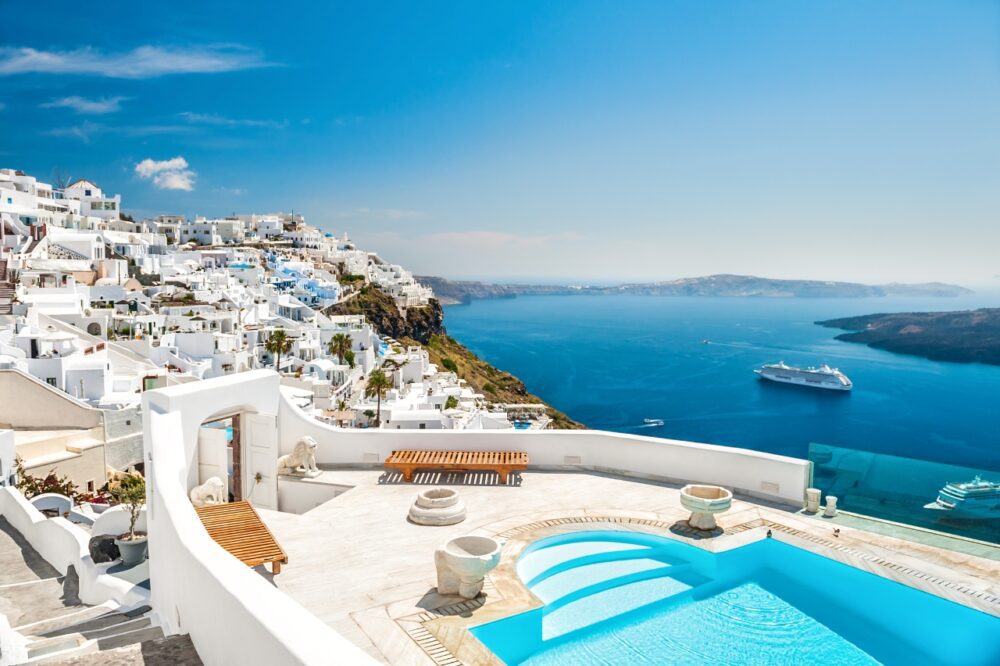
I added Santorini onto the same trip that took me to Mykonos, hopping a ferry south after my four days on Mykonos to see what all the fuss was actually about. I went back a second time the following June, this time flying in directly and staying a full week instead of rushing through in three days. Between the two trips, I’ve now seen Santorini in both shoulder season chaos and closer to peak summer, and I’ve got a much more grounded opinion than the one I walked in with.
Santorini is probably the single most photographed island in Greece, and there’s a reason for that. The caldera views from Oia and Fira are genuinely as good as the pictures suggest, which is rare. Most overhyped destinations disappoint you a little in person. Santorini mostly doesn’t. But it’s also smaller, pricier, and more logistically demanding than people expect, and I watched several other travelers get caught out by things I wish someone had told me before my first trip.
So is Santorini worth visiting in 2026? After two trips in two different seasons, my answer is yes, but it’s a more complicated yes than most travel blogs will admit. Here’s what I actually found, good and bad.
Table of Contents
Pros – Reasons Santorini is Worth Visiting
1. The caldera view is one of the best in the world, not just in Greece
I’ve traveled a fair amount, and I still think the view from the caldera rim, whether from Oia, Fira, or Imerovigli, is one of the most striking I’ve seen anywhere. Whitewashed buildings stack down a cliff face into a deep blue sea, with the volcanic caldera itself sitting in the middle. Photos genuinely don’t oversell this one. I stood at the same spot in Imerovigli on both trips and felt the same reaction each time.
2. Sunset in Oia deserves its reputation, crowds and all
Yes, it gets crowded. I stood shoulder to shoulder with a few hundred other people on my first visit, and I still thought it was worth it. The way the light hits the caldera and the whitewashed town as the sun drops is genuinely spectacular. On my second trip, I found a quieter spot near the castle ruins slightly off the main viewing area, which gave me a similar view with a fraction of the crowd.
3. The wine here is genuinely excellent, not just a tourist gimmick
Santorini’s volcanic soil produces wine you won’t find replicated elsewhere, particularly Assyrtiko, a crisp white grown in low, basket-shaped vines to protect against the island’s strong winds. I did a wine tasting at a family-run vineyard on my second trip and left more impressed than I expected to be. This isn’t marketing dressed up as culture. The wine stands on its own.
4. Unique volcanic beaches you won’t find elsewhere in Greece
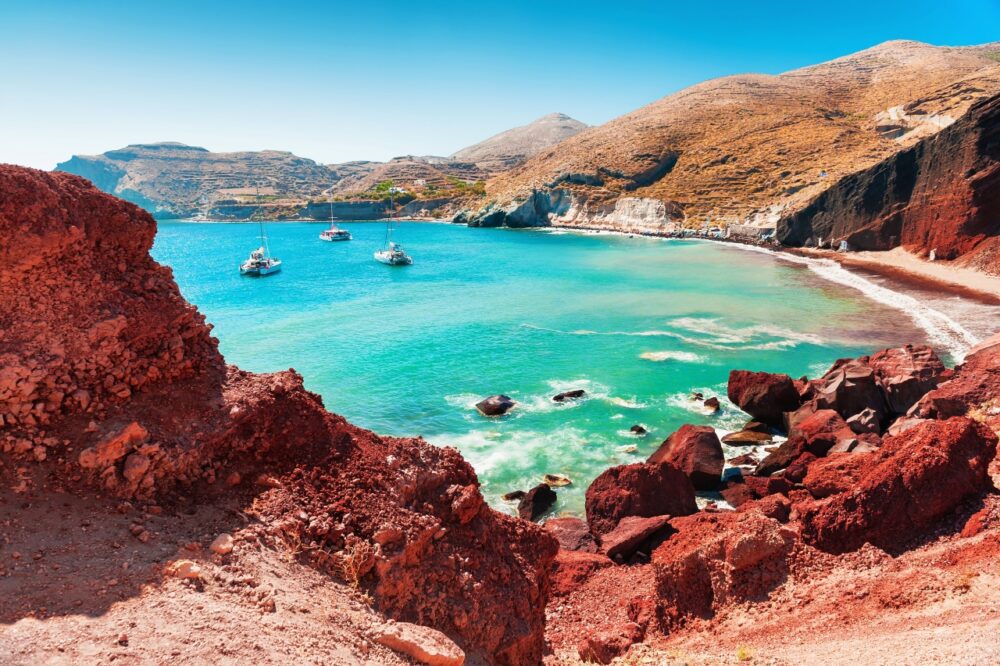
Most Greek islands give you white or golden sand. Santorini gives you Red Beach, with cliffs the color of rust, and Perissa and Kamari, with black volcanic sand that gets genuinely hot underfoot by midday. I hadn’t experienced beaches like these anywhere else in Greece, and they’re worth visiting purely for how different they look and feel.
5. Boat trips to the volcano and hot springs are a memorable half-day
I took a boat trip out to the still-active volcanic islet of Nea Kameni on my first visit, hiked to the crater rim, and then swam in the nearby hot springs, which are more lukewarm and sulfur-scented than dramatically hot, but still a fun novelty. It’s a genuinely different way to spend a half day compared to the usual beach and wine routine.
6. Fewer language and logistics barriers than some other islands
Santorini is set up for international visitors in a way that made both trips easy. English is spoken widely, signage is clear, and tour operators, wineries, and restaurants are used to accommodating travelers with varying levels of Greek. If it’s your first time in the Greek islands and you want fewer logistical surprises, Santorini is a gentler entry point than some other islands I’ve visited.
7. The food scene mixes traditional Greek with genuinely creative modern cooking
Alongside classic tavernas, I found a handful of restaurants doing more ambitious, modern takes on Greek ingredients, particularly around Imerovigli and Pyrgos. A meal at a small restaurant in Pyrgos on my second trip, built around Santorini’s own tomatoes and fava, easily rivaled meals I’ve had in far more expensive European cities.
Cons – Things to Consider Before Visiting Santorini
1. It’s the most expensive Greek island I’ve visited
Between the two trips, my daily spend in Santorini ran higher than Mykonos, and noticeably higher than Athens or Thessaloniki. Caldera-view accommodation in particular carries a steep premium, sometimes double or triple the cost of a room with no view just a few streets back. If budget matters, you can still visit affordably, but you’ll need to be deliberate about where you stay and eat.
2. The best views come with real crowds, especially at sunset
Oia at sunset in peak season is genuinely packed, and I don’t think any blog post should pretend otherwise. I’ve stood in that crowd, and while I still found it worth doing, I wouldn’t call it a peaceful, romantic moment the way it’s often marketed. Going in shoulder season, or finding a slightly less famous viewpoint, makes a real difference here.
3. Getting around requires more planning than a typical island
Santorini’s towns are spread along the caldera rim and connected by winding, often narrow roads, and the main bus routes, while functional, don’t run especially frequently outside peak hours. On my first trip I underestimated travel time between Fira and Oia and nearly missed a dinner reservation because of it. Build in more buffer time between activities here than you would on a smaller, more compact island.
Things to Do in Santorini
- Watch sunset in Oia at least once. Crowded, yes, but I still think it’s worth experiencing firsthand.
- Walk the caldera path from Fira to Oia. A roughly three-hour hike with some of the best views on the island, if you go early to avoid the midday heat.
- Visit Imerovigli for a quieter caldera view. Fewer crowds than Oia, with an equally impressive outlook, especially around sunset.
- Take a boat trip to the volcano and hot springs. A genuinely different half-day compared to the usual wine and beach routine.
- Do a wine tasting at a family-run vineyard. I’d recommend one near Pyrgos or Megalochori, away from the busier tourist-focused wineries.
- Visit Red Beach. Striking scenery, though arrive early since it gets busy and the path down is a bit uneven.
- Explore Pyrgos village. Quieter and more traditional than Oia or Fira, with excellent, less touristy restaurants.
- Visit the Akrotiri archaeological site. A well-preserved Bronze Age settlement, sometimes called the Greek Pompeii, and genuinely worth the entry fee.
- Watch sunset from Kamari’s promenade instead of Oia. A more relaxed, less crowded alternative with its own decent view.
- Spend an afternoon in Fira itself. The main town has good shopping, a solid archaeological museum, and its own caldera views without needing to travel to Oia.
Where to Stay in Santorini
- Oia – The most famous and most photogenic base, with premium caldera-view pricing to match. Good if the sunset view from your own balcony is a priority.
- Fira – The island’s main hub, with the most restaurants, shops, and nightlife, and easy access to buses heading elsewhere on the island.
- Imerovigli – Quieter than Oia but arguably just as scenic, and where I’d recommend staying if you want caldera views without the biggest crowds.
- Kamari or Perissa – On the black sand beach side of the island, more relaxed and noticeably cheaper than the caldera-view towns.
- Pyrgos – Inland and traditional, a good choice if you want a quieter, more local base and don’t mind short drives to the caldera towns and beaches.
Getting Around Santorini
I relied on a mix of rental car and local buses across my two trips, and I’d recommend a rental car if your budget allows it. Santorini’s towns are spread out along winding roads, and having your own car meant I could time visits to Oia and the wineries around the crowds rather than around a bus schedule. Roads can be narrow and busy in peak season, so go slowly, especially near the cliffside towns.
Local buses connect the main towns and are cheap, running most frequently between Fira and Oia, though schedules thin out in the evenings and on quieter routes. Taxis exist but are limited in number, and I’d never count on grabbing one on short notice during peak season. Quad bikes and scooters are popular with younger travelers, and while I never rented one myself, several people I met while traveling recommended them as a flexible, lower-cost alternative to a full rental car.
Conclusion
Is Santorini worth visiting in 2026? Based on two trips, in two different seasons, I think it is, and the caldera view alone justifies a good portion of the hype. What surprised me most was the wine, the food beyond the tourist strip, and quieter spots like Imerovigli and Pyrgos that gave me a version of the island the postcards don’t usually show.
The honest caveat is that Santorini takes more planning and more budget than most other Greek islands I’ve visited, and the famous sunset spots come with real crowds attached. If you go in with realistic expectations, plan around the crowds where you can, and budget accordingly, I think Santorini earns its reputation. It’s not a relaxed, undiscovered secret anymore, and it never really was, but it’s still one of the most visually striking places I’ve traveled to in Greece.
Related Posts
- Is Athens Worth Visiting? Pros, Cons and Travel Tips (2026)
- Is Corfu Worth Visiting? Pros, Cons and Travel Tips (2026)
- Is Mykonos Worth Visiting? Pros, Cons and Travel Tips (2026)
- Is Santorini Worth Visiting? Pros, Cons and Travel Tips (2026)
- Is Thessaloniki Worth Visiting? Pros, Cons and Travel Tips (2026)