
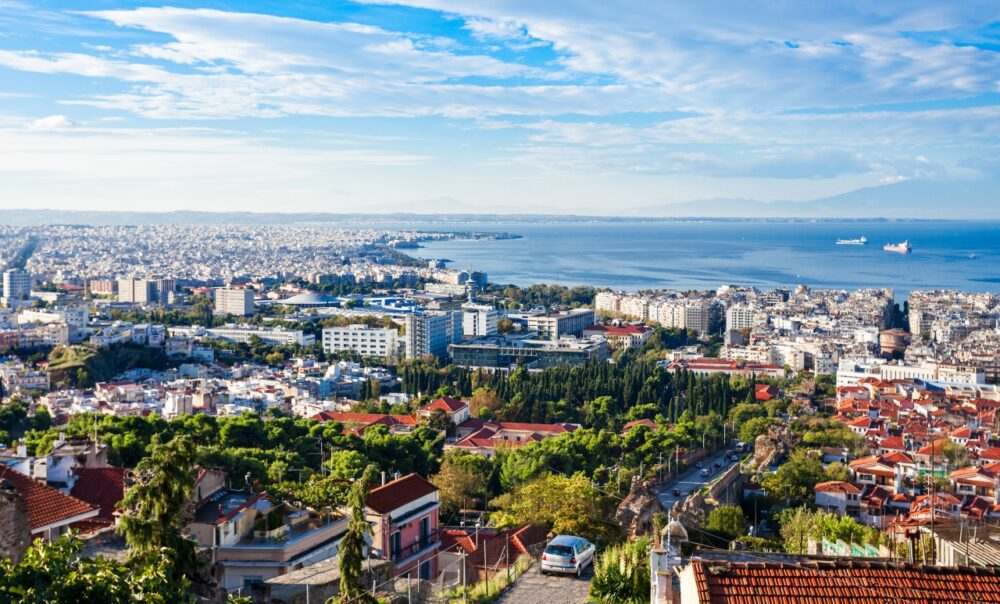
I first landed in Thessaloniki for a work conference, the same trip that later took me on to Athens. I’d budgeted zero expectations for the city itself, figuring it would be a forgettable stopover between meetings. Instead I ended up extending my flight by two days just to keep wandering the waterfront, and I’ve been back once since, this time on purpose, for a long weekend in early autumn.
If Athens is the city everyone puts on their Greece itinerary, Thessaloniki is the one locals quietly tell you to add instead. It’s Greece’s second city, but it doesn’t feel like a smaller, lesser version of the capital. It feels like its own thing entirely: Byzantine, Ottoman, and modern Greek layers stacked on top of each other along a long curving bay, with a food scene that Athenians themselves admit is better than their own.
So is Thessaloniki worth visiting in 2026? I’ve now spent close to two weeks there across two trips, in two different seasons, and I think the answer is a clear yes for the right kind of traveler. Below is everything I’d actually tell a friend before they book, not just the highlight reel.
Table of Contents
Pros – Reasons Thessaloniki is Worth Visiting
1. Layers of history you won’t find packaged together anywhere else
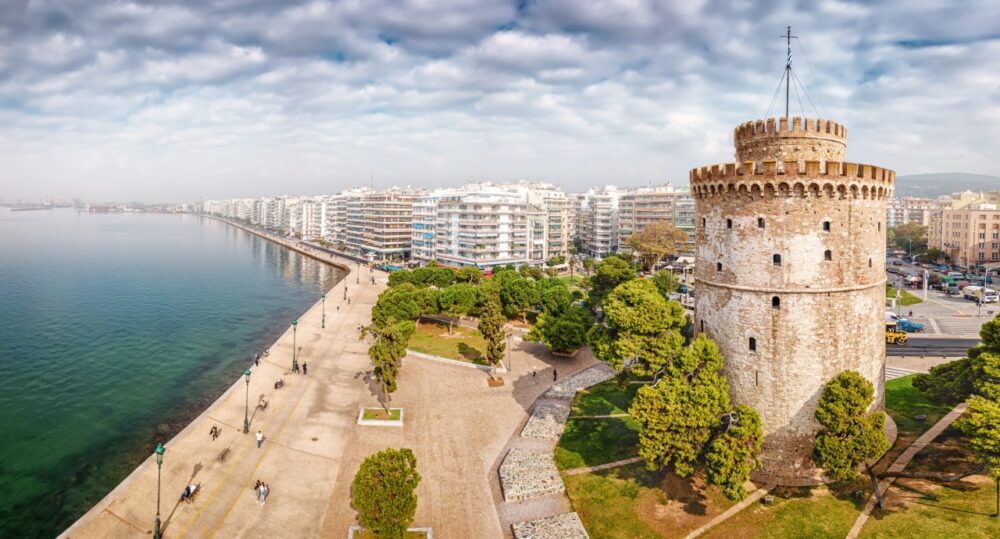
In one afternoon on my second trip, I walked through Roman ruins at the Rotunda, a Byzantine church with mosaics older than most European cathedrals, and an Ottoman-era bathhouse still standing a few streets over. Thessaloniki has been Roman, Byzantine, Ottoman, and Greek, in that order, and it hasn’t scrubbed any of those identities away. Very few cities let you experience that many distinct eras within a twenty-minute walk.
2. The food scene genuinely rivals Athens, maybe beats it
I said this in my Athens post and I’ll repeat it here with more confidence: Thessaloniki’s food is the best I’ve had in Greece. Locals here take real pride in it, partly because of the city’s history as a melting pot of Greek, Jewish, and Ottoman communities. I ate a bougatsa, a custard pastry dusted with sugar and cinnamon, from a bakery near Aristotelous Square that had been making the same recipe for decades. That single pastry has stuck with me longer than most full meals I’ve had elsewhere in Europe.
3. A walkable waterfront that anchors the whole city
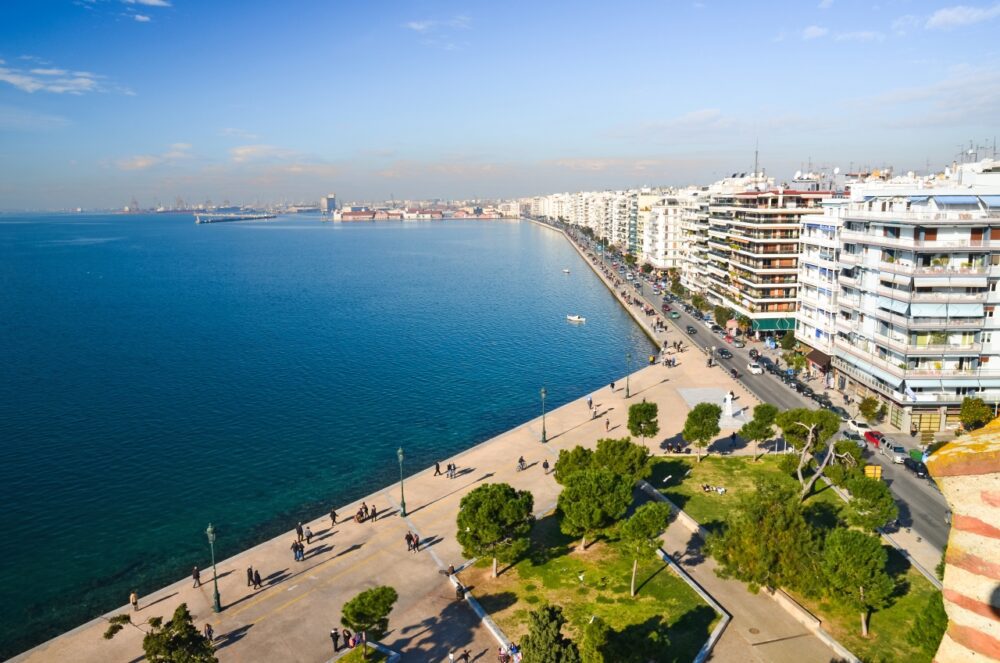
The paralia, Thessaloniki’s long seafront promenade, runs for several kilometers along the bay, with the White Tower marking one end. I walked it most evenings on both trips, and it never got old watching locals jog, cycle, and gather for coffee along the water as the sun dropped behind Mount Olympus in the distance. Few Greek cities give you a public space this long, this active, and this free to enjoy.
4. It’s noticeably less touristy than Athens
I never felt like I was competing with tour groups for space here, even in the busier parts of the old town. Signs are still mostly in Greek first, menus feel written for locals, and I had multiple conversations with shop owners who seemed genuinely curious why a foreigner had bothered to visit. If you want a Greek city experience without the crowd management of the Acropolis, this is it.
5. A serious university-town energy
Aristotle University is one of the largest in Greece, and the student population gives Thessaloniki a younger, more current feel than Athens in places. Cafes stay busy late, there’s a strong live music and bar scene, and the city has a creative, slightly scrappy energy that reminded me more of a mid-sized Spanish or Italian city than a typical Greek tourist stop.
6. Affordable even by Greek standards
Thessaloniki was cheaper than Athens on both of my visits, which is saying something given how affordable Athens already is compared to Western Europe. A full dinner with wine for two, at a proper sit-down taverna, cost me under 30 euros on my second trip. Accommodation runs noticeably cheaper too, especially outside the very center.
7. A genuinely good base for exploring northern Greece
I used my second trip to take a day trip out to Vergina, where Philip II of Macedon is buried, and another day out toward Halkidiki’s beaches. Thessaloniki sits close to a surprising range of day trips that most travelers skip entirely because they never make it past Athens and the islands.
Cons – Things to Consider Before Visiting Thessaloniki
1. Fewer direct international flights than Athens
Getting here can mean a connection through Athens first, depending on where you’re flying from. I flew in on a direct route from a conference hub, so this wasn’t an issue for me personally, but I’ve since heard from other travelers that budget carriers don’t serve the city as widely. Check your routing early, since it can add real time and cost to the trip.
2. Sights are more spread out than they first appear
The old town, or Ano Poli, sits up a genuinely steep hill above the center, and I underestimated it on my first visit, arriving in sandals that were completely wrong for the climb. The views from up there are worth it, but budget more time and better shoes than you’d expect for a city that looks compact on the map.
3. It’s a working city first, a tourist city second
Thessaloniki isn’t set up around visitors the way parts of Athens or the islands are. That’s part of its charm, but it also means fewer English menus in some neighborhoods, less obvious signage for attractions, and a general expectation that you’ll figure things out rather than be guided through them. I liked this, but I know it won’t suit every traveler, especially first-timers to Greece who want more hand-holding.
Things to Do in Thessaloniki
- Walk the full length of the paralia. Start at the White Tower and keep going until you hit the newer sculpture park; it’s the best way to get a feel for the whole city.
- Climb up to Ano Poli. The old town has narrow lanes, remaining sections of the Byzantine walls, and some of the best sunset views over the bay I’ve seen anywhere in Greece.
- Visit the Rotunda. A Roman monument turned Byzantine church turned mosque turned church again, with mosaics that genuinely stopped me mid-sentence.
- Explore the Archaeological Museum of Thessaloniki. Less crowded than Athens’ museums, with an excellent collection of Macedonian gold and artifacts.
- Eat your way through the Modiano and Kapani markets. I bought spices, cheese, and street snacks here on both trips, and it’s the best way to see how locals actually shop.
- Try bougatsa for breakfast. Ideally from a bakery that’s been making it for generations, not a tourist-facing cafe.
- Take a day trip to Vergina. The royal tombs museum is one of the most impressive archaeological sites I’ve visited in Greece, and it’s an easy trip from the city.
- Spend an evening in Ladadika. A former warehouse district turned bar and restaurant neighborhood, good for a relaxed night out.
- Visit the White Tower itself. The exhibits inside are modest, but the views from the top over the bay are worth the short visit.
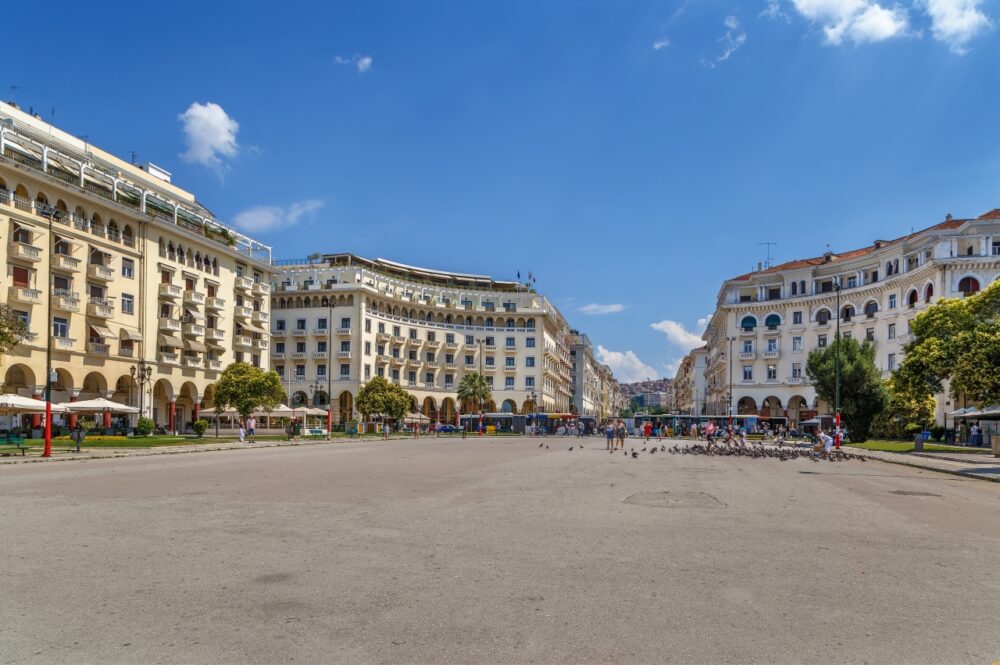
- Wander Aristotelous Square in the early evening. It’s the social heart of the city, and I found it a good spot to just sit, people-watch, and get a feel for local life.
Where to Stay in Thessaloniki
- City center, near Aristotelous Square – Central, walkable to the waterfront and most major sights. This is where I stayed on my second trip, and I’d recommend it for first-timers who want everything within easy reach.
- Ladadika – Trendy and close to the port, with a strong bar and restaurant scene right outside your door. Good for travelers who want nightlife nearby.
- Ano Poli – Quieter and more atmospheric, with narrow lanes and great views, though you’ll want to be comfortable with hills and stairs.
- Near the waterfront, east of the White Tower – More residential and calm, with easy access to the promenade for morning walks or runs.
Getting Around Thessaloniki
Thessaloniki is one of the most walkable cities I’ve visited in Greece, since the historic center and waterfront are compact and mostly flat, aside from the climb up to Ano Poli. I covered almost everything on foot on both trips and rarely needed anything else for day-to-day sightseeing.
Buses cover the rest of the city well and are cheap, though schedules can run loosely and announcements are mostly in Greek. A long-awaited metro system has been under construction for years and was still not fully operational during my most recent visit, so I wouldn’t plan around it yet. For trips outside the center, like Vergina or Halkidiki, I’d recommend either a rental car or an organized day tour, since public transport options thin out quickly once you leave the city proper. Taxis are affordable and easy to flag down in the center, and I used them a few times late at night without any issues.
Conclusion
Is Thessaloniki worth visiting? Based on two trips, in two different seasons, my honest answer is yes, and for some travelers I’d actually rank it above Athens. The history is just as layered, the food is arguably better, and the crowds are a fraction of what you’ll deal with at the Acropolis. It rewards travelers who don’t mind figuring things out for themselves, since it’s a working Greek city first and a tourist destination second.
The tradeoffs are real but manageable: flight routing takes a bit more planning, the old town will test your legs, and you won’t get the polished tourist infrastructure of the bigger names on the Greek circuit. If that trade sounds fair to you, and I think it is, Thessaloniki deserves a spot on your 2026 Greece itinerary, not just as a stopover on the way to somewhere else, but as a destination in its own right.
Related Posts
- Is Athens Worth Visiting? Pros, Cons and Travel Tips (2026)
- Is Corfu Worth Visiting? Pros, Cons and Travel Tips (2026)
- Is Mykonos Worth Visiting? Pros, Cons and Travel Tips (2026)
- Is Santorini Worth Visiting? Pros, Cons and Travel Tips (2026)
- Is Thessaloniki Worth Visiting? Pros, Cons and Travel Tips (2026)