
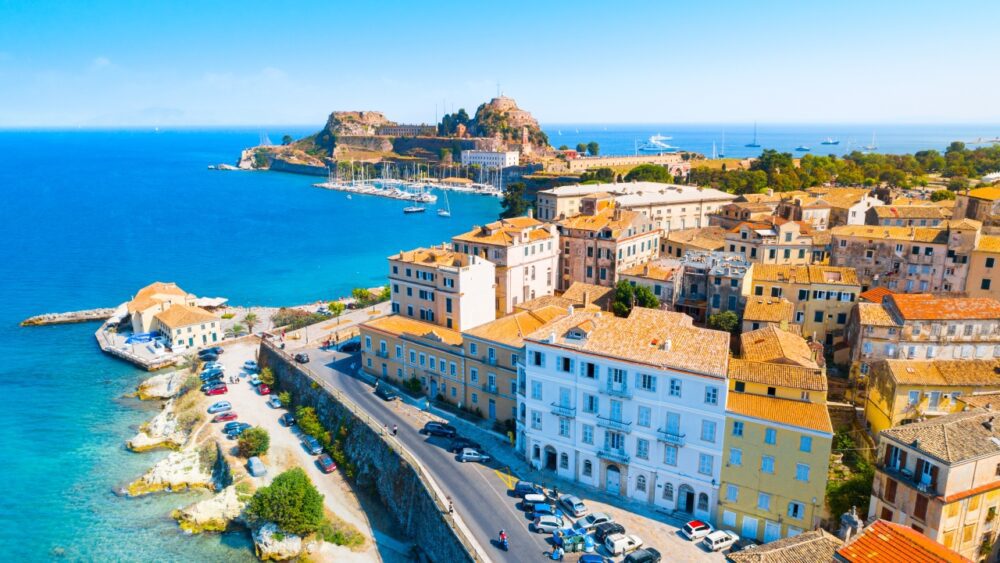
Corfu was a deliberate trip, not an add-on. I’d already spent time island hopping through the Aegean, on Mykonos and Santorini, and I wanted to see how the Ionian side of Greece compared, since everyone kept telling me it felt like a different country entirely. I flew in directly and spent a full nine days there last spring, splitting my time between Corfu Town and the quieter northeast coast, then went back for a shorter four-day trip the following October to see the island in a different season.
The comparison people make is accurate. Corfu doesn’t look or feel like the Cyclades. There’s no whitewash-and-blue-dome uniformity here. Instead you get Venetian architecture, deep green hills, olive groves that cover entire hillsides, and a coastline that shifts from pebble coves to long sandy stretches depending on which side of the island you’re on. It was ruled by Venice for four centuries, and that history is stamped all over Corfu Town in a way that makes it feel closer to Italy than to Mykonos.
So is Corfu worth visiting in 2026? After two trips in two different seasons, I’d say yes, and for a specific kind of traveler it might be the best Greek island I’ve been to. Here’s the full picture, based on what I actually experienced rather than what the brochures promise.
Table of Contents
Pros – Reasons Corfu is Worth Visiting
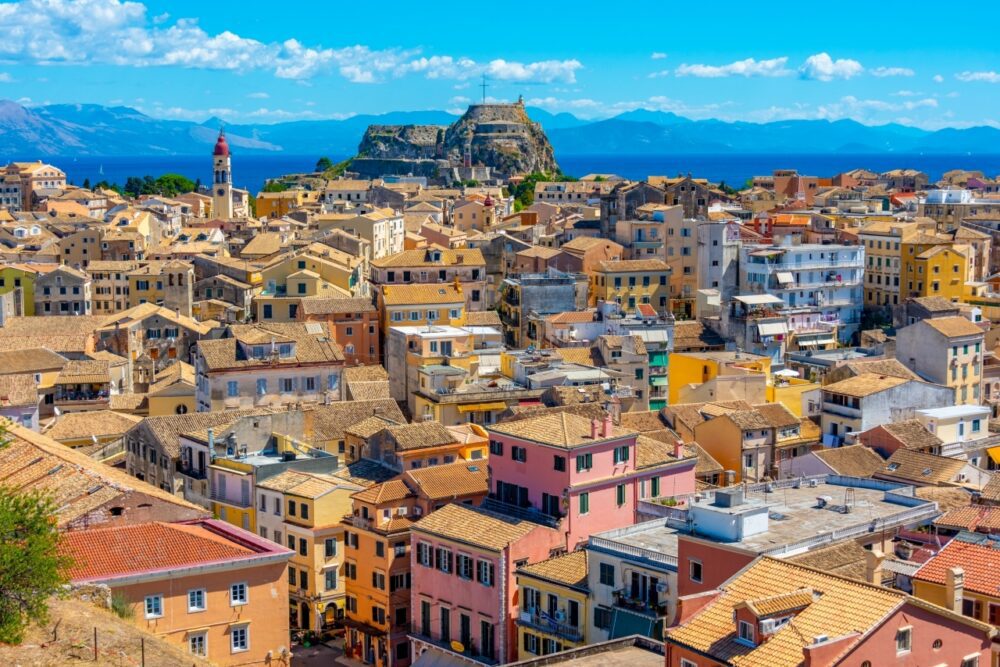
1. Corfu Town looks and feels unlike anywhere else in Greece
Wandering the Old Town’s narrow streets on my first morning, I kept forgetting I was in Greece at all. The Venetian architecture, the cricket pitch on the Spianada square, the Italian-influenced arcades, all of it gives Corfu Town a completely different character than the Cycladic islands. It’s a UNESCO World Heritage site, and walking through it, that designation makes immediate sense.
2. It’s genuinely green, which changes the whole feel of a Greek island trip
Most people picture bare, sun-baked hills when they think of Greek islands. Corfu is covered in olive groves, cypress trees, and dense green hillsides, largely thanks to higher rainfall than the Cyclades gets. I hiked a section of the Corfu Trail on my spring trip and spent most of it in genuine shade, something I never experienced on Santorini or Mykonos.
3. The beaches range from dramatic cliffs to calm family coves
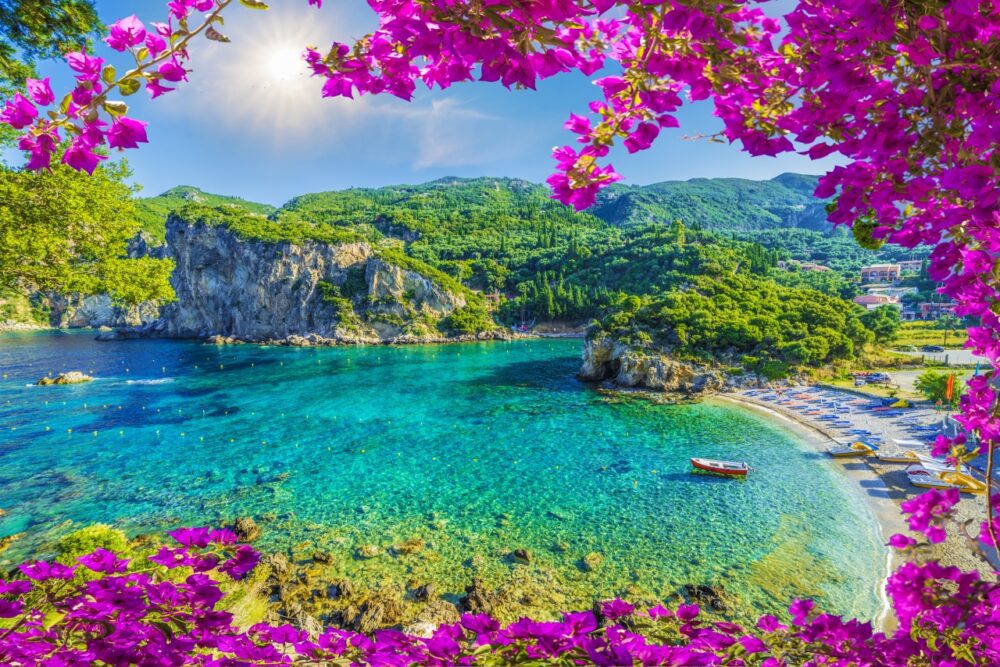
Paleokastritsa, on the west coast, gave me some of the most striking coastal scenery I’ve seen in Greece, with cliffs dropping into turquoise coves. On the northeast side, beaches like Kalami and Kassiopi were calmer and shallower, better suited to relaxed swimming than dramatic photos. Having both extremes on one island, rather than needing to island-hop for variety, was a real advantage.
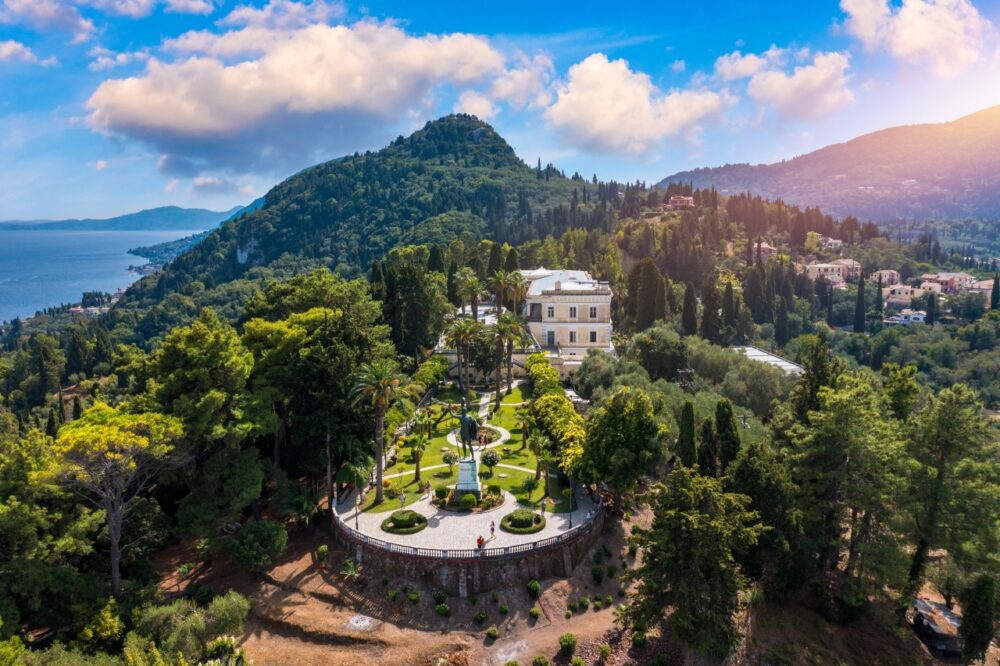
4. Achilleion Palace is a genuinely worthwhile stop, not just a tourist trap
I went in with low expectations, assuming it would be an overpriced photo stop, and left impressed. The palace, built for Empress Elisabeth of Austria, has manicured gardens, striking statues, and views over the coast that made the visit worth far more than the modest entry fee.
5. The food carries a distinct Venetian and Italian influence
Corfu’s cuisine sets it apart from the rest of Greece, with dishes like pastitsada, a slow-cooked beef and pasta dish with clear Italian roots, and sofrito, a garlicky veal dish that I hadn’t seen on menus anywhere else in the country. I ate at a family-run taverna in the Old Town on my second trip that had been serving the same pastitsada recipe for three generations, and it remains one of my favorite meals from any Greek island.
6. Fewer crowds than the Cyclades, even in summer
My spring trip felt genuinely uncrowded, even in popular spots like Paleokastritsa. My October trip was even quieter. Corfu draws a steady stream of visitors, particularly from the UK and Italy, but it never felt as saturated as Santorini or Mykonos did during my visits there.
7. It works well as a base for exploring nearby islands too
I took a day trip to Paxos from Corfu Town, a smaller, quieter island reachable by boat in under an hour, and found it a worthwhile add-on rather than a full separate trip. Corfu’s position in the Ionian makes it a reasonable jumping-off point if you want to see more than one island without a long ferry commitment.
Cons – Things to Consider Before Visiting Corfu
1. Parts of the coast lean heavily into package-tourism
Certain resort areas, particularly around Kavos in the south, are built almost entirely around British and European package holidays, with a nightlife scene that has little to do with the quieter, historic character of Corfu Town. I drove through Kavos briefly on my spring trip out of curiosity and found it a jarring contrast to the rest of the island. If that’s not the experience you’re after, research your base carefully.
2. Weather is less predictable than the Cyclades
Corfu’s greenery comes from rainfall, and that means the weather here is genuinely less reliable than on drier islands like Santorini. My October trip included two days of real rain, something I never dealt with on my Aegean island trips. If you’re set on guaranteed sun, this is worth factoring into when you travel.
3. The island is bigger than it looks, and distances add up
Corfu is one of the larger Greek islands, and I underestimated travel times on my first trip, assuming everything would be a short hop like it often is on smaller islands. Getting from Corfu Town to the northeast coast took closer to an hour by car, and reaching the west coast beaches took even longer. Plan your itinerary with real driving distances in mind, not just a glance at the map.
Things to Do in Corfu
- Wander the Old Town of Corfu Town. The Venetian streets and arcades are worth exploring without a fixed plan, just like Mykonos’ Chora, but with a completely different architectural feel.
- Visit the Old and New Fortresses. Both offer good views over the town and the sea, and the history behind Corfu’s Venetian defenses is genuinely interesting.
- Spend an afternoon at Paleokastritsa. The dramatic cliffs and coves here were the single most photogenic spot on either of my trips.
- Tour Achilleion Palace. Worth the entry fee for the gardens and views alone, even if you’re not usually a palace-touring type of traveler.
- Try pastitsada or sofrito at a family-run taverna. Corfu’s Venetian-influenced dishes are different enough from mainland Greek food to be worth actively seeking out.
- Take a boat trip to Paxos. A manageable day trip with its own charming small harbor towns and clear water.
- Hike a section of the Corfu Trail. Even a short stretch gives you a genuine sense of the island’s green, hilly interior.
- Watch a cricket match on the Spianada. A leftover from British rule, and a strange, memorable sight in a Greek setting.
- Explore Kassiopi’s harbor. A relaxed fishing village turned low-key resort town, good for a quieter afternoon on the northeast coast.
- Visit the Asian Art Museum in Corfu Town. An unexpectedly excellent, under-visited museum inside a former royal palace on the Spianada.
Where to Stay in Corfu
- Corfu Town – The most central and historically rich base, with easy access to restaurants, the two fortresses, and ferries. Best for travelers who want history and walkability over beach proximity.
- Kassiopi – A relaxed northeast coast option, with a proper harbor feel and access to calmer beaches like Kalami nearby.
- Paleokastritsa – Best if dramatic coastal scenery and beach time are your priority, though it’s less convenient for reaching the Old Town.
- Kavos – The island’s main package-holiday and nightlife hub, worth knowing about mainly so you can choose to stay elsewhere if that’s not the trip you want.
- Benitses – A quieter, more traditional coastal village south of Corfu Town, good for travelers wanting a calmer base still within reach of the main sights.
Getting Around Corfu
I rented a car on both trips, and honestly, I think it’s close to essential here. Corfu is large enough, and its sights spread out enough, that relying entirely on buses would have cost me significant time. Having a car meant I could reach Paleokastritsa in the morning and Kassiopi by the afternoon without waiting on connections.
That said, local buses do connect Corfu Town to most of the island’s main towns and beaches, and they’re a reasonable, cheap option if you’re staying centrally and only plan day trips to one or two areas rather than covering the whole island. Within Corfu Town itself, walking is easily the best way to get around, since the Old Town’s narrow streets aren’t really built for cars anyway. Taxis are available and reasonably priced for shorter trips, and boat transfers are worth considering if you’re staying somewhere like Kassiopi and want to reach nearby coves without a long drive.
Conclusion
Is Corfu worth visiting in 2026? Based on two trips, in two different seasons, my answer is a confident yes, particularly for travelers who want a Greek island trip that doesn’t look or feel like the Cyclades. The Venetian history, the greenery, and the distinct food culture set it apart from every other Greek island I’ve covered in this series, and I found the pace here noticeably more relaxed than Mykonos or Santorini.
The tradeoffs are worth knowing going in: pick your base carefully to avoid the heavier package-tourism areas if that’s not your scene, expect less guaranteed sunshine than the Aegean islands, and budget more travel time between sights than you would on a smaller island. Once you account for those, Corfu holds up as one of the more distinctive, rewarding Greek islands I’ve visited, and I’d genuinely recommend it over some of the more famous names on this list, depending on what kind of trip you’re after.
Related Posts
- Is Athens Worth Visiting? Pros, Cons and Travel Tips (2026)
- Is Corfu Worth Visiting? Pros, Cons and Travel Tips (2026)
- Is Mykonos Worth Visiting? Pros, Cons and Travel Tips (2026)
- Is Santorini Worth Visiting? Pros, Cons and Travel Tips (2026)
- Is Thessaloniki Worth Visiting? Pros, Cons and Travel Tips (2026)