Is Sibiu Worth Visiting? Honest Pros and Cons (2026)

Look up in Sibiu and the houses look right back at you. Small, half-closed windows peek out of the red-tiled roofs, and they follow you across the square like sleepy eyes. I visited one summer and spent two days here, and those rooftop “eyes” made me smile before I’d even found my coffee. Few small details in Eastern Europe have stuck with me as much.
Sibiu (Hermannstadt to its old Saxon founders) is one of the prettiest cities in Transylvania, with around 135,000 people. It was also a European Capital of Culture in 2007, and the restoration work from that year still shows. Pastel townhouses wrap around Piața Mare, a medieval wall runs along the edge of the centre, and the Carpathians rise just beyond the suburbs. Sibiu is worth visiting for a long weekend, and it’s an easy base for the rest of central Romania.
This guide covers the pros and cons of Sibiu, where to stay, and what to book. You’ll also find tips on when to go, how long you need, and getting around, so you can decide whether it suits your kind of trip.
In a Rush? Here Are Our Favourite Hotels in Sibiu Romania
⭐️⭐️⭐️ ART Hotel – Click here for rates & availability
Pros of Visiting Sibiu
1. Piața Mare

Piața Mare (the Large Square) is the heart of Sibiu, and I walked across it at least a dozen times in two days. It’s a huge cobbled square ringed by pastel Baroque townhouses, with the Brukenthal Palace on one side and the Holy Trinity Catholic Church on another. The famous “eyes” look down from almost every roof. They were built as dormer windows to ventilate the attics where people once stored grain and meat.
The square is at its best in the early evening, when the terraces fill up and the light turns golden. Strada Nicolae Bălcescu, the main pedestrian street, leads off the square and is full of shops and cafés. A coffee costs around 12 to 15 lei (£2 to £2.50), which is fair for the view. If you want the stories behind the buildings, join the Sibiu guided sightseeing tour. It lasts about 90 minutes and covers the square, Cetății Street and the Bridge of Lies.
2. Bridge of Lies

A short stroll from Piața Mare, a smaller square called Piața Mică leads to Sibiu’s best-known landmark. The Bridge of Lies is a little cast-iron footbridge built in 1859. It was the first of its kind in Romania, and it crosses the lane that drops down toward the Lower Town. Local legend says it creaks, or even collapses, when someone tells a lie on it!
I tested it with a very honest sentence and nothing happened. Still, the bridge is a great photo spot, especially from the steps below, where you can frame it with the old guild houses behind. It’s also free, so you can cross it as many times as you like. Piața Mică is lined with cafés, and the Council Tower rises on one side. The tower is closed for restoration at the moment, but it looks just as striking from the ground, and the square is a beautiful place for a slow lunch.
3. Evangelical Cathedral

The Evangelical Cathedral sits on Huet Square, a short walk from the main square, and it’s the most impressive building in Sibiu. Builders worked on it from 1350 until 1520, and its tower, at just over 73 metres, is the tallest in the region. Inside, the Gothic nave feels calm and spacious. Look for the huge Crucifixion fresco from 1445 and the organ, which is the largest in Romania.
I climbed the tower on my first afternoon. The stairs are steep and narrow, so take your time, but the view over the rooftops and toward the Făgăraș Mountains is the best in the city. Sit in a pew for a few minutes before you climb, because the quiet is a nice break from the busy square outside. In summer the tower stays open until early evening. Come late in the day for soft light and thinner crowds, and wear comfy shoes for the climb.
4. Brukenthal Museum
The Brukenthal National Museum fills the grand Baroque palace on Piața Mare. Samuel von Brukenthal, the Habsburg governor of Transylvania, built the palace between 1778 and 1788 to house his art. The museum opened to the public in 1817, which makes it one of the oldest in this part of Europe. Today the European Art Gallery holds more than 1,000 works, including the portrait known as the Man with the Blue Hat.
I spent about two hours inside, which was plenty. The elegant halls are almost as impressive as the paintings on the walls. The crowds are small and the collection is far better than you’d expect from a city this size. The museum is closed on Mondays and Tuesdays in summer, so plan around that. If you only visit one museum in Sibiu, make it this one. Combine it with a walk around the square before or after.
5. Medieval Walls and Towers
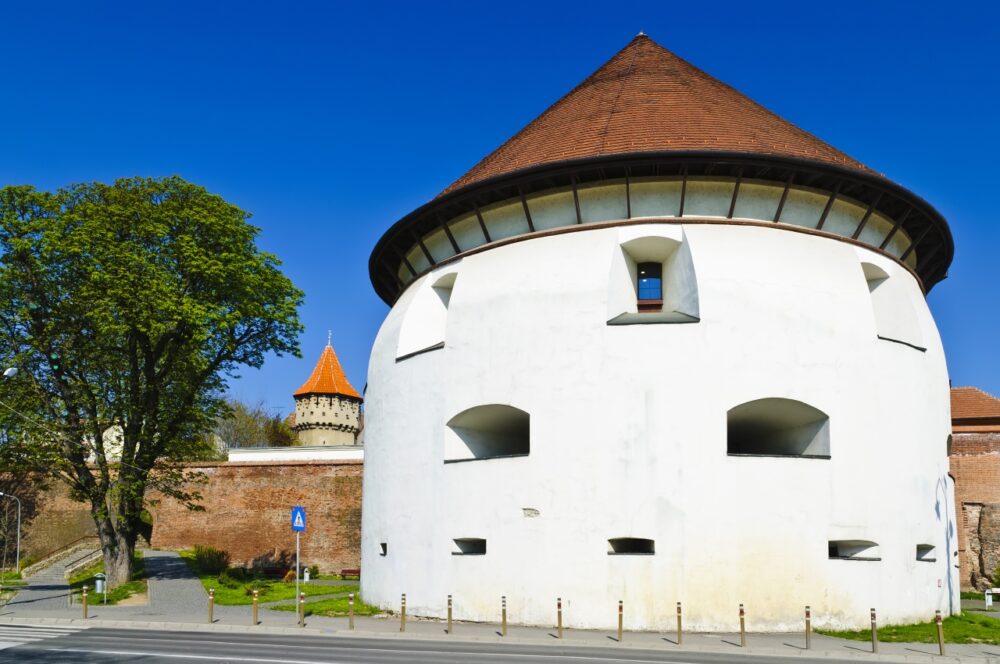
Sibiu was once one of the most heavily fortified cities in Transylvania, and large sections of the old defences still stand. The best stretch runs along Cetății Street. Here you’ll find the Potters’ Tower, the Carpenters’ Tower, the Arquebusiers’ Tower and the Thick Tower, each one named after the guild that defended it. The walls are free to wander, and they’re calm even in summer. Cetății Street is a short walk from the main square, so it works well as a morning stroll before the day warms up. Combine it with Huet Square for a neat loop of medieval sights!
Another gem is the Stairs’ Tower, the oldest monument in the city. It forms the passage that links the Upper Town and the Lower Town. I used it daily, because it’s the quickest route down to the river. For the history behind each tower, a local guide helps a lot. Wear good shoes, since the stones are uneven and the stairs are steep and worn.
6. ASTRA Museum
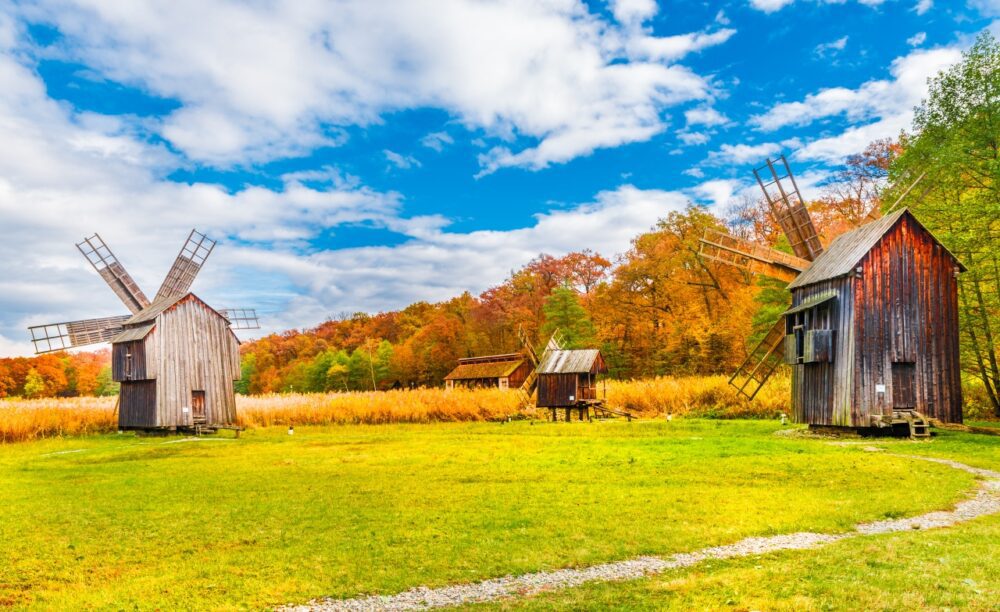
The ASTRA Museum is one of the largest open-air museums in Europe, and it was my favourite surprise of the trip. It sits in Dumbrava Forest on the edge of town and covers 96 hectares, with around 10 kilometres of paths. Wooden houses, windmills, watermills and workshops from across Romania stand among the trees. Many of them are still used for demonstrations. Kids will love it too, as lots of the buildings are open to walk through. Inside, the old tools, looms and furniture make the past feel real.
An adult ticket costs 50 lei (£8.50). I allowed three hours and could easily have stayed longer. The best way to enjoy it is to wander without a plan and stop at whatever catches your eye. Pack water and sun cream in summer, because there’s little shade between some buildings. It’s an easy ride from the centre by city bus, and the forest around it is beautiful for a stroll.
7. Hearty Transylvanian Food
Sibiu’s food scene is hearty, simple and very good value. Order ciorbă (a sour soup), sarmale (cabbage rolls stuffed with pork and rice) and mămăligă, the creamy Romanian polenta. The city is also famous for Sibiu salami, a dry-cured pork salami with a white mould coating. For dessert, papanași (fried cheese doughnuts with sour cream and jam) are a must. A traditional main course costs around 40 to 70 lei (£7 to £12). Vegetarians do fine too, with bean soup, polenta with cheese and plenty of stews.
Many restaurants sit in old townhouses with cosy cellar dining rooms. Crama Sibiul Vechi was a favourite for traditional dishes. Walk a few minutes off the main square and prices drop quickly. To pair your meal with local grapes, book a Romanian wine tasting in Sibiu. It’s a two-hour tasting with a sommelier, and it was a relaxed way to end an evening.
8. Christmas Market and Festivals
Sibiu comes alive with events all year, and its Christmas Market is one of the best in Romania. It fills Piața Mare from mid-November until early January. More than 120 stalls sell crafts, ceramics, candles and street food, and there’s a panoramic wheel, an ice rink and free entry to the market itself. A mug of mulled wine under the lights is hard to beat. The stalls open from 11:00 am on weekdays and 10:00 am at weekends. Go on a weekday evening if you hate crowds, because weekends can get packed!
In summer, the International Theatre Festival turns the city into a stage every June. Concerts and performances spill out into Piața Mare, and the square buzzes late into the evening. I arrived a few weeks after it ended, and the posters were still on the walls. Other highlights include the ASTRA Film Festival in October and craft fairs on the main square through the warmer months.
9. Great Value for Money
Sibiu is great value, especially compared with most of Western Europe. A beer costs around 12 to 16 lei (£2 to £2.75), and a taxi across the centre is usually under 30 lei (£5). A one-hour bus ticket costs just 3.5 lei, which is well under £1. Even a three-course dinner with a drink won’t hurt your budget. A hearty lunch of soup, a main and a drink often comes in under 60 lei (£10). I spent far less than I expected over two days.
Sights are cheap too, and the walls and squares are free. Tours are good value as well, because small groups and included transport keep prices down. A guided Old Town walk costs less than a pizza in many big cities. Hotels follow the same pattern. A comfortable double in the Upper Town often costs far less than a similar room in most Western European cities.
10. Day Trips from Sibiu

Sibiu is a perfect base for day trips, and that’s a big reason I’d stay longer. Brasov, with its Black Church and Dracula’s Bran Castle, is about two and a half hours away. The Brasov and Dracula’s Castle day tour includes a local guide for the city, then lets you explore the castle on your own.
For history lovers, Alba Iulia and Corvin Castle is an eight-hour trip to a Habsburg star fortress and one of Europe’s most dramatic castles. Closer to town, Cisnadioara has a hilltop Romanesque church, and the mountain resort of Paltinis is about 35 kilometres away. In summer, the Transfăgărășan road and Bâlea Lake are about two hours away. Sighisoara, a colourful medieval citadel, is also around two hours each way, so I’d join a tour or hire a driver for the day. Fortified churches dot the villages around Sibiu too, and most feel far quieter than the big names.
Cons of Visiting Sibiu
1. Busy Summer Weekends
Sibiu gets busy in summer, especially on weekends. Piața Mare fills up by late morning, and tour groups queue at the Evangelical Cathedral tower. Festival weeks are the worst, when hotel prices rise and the best restaurant tables book out. On my trip, I found the stairs by the Bridge of Lies almost impossible to photograph without strangers in the frame!
Start early, when the square is quiet and the light is beautiful. Visit midweek if you can, and book your hotel well ahead for festival dates. A guided sightseeing tour helps you skip the confusion and find the quieter lanes. After about 7:00 pm, the day-trippers head home and the old town feels relaxed again. Sibiu is still worth it at its busiest.
2. Pricey Square-Side Dining
The terraces around Piața Mare are pretty, but many are overpriced. Menus come in several languages, the food is average and service slows down when the tables fill up. I paid nearly double for a plate of mici (grilled minced-meat rolls) on the square compared with a place two streets away. It was a classic tourist-spot price for an ordinary dish.
Walk a few minutes off the square before you sit down. The side streets near the Lower Town have better prices and more locals. Read the menu for prices before you order. If you want to leave the choosing to a guide, the two-hour wine tasting is an easy way to enjoy local flavours, and the old town is still a great place to eat.
3. Slow Train Connections
Sibiu isn’t the easiest city to reach by train. The fastest service from Bucharest takes more than five hours, and only two InterRegio trains run each day. There’s no InterCity service. Trains from other cities are also slower than the distance suggests, and the schedule leaves little room for a late start or a missed connection.
Flying is often easier, because Sibiu has a small airport with direct flights to Bucharest, Munich and Vienna. If you’re coming from Brasov, a guided day tour in the other direction is a good alternative. The Brasov and Dracula’s Castle tour covers the road for you. Coaches can be quicker on some routes, so compare your options before you book. Plan your connections carefully, and Sibiu is still worth the journey.
4. Closures and Renovations
Some of Sibiu’s top attractions are hard to see at times. The Council Tower is closed for restoration until the end of 2027, which means no climb to the rooftop view from Piața Mică. Many museums close early in the week, and a few smaller sights shut for lunch or for private events. It’s easy to arrive at a locked door!
Plan your days around the opening hours. Visit the Brukenthal Museum from Wednesday to Sunday, and save outdoor sights like the walls for the quieter days. For a rooftop view, the Evangelical Cathedral tower is the better climb anyway, since it’s higher. Scaffolding comes and goes on the main square, but the town is so photogenic that Sibiu is still worth it.
5. Cold Winters
Sibiu is a beautiful winter break, but it is cold. Temperatures often sit below freezing, snow can lie on the cobbles for weeks, and the days are short. Some mountain roads close, and the Transfăgărășan is shut for much of the year. Open-air sights like the ASTRA Museum feel very different when the paths are icy.
Pack proper boots, gloves and a warm hat. Dress in layers, since shops and cafés are well heated. Visit in late November or December for the Christmas Market, when the whole square glows and warm drinks are everywhere. Spend the colder afternoons in the Brukenthal Museum or a cosy café, and head up to Paltinis if you want snow. With the right layers, winter in Sibiu is still worth it.
Where to Stay
Upper Town: The Upper Town is where I stayed for two days, and I’d happily pick it again. Piața Mare, the Bridge of Lies and the Evangelical Cathedral were all a few minutes from my door, and the quiet cobbled lanes were magical at night. The downsides are late noise from the terraces and higher prices. For a budget stay, Zur Linde is a comfortable apartment stay with a terrace, free WiFi and bikes to borrow. Hotel Am Ring sits right on Piața Mare and has a restaurant, a bar, a terrace and free parking. For a treat, ART Hotel is a 4-star with a restaurant, a bar, a terrace, a coffee house and massage services.
Lower Town: The Lower Town lies below the old walls along the river, and it’s quieter and more local than the Upper Town. You’ll walk 10 to 15 minutes to Piața Mare, usually through the Stairs’ Passage, so expect some climbing on the way back. There are fewer big sights, but prices are lower. Mill Central Apartment is a good-value option with a garden, a terrace and free parking. Casa Wagner is a guest house with a sun terrace, free parking and free WiFi. For something special, Boutique 17B is a 4-star aparthotel with a seasonal outdoor pool, a garden, a bar and massage services.
Calea Dumbrăvii: Calea Dumbrăvii is the main road south of the old town, toward Dumbrava Forest and the ASTRA Museum. It’s about a 10-minute walk to Piața Mare, and the buses are close by. It isn’t pretty, but the hotels are modern and well equipped. Little Heaven Apartments is a budget-friendly stay with a terrace, air conditioning and free parking. MyContinental Sibiu is a 3-star hotel with a restaurant, a bar, a terrace and a 24-hour front desk. Ramada Sibiu is a 4-star with a restaurant, a bar, a fitness centre and an airport shuttle for an extra charge!
Near the Train Station: The area around the station is the cheapest part of town, and it works well if you arrive late or leave early. You’re about 1.5 kilometres from Piața Mare, so it’s a 20-minute walk or a short bus or taxi ride. It lacks charm, but parking is easy. Perfekte Rast offers apartments with free parking and massage services. Pension Korona is a guest house with a restaurant, a bar, a terrace and a coffee house. Hotel Anastasia is a 4-star hotel with a bar, a terrace, room service and free parking.
Best Things to Do
- Sibiu Guided Sightseeing Tour: A 90-minute guided walk through the main square, Cetății Street and the Bridge of Lies, with stories about the medieval city and its Saxon founders.
- Romanian Wine Tasting in Sibiu: A two-hour tasting with a sommelier, with a flight of five Romanian wines from the white Fetească Albă and Regală to the red Fetească Neagră.
- Brukenthal National Museum: The grand Baroque palace on Piața Mare, with the European Art Gallery and more than 1,000 works of art. It’s open Wednesday to Sunday in summer.
- ASTRA Museum: A huge open-air museum in Dumbrava Forest with traditional houses, mills and workshops from across Romania, connected by around 10 kilometres of paths.
- Brașov and Dracula’s Castle Day Tour: A full-day trip with a local guide for Brasov’s old town, then free time to explore Bran Castle on your own.
- Alba Iulia and Corvin Castle Tour: An eight-hour guided day trip to the Habsburg citadel of Alba Iulia and the dramatic Corvin Castle in Hunedoara.
- Sighișoara, Biertan and Viscri Private Tour: An eight-hour private tour with hotel pickup to Sighisoara’s Saxon citadel and the UNESCO-listed fortified church at Biertan, plus the village of Viscri.
- Sibiu to Bâlea Bus Transfer: A full-day bus link from Sibiu to Bâlea Waterfall and Bâlea Lake, so you can explore the lake and the Transfăgărășan road at your own pace without driving.
- Păltiniș Mountain Resort Day Trip: An eight-hour private trip with pickup and a scenic drive through the forests and mountains of the Cindrel Range.
- Paragliding Over Păltiniș: A tandem flight with an experienced pilot, taking off near Paltinis with views of the Cindrel and Făgăraș mountains, plus photos and video.
- Sibiu Christmas Market: A free market in Piața Mare from mid-November to early January, with craft stalls, street food, mulled wine, a panoramic wheel and an ice rink.
Best Time to Visit
Summer: I visited in summer, and it’s a great time to go. Days were warm, usually in the mid to high 20s, and the evenings were cool enough for a light jacket on the terraces. Everything is open, the International Theatre Festival fills the squares in June and day trips run daily. It’s also the busiest season, so book hotels early and start your sightseeing at 9:00 am.
Spring: April and May bring blossom, mild days and far fewer people. The terraces start to reopen, and prices stay low. Showers are common, so pack a rain jacket. Mountain trails around Paltinis can stay muddy or snowy into May, and the Transfăgărășan is still closed.
Autumn: September and October are the months I’d recommend most. The forests turn gold, the crowds thin out and the weather stays mild into early October. It’s perfect for the ASTRA Museum and for hikes in the Cindrel Mountains. The ASTRA Film Festival takes place in October. By November it turns cold and grey, and the days shorten quickly.
Winter: Winter is a very different trip. From mid-November, the Christmas Market fills Piața Mare with lights, stalls and mulled wine. Snow covers the rooftops, and Paltinis opens for skiing. It’s cold, often below freezing, and the days are short. Plan indoor stops like the Brukenthal Museum, and bring a warm coat!
How Long to Spend
1-2 Days: Two days is what I did, and it’s enough for the highlights. Spend the first day on Piața Mare, the Bridge of Lies, the Evangelical Cathedral tower and the Brukenthal Museum. Use the second day for the walls on Cetății Street and the ASTRA Museum. It felt a little rushed, and I’d have loved an extra evening on the square.
3-4 Days: With three or four days, you can add a day trip without feeling hurried. Brasov and Bran Castle is the classic choice, and Alba Iulia and Corvin Castle is a great alternative. A free afternoon is perfect for a long lunch, a wine tasting or a stroll through Dumbrava Forest. This is the ideal length for most people.
5-7 Days: With a week, Sibiu makes a superb base for central Romania. Add Sighisoara and the Saxon villages, a drive along the Transfăgărășan in summer and a hike or paraglide at Paltinis. You could also head to Brasov for a night. Keep one slow day for cafés, museums and the Lower Town. You could also build a separate stay in Cluj-Napoca into a longer Romania itinerary, rather than filling every day in Sibiu with outings.
Getting Around
On foot: Sibiu’s old town is compact and mostly pedestrian, so walking is the best way to get around. It takes about 15 minutes to walk from Piața Mare to the Lower Town. Wear comfy shoes, because the cobbles are uneven and the stairs between the Upper and Lower Town are steep.
Buses: Tursib runs the city buses. A one-hour ticket costs 3.5 lei (under £1), and a day pass costs 7 lei (£1.20). Buy tickets from the SibiuBus app, a ticket machine or the Tursib agencies, or pay contactless on board for some tickets. Inspectors fine riders without a valid ticket, so keep yours handy. The buses are useful for the ASTRA Museum and the train station.
Taxis and ride-hailing: Uber and Bolt both work in Sibiu. A ride across the centre is usually under 30 lei (£5). Check the fare in the app before you set off!
Trains: CFR Călători runs trains to Sibiu. The fastest service from Bucharest takes about 5 hours 25 minutes, and only two InterRegio trains run each day, so book ahead. The station is about 1.5 kilometres from Piața Mare, so take a bus or taxi into the centre.
To and from the airport: Sibiu Airport is small, close to the city and easy to use. Tursib city buses, including line 11, stop right outside arrivals, and a ticket costs 3.5 lei. The ride into the centre is short. Plan your trip back the day before you fly.
Final Thoughts: Is Sibiu Worth Visiting?
Yes, Sibiu is worth visiting, and it’s one of my favourite small cities in Romania. It has a beautiful Saxon old town, a world-class open-air museum and a cathedral tower with the best view in Transylvania. Everything is walkable, the food is good and prices are low. Those rooftop “eyes” alone are worth the trip.
It isn’t perfect. Summer weekends get busy, restaurants on the main square charge extra and the train links are slow. Some sights close for renovation, and winters are cold. But a smart hotel choice, an early start and a couple of well-chosen tours fix most of that.
If you enjoy history, hearty food and charming streets, Sibiu is a great choice for a long weekend or a base for exploring Transylvania. If you want pristine streets and no tourists, look elsewhere. For me, it was a two-day trip that felt far too short, and I’d happily go back.