Where to Stay in Sofia: Best Areas and Hotels (2026)

Sofia is a capital where you can ride the metro past Roman ruins, pause under gold domes and still be on a mountain trail within the hour. It’s cheap, relaxed and far less crowded than most European capitals, and it has more history packed into its centre than its reputation suggests. It’s also easy to book badly, because the neighbourhoods are packed into a small space yet have very different personalities.
I spent two days in Bulgaria’s capital one spring and stayed in the City Center. I walked to Alexander Nevsky Cathedral on my first morning, wandered through the Serdica ruins by lunchtime and still had the afternoon free for the mosque and the market hall. The city is flat and compact, and two days covered most of the big sights without any rushing.
On a short trip, my advice is the City Center. It puts the cathedral, the mosque, the synagogue and the main pedestrian streets all within a short walk, and the metro is right there for everything else. The four other areas suit different trips, from tree-lined residential streets to a village at the foot of the mountain. Below, I walk through what each one is like, the pros and cons, and the three hotels I’d look at first, and I finish with a section on transport.
Best Areas to Stay in Sofia
- City Center – Best area for newcomers and sightseeing on foot
- Vitosha Boulevard and NDK – Best area for shopping, cafés and mountain views
- Oborishte – Best area for leafy streets and quieter evenings
- Lozenets – Best area for parking, calm and quick access to Vitosha
- Boyana – Best area for medieval frescoes and village-style stays
Map of Hotels
City Center
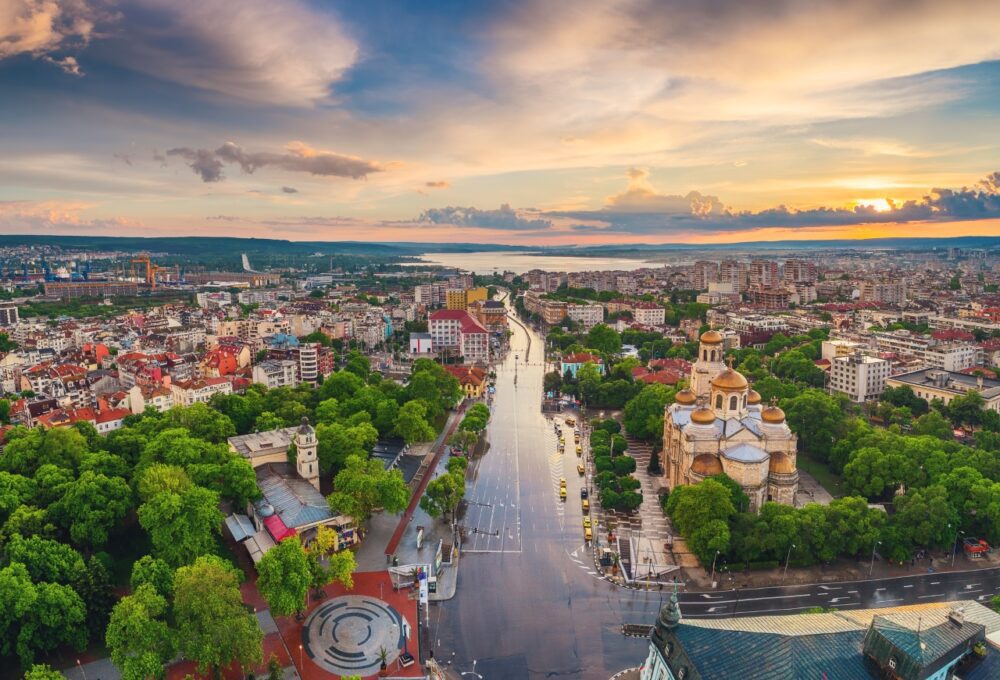
I based myself in the City Center, and it’s where I’d send anyone on a first trip. Within a few minutes’ walk you can reach Alexander Nevsky Cathedral, the Church of Sveta Nedelya, the Rotunda of St George, the Church of St Sophia and the Roman streets of Serdica, which are preserved inside the Serdika metro station. The cathedral’s Museum of Christian Art in the crypt is open from Tuesday to Sunday, 10:00 to 18:00, and the flea market beside it sells Soviet badges, old books and icons. I walked out of my hotel on the second morning and passed two thousand years of history before breakfast.
The big advantage is how little planning you need. The Banya Bashi Mosque, built in 1576, and the Sofia Synagogue, which opened in 1909, are around the corner from each other, the Central Market Hall (open since 1911) is good for cheese and honey, and warm mineral water pours from free public fountains outside the old baths, and there’s a mehana (traditional restaurant) on nearly every block. A main course costs roughly €8 to €12. The metro runs straight through the middle, so you can reach Vitosha Boulevard or the airport without a taxi. Order banitsa from a corner bakery for breakfast and a shopska salad with kebapche for lunch, and you’ll rarely spend more than a few euros. Hotels are plentiful, from simple budget places to the grand five-star on Sveta Nedelya Square.
The catch is traffic and price. The main boulevards are loud, and street-facing rooms catch the noise from the early hours. Hotels cost a little more than in the outer districts, and some of the older buildings need a coat of paint. Request a courtyard room or a higher floor and the noise fades. For a trip built around walking, this is where I’d stay again.
Pros and Cons of City Center
| Pros | Cons |
|---|---|
| Cathedral, mosque, synagogue and Serdica ruins within a short walk | Traffic noise on the main boulevards |
| Metro, trams and buses all close by | Slightly higher prices than outer districts |
| Widest range of hotels and restaurants | Some older buildings look tired |
| Flat, compact and easy to cover on foot | Pavements get busy around midday |
Best Hotels in City Center
- Maria Luisa by INTROVERT HOTELS – A budget-friendly stay on Knyaginya Maria Luiza Boulevard, close to the Central Market Hall. It has a terrace, a shared lounge and lockers, and pets are welcome. A good match for solo travellers who just need an inexpensive bed in the middle of town.
- B1 Downtown Hotel – A three-star on Alexander Stamboliyski Boulevard with its own restaurant, a fitness centre and reception that never closes. It’s a practical pick for couples and business travellers who want a comfortable, central base.
- Sofia Balkan Palace – An upscale five-star on Sveta Nedelya Square, right in the middle of the action. Inside you’ll find a restaurant with a bar and a fitness area, and the rooms are soundproofed. Book it when you fancy a treat.
Vitosha Boulevard and NDK
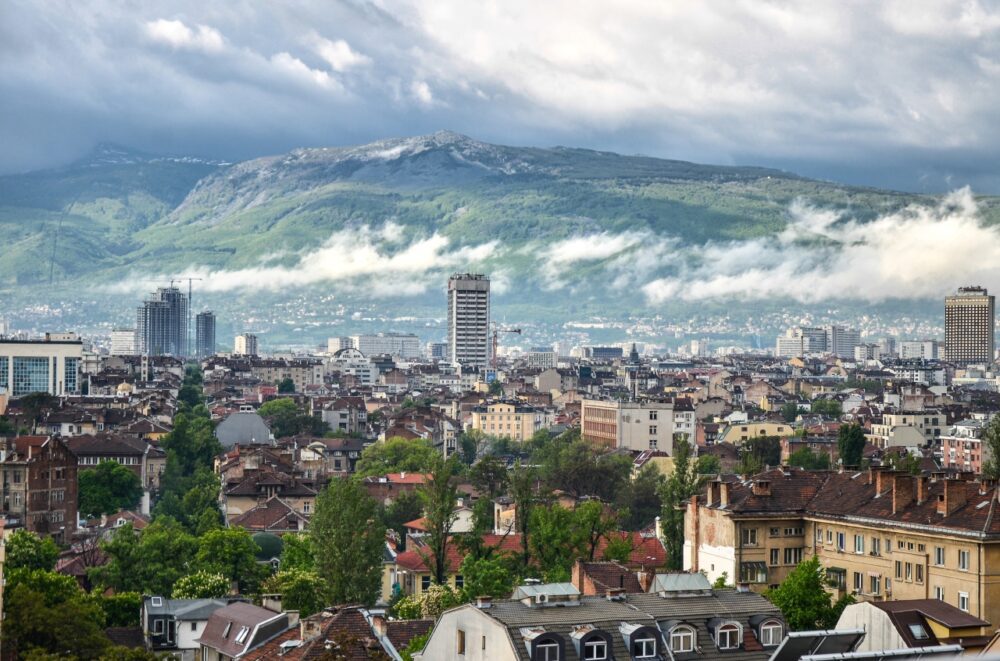
Vitosha Boulevard is the stylish side of Sofia. It’s the city’s main pedestrian street, lined with shops, cafés and restaurants, and it runs south towards the National Palace of Culture, known as the NDK. The NDK opened in 1981 to mark 1,300 years of the Bulgarian state, and its main hall seats more than 3,000 people. The park around it is a favourite spot for locals to walk and meet friends. Look up from almost anywhere on the boulevard and you’ll see Vitosha Mountain rising behind the rooftops.
It’s the best area if you like to browse, eat and people-watch, and it’s the one I’d pick for a long weekend built around good food. Terraces fill up on warm evenings, and you can move from a coffee to a cocktail bar without crossing a road. If you want a proper Bulgarian dinner, many of the restaurants around the boulevard serve kavarma, a slow-cooked pork and vegetable stew, followed by a small glass of rakia. The metro stops at the NDK, and the cathedral is only a quarter of an hour away on foot, so the old sights stay within easy reach. Hotels range from small apartment-style stays to the big Hilton beside the NDK, and many include breakfast. The streets around the park stay lively until late.
The downsides are crowds and cost. The boulevard gets packed at weekends, and prices for food and rooms run a little above other parts of Bulgaria’s capital. The side streets can be noisy when the bars close, so it’s worth asking for a room that faces away from the main drag. There aren’t many historic sights right on the boulevard itself, so you’ll walk or take the metro for those. If you’d like a polished, lively base with the mountain on your doorstep, it’s a very easy choice.
Pros and Cons of Vitosha Boulevard and NDK
| Pros | Cons |
|---|---|
| Car-free boulevard with shops, cafés and restaurants | Crowded at weekends |
| Mountain views from the street | Prices a little above other areas |
| Metro stop at the NDK | Side streets noisy late at night |
| Cathedral a 15 minute walk away | Few historic sights on the boulevard itself |
Best Hotels in Vitosha Boulevard and NDK
- Art31 – A budget-friendly apartment-style stay on Petar Parchevich Street. Reception is open around the clock, there’s a lift and air conditioning, and the boulevard is steps from the door. A good fit for couples and short breaks.
- Sentro Boutique Hotel – A three-star on Solunska Street, a short walk from the boulevard. The property has a garden and a terrace, along with a bar and a coffee house. It works well for travellers who like a quieter courtyard after a busy day.
- Hilton Sofia – An upscale five-star beside the NDK, with a spa and a sauna, a gym, a garden and a restaurant. Choose it if a proper spa stay is the goal.
Oborishte
Oborishte is a pleasant district just east of the centre, wrapped around the Doctors’ Garden and the grounds of Sofia University. It’s a walkable, tree-lined part of town, with neighbourhood cafés and quiet residential streets. You can stroll to Alexander Nevsky Cathedral or the City Garden, where the National Theatre stands, in a few minutes. Locals come to stroll through the park and linger over a coffee, and life moves noticeably slower than it does in the heart of the city. The surrounding streets are dotted with bookshops and small galleries, which makes it a pleasant place to wander without a plan, especially if you’ve already ticked off the headline sights.
Pick this district if you want calmer evenings and a more lived-in feel. Streets are quieter at night, and the cafés are full of students and university staff rather than tour groups. You can walk to the main sights in about 10 to 15 minutes; the Doctors’ Garden is a nice place for a morning stroll, and a few of the guesthouses sit in older buildings with plenty of character.
The drawback is a thinner choice of places to eat and drink nearby. Some quieter streets feel empty after dark, so you’ll head back towards the centre for dinner, and you’ll miss the buzz of the main boulevards. A couple of the side roads are narrow and can be tricky if you arrive with a lot of luggage. Even so, if you’d rather end the day in a calm, green neighbourhood than a busy square, Oborishte is a good fit. The cathedral and the Serdica ruins are both an easy walk, so you can still treat it as a sightseeing base and simply sleep somewhere quieter. It’s also worth a look for travellers who’ve visited before and no longer need to be beside every landmark.
Pros and Cons of Oborishte
| Pros | Cons |
|---|---|
| Doctors’ Garden and park walks on your doorstep | Thinner choice of places to eat and drink |
| Quiet, tree-lined streets at night | Some side streets feel empty after dark |
| Cathedral and City Garden within a short walk | Less buzz than the core |
| Guesthouses in elegant old villas | Narrow roads for luggage and taxis |
Best Hotels in Oborishte
- Momenti & Colori Studios – A budget-friendly apartment on Georgi Benkovski Street with a terrace, a lift and air conditioning. Solo travellers and couples get a little more room than in a standard hotel bedroom.
- L’Opera Guest House – A three-star on Paris Street with a terrace, a coffee house and soundproofed rooms. It’s the pick for travellers who want a quiet room close to the City Garden.
- Hyatt Regency Sofia – An upscale five-star on Vasil Levski Square, with an indoor pool, a spa, a hammam and a garden. It’s the best option in the district for a relaxing, comfortable stay.
Lozenets
Lozenets is the leafy residential district south of the centre, at the foot of Vitosha Mountain. It’s where you’ll find embassies, villas and wide, quiet streets lined with trees. The mountain is close enough that you can see the peaks from your window, with Cherni Vrah, the highest point, rising to 2,290 metres, and Vitosha Nature Park starts at the edge of town. The district feels like a different city from the busy centre.
It’s built for travellers who value peace over sightseeing. Parking is straightforward, which you can’t say for the middle of the city, and many hotels have gardens, terraces and pools. Rates are generally lower than in the centre for the same level of comfort, and you’ll find a good choice of four- and five-star places with spa facilities. The metro and taxis connect you to the old town, and the mountain is a short ride from your door. It’s also a smart base if you plan a hiking day or want to use Sofia as a launch pad for trips around Bulgaria. Locals head up the mountain at weekends to hike in summer and ski in winter, and the Boyana Waterfall and the Stone River boulder field are two of the best-known sights in the park.
The downside is distance from the sights. You’ll need a quick metro hop or a taxi to reach the cathedral and Serdica, and evenings are very quiet. There are fewer cafés and bars than in the middle of town, and you won’t feel the energy of the pedestrian streets. Some of the older hotels look dated too, so look at recent photos before you book. If you’re driving, planning mountain days or simply want a calm retreat, Lozenets is a sound choice.
Pros and Cons of Lozenets
| Pros | Cons |
|---|---|
| Quiet, green streets at the foot of Vitosha | Short metro ride or taxi to the main sights |
| Easy parking at most hotels | Very quiet evenings |
| Spa hotels and gardens at lower rates | Fewer cafés and bars nearby |
| Quick access to mountain hikes | Some older hotels look dated |
Best Hotels in Lozenets
- California Hotel – A low-cost three-star on Bigla Street with a garden, a terrace and its own car park. It’s a quiet, simple base for drivers and anyone heading into the mountains.
- Best Western Plus Lozenetz Hotel – A four-star on Sveti Naum Boulevard Here you get a restaurant, a bar, a garden and an EV charging station. Business travellers and families will find it reliable and comfortable.
- Hotel Marinela Sofia – An upscale five-star on James Bourchier Boulevard, with an indoor pool, a spa, a hammam and a fitness centre. Book it when you want to unwind after a day on the trails.
Boyana
Boyana is a village-like district on the slopes of Vitosha, about 10 minutes by car from the centre, and it’s the most peaceful of the five areas. Its main attraction is Boyana Church, inscribed on the UNESCO World Heritage List in 1979. The second church was completed in 1259, and its frescoes show lifelike faces that art historians see as a forerunner of the Renaissance. Visitor numbers are limited to protect the paintings, and the church is open from 9:30 to 18:00 between April and October. The streets around it are quiet, with villas, gardens and the forest just beyond. The frescoes cover 89 scenes with around 240 images, and the faces look surprisingly lifelike for the 13th century.
It’s the area for people who want to wake up near trees and be back among them within minutes of leaving the door. You can walk to the church, the Boyana Waterfall trail and the National Museum of History, and the Nu Boyana Film Studios are close by. Hotels are small, quiet and often have gardens, free parking and views of the mountain. If you want something lighter than a church, the Nu Boyana Film Studios run guided tours with outdoor sets and original props. Evenings are very calm, so it suits couples and families who plan to spend the days outdoors. Buses 64 and 107 serve the church, and a taxi is the easiest way back to the centre when you want a night out.
The trade-off is that you’ll spend more time getting around. The centre is 10 to 20 minutes away by car, and by bus it takes longer, so you won’t pop back to your room between sights. There are very few restaurants and almost no nightlife, and the nearest metro stop is some distance away. Book ahead for the church in busy months, and plan your meals in advance. If you want fresh air, fresco-hunting and a quiet room more than late-night cafés, Boyana is a lovely base. Pair it with a day on the mountain, since the Vitosha trails start only a short drive away.
Pros and Cons of Boyana
| Pros | Cons |
|---|---|
| Boyana Church and the waterfall trail within walking distance | 10 to 20 minutes by car from the centre |
| Quiet, green, village-style streets | Very few restaurants and almost no nightlife |
| Hotels with gardens and free parking | Buses are slower than the metro |
| Easy access to Vitosha hikes | Limited visitor numbers at the church |
Best Hotels in Boyana
- Casa Boyana Boutique Hotel – A five-star on Ivanitza Danchev Street, about 10 minutes from the church on foot. Facilities include a restaurant, a lobby bar, a sauna and gym, with breakfast included. The soundproofed rooms suit couples and families.
- Two-bedroom apartment in Boyana – A self-catering apartment about six minutes’ walk from the church, with a kitchen, a terrace, air conditioning and free parking. Breakfast isn’t included, which makes it a better fit for groups and longer stays.
- Rumen’s house – A homely guesthouse on Sevastokrator Kaloyan Street with garden views, free parking and a peaceful setting. Pets are welcome, and breakfast isn’t included. Hikers and anyone who likes a quiet, homely stay will feel at home.
Getting Around
Sofia is flat and manageable, and you can cross the City Center on foot. The metro is clean, quick and cheap, and trams and buses fill in the gaps. Bulgaria uses the euro, so you don’t need to change money before you arrive.
Walking and the metro – The cathedral, Sveta Nedelya, the Serdica ruins and Vitosha Boulevard are all within about 30 minutes of each other on foot, and the centre is flat, so a day of sightseeing won’t tire you out. Cobbles and uneven paving are the main hazards, which is another reason to pack comfortable shoes. The Sofia Metro is the best option for longer hops, and the lines meet in the middle of town, so it’s hard to get lost. Trams and buses run by Sofia Traffic cover the rest of the city, and the day card works on all of them.
Tickets and payment – A single metro ticket costs €0.80, and a day card costs €2 for unlimited metro, bus, tram and trolleybus rides on the day. If you tap a contactless card instead, you can transfer within 30 minutes at the same €0.80 fare. Touch a contactless bank card or phone to the reader at the barrier, and validate each time you board. Pavements can be uneven away from the pedestrian streets, so wear comfortable shoes.
To and from the airport – Sofia Airport is about 10 km from the centre. The metro runs from the airport to Serdika station in about 25 minutes, and it costs the same as any other single ticket, which makes it the cheapest and easiest way to reach town. If you’d like someone waiting for you, a private airport transfer takes around 40 minutes and starts at about £30 for a group of up to three. A one-way private transfer costs from about £15 per person. Book your journey back to the airport the night before, so your last morning isn’t a scramble.
Night transport – The metro stops running around midnight, so look up the last train before you settle in for a long dinner. A few night bus routes exist, but they’re infrequent, and a taxi booked through an app is the simpler way home. If you’re staying in Lozenets or Boyana, ask your hotel to order a car before you head into town.
Taxis and ride-hailing – You can order rides with Bolt or Uber in Sofia, and both show the price before you set off. Short rides in the centre usually cost €2 to €4. Skip street cabs near the airport and the central station, where overcharging is more common, and insist on the meter if you do take one.
Summary of Where to Stay in Sofia
If I could only pick one, it would be the City Center. The cathedral, the Serdica ruins and the mosque are all a short stroll away, the metro is on your doorstep, and there are hotels at every price. It made my two days easy, and I covered nearly everything on foot. Maria Luisa by INTROVERT HOTELS is the cheapest way in, and Sofia Balkan Palace is where I’d stay with a bigger budget.
Each of the remaining areas matches a different style of trip. Vitosha Boulevard and NDK is best for shopping, cafés and mountain views, while Oborishte gives you leafy streets and quieter evenings. Lozenets suits drivers and anyone who wants a spa hotel near the mountain, and Boyana is the pick for fresco-hunting and village-style peace. If you land late, the City Center is the easiest place to finish the day, because the metro takes you straight there.
Sofia is cheap, friendly and still wonderfully uncrowded. Meals, coffee and taxis cost very little, so you can afford a nicer room, but the best-value hotels in the centre fill up for big events and weekends, so book a few weeks ahead if you can. Check whether breakfast is included before you compare prices, because several of the hotels above include it and several don’t. Wherever you stay in Bulgaria’s capital, you’re never more than a short metro ride from the cathedral, and the mountain is always close. Two days was enough for me to cover the highlights, and the extra time I’d add on a return trip would go on the day trips to Rila and Plovdiv.