
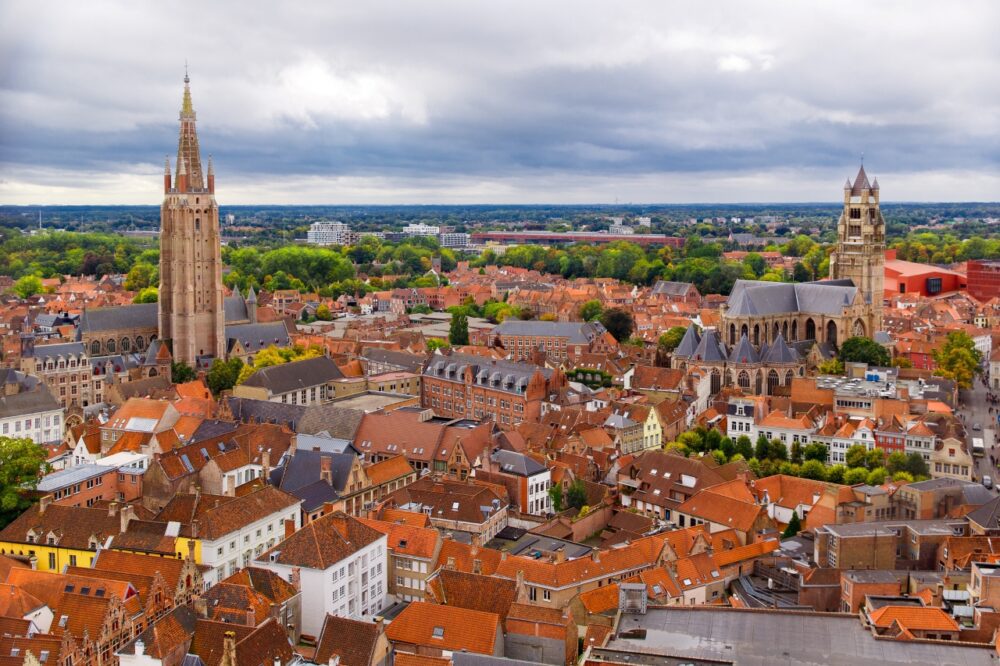
The first thing I noticed about Bruges wasn’t the canals or the gabled rooftops. It was the sheer number of people trying to photograph both at the same time. I arrived on a warm Saturday in June, stepped off the train, and walked into a wall of tour groups before I’d even reached the Markt. My honest first reaction was disappointment. By the end of my second day, once the day-trippers had cleared out for the evening, I understood why people still call it one of the best-preserved medieval cities in Europe.
Bruges is small, and that’s central to understanding it. The entire historic center can be crossed on foot in under 30 minutes, and it looks the way it does because much of it was left largely untouched since the 17th century, when the city’s importance as a trading port declined and building over the old core simply never happened economically. That accident of history is why Bruges looks the way postcards promise, canals, cobblestones, and step-gabled houses, with very little modern development breaking up the view.
I’ve now been to Bruges three times, once as a rushed day trip from Brussels and twice with overnight stays. Those overnight stays completely changed how I feel about the city, and they’re the main reason I can give you a real answer to whether Bruges is worth visiting rather than a rehashed version of what every top ten list already tells you. Below is an honest breakdown built from actual time on the ground, covering the pros, the cons, what to do, where to stay, and how to get around.
Table of Contents
Pros – Reasons Bruges is Worth Visiting
1. The Historic Center Genuinely Looks Like Nowhere Else
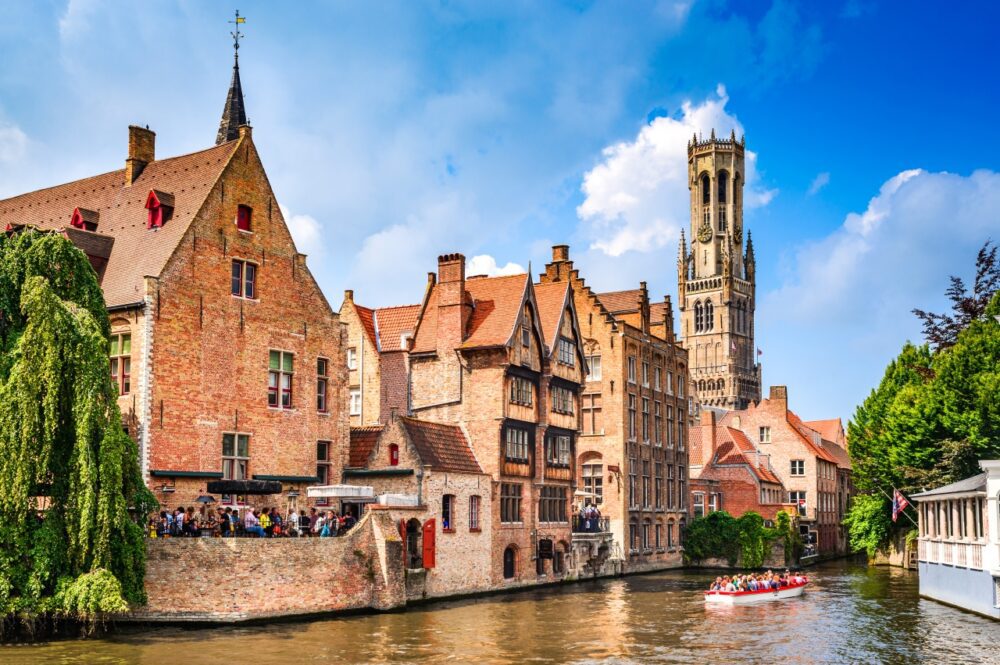
I’ve traveled through a fair number of European old towns, and Bruges is the only one where I stopped mid-street more than once just to take it in. The combination of canals, brick facades, and narrow lanes hasn’t been recreated or restored into something artificial, it’s largely original. Walking the Rozenhoedkaai at golden hour, with the Belfry in the background reflected in the water, is one of those views that photos genuinely undersell.
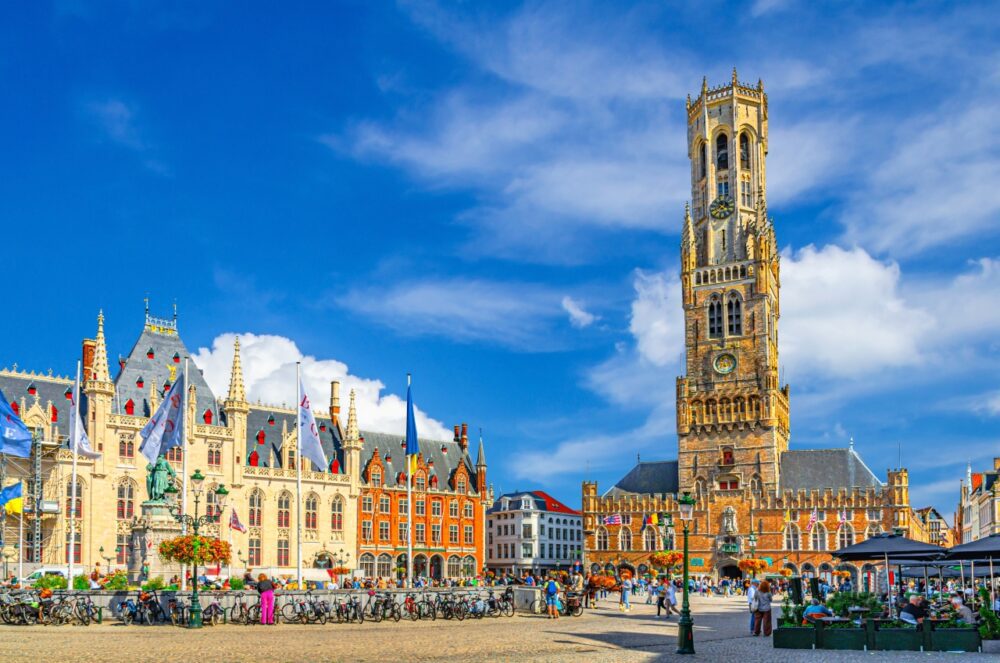
2. The Belfry and Markt Square Deliver on the Hype
The Markt, Bruges’ main square, is framed by guild houses and dominated by the Belfry tower, which you can climb via 366 steps to a viewing platform over the rooftops. I did the climb on my second visit and found it narrower and steeper than expected, but the view at the top, red rooftops stretching out with almost no modern buildings breaking the pattern, made the legwork worth it.
3. Chocolate and Beer Culture Run Deep, Not Just for Tourists
Bruges has an enormous number of chocolate shops, and it would be easy to assume most are tourist traps. Some are, but the city also has genuinely serious chocolatiers who’ve been making chocolate by hand for generations. I did a small chocolate tasting at a family-run shop off the main square and learned more about bean origin and tempering in twenty minutes than I expected to. The beer scene follows the same pattern, with bars that stock hundreds of Belgian beers and staff who know the difference between them.
4. Canal Boat Tours are Worth Doing Despite Being Touristy
I’m usually skeptical of anything that feels like a tourist checklist item, but the canal boat tour in Bruges earned its reputation. Seeing the backs of the historic buildings from the water, including angles you simply can’t get on foot, gives a different sense of the city’s scale. The tours run about 30 minutes and are inexpensive, which makes the skepticism easy to set aside.
5. It’s Genuinely Walkable in a Way Few Cities Are
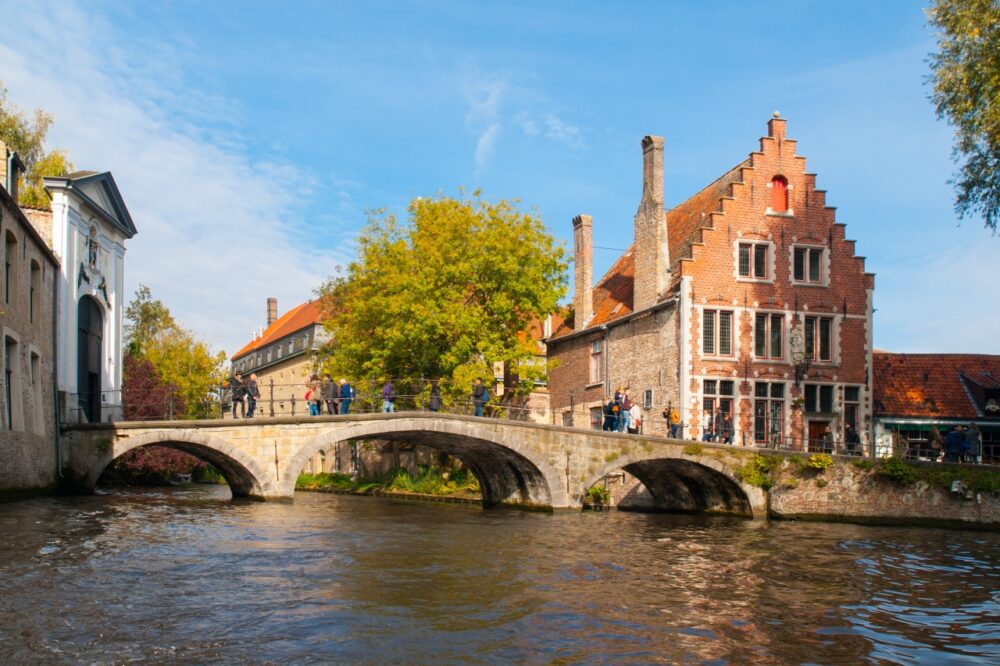
Bruges’ small size, which can be a limitation in other ways, is also one of its biggest strengths. I never once needed transport during any of my visits. Everything from the Markt to the Béguinage to Minnewater Park sits within a comfortable walk, and the compact layout means you can cover a lot of ground even on a short trip without feeling rushed.
6. The Béguinage and Minnewater Park Offer a Quiet Contrast
Away from the busier squares, the Béguinage, a peaceful courtyard once home to a community of religious laywomen, and the adjacent Minnewater Park give the city a completely different pace. I sat on a bench near the lake in Minnewater Park on my second trip and had the kind of quiet I hadn’t expected to find anywhere in Bruges after the crowds near the Markt. It’s a good reminder that the city has more than one gear.
7. Museums Cover Real Depth, Not Just Medieval History
The Groeningemuseum holds an excellent collection of Flemish primitive paintings, including work by Jan van Eyck, and the Choco-Story museum covers the actual history of chocolate production in more depth than I expected walking in. Neither takes more than an hour or two, which makes them easy to fit around a day of wandering without turning the trip into a museum marathon.
Cons – Things to Consider Before Visiting Bruges
1. The Crowds Can Be Overwhelming, Especially on Day Trips
Bruges is one of the most popular day trip destinations from Brussels, and it shows. Between roughly 10am and 5pm, the Markt and the main canal viewpoints fill with tour groups, and the narrow streets make it hard to move at a comfortable pace. My first visit, a single-day trip during peak season, left me frustrated for exactly this reason. Staying overnight and exploring early morning or evening made an enormous difference.
2. It Can Feel More Like a Living Museum Than a City
Because so much of Bruges’ economy runs on tourism, the historic center can feel curated rather than lived-in, especially compared to a city like Ghent, which has a large student population keeping it active outside tourist hours. I noticed shops near the Markt cater almost entirely to visitors, and the center empties out noticeably once day-trippers leave for their return trains. If you want a city that feels like real daily life is happening around you, Bruges asks a bit more effort to find that.
3. Prices in the Center are Higher Than Elsewhere in Belgium
Restaurants and cafes directly on or near the Markt charge a premium simply for the location, and I’ve paid noticeably more for a mediocre meal there than I did for a better one a five-minute walk away. Accommodation follows the same pattern, with prices climbing fast during peak season and weekends. A short walk away from the main tourist center usually solves both problems.
Things to Do in Bruges
- Climb the Belfry. The 366-step climb is steep, but the rooftop view over the historic center is one of the best in Belgium.
- Take a canal boat tour. A touristy pick that still earns its place, giving you angles on the city you can’t get from the streets.
- Visit the Groeningemuseum. A focused collection of Flemish primitive art, including work by Jan van Eyck, without the overwhelming size of a major national gallery.
- Walk through the Béguinage. A quiet, contemplative courtyard that offers a real break from the busier tourist areas nearby.
- Try a chocolate tasting at a family-run chocolatier. Skip the mass-market shops near the Markt and ask locally for a recommendation instead.
- Relax in Minnewater Park. A calm, green space by the lake, good for a slower afternoon after a morning of sightseeing.
- Visit the Choco-Story museum. A genuinely interesting look at chocolate’s production history, not just a shop with a museum label attached.
- Photograph the Rozenhoedkaai at golden hour. The single best canal view in the city, and worth timing your visit around if photography matters to you.
- Explore the streets east of the Markt. Quieter and less crowded than the main tourist routes, with a more residential feel.
- Sample a wide range of Belgian beers at a proper beer bar. Bruges has several bars with extensive menus and staff who can guide you through unfamiliar styles.
Where to Stay in Bruges
- Historic Center (near Markt): Puts you within walking distance of everything, but expect higher prices and more noise from evening crowds, particularly on weekends.
- East of the Center (near Sint-Anna): A quieter, more residential area that’s still an easy walk to the main sights, with fewer tourists and better value.
- Near Minnewater: A peaceful choice close to the park and the train station, good for anyone prioritizing quiet over being in the thick of things.
- Near Bruges Station: A practical option if you’re arriving by train or plan on day trips elsewhere, though it’s a 15 to 20 minute walk into the historic core.
- Sint-Gillis: A more local, lower-key neighborhood a bit further from the center, suited to travelers who don’t mind a short walk or bike ride in each day.
Getting Around Bruges
Bruges’ historic center is compact enough that walking covers almost everything you’ll want to see, and I never used public transport during any of my three visits. The distance from the Markt to the furthest major sights, like Minnewater Park, is around a 15-minute walk, which makes the city one of the easiest in Belgium to navigate entirely on foot.
For anyone staying slightly further out, De Lijn runs a bus network connecting the train station and outer neighborhoods to the center, and it’s a straightforward option if you’re not up for the walk. Bikes are also common in Bruges, and renting one is a good way to see areas just outside the historic core, like the windmills along the old city ramparts, without much effort. I rented a bike on my second trip specifically for that stretch and found the paths well maintained and easy to follow. Given how small the center is, I’d skip taxis entirely unless you’re arriving late with luggage, since walking or a short bike ride will almost always be faster.
Conclusion
So, is Bruges worth visiting? Yes, but the way you visit matters more here than in most cities. A rushed day trip during peak season, which is how most visitors experience Bruges, will show you a crowded, slightly frustrating version of the city that doesn’t do it justice. Stay overnight, walk the streets early in the morning or after the tour buses leave, and Bruges turns into something closer to what draws people there in the first place, genuinely beautiful, historically intact, and quiet in the right corners.
The crowds and the higher prices in the center are real downsides, and I won’t pretend they aren’t. But they’re manageable with a bit of planning, and they don’t outweigh what the city offers. If you can give Bruges more than a few rushed hours, it earns its reputation as one of the most visually striking cities in Europe, and I’d recommend it without hesitation as part of a wider Belgium trip in 2026.