Is Debrecen Worth Visiting? Honest Pros and Cons (2026)

Debrecen has been Hungary‘s capital twice. In 1849, the government and parliament fled here during the war of independence, and Lajos Kossuth declared the country free of the Habsburgs inside the city’s biggest church. In 1944 it briefly took on the job again. Most people never get past Budapest, so the city that once ran the country is quiet, cheap and easy to enjoy.
I spent three days in Debrecen one autumn. It’s the second-largest city in Hungary, with around 200,000 people, and locals call it the “Calvinist Rome”. You get a huge Reformed church, a museum with some of Hungary’s most famous paintings, thermal baths and a giant forest park. They’re all close together, and you’ll hear far more Hungarian than English on the street.
This guide covers the pros and cons of Debrecen, where to stay, and what to book. You’ll also find tips on when to go, how long you need, and getting around, so you can decide whether it suits your kind of trip.
In a Rush? Here Are Our Favourite Hotels in Debrecen Hungary
⭐️⭐️⭐️ Mercure Debrecen – Click here for rates & availability
⭐️⭐️ Hotel Divinus – Click here for rates & availability
⭐️ Hilton Garden Inn Debrecen City Center – Click here for rates & availability
Pros of Visiting Debrecen
1. The Reformed Great Church

The Reformed Great Church is the first thing I’d tell anyone to see. It’s the largest Reformed church in Hungary, with two towers rising 61 metres and room for nearly 2,000 people. The neoclassical building went up between 1805 and 1823, after a fire in 1802 destroyed the old one. Inside it’s plain, bright, and huge. There’s no gold and no statues, just clean white walls and a big pulpit. It suits the Calvinist style perfectly.
The history is the real draw. Kossuth read out the Declaration of Independence here on 14 April 1849, and you can see his chair, the Vizsoly Bible and the famous Rákóczi bell. The basic tour costs 1,500 Ft (£3). The longer tour is 2,500 Ft (£5) and takes you up into the attic and along the panorama walkway. I’d pay for the longer one. The views over the rooftops are worth it, and you can check opening hours on the church’s official website before you go.
2. Kossuth Square and Piac Street
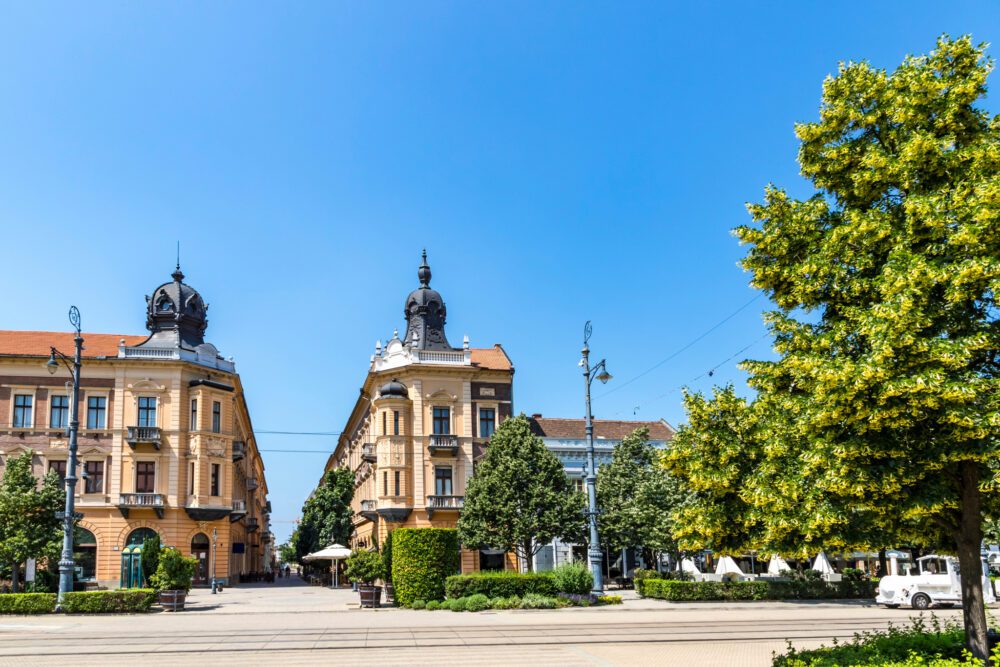
Piac Street is the spine of Debrecen’s centre. It’s a wide, mostly pedestrian avenue that runs about 1.5 km from the railway station to Kossuth Square, and the walk takes around 20 minutes. You pass cafés, shops and pastel buildings on the way. The main tourist information office sits in the old town hall at Piac utca 20, so it’s easy to grab a map as soon as you arrive!
Kossuth Square is the heart of the city, with the Great Church at one end and fountains and benches in front of it. It’s where locals meet in the evening, and the terraces fill up fast. The Flower Carnival parade has used Piac Street since 1966. If you want some context, the private walking tour with a local is a good way to see the centre. It’s private, lasts anywhere from one to six hours and can be arranged in English.
3. The Reformed College and 1849 History
The Reformed College at Kálvin tér 16 was founded in 1538, and it’s one of the most important schools in Hungarian history. It’s still a working school today. The building is a beautiful mix of old courtyards and long corridors, and it feels very different from the grand sights in Budapest. It’s quiet and local, and you can wander without feeling rushed.
The big moment inside is the Oratory. Parliament sat here in the first half of 1849, so this is where Hungary’s independence was debated. The museum and the Great Library are also on site, and the museum page on the Visit Debrecen website has the details. Next door, the Reformed Small Church is the oldest church in the centre. It has a fire tower you can climb for a view over the old town. Together they make a great history morning, and the whole area is free to wander around.
4. Déri Museum and MODEM
The Déri Museum is the best reason to visit if you love art. It holds Mihály Munkácsy’s famous Christ trilogy: Christ before Pilate, Golgotha and Ecce Homo. They’ve hung together since 1995, and the paintings are huge. Standing in front of them is genuinely powerful. The museum also has Egyptian pieces, weapons and a surprising samurai collection. Tickets are around 2,800 Ft (£6), and you can find hours on the Déri Museum website. Don’t skip the statues outside.
If you prefer modern art, head to MODEM, about five minutes from Kossuth Square. It opened in 2006 and shows contemporary Hungarian and international work in a bright, clean building. A combined ticket costs around 5,000 Ft (£11), and the MODEM website lists current exhibitions. Between the two, you get old masters and fresh ideas in one afternoon. Few smaller cities offer that range, and I think it’s a big reason Debrecen is such a great option for a short cultural break.
5. Aquaticum Thermal Baths
Hungary is famous for thermal baths, and Aquaticum is Debrecen’s best. It sits in Nagyerdő park, with a thermal bath section, a sauna world and a Mediterranean-style indoor aquapark. The thermal pools are the ones I’d use to unwind after a day of walking. The warm water feels amazing on tired legs, and the whole place is clean and well run!
A full-day adult thermal ticket costs around 4,900 Ft (£11), and it opens at 7:00. The pools close at 20:30, so an evening visit works well. Towel rental is 3,000 Ft (£7) plus a deposit, so bring your own if you can. You can reach it on tram 1 or on a pleasant walk of about 25 minutes through the park. Check prices and opening times on the Aquaticum website. It’s a better, calmer experience than the crowded baths in the capital, and I was happy to stay for hours.
6. Nagyerdő Park and the Zoo
Nagyerdő is a huge forest park just north of the centre. It covers 1,086 hectares and has been protected since 1992. You’ll find tree-lined paths, a small lake called Békás-tó (Frog Lake), a stadium and an open-air theatre. The old Water Tower, built in 1913, has a lookout about 34 metres up. It’s a beautiful place to walk, jog, or cycle, and it gives the city a green, relaxed feel.
The Debrecen Zoo is inside the park. It opened in May 1958 as the first countryside zoo in Hungary, and it now has around 185 species from five continents. There’s also a small amusement park with about 24 rides. It’s open daily from 9:00 to 18:00, and adult tickets start from 4,900 Ft (£11). Details are on the zoo’s official website. If you’re travelling with kids, this is a great day out. Even without kids, the park alone makes the trip worthwhile.
7. Debrecen Sausage and Hungarian Food
The food in Debrecen is hearty and cheap. The local speciality is the Debrecen sausage (debreceni páros kolbász), which is a Hungaricum, meaning it’s protected as a national treasure. It’s spiced with pepper, cumin, garlic and sweet paprika, then lightly smoked. I had it with mustard and fresh bread, and it was one of the best things I ate in Hungary. Other dishes to try are Hortobágy pancakes, lecsó (a pepper and tomato stew) and goulash.
You’ll find good restaurants all along Piac Street and the streets around it. IKON, Régi Posta, Flaska and Csokonai are all popular options. I’d also look at Barabás Restaurant, which does traditional Hungarian cooking in a beautiful setting. A main course usually costs around 5,000 Ft (£11). Portions are big, so share a starter. Save room for dessert too, because the cakes in the cafés on Piac Street are excellent. For a foodie, this is a great place to eat well without spending much.
8. Festivals and Advent
Debrecen puts on events all year, and they’re a big part of its charm. The Flower Carnival is the most famous. It’s been running since 1966, and the 2026 edition runs from 18 to 23 August, with a parade of floats covered in live flowers on 20 August. The Wine & Jazz Days take place in early August, and the Hortobágy Equestrian Days bring horse shows to the region in June!
Winter is just as good. Debrecen Advent runs from 20 November to 23 December in 2026, with market stalls, hot wine and lights across Kossuth Square. The ice rink opens on 20 November and stays until 10 January 2027. It was named Europe’s most beautiful Christmas ice rink in 2025, and it really is pretty with the Great Church behind it. The Debrecen Advent page has the programme. A winter trip here feels cosy and far less touristy than the bigger Christmas markets.
9. Great Value for Money
Debrecen is one of the cheapest places I’ve visited in Europe. Food, drinks and entry tickets all cost far less than in the big tourist cities. A full sightseeing day is easy to do on a small budget. For example, the longer Great Church tour, the Déri Museum and a day at the thermal bath add up to about 10,200 Ft (£22). That’s three of the best sights in the city for the price of a modest dinner elsewhere.
Getting around is cheap too. A day ticket for the city’s trams and buses costs 1,700 Ft (£4), and a coffee or a beer in a café on Piac Street is usually a few pounds at most. Hotels are good value as well, with plenty of central options for a lot less than you’d pay in Budapest. If you want a city break that doesn’t hurt your wallet, Debrecen is a smart choice.
10. Easy Day Trips
Debrecen is a great base for day trips. The best is Hortobágy National Park, a UNESCO site since 1999 and the largest protected grassland in Europe. It’s about 50 minutes away by train. You can see the famous Nine-Arch Bridge, wild horses, and cattle, and ride a carriage tour at the Máta Stud with a horsemen show. The horse carriage tour page has the current season and prices.
For more water, head to Hajduszoboszlo, about 20 km away. Hungarospa is billed as one of the largest bath complexes in Europe, and a full-day ticket costs around 5,500 Ft (£12). Wine fans can take a direct train to Tokaj in about 52 minutes, or join a Tokaj vineyard tour and tasting with pickup in the region. Each one is easy to do in a day and back by evening. Having these options makes Debrecen worth visiting for longer than a weekend, and it’s why I’d suggest staying at least three nights.
Cons of Visiting Debrecen
1. Short Opening Hours
Debrecen’s biggest sights keep short hours. The Great Church is open on Saturday mornings and Sunday afternoons only, and it closes to tourists during services. I turned up on a Sunday morning and found the doors shut to people. The Déri Museum and MODEM are closed on Mondays, and the Reformed College museum is only open on weekdays. If you don’t plan around this, you can waste a day!
It’s easy to sort. Check the opening hours for each sight before you go, and plan your days around them. I’d do the church and the College on a weekday, save the baths and the park for Monday, and keep the museums for the rest of the week. Once I’d done that, everything fit easily into three days. A bit of planning solves it, and the city is still absolutely worth it.
2. Getting There Takes Time
Debrecen is not close to the main entry points for most people. From Budapest, the InterCity train takes around 2.5 to 3 hours, and a ticket with a seat reservation costs about 5,000 Ft (£11). The local airport is small, and only a handful of European cities have direct flights, mostly on Wizz Air. If you’re arriving from further away, expect a long travel day.
The good news is that the journey is simple. Trains are comfortable, and the line runs straight across the Great Plain. I’d treat the trip as part of the experience and bring a book. If you already plan to visit Budapest, adding Debrecen is easy, and it’s a nice way to see a different side of Hungary. The extra travel time is still worth it for what you get at the other end.
3. Sights Are Spread Out
The centre is compact, but not everything is in it. Nagyerdő park, the Aquaticum baths and the zoo are about 2.5 km north of Kossuth Square. That’s too far for tired legs after a full day, and in bad weather you won’t want to walk it. A few other sights, like MODEM, sit a short way off the main square too.
Luckily, the tram solves the problem. Tram 1 runs from the railway station through the centre and out to the university and Nagyerdő, so you can reach the park in minutes. A day ticket for 1,700 Ft (£4) makes it even easier. A private walking tour with a local can also cover Nagyerdő if you prefer a guide. Once you know the tram line, the spread-out layout stops being a problem, and the city is still very easy to explore.
4. Hot Summers and Cold Winters
Debrecen has a continental climate, so the weather can be extreme. Summer days are often hot, and the sun on the flat plain doesn’t help. In winter it gets properly cold, and the days are short. Walking tours and park visits are not much fun at either extreme, and the open-air attractions slow down in the coldest months!
The answer is to plan around it. In summer, do your sightseeing in the morning and spend the hot afternoon in the Aquaticum or a shaded café. Evenings on Piac Street are beautiful when it cools down. In winter, stick to museums, churches and the baths, which are open year-round, and enjoy the Advent lights. Dress warmly and the cold stops mattering. Whatever the season, Debrecen is still worth it.
5. Fewer Big-Name Sights
Debrecen doesn’t have the long list of famous landmarks that Budapest does. There’s no huge castle, no grand palace and no famous skyline. If you want to tick off a dozen headline attractions in one day, you’ll find the list short. Some people run out of things to see after two or three days.
I see that as a plus as much as a minus. The sights it does have are very good, and you never have to queue. To fill extra time, add a day trip to Hortobágy, Hajduszoboszlo or Tokaj, which are all easy from the city. Spread over three days, I found the mix of history, art, baths and food perfect. It’s a relaxed destination, and for many travellers that is exactly the point.
Where to Stay
Old Town (Kossuth Square, Kálvin tér, Piac Street): This is the best area for most people, and it’s where I stayed for my three days. Everything is within a short walk, from the Great Church and the College to the best cafés and restaurants. It’s lively in the evening but quiet enough to sleep. For a budget stay, Centrum Hotel is a 3-star on Kálvin tér, right by the College. In the middle range, Belga Boutique Panzió is a small 3-star guesthouse on Piac Street. For something more upscale, Mercure Debrecen is a 4-star with a restaurant, a sauna, a fitness room and soundproof rooms.
Hunyadi Street and Hatvan Street: This part of town sits just north-west of the centre, close to MODEM and still within walking distance of Kossuth Square. It’s a bit quieter than the Old Town and feels more residential, with good local restaurants nearby. On a budget, Silver Shine Apartman gives you an apartment-style stay with your own space. In the middle range, Urban Hotel on Hatvan Street is a modern, central option. For an upscale stay, Hilton Garden Inn Debrecen City Center offers the comfort of an international chain close to the main sights.
Nagyerdő: If you want green space and the baths on your doorstep, stay in Nagyerdő. It’s peaceful, with forest paths on one side and the Aquaticum and zoo close by. The trade-off is that it’s a tram ride from the Old Town, so evenings out take a bit more effort. Sport Hotel is the budget pick, handy for the stadium and park. Villa Hotel is a good mid-range choice in a calm setting. For a treat, Hotel Divinus is a 5-star with an indoor pool and a spa!
Lower Piac Street and the Railway Station: Staying near the station is practical if you’re arriving by train or heading out on day trips. You’re about 20 minutes’ walk from Kossuth Square, and tram 1 is right there. It’s not the prettiest part of town, but it’s cheap, and handy. Marvel Apartman on Piac Street is a good budget option. Violet Center Apartman Debrecen is a solid mid-range apartment, also on Piac Street. For an upscale pick, Türkiz Boutique Apartman on Jászai Mari utca is a stylish boutique stay.
Best Things to Do
- Best of Debrecen: Private Walking Tour with a Local: A private tour that runs anywhere from one to six hours, in English or Hungarian. It’s wheelchair accessible and lets you shape the route around your interests.
- Tokaj: Vineyard Tour and Tasting: A three-hour tour with seven wines, including the famous Tokaj Essence, in a 500-year-old cellar. Pickup is from Tokaj, Tarcal or Bodrogkeresztur.
- Reformed Great Church: The symbol of the city, where Kossuth declared independence in 1849. Take the longer tour to climb to the attic and panorama walkway.
- Reformed College and Oratory: A historic school founded in 1538, with a museum, a library and the hall where parliament met in 1849.
- Déri Museum: Home to Munkácsy’s Christ trilogy, plus Egyptian, weapon and samurai collections. Closed on Mondays.
- MODEM: A modern and contemporary art centre, five minutes from Kossuth Square. A combined ticket is around 5,000 Ft (£11).
- Aquaticum Thermal Baths: Thermal pools, saunas and an indoor aquapark in Nagyerdő. A full-day ticket is around 4,900 Ft (£11).
- Debrecen Zoo and Amusement Park: About 185 species and 24 rides, open daily from 9:00 to 18:00. Adult tickets start from 4,900 Ft (£11).
- Nagyerdő and the Water Tower: Walk or cycle the forest paths, then climb the 1913 water tower for a lookout over the treetops. It’s free to wander the park.
- Hortobágy Carriage Tour: A 70 to 80 minute ride through the puszta at the Máta Stud, with a horsemen show. It costs 4,800 Ft (£10) for adults, and it’s best to book ahead.
- Hungarospa Hajdúszoboszló: One of Europe’s biggest bath complexes, about 20 km away. A full-day ticket is around 5,500 Ft (£12).
- Debrecen Advent and Ice Rink: Markets, lights and Europe’s most beautiful Christmas ice rink on Kossuth Square from late November.
Best Time to Visit
Autumn (September to November): I visited in autumn, and I’d pick it again. Nagyerdő turns gold, the temperature is mild and the crowds are non-existent. In October you can spot cranes at Hortobágy, and the carriage tours run until 31 October. The zoo’s amusement park season ends around the end of the month, so go early if you want the rides.
Winter (December to February): Winter is magical in Debrecen. Advent runs from 20 November to 23 December in 2026, and the ice rink stays open until 10 January. It’s cold, but the baths are warm. Remember that the Great Church keeps shorter hours from November to February.
Spring (March to May): Spring is fresh and quiet. The carriage tours restart in mid-March, the parks turn green and City Day runs from 7 to 11 April. It’s a good time if you want pleasant walking weather without the summer heat.
Summer (June to August): Summer is the busiest and liveliest time. The Flower Carnival is in August, followed by the Wine & Jazz Days, and the Aquaticum has outdoor space for hot days. Expect heat on the plain, so plan sightseeing for mornings!
How Long to Spend
1-2 Days: Two days is enough for the highlights. Spend the first morning on the Great Church and the College, then walk Piac Street and have lunch. On day two, see the Déri Museum, then relax in the Aquaticum and walk through Nagyerdő.
3-4 Days: This is the sweet spot, and it’s what I did with my three days. You can cover the big sights at a slow pace, add MODEM and the zoo, and still have time for long meals. A fourth day lets you add a half-day trip to Hortobágy or Hajduszoboszlo.
5-7 Days: With a week, Debrecen becomes a base for the whole region. Add Tokaj for wine, Hortobágy for the plains and Hungarospa for another bath day. You could also visit Miskolc and Eger by train. It’s more than most people need, but it’s a beautiful, slow way to see eastern Hungary. On a longer Hungary trip, you could give Pecs and Szeged their own stays rather than trying to see them from here.
Getting Around
On foot: The centre is flat and compact. The walk along Piac Street from the station to Kossuth Square takes about 20 minutes, and most of the main sights are within a few minutes of each other. You’ll walk a lot, so bring comfortable shoes.
Bike hire: The terrain is flat, which makes cycling easy. The tourist office at Piac utca 20 rents bikes and e-scooters, and you can check the details on the Visit Debrecen website. There’s no tourist bike-share scheme, but the cycle route through Nagyerdő is beautiful.
Trams, trolleybuses and buses: The city’s public transport is run by DKV. There are two tram lines, and tram 1 is the one you’ll use most. It runs from the main station via Kálvin tér to the university, Nagyerdő and Aquaticum. Tram 2 stops at Hunyadi utca. A paper ticket costs 500 Ft (£1), and you must validate it on board. A mobile ticket costs 480 Ft through the MyDKV app, and a ticket bought on board costs 650 Ft (£1.50). A day ticket is 1,700 Ft (£4), and a 3-day ticket is 3,600 Ft (£8)!
Taxis and ride-hailing: Taxis are cheap, and Bolt works well in the city. It’s handy late at night or when the weather turns bad.
Trains from Budapest: Intercity trains run by MÁV take about 2.5 to 3 hours, and tickets are around 5,000 Ft (£11). You can buy them at the station or online.
To and from the airport: Debrecen Airport is about 4 to 6 km from the centre, and buses or taxis take around 15 minutes. If you land in Budapest instead, there’s no direct train. Take the airport bus or train into the city and then an InterCity to Debrecen, or book a private transfer, which takes about 2.5 hours. Line up your return journey before you arrive, so you’re not hunting for tickets on your last morning.
Final Thoughts: Is Debrecen Worth Visiting?
Debrecen is worth visiting if you want a real Hungarian city, not a tourist show. You get a church that changed the country’s history, a museum with world-famous paintings, thermal baths and a huge forest park. Add great food and low prices, and it’s easy to fill three days.
It does have downsides. Opening hours are short, it takes time to reach, and the list of famous landmarks is small. But the fixes are simple, and nothing I found made me regret the trip. If you plan around the hours and use the tram, the city is relaxed and easy.
I’d happily go back, especially for Advent. If you’re already in Budapest and have a spare few days, Debrecen is a great option for something different. Go for the history, stay for the baths and the sausage, and use it as a base for Hortobágy and Tokaj. I think you’ll find it’s a hidden gem!