
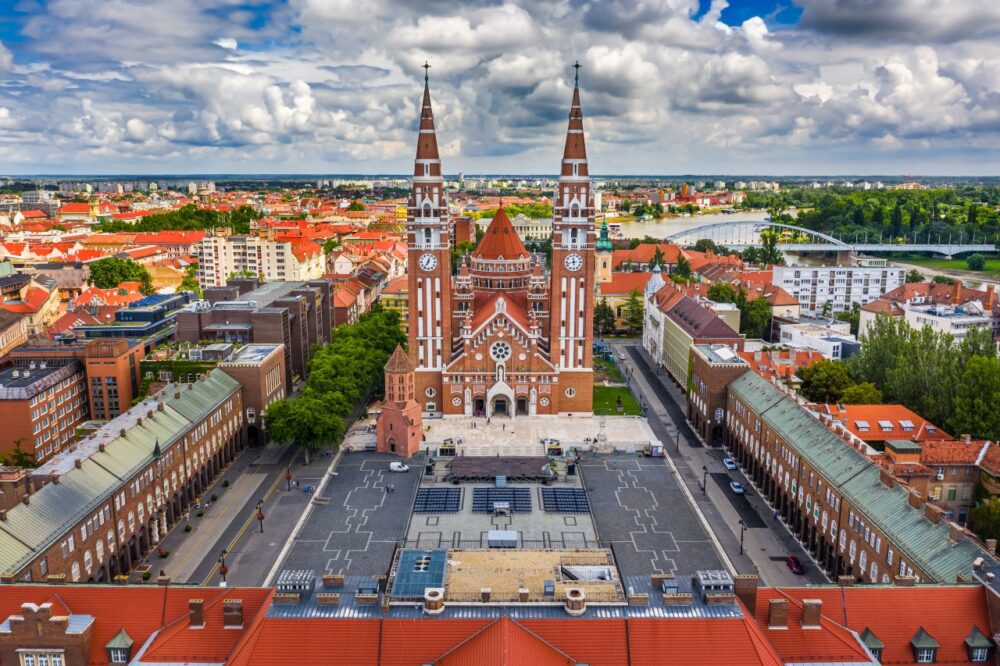
I got to Szeged by accident, in a way. I was planning a short loop through southern Hungary and needed somewhere to break up the drive between Budapest and the Serbian border. Szeged was the obvious stop on the map, so I booked two nights without expecting much. I stayed three, and I’ve recommended it to more people since than almost anywhere else in Hungary. If you’re trying to figure out whether Szeged is worth visiting in 2026, here’s what I found, based on time actually spent walking its streets rather than a quick pass-through.
Szeged sits in the far south of Hungary, right where the Tisza river bends, close enough to Serbia and Romania that the city has picked up a bit of a border-town mix in its food and history. It’s known locally as the “sunniest city in Hungary,” and during my visit that reputation held up. Wide squares, orange-and-yellow Art Nouveau buildings, and long open sightlines down the main streets gave the whole city a brighter, airier feel than some of the more compact, shadowed old towns I’d visited elsewhere in the country.
What surprised me most was how balanced Szeged felt. It has real history and architecture worth seeing, a serious university population that keeps the city young and active, and a food and paprika culture that’s distinct from anywhere else I ate in Hungary. It never felt like a “filler stop.” Below, I’ll go through the honest pros and cons of visiting, plus practical advice on where to stay, what to do, and how to get around.
Table of Contents
Pros – Reasons Szeged Is Worth Visiting
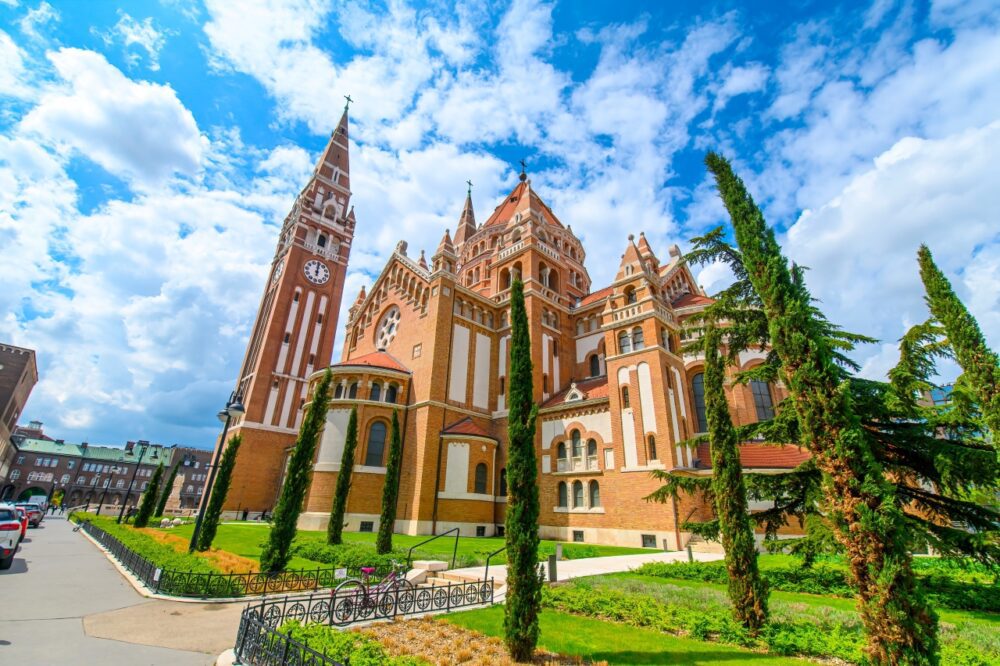
1. The Votive Church and Dóm Square Are Worth the Trip Alone
The twin-towered Votive Church dominates Dóm Square, and I spent longer than expected just sitting on the square’s steps taking it in. The square itself hosts the Szeged Open-Air Festival in summer, with a stage built right against the church facade. Even without an event running, the scale of the space and the building’s detail made it one of my favorite squares in Hungary, and I’ve seen a fair few by now.
2. It Has a Genuine Paprika and Food Culture
Szeged is one of Hungary’s paprika capitals, and it shows. I visited the Pick Salami and Szeged Paprika Museum, which sounds niche but turned out to be one of the more interesting small museums I’ve been to, covering how the region built an entire food industry around this one spice. I also had Szeged fish soup, a local specialty made with a heavy dose of paprika, at a riverside restaurant, and it was one of the best meals of the whole trip.
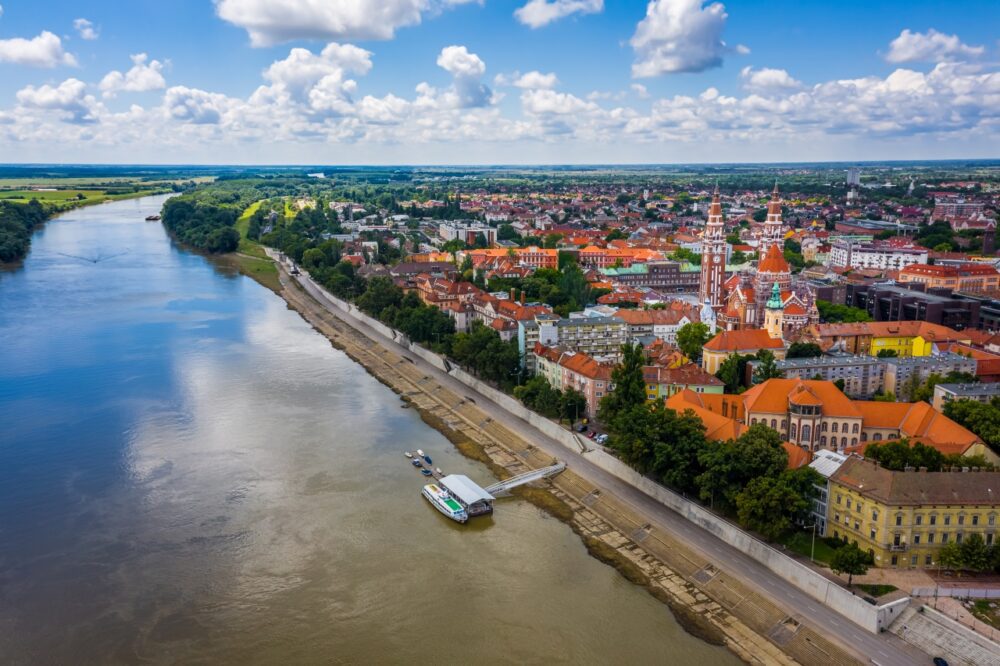
3. The Architecture Feels Distinct from the Rest of Hungary
After a fire destroyed much of the city in 1879, Szeged was rebuilt with wide boulevards and a coordinated Art Nouveau and eclectic style, funded partly by donations from other European cities. Walking down Kárász utca, the main pedestrian street, I noticed the buildings had a lighter, more uniform look than the older, patchier centers I’d seen in Debrecen or parts of Budapest. It gives the city a distinct visual identity that’s easy to appreciate even without knowing the backstory.
4. The New Synagogue Is One of the Most Beautiful Buildings I’ve Seen in Hungary
I nearly skipped this, thinking I’d seen enough synagogues on the trip already. I was wrong to almost skip it. The New Synagogue’s blue-domed interior, with light pouring through stained glass in a way that shifts through the day, stopped me in my tracks. It’s still an active synagogue and one of the largest in Europe, and it’s a genuinely moving space to sit in for ten minutes, regardless of your background.
5. Thermal Baths Without the Crowds of Bigger Cities
Szeged has its own thermal bath complex, Anna Baths, right in the city center, along with a larger water park option outside town. I chose Anna Baths for a quieter, more traditional experience and had a full pool to share with maybe a dozen other people on a weekday afternoon. If you want the Hungarian thermal bath experience without Budapest-level crowds, Szeged delivers it at a fraction of the wait.
6. The University Keeps the City Genuinely Lively
The University of Szeged brings tens of thousands of students into the city, and it shows in the number of cafes, bars, and casual restaurants packed into the center. Unlike some smaller Hungarian cities that feel quiet after dark, Szeged had a real evening buzz around Kárász utca and the main squares, especially on weekend nights. It gave the city an energy I hadn’t expected from a place this size.
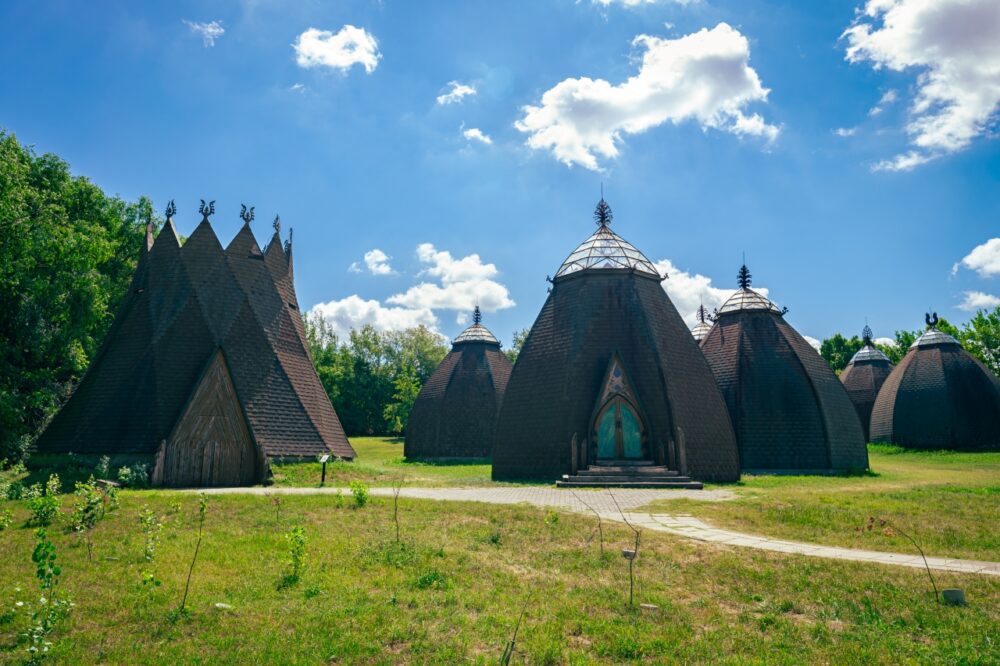
7. It’s an Easy Base for Border-Region Day Trips
Szeged’s location near the Serbian and Romanian borders makes it a useful base if you want to add something a little different to a Hungary trip. I didn’t cross the border myself, but I met other travelers using Szeged as a jumping-off point for short trips into Serbia. Even without crossing, the city’s position gives it a slightly different cultural feel from cities further north, which came through in the food and the mix of languages I heard around the market.
Cons – Things to Consider Before Visiting Szeged
1. It’s a Long Way from Budapest
Szeged sits around two and a half hours from Budapest by direct train, which is a longer haul than Debrecen and some other regional cities. If you’re short on time and only want a quick day trip, Szeged isn’t the easiest option. It works much better as a proper overnight stop or the southern anchor of a longer Hungary itinerary.
2. Sights Are Spread a Bit Thinner Than in Bigger Cities
Szeged has strong individual sights, the Votive Church, the synagogue, the paprika museum, but there’s more open space between them than in a denser old town. I covered the highlights comfortably in two days, and while I don’t think that’s a bad thing, it means the pace is slower and less packed than a typical capital city visit. Go in expecting a relaxed few days, not a checklist-heavy sprint.
3. Limited English Outside the Center and University Area
I found English easy to come by around the university and main tourist sights, but it dropped off noticeably at smaller local restaurants and shops further from the center. This wasn’t a major problem with a translation app on hand, but it’s worth knowing before you go, especially if you’re planning to eat where locals eat rather than sticking to the main square.
Things to Do in Szeged
- Sit in Dóm Square and take in the Votive Church – The best single view in the city, and free to enjoy at any time of day. Go at golden hour if you can.
- Visit the New Synagogue – A quietly stunning interior that I’d rank among the best religious buildings I’ve visited in Hungary. Check opening times in advance, as hours vary by season.
- Walk Kárász utca, the main pedestrian street – The easiest way to get a feel for the city’s energy, with cafes, shops, and street performers on weekends.
- Tour the Pick Salami and Szeged Paprika Museum – A small but genuinely interesting look at the region’s food history. Worth an hour even if museums aren’t usually your thing.
- Relax at Anna Baths – A calmer, more local alternative to Budapest’s bigger thermal complexes, right in the city center.
- Try Szeged fish soup at a riverside restaurant – The city’s signature dish, and worth eating somewhere with an actual Tisza view rather than a tourist-strip cafe.
- Walk along the Tisza river promenade – A relaxed, scenic stretch that’s especially pleasant in the early evening when the light softens over the water.
- Browse the Széchenyi Square markets and gardens – A large, green public square that gives a good sense of everyday local life outside the main tourist sights.
- Visit the Reök Palace – A striking Art Nouveau building with a wavy, almost organic facade that stands out even among Szeged’s already distinct architecture.
- Time your visit for the Szeged Open-Air Festival (summer) – If your dates allow it, this is one of the region’s biggest cultural events, staged right against the Votive Church.
Where to Stay in Szeged
- City Center (around Dóm Square and Kárász utca) – The best choice for first-time visitors, putting the Votive Church, synagogue, and main dining streets all within walking distance.
- Near the Tisza river promenade – A quieter, more scenic option, good for slower mornings and evening walks, while still being a short walk from the center. This is roughly where I stayed, and I’d choose it again.
- University district – Livelier and younger, with more budget-friendly food options, though it can get noisier during term time.
- Near the train station – Convenient for arrivals and departures, particularly useful given how long the journey from Budapest can be, though it sits a short tram ride from the main sights.
Getting Around Szeged
Szeged’s center is compact enough to explore almost entirely on foot, and that’s how I got around for most of my stay. The main sights, Dóm Square, the synagogue, Kárász utca, all sit within a comfortable walking loop.
For anything further out, the city runs a simple tram network that’s easy to figure out even without much Hungarian. I used it once to reach the outskirts near the water park and found it cheap and reliable. Buses cover the rest of the city and the surrounding suburbs, though I rarely needed them during a center-focused visit. Szeged is also flat and genuinely bike-friendly, with dedicated cycling lanes running along the river and through several main streets. I rented a bike for an afternoon along the Tisza promenade and it was one of the more relaxed ways I’ve explored any Hungarian city. If you’re comfortable cycling, it’s worth doing here more than in most other Hungarian cities I’ve visited.
Conclusion
So, is Szeged worth visiting in 2026? Based on my time there, yes, particularly if you’re building a longer Hungary itinerary that goes beyond Budapest. The Votive Church, the New Synagogue, and the city’s distinct paprika-driven food culture give it real substance, not just a pleasant afternoon stop. The relaxed pace, sunny open squares, and lively university atmosphere made it one of the more enjoyable stretches of my whole trip.
The trade-offs are worth weighing honestly: it’s a longer journey from Budapest, the sights are spread out a bit more than in a dense old town, and English thins out once you’re off the main streets. None of that stopped me from extending my stay, and I don’t think it should stop you either. If you have the time to include a southern Hungary stop and want somewhere with real character rather than just convenience, Szeged is worth the extra hours on the train.