
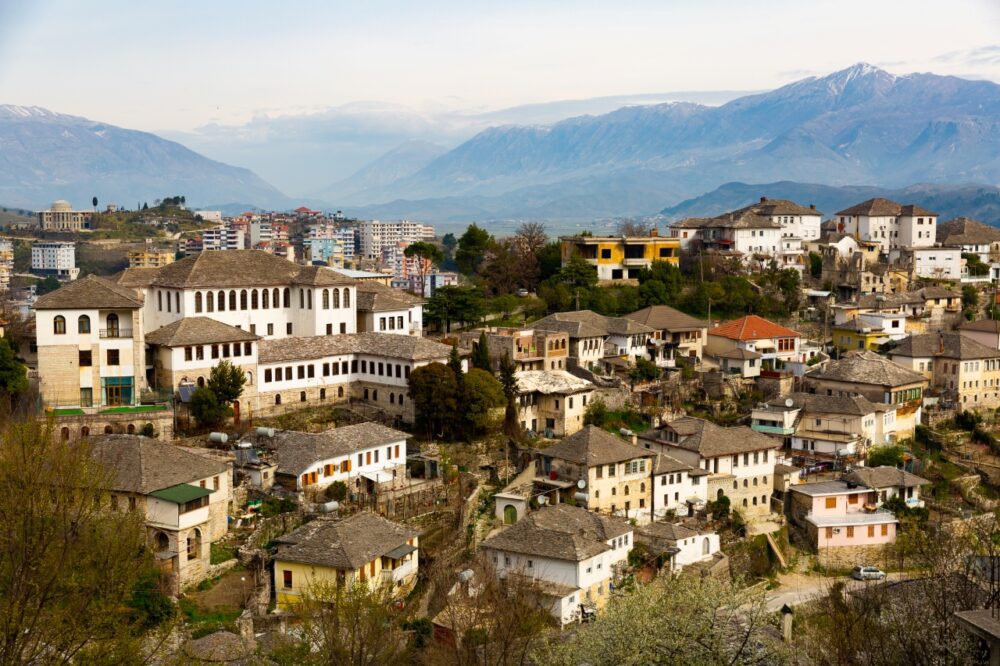
Gjirokaster sits on a steep hillside in southern Albania, all grey stone roofs and Ottoman houses stacked above a valley of olive groves. I arrived by furgon from Berat, tired and a little skeptical after being told by a few other travelers that “one Albanian old town is basically the same as another.” Within an hour of wandering the old bazaar, I knew that wasn’t true. Gjirokaster has its own character, and it’s a distinct one.
I spent three nights there, using the town as a base for both exploring the old quarter and taking day trips into the surrounding countryside. Gjirokaster is a UNESCO World Heritage town, recognized for its collection of Ottoman-era tower houses (called kule), built from local stone with distinctive fortified designs. It’s also the birthplace of Enver Hoxha, Albania’s communist dictator, and of writer Ismail Kadare, which gives the town an unusual pull between two very different legacies.
If you’re planning an Albania trip and wondering whether Gjirokaster is worth visiting, I’d say it depends on what you want out of a stop like this. It’s not a beach town, and it’s not built for nightlife. But if you’re drawn to well-preserved architecture, a serious hilltop castle, and a slower, more local pace than Tirana offers, it’s one of the better stops I made in the country. Here’s my honest breakdown of the pros, the cons, and what to actually do once you’re there.
Table of Contents
Pros – Reasons Gjirokaster is Worth Visiting
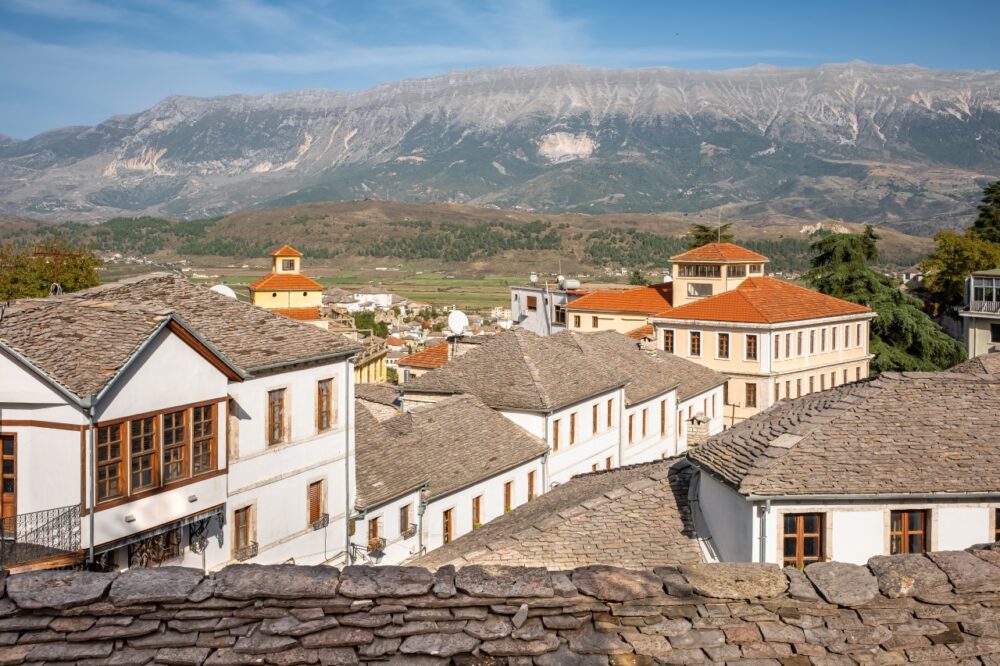
1. The Stone Architecture is Some of the Best-Preserved in the Balkans
Gjirokaster’s old town is built almost entirely from local grey limestone, from the cobbled streets to the distinctive tower houses with their steep, slate-tiled roofs. Walking through the old bazaar, I noticed how consistent the material and style stayed across the whole neighborhood, which is part of why UNESCO listed it in 2005. I’ve visited a lot of old towns across Europe, and few felt this architecturally coherent.
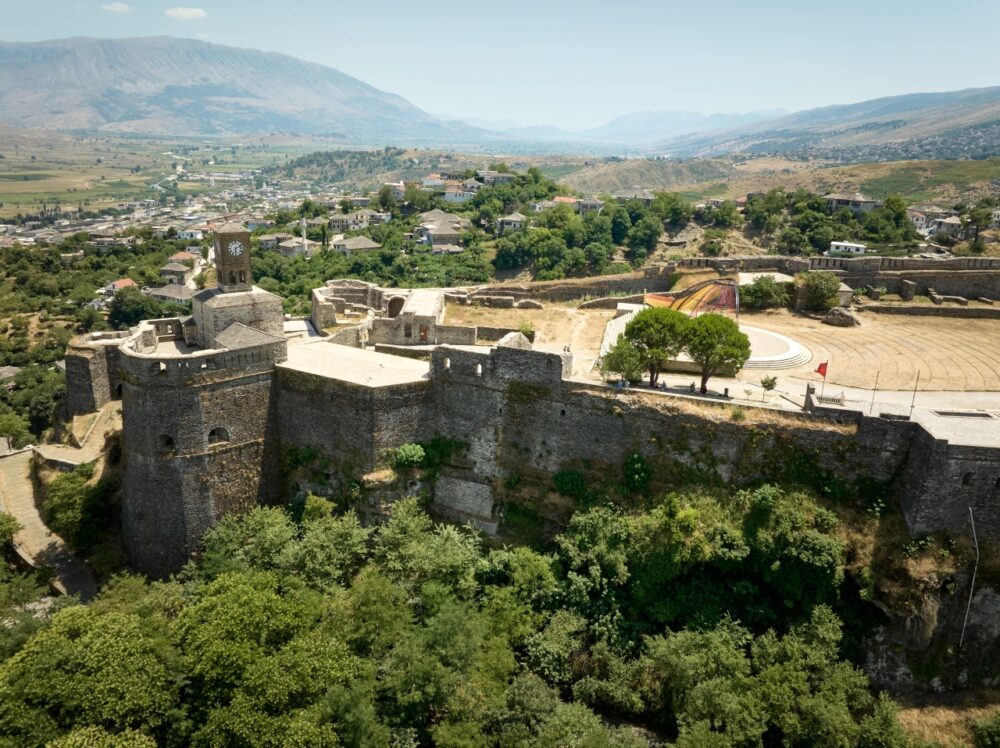
2. Gjirokaster Castle is One of the Largest in the Balkans
The hilltop castle dominates the town’s skyline, and it’s genuinely massive once you’re inside. I spent close to two hours walking through it, past an old military museum with a captured American plane from the Cold War, an open-air theater still used for the town’s folk festival, and long stone corridors that once served as a prison under both the monarchy and later communist rule. The views over the valley from the castle walls alone made the climb worth it.
3. It’s Extremely Affordable, Even by Albanian Standards
I found prices in Gjirokaster lower than in Tirana and roughly in line with Berat. A generous dinner with a local wine cost me around 8-10 euros. A comfortable guesthouse room in the old town ran about 25 euros a night. For travelers watching their budget closely, Gjirokaster offers excellent value, especially given the quality of what you’re getting for the price.
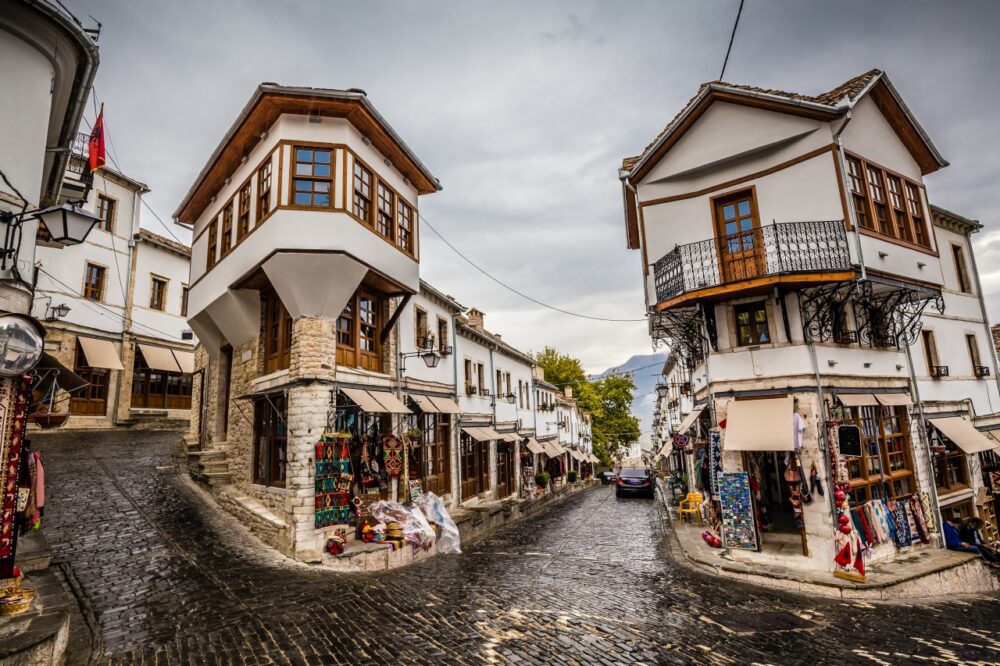
4. The Old Bazaar Still Functions as a Real Market
Unlike some restored old towns that feel more like open-air museums, Gjirokaster’s bazaar is still a working commercial area. I bought local cheese, dried herbs, and a hand-carved wooden item from vendors who’d clearly been running their stalls for years, not just for tourist season. It gave the whole area a more genuine feel than similar old towns I’ve visited elsewhere.
5. It’s a Fascinating Stop for Modern History
Between the birthplaces of Enver Hoxha and Ismail Kadare, Gjirokaster offers a window into two very different sides of 20th-century Albania: authoritarian rule and literary resistance to it. I visited Kadare’s childhood home, now a small museum, and found it a genuinely moving stop, especially having read some of his work before the trip. Combined with the castle’s Cold War-era exhibits, the town gives a fuller picture of Albania’s recent history than most other stops on a typical itinerary.
6. It Makes a Great Base for the Blue Eye Spring and Southern Albania
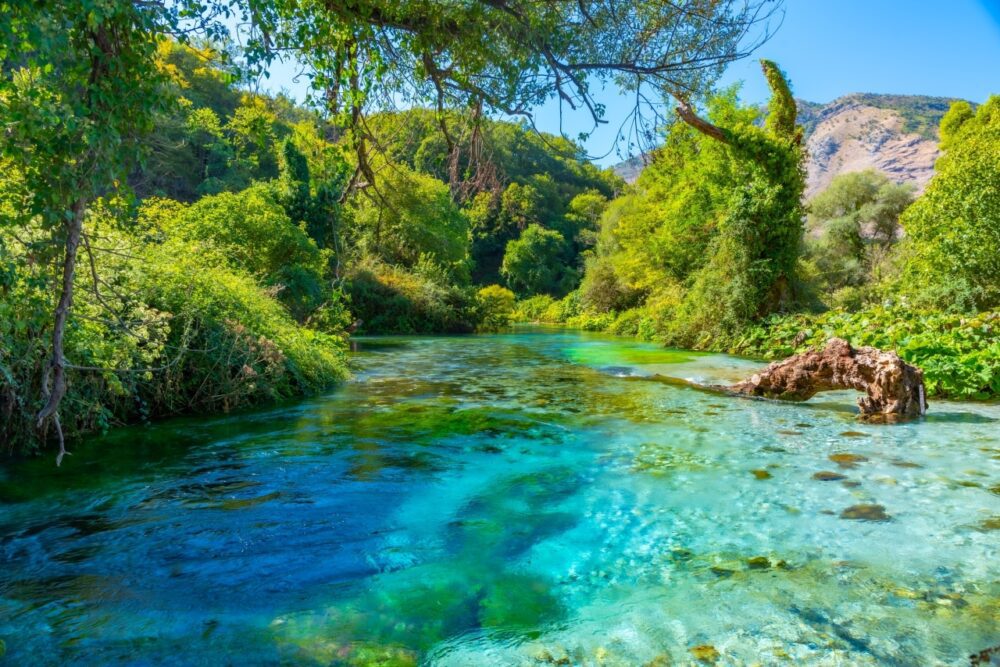
Gjirokaster sits close to some of southern Albania’s best natural sights. I took a half-day trip to Syri i Kaltër (the Blue Eye Spring), a strikingly deep blue natural spring about 40 minutes away, and it was one of the most beautiful natural spots I saw in the entire country. The town also makes a reasonable base for exploring toward the Albanian Riviera if you’re heading that direction next.
7. It’s Quiet, Even During Peak Season
I visited in the warmer months and still found Gjirokaster noticeably calmer than Berat or Tirana. The steep terrain seems to keep the bigger tour groups shorter in their visits, usually a few hours rather than overnight stays. Staying overnight let me experience the old town in the early morning and evening, when it was nearly empty, which was one of the highlights of my whole trip through southern Albania.
Cons – Things to Consider Before Visiting Gjirokaster
1. The Hills are Steep, Even by Albanian Standards
I thought Berat’s cobbled streets were tough, and then I got to Gjirokaster. The old town climbs sharply toward the castle, and many of the stone streets are uneven and can get slippery, especially after rain. I was constantly catching my breath on the walk up to my guesthouse. If steep walking is a serious concern for you, look closely at exactly where your accommodation sits before booking.
2. There’s Not Much to Do After Dark
Gjirokaster quiets down fast once the sun sets. A handful of restaurants and bars stay open around the bazaar, but I found most evenings pretty low-key. That suited me fine after a day of walking, but if you’re looking for an active nightlife scene, this isn’t the town for it.
3. Getting There and Around Takes Some Planning
Gjirokaster isn’t on a major train line, and there’s no local bus network within the town itself. I relied on furgon minibuses to get there from Berat, and schedules weren’t always posted clearly online, so I had to ask locally to confirm times. Once in town, reaching outlying sights like the Blue Eye Spring meant arranging a taxi or joining a small group tour, since there’s no public transport covering that route.
Things to Do in Gjirokaster
- Explore the Old Bazaar – The commercial heart of the old town, still active with real vendors selling cheese, textiles, and crafts. Best explored slowly, ideally in the morning before it gets busy.
- Visit Gjirokaster Castle – The town’s biggest draw, with sweeping valley views, a military museum, and an open-air theater. Budget at least two hours to see it properly.
- Tour the Zekate House – One of the best-preserved tower houses in town, with ornately painted ceilings and a layout that shows exactly how a wealthy Ottoman-era family would have lived.
- Visit Ismail Kadare’s Childhood Home – A small museum dedicated to Albania’s most famous writer. I’d recommend reading a bit of his work beforehand to get more out of the visit.
- Day Trip to the Blue Eye Spring (Syri i Kaltër) – A vivid blue natural spring about 40 minutes from town. One of the most beautiful natural sights I saw anywhere in Albania.
- Walk the Old Town at Sunset – The stone houses take on a warm glow in the evening light, and the crowds thin out significantly once the day-trip tour groups leave.
- Try Qifqi at a Local Restaurant – A Gjirokaster specialty made of fried rice balls with herbs and egg. I hadn’t seen it anywhere else in Albania and would recommend trying it here specifically.
- Visit the Ethnographic Museum – Built near the site of Enver Hoxha’s birth home, this museum covers traditional local life and gives useful context on the town’s more complicated modern history.
- Browse for Local Crafts and Textiles – Gjirokaster is known for its handwoven kilims and carpets. Several shops in the bazaar sell authentic pieces, and prices are noticeably lower than in Tirana.
- Take a Day Trip Toward the Albanian Riviera – If you have a car or can arrange transport, the drive south toward Sarandë and the coast passes through dramatic mountain scenery and makes for a good half-day or full-day excursion.
Where to Stay in Gjirokaster
- Old Town (near the Bazaar) – The most atmospheric choice, putting you right among the stone houses and the market. I stayed here and would do it again, despite the steep walk to reach it.
- Near the Castle – A quieter option slightly higher up, with excellent views but an even steeper climb. Worth it if you don’t mind the extra effort.
- Lower Town (near the main road) – The most practical base if you’re arriving with luggage or plan on day trips, since it’s flatter and closer to furgon stops and taxi pickup points.
- Just Outside the Old Town – A good middle ground for travelers who want easy access to the historic center without tackling the steepest streets every time they come and go.
Getting Around Gjirokaster
Walking is really the only option inside the old town, and it’s also the best way to experience it. Everything of interest sits within a compact area, but the terrain is steep and the stone streets can be uneven, so proper footwear matters more here than in most other Albanian towns I visited.
For trips outside the center, like the Blue Eye Spring or onward toward the coast, you’ll need a taxi, a rental car, or an organized tour, since Gjirokaster doesn’t have local public transport covering these routes. I arranged taxis through my guesthouse each time and found the drivers reliable and reasonably priced. For getting to Gjirokaster itself, furgon minibuses connect it to Berat, Tirana, and Sarandë, though I’d recommend confirming departure times a day ahead rather than trusting posted schedules, since they shift more often than you’d expect.
Conclusion
So, is Gjirokaster worth visiting? Based on my time there, I’d say yes, particularly for travelers who care about architecture, history, and a genuinely local pace of life. The pros are compelling: remarkably well-preserved stone architecture, one of the most impressive castles in the Balkans, a real working bazaar, and an unusual depth of modern history packed into a small town. The cons mostly come down to logistics and physical effort, the steep streets and the need to plan transport ahead rather than winging it.
I’d recommend Gjirokaster to anyone building a southern Albania itinerary, especially as a stop between Berat and the coast, or as a base for visiting the Blue Eye Spring. It’s not the town for travelers chasing nightlife or convenience, but for anyone who wants to see a genuinely well-preserved piece of Ottoman-era architecture without the crowds, it’s one of the strongest stops I made in the entire country.
Related Posts
- Is Berat Worth Visiting? Pros, Cons and Travel Tips (2026)
- Is Gjirokaster Worth Visiting? Pros, Cons and Travel Tips (2026)
- Is Ksamil Worth Visiting? Pros, Cons and Travel Tips (2026)
- Is Sarande Worth Visiting? Pros, Cons and Travel Tips (2026)
- Is Tirana Worth Visiting? Pros, Cons and Travel Tips (2026)