
Is Rotterdam Worth Visiting? Honest Pros and Cons (2026)

Rotterdam doesn’t look like the Netherlands on the famous views. There are no leaning gabled houses here. Instead, you step out of the station and see glass towers, a giant arched market hall and a row of yellow cubes tilted on their corners. I spent three days here one summer, and I kept stopping to stare at buildings I couldn’t quite believe.
Rotterdam is the second-largest city in the Netherlands, and it runs Europe’s biggest port. Most of the old centre was destroyed in the Second World War, so the city rebuilt itself with bold, modern architecture. That gives you a skyline full of ideas, plus a lively food scene, big museums, harbour cruises and some of the best street art in the country. It’s also spread out, a little rough around the edges and nothing like Amsterdam. Whether Rotterdam is worth visiting depends on what you want from a city, and for me the answer is yes.
This guide covers the pros and cons of Rotterdam, where to stay, and what to book. You’ll also find tips on when to go, how long you need, and getting around, so you can decide whether it suits your kind of trip.
Pros of Visiting Rotterdam
1. Bold Architecture

Rotterdam is the best place in the Netherlands for modern architecture. The Erasmus Bridge, nicknamed “The Swan”, curves across the Maas with a single white pylon. The Cube Houses near Blaak station are a row of yellow homes tilted at 45 degrees, and they look like a children’s toy set on an enormous scale.
You can go inside the cubes, too. The Kubuswoning show cube is a furnished home you can walk through, and it shows how odd and clever the layouts are. Then walk across the Erasmus Bridge to Kop van Zuid for the best view back across the river. The Rotterdam highlights bike tour is a good way to see the main buildings in one go, with a local guide to explain the stories. I walked the bridge twice, once in the afternoon and once at dusk, and the night view was my favourite.
2. Markthal and the Food Scene

The Markthal is the city’s showpiece. It’s a huge horseshoe-shaped building with homes on the outside and a food hall under a vast arched ceiling, covered in colourful fruit, flowers, and insects. Stalls sell cheese, fresh stroopwafels, Turkish pastries, Surinamese rolls, sushi and just about anything else. I grazed here for lunch on my first day and came back for a second round the next morning.
The Markthal is open Monday to Thursday and Saturday from 10am to 8pm, on Friday until 9pm and on Sunday from 12pm to 6pm. Blaak metro stop is right outside. The Markthal and Cube Houses tour combines tastings with the nearby architecture, and it works well on a first day. Beyond the market, the city has a strong restaurant scene, with Indonesian, Surinamese, Turkish and street food all easy to find. Eat early, because the market gets busy at lunchtime!
3. The View From the Euromast
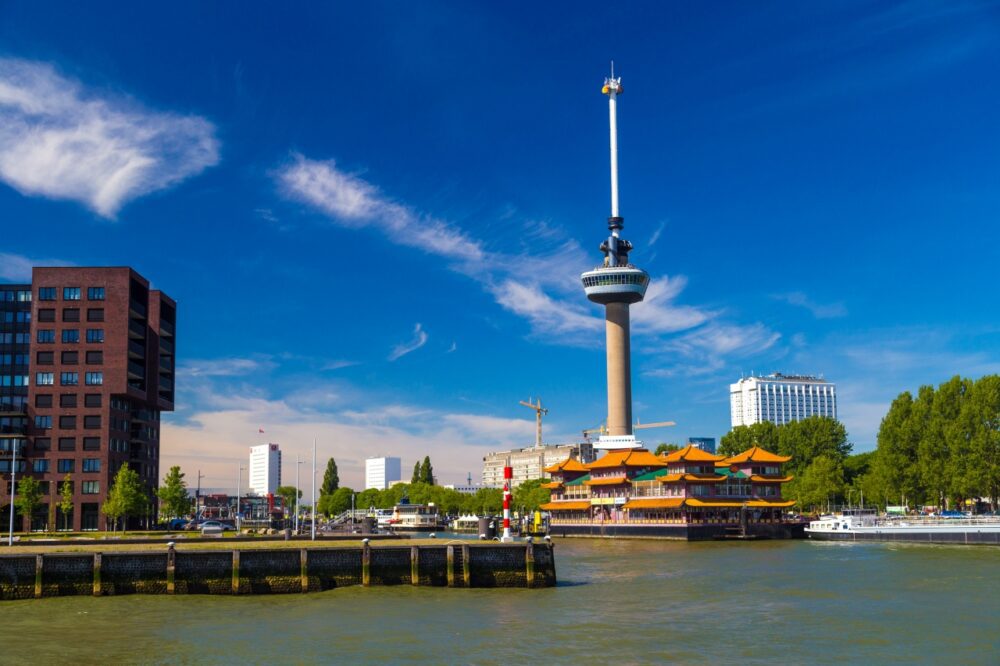
The Euromast is Rotterdam’s tower, and it gives you the best view of the city and the port. The main platform sits at 112 metres. The Euroscoop, a glass lift that rotates as it rises, takes you up to 185 metres. From the top, you see the whole harbour, the bridges and the sprawl of cranes and container ships going out to sea. On a clear day, the view runs for miles. It helps you understand how big the port is.
The Euromast is open daily from 9:30am to 10pm, and it takes cards only. You can book the Euromast ticket ahead of time. Go late afternoon and stay for sunset, when the harbour lights come on. The tower also has a brasserie, and you can eat with the same view. I went up in the early evening, and I’d do it the same way again.
4. The Port and Harbour Cruises
Rotterdam is a port city, and the best way to feel it is from the water. Huge container ships dock along the Maas, cranes line the banks and old warehouses stand beside new towers. A harbour cruise takes you past all of it. You see the Erasmus Bridge from underneath, the old Hotel New York building and the quays at Katendrecht. It’s a working harbour, so the scale surprised me. Everything looks bigger from the deck. It’s a very different view from the one you get on land, and it explains why the city exists.
The Rotterdam harbour tour is the simplest way to do it. Spido is the long-running cruise operator in the city, with day and theme cruises. If you want something lighter, the pancake cruise serves Dutch pancakes on the water. Pick a clear day, because the skyline looks best in good light. Sit on the open deck if you can.
5. Museums for Every Taste
Rotterdam has a strong museum scene. Museum Boijmans Van Beuningen runs the Depot, a mirrored bowl-shaped building in Museumpark where you can walk through the storage rooms and see thousands of artworks. The Depot is open Tuesday to Sunday from 11am to 5pm. The Kunsthal hosts changing exhibitions on art, design, and photography, and it’s open Tuesday to Sunday from 10am to 5pm. Both sit close together, so you can combine them in one afternoon.
The Maritime Museum tells the story of the port, with models, films and a harbour full of historic ships. It’s open Tuesday to Saturday from 10am to 5pm and on Sunday from 11am to 5pm, and the historic ships are open from April to October. I liked the Depot most, because you see the art in a way you don’t in a normal gallery. Most museums close on Mondays, so plan around that!
6. Street Art and Delfshaven

Rotterdam is a canvas. Huge murals cover walls across the city, from Witte de Withstraat to the old warehouses along the river. Some are playful and some are political, and new ones appear all the time. Walking around with no plan turned up more art than I expected. It gives the city a young, creative feel that’s hard to find elsewhere in the country.
For context, the street art tour comes with a specialist guide who explains the artists and the stories behind the walls. Delfshaven is the other must-see. It’s one of the few areas that survived the 1940 bombing, and its old canal houses and windmill feel completely different from the centre. The Delfshaven canal cruise has a live guide and shows you the quiet side of the city. Walk back along the water afterward. The old harbour looks beautiful in the evening light, and there are plenty of cafés for a stop on the way.
7. SS Rotterdam and Maritime History

The SS Rotterdam is a former ocean liner, built in 1959, and it’s moored in Katendrecht on the south bank. It’s now a floating hotel, restaurant, and museum, and you can walk its decks, see the old ballrooms and learn how people crossed the Atlantic in style. The art deco details are still there, and the ship feels frozen in another era. Katendrecht itself has turned into one of the city’s trendiest neighbourhoods, with restaurants and bars in old harbour buildings.
The SS Rotterdam audio tour gives you entry and a guided audio walk through the ship. It’s a good fit if you like ships, history or retro design. Combine it with lunch in Katendrecht, and take the water taxi across the river for a nicer arrival. I’d allow at least two hours. It’s one of the most unusual things I did in the city.
8. Easy to Get Around
Rotterdam is simple to navigate. The metro, trams and buses all link up, and the main sights are close to a stop. Rotterdam Centraal sits right in the middle, so most people can walk to their hotel. The city is flat and bike-friendly, with wide cycle lanes and plenty of space. Water taxis add a fun extra, hopping between quays along the river. After the first day, I didn’t need a map. Stops are well signed, and the lines are simple to follow. Even with a suitcase, getting from the station to a central hotel takes just a few minutes.
The RET network runs the metro, trams, and buses, and the RET 1-day ticket covers all of them. Trains connect Rotterdam to Amsterdam, The Hague, Delft and Utrecht in well under an hour, which makes it a handy base. Signs and menus are clear, and nearly everyone speaks excellent English. That makes a short trip very low-stress!
9. Football, Beer and Nightlife
Rotterdam has a proud, working-class spirit, and you feel it in the stadium and the bars. Feyenoord is the city’s club, and De Kuip is one of the great old football grounds in Europe. You don’t need a match day to enjoy it. The De Kuip stadium tour takes you behind the scenes, and it’s a fun half day even if you don’t follow football.
The craft beer scene is strong too. The Stadshaven brewery tour includes beer tastings and shows how a local brewery works. After dark, Witte de Withstraat and the streets around Oude Haven fill with bars and restaurants. The nightlife is relaxed and friendly, with fewer tourists than in Amsterdam. I spent one evening bar-hopping and ended up chatting to locals about the football. The crowd is friendly and unpretentious, which makes it an easy place to meet people and settle in for the night.
10. Day Trips

Rotterdam sits in the middle of the Randstad, so day trips are easy. Delft, The Hague and Utrecht are all a short train ride away. Kinderdijk is the highlight, a UNESCO World Heritage site with 19 windmills lined up along the water. The Kinderdijk entry ticket gets you in, and the windmills are a gentle walk or cycle along the canals.
The best way to get there is the WaterShuttle, a boat that sails from Rotterdam to Kinderdijk in about 30 minutes. The WaterShuttle runs daily from 23 March to 25 October, then on Friday to Sunday. In spring, the Keukenhof tour from Rotterdam takes you to the famous tulip gardens. Pick one trip per day, because each one takes most of a day. They’re worth it if you have three days or more. Book ahead in busy months, and check the boat times before you set out.
Cons of Visiting Rotterdam
1. It’s Not a Postcard City
Rotterdam doesn’t have the canal houses, the cobbled lanes or the old squares that people picture in the Netherlands. The 1940 bombing wiped out most of the old centre, and what replaced it is modern. Some streets feel wide, grey and a little cold. Big roads and shopping streets cut through the middle, and a few corners are plain. On my first walk from the station, I wondered if I’d made a mistake.
The answer is to adjust your expectations. Rotterdam is about ideas, not charm. Head to Delfshaven, Oude Haven and the waterfront when you want old-world looks, and treat the rest as a gallery of modern design. If you want canal-side prettiness, Delft is a short train ride away. Give the city a day, and the architecture starts to win you over. It’s still worth it!
2. It’s Spread Out
The main sights are not clustered like they are in smaller Dutch cities. The Euromast, the Cube Houses, the Depot, Katendrecht and Delfshaven are all in different corners. You can walk between a few of them, but others need a tram, a metro or a water taxi. On my second day, I realised I’d spent more time travelling than looking. The river also splits the city in two, which adds to the distances.
Plan each day around one area. Do the Blaak and Markthal zone together, then Museumpark and the Euromast, then Kop van Zuid and Katendrecht. A day ticket makes hopping around cheap. The water taxi turns a transfer into a ride you’ll enjoy. With a little planning, the distances stop mattering, and the city is still worth it.
3. Wind and Changeable Weather
Rotterdam sits by the sea, and the wind comes straight up the river. The wide open streets and big squares give it nowhere to go. Even on a warm day, the breeze on the Erasmus Bridge or the harbour can feel sharp. Rain can arrive quickly, and the sky changes fast. I was glad I’d packed a light jacket, even in summer.
Pack layers and a compact waterproof. Keep a few indoor plans ready, such as the museums, the Markthal and the SS Rotterdam. The harbour cruise has covered options, so a shower won’t ruin it. Check the forecast for the day you plan to go up the Euromast, because a clear sky makes a big difference. A little preparation takes care of this, and the city is still worth it.
4. Short Hours on Mondays and Sundays
Some of the best sights keep short hours. Most museums close on Mondays, and the Markthal opens later and closes earlier on Sundays. The Depot, the Kunsthal and the Maritime Museum are all closed on Mondays, so a Monday can feel quiet. On my trip, I nearly planned the Depot for a Monday before I checked the hours.
Check opening times before you build your days. Use Mondays for outdoor plans, such as the architecture walk, a harbour cruise, street art or Delfshaven. Save the museums for Tuesday to Sunday, and visit the Markthal on a weekday or Saturday when it’s open late. A tiny bit of scheduling avoids the problem, and the museums are still worth it. Once you know the hours, the week falls into place!
5. Prices Jump During Events
Rotterdam is cheaper than Amsterdam, but hotel prices still climb during big events. North Sea Jazz in July, World Port Days in early September, the marathon in April and the film festival in late January or early February can all push rooms up. A central three or four-star room often costs around €100 to €230 per night on a busy weekend. Rooms near the station sell out first.
Book early if your dates match an event. Weekdays are usually cheaper than weekends, and the areas just outside the very centre often cost less. Many hotels offer free cancellation, so booking early is low-risk. Eat at the Markthal or in the neighbourhood cafés rather than at the pricey terraces near the station. A bit of planning keeps costs down, and the city is still worth it.
Where to Stay
City Centre and Station: I stayed in the city centre, and it’s the easiest base for a first visit. Rotterdam Centraal is close, the metro and trams stop nearby and you can walk to the Markthal and the Cube Houses in about 15 minutes. It suits short stays, and arrivals and departures are simple. The downsides are higher prices and some busy streets near the station. Motel One is a budget-friendly option with a bar and a modern design. Holiday Inn Express Rotterdam Central Station is a mid-range choice beside the station. citizenM Rotterdam is a stylish mid-range hotel with a lively lobby bar.
Blaak and Oude Haven: This is the most fun part of the centre. The Cube Houses, the Markthal and the old harbour are all on your doorstep, and the cafés and bars of Oude Haven are a short walk away. It suits couples, foodies and anyone who likes to be in the middle of things. The downsides are crowds at weekends and some noise after dark. Motto by Hilton Rotterdam Blaak is a budget-friendly stay with compact, smart rooms. Room Mate Bruno is a mid-range design hotel with a lively bar. The James Rotterdam is an upscale boutique stay with a restaurant.
Kop van Zuid: This is the modern waterfront on the south bank, just across the Erasmus Bridge. The views of the skyline are the best in the city, and the area is calm at night. You’re a short tram or water taxi ride from the centre, though dining options are fewer. It suits architecture fans and anyone who wants a quieter base. Hotel New York is a mid-range classic in the former Holland America Line headquarters, with a restaurant and river views. nhow Rotterdam is an upscale design hotel with bold interiors and river views.
Middelland and the West: Middelland is a local, residential neighbourhood with independent cafés, small shops and much lower prices. It’s a short tram ride from the centre and feels more like real city life. It suits longer stays and travellers on a budget, though it has fewer major sights. Hotel Middelland is a mid-range stay in the heart of the neighbourhood. Hotel Port is a budget-friendly option with simple, modern rooms. Mr.Lewis is another mid-range option with a relaxed feel!
Best Things to Do
These are the tours and tickets I’d book for a trip to Rotterdam.
- Rotterdam harbour tour: A cruise past the container terminals, the Erasmus Bridge and the old quays of Rotterdam’s working port.
- Euromast ticket: Entry to the tower for panoramic views over the city and port. The Euroscoop lift rotates as it climbs to 185 metres.
- Markthal and Cube Houses tour: A guided walk with food tastings in the Markthal and a look at the Cube Houses nearby.
- Rotterdam highlights bike tour: A relaxed 2.5-hour ride through the main sights and neighbourhoods with a local guide.
- Kinderdijk entry ticket: Entry to the UNESCO windmill village, with 19 windmills set among the canals.
- SS Rotterdam audio tour: Entry to the former ocean liner in Katendrecht, with an audio guide that takes you through the decks and ballrooms.
- De Kuip stadium tour: A behind-the-scenes tour of Feyenoord’s historic stadium.
- Stadshaven brewery tour: A tour of a local craft brewery with beer tastings. Guests must be 18 or older.
- Street art tour: A guided walk past the city’s best murals with a specialist guide.
- Rotterdam Zoo skip-the-line ticket: Entry to one of the best-known zoos in the Netherlands, with a faster way in. It’s a good pick for families.
- Miniworld Rotterdam entry ticket: Entry to a huge miniature world with detailed models of cities, ports and trains.
- Keukenhof tour from Rotterdam: A bus trip with a Keukenhof ticket included. It only works during the garden’s short opening season.
Best Time to Visit
Spring (March to May): Spring is a great time to go. Keukenhof usually opens from late March to mid-May, and it’s an easy day trip from the city. King’s Day on 27 April fills the streets and canals with orange, and the Rotterdam Marathon takes over in April. Mornings can be cool, so pack layers. The WaterShuttle to Kinderdijk starts daily in late March.
Summer (June to August): Summer is the liveliest season. Days are long, terraces fill up and the waterfront comes alive. North Sea Jazz brings big crowds in July, and the historic ships at the Maritime Museum are open. Temperatures are usually mild, with the odd shower. It’s also the busiest and priciest season, so book hotels and key tickets early.
Autumn (September to November): Autumn is a good time for fewer crowds. World Port Days in early September turn the harbour into a festival of ships, cranes, and cruises. The weather turns changeable, with wind and rain mixed with bright days, so pack a waterproof jacket. The WaterShuttle runs daily until 25 October, and museum days are perfect for wet afternoons.
Winter (December to February): Winter is quiet and cold, with short days. Prices drop outside the Christmas period, and the museums and the Markthal are cosy escapes from the wind. The International Film Festival Rotterdam arrives in late January or early February. The WaterShuttle runs on Friday to Sunday only!
How Long to Spend
1-2 Days: With one or two days, you can cover the essentials. Ride a harbour cruise, eat in the Markthal, see the Cube Houses and go up the Euromast. Walk across the Erasmus Bridge for the skyline view. It’s a full, rewarding stop, especially as part of a wider Dutch trip.
3-4 Days: This is the ideal length, and it’s what I did. Three days gives you the architecture, the Markthal, a museum, or two, Delfshaven, Katendrecht and an evening in the bars without rushing. A fourth day lets you add Kinderdijk. I spent one day on the main sights, one on museums and the waterfront, and one on the west side of the city.
5-7 Days: With a week, you can see Rotterdam at a slow pace and use it as a base. Delft, The Hague, Utrecht and Keukenhof are all easy by train or tour. Keep one slow day for a long lunch at the Markthal and a stroll along the river. For a longer Netherlands break, you could give Haarlem a stay of its own for a change from Rotterdam.
Getting Around
On foot: The centre is walkable, and the Markthal, the Cube Houses, Oude Haven and the shopping streets are within about 15 minutes of each other. The Erasmus Bridge is also a good walk. Beyond the centre, distances grow, so mix walking with public transport.
Bike hire: Rotterdam is flat and bike-friendly, with wide, well-marked lanes. Donkey Republic rents bikes through an app. Lock your bike every time you stop, and keep to the cycle lanes.
Metro, trams and buses: RET runs the metro, trams, and buses. The metro is the fastest way to cross the city, and Blaak is the stop for the Markthal and the Cube Houses. OVpay lets you tap in and out with a contactless bank card or phone, so check the OVpay site for details. For a day ticket, the RET 1-day ticket covers all of RET’s services. If you plan to visit several attractions, the Rotterdam City Card includes public transport and discounts of 25% or more at 50+ attractions. It excludes NS trains, water taxis and the Waterbus. Remember to tap out at the end of each ride!
Water taxis and the WaterShuttle: The water taxi runs between about 50 stops along the river, with fares from about €5.25 per person. It’s the quickest way to get across the Maas and a fun ride on its own. The WaterShuttle to Kinderdijk takes about 30 minutes, with bikes carried free.
Trains: NS runs the national train network, and Rotterdam Centraal links to Amsterdam, The Hague, Delft and Utrecht. Trains are frequent and fast, and they make day trips simple.
To and from the airport: Rotterdam The Hague Airport is small, and bus 33 reaches Rotterdam Centraal in about 20 minutes. Many people fly into Schiphol instead. The direct Intercity train from Schiphol to Rotterdam Centraal takes about 26 minutes with a supplement, and the regular train takes about 50 minutes. The Schiphol train transfer is a simple ticket that you can book ahead. If you want door-to-door service, the private transfer runs between Schiphol and Rotterdam. The airport site has more on buses and other options. For the way back, line up the same type of ticket for your departure, or take the train from Rotterdam Centraal.
Final Thoughts: Is Rotterdam Worth Visiting?
Yes, and it’s a city that surprises you. Rotterdam gives you bold architecture, a world-class market hall, big views, a working harbour, strong museums, street art and easy day trips. It’s well connected, English-friendly and cheaper than the Dutch capital. I left with a camera full of buildings I’d never seen the likes of.
It isn’t perfect. The city isn’t pretty in the classic sense, the sights are spread out, the wind can bite, opening hours can catch you out and prices jump during events. Each of these has a simple fix, so none of them should put you off.
Rotterdam is best for architecture fans, foodies, football lovers and anyone who wants a different side of the Netherlands. If you plan each day around one area, check opening hours and save a day for Kinderdijk, it’s worth every euro. You’ll leave with a new idea of what a Dutch city can be!


