
Is Haarlem Worth Visiting? Honest Pros and Cons (2026)

New York’s Harlem takes its name from Haarlem, a city in the Netherlands that most travellers skip on the way to Amsterdam. That’s a shame. Haarlem has a grand market square, a giant medieval church, hidden almshouse courtyards and a canal lined with old merchant houses, all without the crowds of the capital.
I visited Haarlem one winter and found it a very easy city to enjoy. It’s the capital of the province of North Holland, and it sits only 15 to 20 minutes from Amsterdam by train. I wandered the old streets, climbed into a windmill, spent hours in two of the best museums in the country and ate far too many stroopwafels.
This guide covers the pros and cons of Haarlem, where to stay, and what to book. You’ll also find tips on when to go, how long you need, and getting around, so you can decide whether it suits your kind of trip.
Pros of Visiting Haarlem
1. The Grote Markt

The Grote Markt is the centre of Haarlem, and it’s one of the prettiest squares in the Netherlands. The huge church dominates one side, and the old town hall and a row of gabled cafes fill the rest. I arrived early and watched the square wake up, with shopkeepers setting up and cyclists rolling past. Take a moment to walk around the edges, because each side has a different view of the church and the old buildings.
Cafe terraces fill the square all year, and many have heaters in winter. I grabbed a coffee outside and just watched people for a while. In December, a Christmas market takes over the Grote Markt and the streets around it, with crafts, gifts, mulled wine and public carol singing. A walking tour is a good way to learn the stories behind the buildings. The square is also only about 8 minutes on foot from the station, which makes it a perfect first stop.
2. The Grote Kerk

The Grote Kerk, also called the Sint-Bavokerk, towers over the Grote Markt. It’s a huge Gothic church, and the interior feels even bigger than the outside suggests. The pale walls and soaring vaults make it a great place to slow down for a while!
The star of the show is the Müller organ, built in 1738. It’s one of the most famous organs in the world, and the young Mozart played it in 1766. I loved standing underneath it and imagining the sound filling the nave. Visiting is simple, since the church sits right on the square, and you can easily fit it in between a coffee and a museum. Look out for the memorials along the walls too, which tell the story of the city, and walk around the outside to see how the church rises above the square. It’s a good reminder of how wealthy Haarlem once was.
3. Teylers Museum

Teylers Museum is the oldest museum in the Netherlands, and it feels like a time machine. It opened in 1784, and the building still has the atmosphere of an 18th-century science club. Glass cases hold fossils, minerals, scientific instruments and old drawings, all in beautiful rooms.
The highlight is the Oval Room, which dates from 1784 and is still on display. I spent far longer there than I planned, because every case has something unusual. The museum is open Tuesday to Sunday from 10:00 to 17:00. Skip the queue by booking a Teylers Museum ticket in advance. It also comes with an optional audio guide, which adds helpful context. Allow at least two hours. It’s a great pick for a cold or rainy day, and it suits families as well as adults. The Oval Room alone is worth the entry, and the quiet galleries beyond it feel like discovering a private collection.
4. The Frans Hals Museum
Frans Hals is the most famous painter from Haarlem, and the Frans Hals Museum is the best place to see his work. He painted lively portraits in the Dutch Golden Age, and his people look surprisingly real, with smiles and quick gestures. The museum sits at Groot Heiligland 62, about 15 minutes on foot from the station.
The collection runs from the 16th century to the present day. You’ll see works by Jan van Scorel, Maarten van Heemskerck and Hendrick Goltzius next to modern art. It’s open Tuesday to Sunday from 11:00 to 17:00. A Frans Hals Museum ticket with audio guide makes the visit easy and gives you the background on each painting. I liked how the rooms mix old and new, so it never felt dry. If you love art but find big museums tiring, this is a great size. Allow about two hours, then walk back through the old streets to the Grote Markt for lunch.
5. Corrie ten Boom House
The Corrie ten Boom House is one of the most moving places I’ve visited in the Netherlands. During World War II, the ten Boom family hid Jewish people and resistance members in a secret room in their home above the family watch shop. Corrie later wrote about it, and her story became famous around the world!
You can only visit with a guided tour, which runs for about an hour in English or Dutch. Tours run Tuesday to Saturday, and you need to book at least five days in advance on the website. The house is at Barteljorisstraat 19, just off the Grote Markt. I’d put it at the top of any list. The guides tell the story with care, and standing in the tiny hiding place made the history feel very real. Go with an open mind and allow time to reflect afterwards. A quiet coffee in a nearby cafe helped me take it all in.
6. Hofjes and Hidden Courtyards
Haarlem is famous for its hofjes, small courtyards surrounded by historic almshouses. Wealthy citizens built them to house poor or elderly residents, and many are still homes today. Walk through an unmarked gate and you suddenly find yourself in a quiet garden, far from the main streets.
I found them by chance while wandering, which is half the fun. Hofje van Bakenes is one of the oldest, and you can spot several others within a short walk of the Grote Markt. Please keep your voice down and respect the residents, since these are private homes. A guided walking tour of Haarlem’s history and hofjes lasts about two and a half hours in a small group. A guide knows which gates are open and the stories behind them. It’s the best way to see the side of Haarlem that most people miss, and the stories make the quiet courtyards much more memorable.
7. Windmill De Adriaan
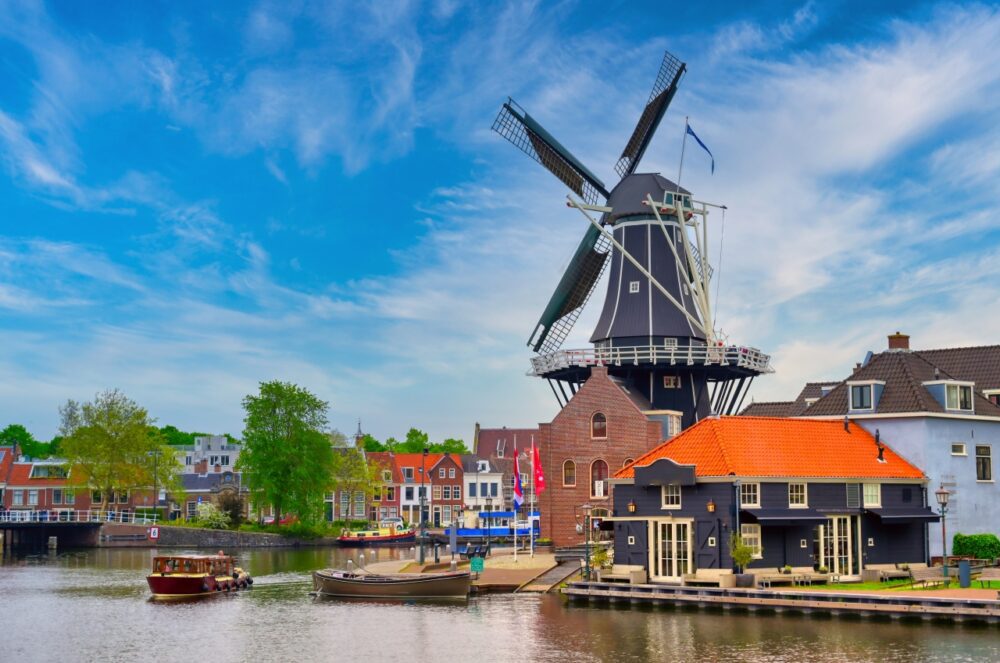
Windmill De Adriaan stands on the bank of the Spaarne river, at Papentorenvest 1-A, and it’s a classic Dutch scene. You can only visit with a guide, and the tour takes around 45 minutes. Inside, you see the machinery that once ground grain, then step out onto the deck for views across the city.
It’s a fun and cheap thing to do, and it gives you a real feel for how Dutch windmills work. I enjoyed climbing the narrow stairs and watching the sails turn. You can book the De Adriaan windmill tour online, which lasts about an hour. The mill is a comfortable 15-minute walk from the station. After the tour, stroll along the Spaarne to see the old warehouses and bridges. The riverside is especially pretty in the late afternoon light, and it’s a good place to rest your feet. The walk back to the Grote Markt takes about ten minutes.
8. Canal Cruises on the Spaarne

Haarlem looks great from the water. The Spaarne river and the old canals wind through the centre, past historic houses, bridges and the city’s old gates. A boat is a relaxed way to see them, particularly on a day when walking feels like too much work!
The Open Boat Canal Tour runs for 75 minutes. A guide gives a talk on the history, architecture and art you pass along the way. I liked how quiet it was after the busy streets. If you want something more hands-on, you can also rent a private electric boat and steer it yourself for two hours. It’s a nice option for groups of friends or families, and it lets you set your own pace. Dress warmly if you go in the colder months, since the wind on the water cuts through. Sit on the side facing the old houses for the best views, and bring gloves.
9. Food, Cafes and Shopping
Haarlem is a brilliant city for a long, lazy lunch. The cafes around the Grote Markt serve Dutch classics like bitterballen and pancakes, and the side streets hide bakeries and small restaurants. The city’s Golden Streets are packed with independent shops, which makes browsing a pleasure.
I spent one afternoon on a stroopwafel workshop, which lasts about 45 minutes. You bake and fill your own warm waffle, which is as fun as it sounds. For a drink, the Jopenkerk is a popular brewery and restaurant in a former church. The beer is worth trying, and the high ceilings make it a striking place for dinner. The shops along the Golden Streets are worth a slow look too. The pace is slower than in the capital. It’s easy to fill a day with nothing more than coffee, shopping, and snacks. Try a bitterbal with a local beer in the evening, and you’ll see why people linger here.
10. Day Trips

Haarlem is a great base for day trips. Zandvoort, a lively seaside town with a long sandy beach, is only a short train ride away. The beach is a beautiful place for a winter walk, and it gets busy in summer. Amsterdam is 15 to 20 minutes away, so you can easily combine both cities.
In spring, the Keukenhof gardens open in the third week of March, and the tulip fields of the Bollenstreek are close by. Haarlem has a long link with tulips, and the city played a big part in the tulip mania of the 1600s. For windmills and wooden houses, take the train to Zaandam and use the Zaanse Schans combi ticket, which covers the open windmills and the Windmill Museum. Leiden and the dunes are also within easy reach. Trains are frequent, so you can leave when you like and still be back for dinner.
Cons of Visiting Haarlem
1. Short, Cold Winter Days
Dutch winters are damp, grey and short on daylight. In Haarlem, the sun sets early, and the wind off the Spaarne makes outdoor sights feel colder than the thermometer suggests. On my trip I had to plan around the light, and some afternoons felt gloomy!
The answer is to pack your day with a good mix. Do the windmill, hofjes and canal walk in the morning, and save museums, cafes and the Grote Kerk for the afternoon. Teylers Museum and the Frans Hals Museum are both warm and dry. A hot chocolate stop breaks up the cold too. Bring a waterproof coat, gloves and a hat, and keep your plans flexible if the weather turns. It’s still worth visiting in winter, because the city feels cosy and the crowds are small.
2. Weekend Crowds
Haarlem is close to Amsterdam, and many people come on a day trip. On Saturdays the Grote Markt and the shopping streets fill with locals and tourists, and the cafe terraces get busy. In summer, the beach at Zandvoort adds to the pressure, and the trains fill up on sunny afternoons.
You can avoid most of it. Visit the main sights early, ideally before 10:00, and leave shopping for later. If you have a choice, come midweek when the streets are calmer. Booking museums and tours in advance also saves time, since walk-up tickets can sell out. Staying overnight helps too, because you get the evenings and early mornings when the day-trippers have gone. It’s still worth it, and even a busy Haarlem feels more relaxed than Amsterdam.
3. Monday Closures and Booking Ahead
Many of Haarlem’s top attractions close on Mondays. Teylers Museum and the Frans Hals Museum are open Tuesday to Sunday, and the Corrie ten Boom House runs tours only from Tuesday to Saturday. The Corrie ten Boom tour needs booking at least five days ahead, so a last-minute plan can fall through.
The solution is simple. Check opening days before you fix your dates, and book the Corrie ten Boom House first. Use Mondays for walking, the Grote Kerk exterior, a canal cruise or the hofjes, which you can visit any day. A guided walk also works well on a Monday. Most cafes and shops stay open, so you can still fill the day. It’s a small planning job, and the city still has plenty to see even on a day when the museums are shut.
4. Pricey Rooms in the Centre
Hotels in the historic centre are not cheap. A small city with limited rooms means prices climb fast, especially at weekends and in spring and summer. Some of the best-located places sell out early!
You can save money without losing the location. Look at hotels near the station and Ripperdapark, a short walk from the centre, or consider guesthouses and B&Bs. Hostels are also an option. Booking early helps a lot. Staying in nearby Zandvoort is another way to cut costs in summer, and the train back takes only a short time. The central spots are still worth a bit extra, because you can walk everywhere and avoid transport altogether. A good location also saves time on a short trip, and it means you can pop back to your room between sights.
5. Overshadowed by Amsterdam
Haarlem lives in Amsterdam’s shadow, and it doesn’t have a single headline attraction. If you want one famous landmark to tick off, you might feel underwhelmed. Many people also treat it as a quick stop, so they never see the best of the city.
I think this is part of the appeal. The city rewards curiosity, with quiet corners, small museums and a friendly mood. Treat it as a destination of its own instead of a footnote. Spend at least one night, join a guided walk and leave time for aimless wandering. It’s still worth visiting, because you get real Dutch history and charm with a fraction of the crowds. Even a single overnight stay gives you a very different feel from a rushed day trip.
Where to Stay
Historic Centre: This is the best base for a short trip, and it’s where I stayed. The Grote Markt, the Grote Kerk and most museums sit within a few minutes on foot. In the evening, the cobbled streets quieten down, and I loved stepping out to a lit-up square. The downside is the price. The three-star Ambassador City Centre Hotel on Oude Groenmarkt has a restaurant, a bar, a garden and a terrace. The four-star Hotel 1635 on Zijlstraat has soundproof rooms, air conditioning and a coffee house. On a budget, the two-star Amadeus Hotel sits right on the Grote Markt with a restaurant, a bar and a terrace.
Spaarne Riverside: The area along the Spaarne is quieter and very photogenic, and it puts you close to Teylers Museum and Windmill De Adriaan. It still feels central, but the streets are calmer at night. It suits couples and travellers who want character. The five-star Brasss Hotel Suites on Korte Veerstraat has a sauna, a hot tub, a steam room and a terrace. The Barbera Guesthouse Hotel Apartments on Jansstraat offer apartment-style stays with a garden and a terrace. For a cheaper option, Hello I’m Local Boutique Hostel has a bar, a restaurant, a shared kitchen, and lockers.
Station and Ripperdapark: This area is great if you’re arriving by train or heading out on day trips. The station is close, and the leafy Ripperdapark gives it a calmer feel. The Grote Markt is a short walk away. It’s less atmospheric than the old town but convenient. The four-star Hotel Lion D’Or on Kruisweg has air conditioning, room service and a 24-hour front desk. The four-star Boutiquehotel Staats on Ripperdastraat has a restaurant, a garden and soundproof rooms. Park 43 is a guest house on Ripperdapark with air conditioning and breakfast in your room!
Zandvoort: Zandvoort sits on the coast, a short train ride from Haarlem. It’s the best option if you want sea air, a long beach and a holiday mood. The downside is that you lose the old-town atmosphere, and it can feel quiet in winter. The four-star Beachhotel Zandvoort by Center Parcs on Trompstraat sits on the beach with an indoor pool, a restaurant and a bar. The two-star Hotel Grand Cafe Deight on Kerkplein has a terrace and a restaurant. Pension Corper on Koninginneweg is a guest house with a garden and a shared kitchen.
Best Things to Do
- Open Boat Canal Tour: A 75-minute cruise on an open boat through the historic centre, with a talk on the city’s history, architecture and art along the route.
- Windmill De Adriaan Guided Tour: A one-hour guided visit inside the 250-year-old mill, where you see the inner workings and step out onto the deck for views of Haarlem.
- Teylers Museum Entry Ticket: Entry to the oldest museum in the Netherlands, with an optional audio guide.
- Frans Hals Museum Ticket with Audio Guide: A ticket to the museum named after Haarlem’s most famous painter, with works from the 16th century to the present day.
- Walking Tour of History, Hidden Spots and Local Life: A small-group walk of about two and a half hours through streets, squares and hofjes, with stories and fun facts from your guide.
- Haarlem Highlights Bike Tour: A two-hour guided ride past the main sights and hidden streets, with tips and recommendations from a local.
- Dutch Stroopwafel Workshop: A 45-minute hands-on workshop in the historic heart of the city, where you make your own stroopwafels.
- Self-Drive Private Electric Boat Rental: A two-hour private rental of an easy-to-drive electric boat with cushions, route tips and the freedom to explore the canals and nearby nature.
- Zaanse Schans Combi Ticket: A day-trip ticket covering the windmills open on the day of your visit and the World of Windmills Museum, just a short train ride from Haarlem.
- Corrie ten Boom House: A guided tour of the home and hiding place of the ten Boom family, available Tuesday to Saturday in English or Dutch. Book at least five days ahead.
- Grote Markt and the Grote Kerk: A free wander around the main square and its huge Gothic church, ideal to fill the gaps between tours.
Best Time to Visit
Winter – I visited in winter and liked it more than I expected. The days are short and cold, but the city feels cosy, and the crowds are small. In December, the Christmas market fills the Grote Markt with crafts, gifts and mulled wine. January brings a New Year’s Day dip in the North Sea and ice skating at the Haarlem Ice Rink. Sinterklaas celebrations start in November. Pack warm layers, and plan indoor stops.
Spring – Spring is the prettiest time to visit. Keukenhof opens in the third week of March, and April brings the flower parade and King’s Day celebrations. The weather is mild, although showers are common. It’s also a good time for the tulip fields. Easter and King’s Day can be busy, so book hotels and tours early.
Summer – Summer is a very different trip. The terraces are packed, the evenings are long and Zandvoort’s beach is a short train ride away. June brings the free Houtfestival, and August has the Haarlem Culinair food weekend and Haarlem Jazz & more. It’s the busiest and most expensive season, so book well ahead.
Autumn – Autumn is quieter and easier on the wallet. September opens the cultural season, with performances at the city’s theatres, and October has concerts and festivals. November brings Sinterklaas celebrations. The weather turns cooler and wetter, but it’s a great time for museums!
How Long to Spend
1-2 Days – Two days is enough to see the highlights, and that’s what I spent. Start with the Grote Markt and the Grote Kerk, then visit Teylers Museum. On day two, tour Windmill De Adriaan, join a hofjes walk and fit in the Frans Hals Museum. It’s a full but relaxed pace.
3-4 Days – Three or four days gives you time to add the Corrie ten Boom House, a canal cruise and a stroopwafel workshop. You can spend a half day at the beach in Zandvoort or take a day trip to Zaanse Schans. There’s also room to slow down and enjoy the cafes.
5-7 Days – A week is more than Haarlem needs alone, but it makes a great base. Add days in Amsterdam, Leiden, Zandvoort and the Keukenhof gardens in spring. You can return each evening to a calmer city. It’s a smart way to see the region without moving hotels. With more time in the Netherlands, you could build Rotterdam, The Hague and Utrecht into a wider trip, giving each room in the itinerary rather than rushing through them all.
Getting Around
On foot: Haarlem’s centre is compact, and walking is the best way to explore. From the station, the Grote Markt is about 8 minutes away. The Frans Hals Museum and Windmill De Adriaan take about 15 minutes.
Bike hire: The city has extensive cycle paths, and you can rent a bike near the station or use an OV-fiets from the station itself. Cycling is a great way to reach the dunes and the coast. Watch out for locals on bikes, as they ride fast.
Trains and buses: Haarlem has no metro or tram, but trains and buses cover everything. Tap a contactless bank card or phone when you board and again when you get off, so you don’t need a separate ticket. The NS app covers trains, and 9292 helps with journey planning. Trains to Amsterdam take about 15 to 20 minutes. Bus 300 stops at Centrum / Verwulft, the closest stop to the Grote Markt and many hotels!
Taxis: Taxis and Uber both work in Haarlem. They’re useful late at night or when you have heavy luggage, but you rarely need them in the centre.
To and from the airport: The train from Schiphol Airport to Haarlem takes about 20 minutes, sometimes with one change. Bus 300 takes about 30 to 40 minutes, uses dedicated bus lanes and drops you close to central hotels. Line up your journey back the day before, and leave extra time for the trip to the airport.
Final Thoughts: Is Haarlem Worth Visiting?
Haarlem was one of my favourite surprises in the Netherlands. It has a beautiful market square, a magnificent church, world-class museums and some of the most peaceful courtyards I’ve seen. It also feels like a real city, with locals shopping, cycling and having coffee.
It isn’t perfect. Winter days are short, many attractions close on Mondays and rooms in the centre can be pricey. Because it sits so close to Amsterdam, it can also feel overlooked. With a bit of planning, none of that spoils the visit.
If you want Dutch history, art and canals at a gentler pace, Haarlem is a great choice. Climb into the windmill, spend an afternoon at Teylers Museum and finish with a coffee on the Grote Markt. Then you’ll see why it deserves more than a quick stop.


