Is Amsterdam Worth Visiting? Honest Pros and Cons (2026)
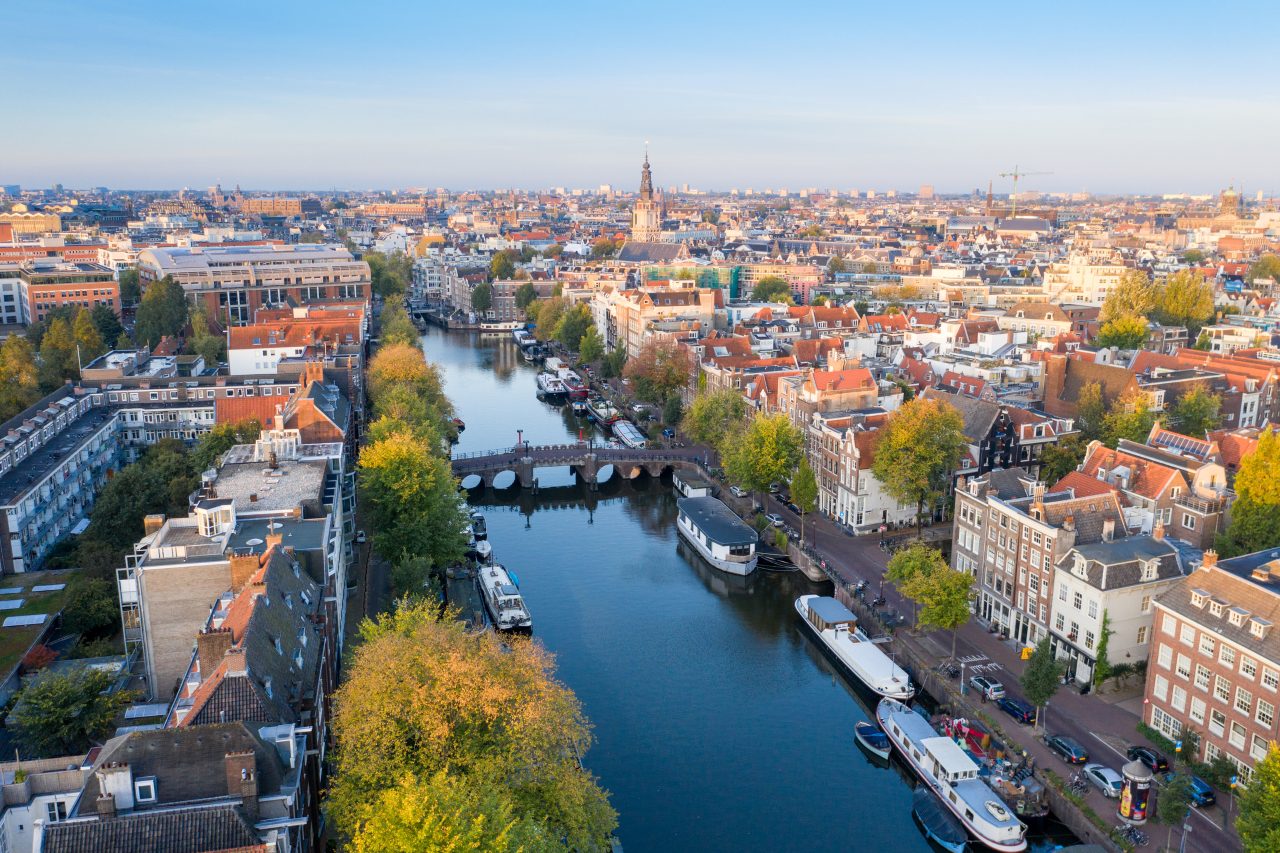
Amsterdam surprises you within the first ten minutes. A tram bell rings behind you, a bike glides past with a crate of flowers on the back, and you realise you’ve been standing in the cycle lane. I’ve been three times, once in summer, once in autumn and once in winter, and I spent three days in the city each time. Every trip showed me a different side of it.
Amsterdam is the capital of the Netherlands, and its 17th-century canal ring is a UNESCO World Heritage Site. You get world-famous art, tall canal houses, cosy brown cafés, big parks and some of the best day trips in Europe, all in a city small enough to cross on foot. It’s also crowded, expensive and full of bikes that don’t slow down for anyone. Plan around those things, and Amsterdam is a clear yes for me.
This guide covers the pros and cons of Amsterdam, where to stay, and what to book. You’ll also find tips on when to go, how long you need, and getting around, so you can decide whether it suits your kind of trip.
Pros of Visiting Amsterdam
1. The Canals
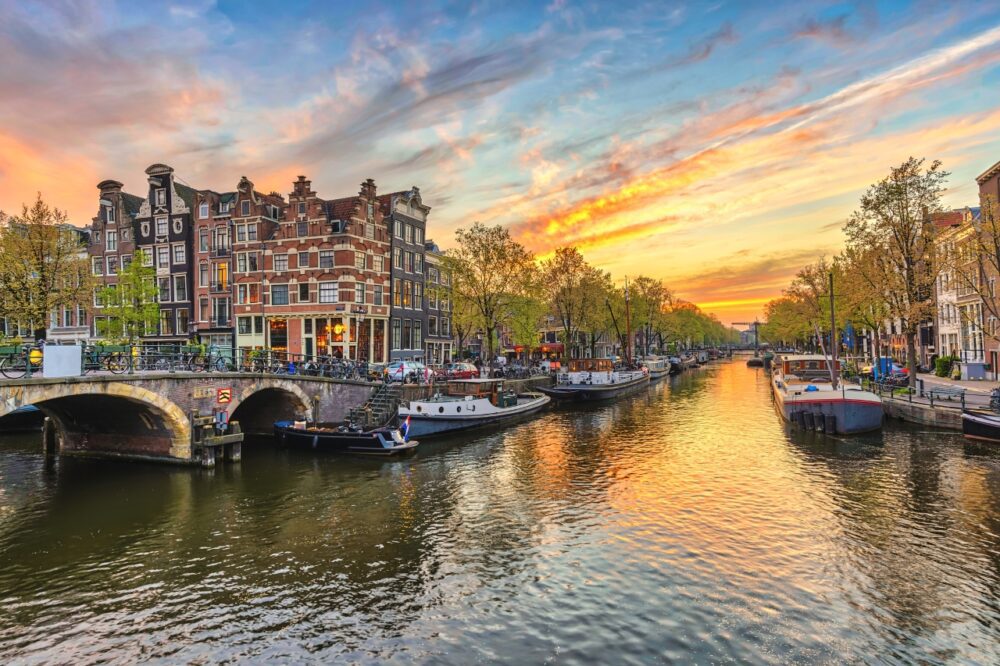
The canals are the reason most people come, and they live up to it. The 17th-century canal ring curves around the old centre in three main arcs, Herengracht, Keizersgracht and Prinsengracht. Tall, narrow merchant houses line the water, and many of them lean at odd angles. More than 1,500 bridges cross the canals, and almost every one of them frames a good photo. I never got tired of walking along them, especially at dusk when the windows light up.
The best way to see it all is from the water. The 75-minute canal cruise runs on a covered boat with an audio guide, and it leaves from several points, including Centraal Station and the Museum Quarter. Walk back along the same canal afterward, because the view from the bank is just as good. Stop for a coffee wherever you like. Early evening is my favourite time to go, when the light turns soft and the houses glow.
2. World-Class Art Museums
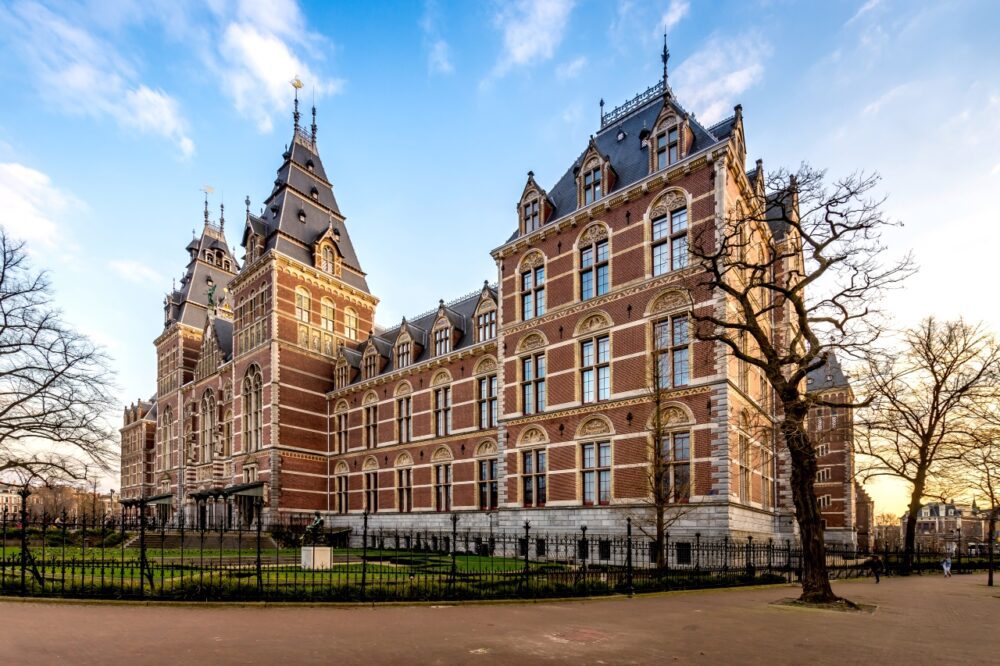
Amsterdam packs some of Europe’s best art into a small area. The Rijksmuseum holds Rembrandt’s Night Watch, Vermeer’s Milkmaid and hundreds of other Dutch Golden Age paintings, and it’s open daily from 9am to 5pm. The Van Gogh Museum has the world’s largest collection of his work, from his early dark scenes to the bright, swirling later paintings. The Stedelijk covers modern art, and the Moco Museum is bold and playful!
Both big museums use timed entry, so book ahead. The Rijksmuseum entry ticket lets you walk in up to 15 minutes after your slot and stay until closing. The Van Gogh Museum ticket gives you a set entry time, and the museum is quietest before 11am or after 3pm. I did the two on separate days, because trying both at once left me museum-blind. Give each one a half day, and leave the afternoon free for a stroll.
3. Anne Frank House and Wartime History

The Anne Frank House is the most moving place I visited in the city. The secret annex where Anne’s family hid for two years sits behind a movable bookcase in a canal house on Prinsengracht, and you walk through the same narrow rooms. The rooms are bare (with only a few original objects) quotes on the walls and her diary. The silence says more than any display could. Nobody speaks much, and a visit takes around an hour. Dress comfortably and allow time to sit quietly afterward.
Tickets are limited, so plan well ahead and check the official site for release dates. The house itself doesn’t cover the wider story, so I paired it with a walking tour. The Anne Frank walking tour explores Anne’s story, the Jewish Quarter and Amsterdam during the war in a small group. It gave the visit far more context, so I’d do the tour first.
4. The Jordaan and the Nine Streets
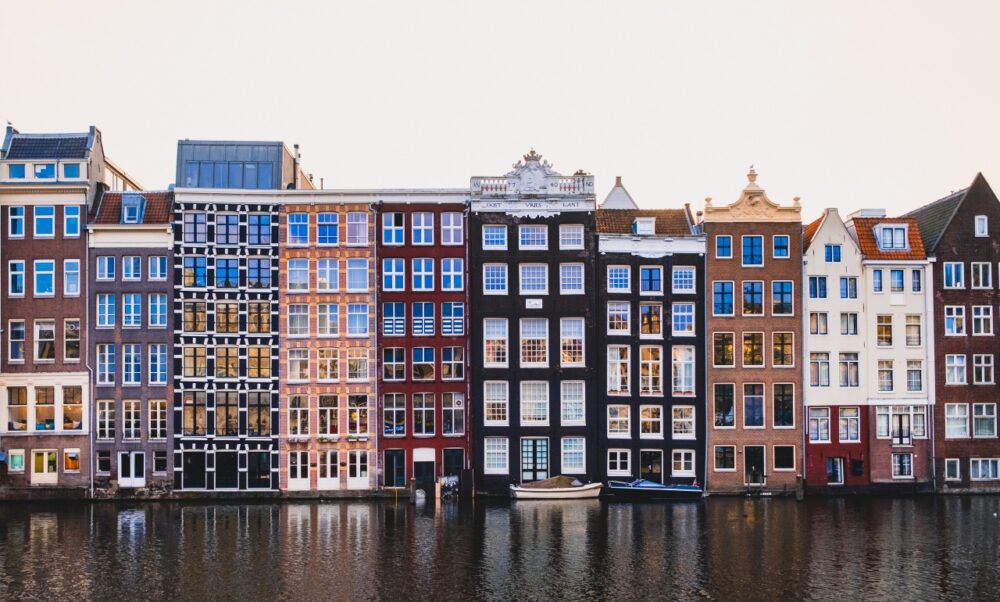
The Jordaan is the Amsterdam of old classic views, with far fewer crowds. It began as a working-class district, and today its narrow lanes hold brown cafés, tiny galleries, hidden courtyards and flower-covered bridges. The Nine Streets sit just to the east, between Prinsengracht, Keizersgracht and Herengracht. They’re lined with independent boutiques, vintage shops and small cafés. I spent entire afternoons here with no plan at all.
On Saturdays the Noordermarkt fills with a farmers’ market, and you can graze on cheese, bread and fresh pastries. A slice of Jordaan apple pie with whipped cream makes a worthy second breakfast. Wander without a map, because the best finds sit on the side streets, away from the main routes. Look up as well as ahead, since every gable is different. Early mornings are the quietest, and the light on the water is beautiful. Pop into a bakery for something sweet along the way.
5. Cycling Culture
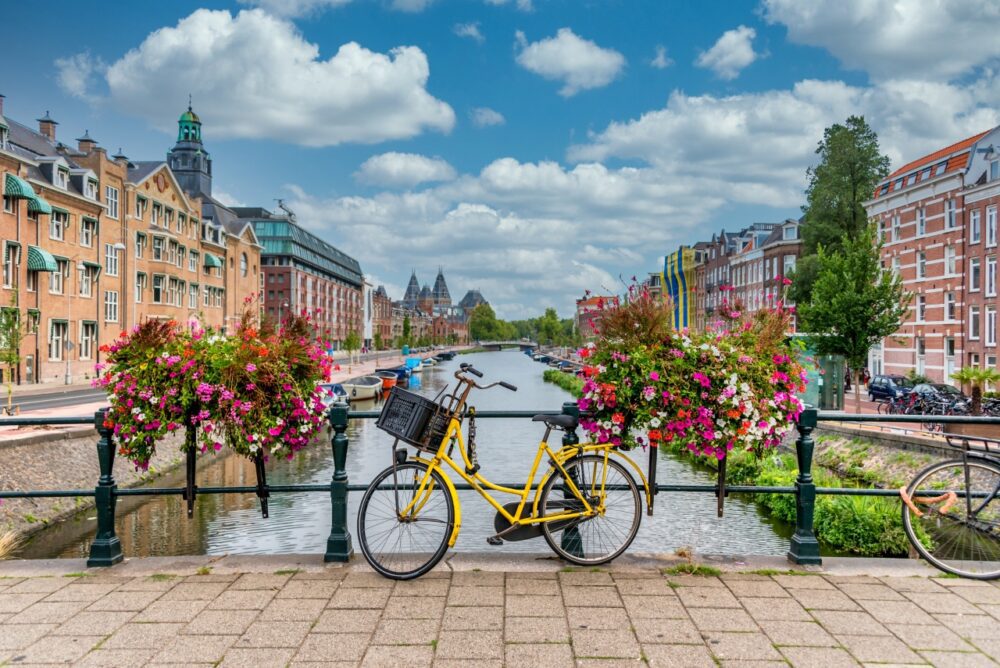
Amsterdam is built for bikes, and watching the city move on two wheels is entertainment in itself. Commuters pedal in suits, parents carry two children in a cargo bike and nobody bothers with a helmet. Red cycle lanes run along most streets, and bikes seem to outnumber people. Once I got on a rental, I understood why locals cycle everywhere. The city is flat, compact and easy to read. The city even has its own bike jams at rush hour, which is something to see!
Renting is simple. The Central Station bike rental is a 24-hour option, and you collect the bike at the station. If you want to have a guide, the city highlights bike tour rides through the Jordaan, along the canals and into Vondelpark with a local, which also teaches you the rules. Lock your bike to something fixed every time you stop. Bike parking is everywhere, so you’ll always find a spot.
6. Vondelpark
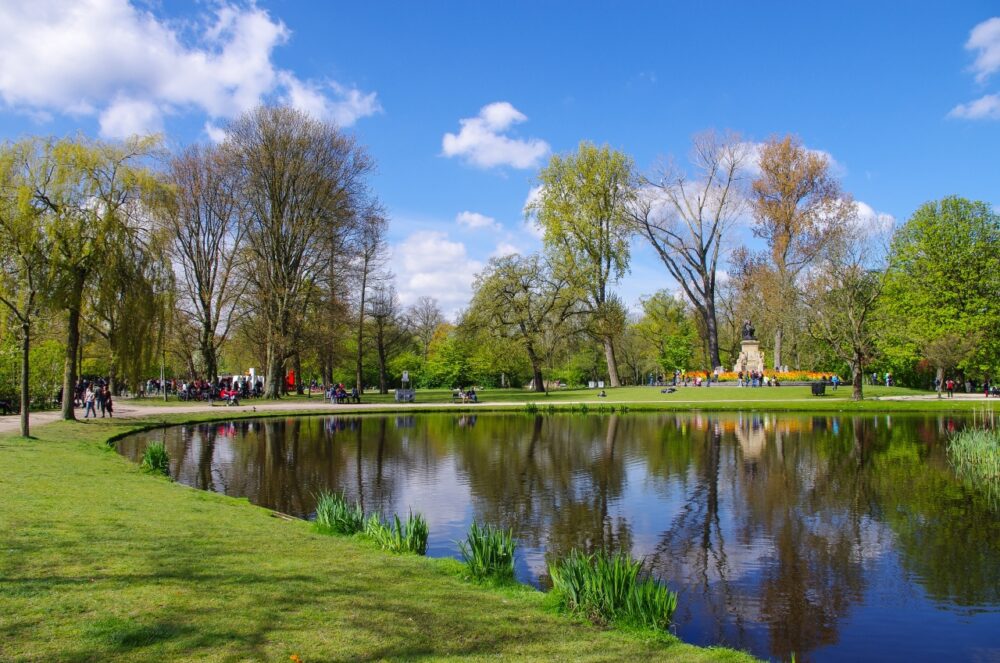
Vondelpark is Amsterdam’s best-loved green space, and I got to know it well on my second trip (when I stayed beside it). The park is long and leafy, with ponds, wide lawns, rose gardens and an open-air theatre. Locals jog, picnic, play guitar and walk their dogs here at all hours. Green parakeets squawk in the treetops, and they surprised me on every visit.
It’s the perfect reset after a morning in the museums, which sit right on its doorstep. Grab a coffee from a kiosk, find a bench by the water and watch the park roll by. The Blauwe Theehuis, a round café in the middle, is a popular spot for lunch or a drink. Walk the full length to Leidseplein for an easy loop back toward the centre. Even on a grey day, the park feels calm. Weekends bring the biggest crowds, so a weekday visit feels more peaceful.
7. Dutch Food and Street Snacks
Dutch food is simple, hearty and better than people expect. Start with a warm stroopwafel, a thin caramel-filled waffle, ideally fresh from a market stall. Add bitterballen, crisp fried meat balls served with mustard, plus chunks of aged Gouda and raw herring with onions if you’re brave. Then there are poffertjes, tiny fluffy pancakes dusted with sugar, and thick fries with mayonnaise. Most of it costs just a few euros, so you can taste a lot without spending much.
The Albert Cuyp Market in De Pijp is hands down the best place to graze (with stalls selling cheese) fish, fruit, and snacks. For a guided tasting, the Albert Cuyp and De Pijp food tour lasts 2.5 hours and includes a stroopwafel workshop. The food and culture walking tour covers the old centre in 3.5 hours. Try a fresh stroopwafel straight from a stall while it’s still soft and warm. Leave room for lunch, because the portions are generous. Come hungry.
8. Easy to Reach and Easy to Navigate
Amsterdam is one of the easiest big cities to get to and around. Schiphol Airport sits about 19 minutes from Centraal Station by train, with services roughly every ten minutes through the day. The centre is compact and flat, and most of the main sights are within a 30-minute walk of each other. Hotels, museums and the best restaurants are all close to a tram stop. I never needed a map after the first day!
Trams fill the gaps, and one ticket system covers them all. Most people can skip taxis completely. The train network also links Amsterdam to other Dutch cities in well under an hour, which makes it a handy base for exploring the rest of the country. Signs and menus are clear, and nearly everyone speaks excellent English, so ordering, asking for directions and checking in are all effortless. It makes a first trip to the Netherlands very easy.
9. Brown Cafés and Cosy Evenings
A brown café, or bruin café, is the cosiest pub you’ll find anywhere. The name comes from decades of tobacco smoke on the walls and ceilings, and they feel like living rooms (with dark wood) candles, mismatched chairs and rugs on the tables. Locals drop in for a beer or a jenever, a juniper-based spirit, and stay for hours. Some of the best sit on quiet canal corners in the Jordaan. Many also serve simple snacks to go with your drink, and table service is relaxed, so nobody rushes you.
If you want the story of Dutch beer, the Heineken Experience includes entry, live presentations, an audio guide and one beer, with a rooftop bar as an optional add-on. On my third trip, I spent a grey evening in a brown café instead, with a plate of bitterballen and a local beer. It was one of my favourite nights. Try to go early for a seat by the window.
10. Day Trips
Amsterdam is the best base in the Netherlands for day trips. Haarlem, Utrecht and Delft are quick train rides away, and each has its own canals and old squares. Haarlem’s main square is beautiful, and Utrecht’s canal has unusual lower wharves. Zaanse Schans has working windmills, a clog workshop and cheese tastings, and it’s about 15 minutes from the city. Giethoorn is a village with canals instead of roads. Keukenhof is a world-famous garden with millions of bulbs, but it only opens for a short window each year.
The Zaanse Schans, Edam, Volendam and Marken tour lasts eight hours by coach. The Giethoorn tour with boat ride lasts 7.5 hours. The Keukenhof entry with shuttle has buses back every 30 minutes. Pick one, because each takes most of a day. They’re worth it if you have four days or more. Book ahead in busy months so you get your preferred departure.
Cons of Visiting Amsterdam
1. Crowds in the Centre
The streets between Centraal Station and Dam Square are packed for most of the day. Damrak is a stream of rolling suitcases and tour groups, and the narrow pavements around the Red Light District feel tight by evening. Canal bridges clog with photographers, and the queue outside the Anne Frank House starts early. On my first trip, I spent my first half hour dodging people rather than enjoying the city!
The answer is to start early and go sideways. Be at the big sights as they open, then head to the Jordaan, De Pijp or Vondelpark when the crowds peak. Book timed tickets so you aren’t standing in a line. A canal-side walk one block off the main streets is often almost empty. The crowds thin out quickly once you leave the Dam area, and the city is still worth it.
2. High Prices
Amsterdam is expensive, especially for hotels. Even a plain three-star room can cost more than a good one in many European capitals, and prices jump at weekends and during big events. Drinks, canal cruises and museum tickets add up quickly, and restaurants near the main tourist streets charge a premium for average food. I added up my first day’s spending and winced.
Stay a short tram ride from the centre, where rooms cost less, and book early. Lunch is cheaper than dinner, and markets, bakeries and snack bars make good meals. Buy tickets online ahead, because it saves queue time. Skip the overpriced terraces on Damrak, and eat where the locals do. A few smart choices keep the bill down, and the city is still worth it.
3. Bikes Everywhere
Bikes rule the road in Amsterdam, and they don’t slow down for people. Cyclists fly along the red lanes, ring their bells and expect you to move. On my first morning, I stepped off a kerb without looking, and a courier whipped past an inch from my shoulder. Trams, scooters and mopeds add to the traffic, and the lanes often blur into the pavement. It takes a day or two to read the flow.
Treat the red paths as roads. Look both ways, even on one-way streets, and don’t stop for photos in a cycle lane. If you hear a bell, step aside quickly. Cycling yourself is easy once you learn the rules, and quiet streets in the Jordaan or Vondelpark are good places to start. By the second day, I felt far more at home, and it’s well worth the adjustment.
4. Stag Parties and Late-Night Noise
Parts of the old centre turn rowdy after dark. Groups on stag and hen weekends gather around Rembrandtplein, Leidseplein and the Red Light District, and the noise carries along the narrow canals until the early hours. The smell of cannabis drifts through some streets, and drunk groups are common at weekends. On my third trip, a late night near the centre left me with very little sleep!
Ask for a room at the back or on a higher floor, and pack earplugs. Staying in the Jordaan, De Pijp or near Vondelpark gives you a quieter base, and the centre is still a short walk or tram ride away. See the Red Light District in the early evening or by day, and respect the rule against photographing the workers. The trade-off is small, and the city is still worth it.
5. Tickets Sell Out
The best sights sell out in advance. The Anne Frank House releases a limited number of tickets, and the Rijksmuseum and Van Gogh Museum both use timed entry, so turning up on the day often means waiting or missing out. The Heineken Experience also sells out at busy times. On my first trip, I arrived at one museum without a booking and had to come back another day.
Book your key tickets as soon as you know your dates. Lock in the Anne Frank House first, then the Van Gogh Museum, and build the rest of each day around them. Most tours and tickets on GetYourGuide offer free cancellation up to 24 hours before, so booking early is low-risk. Early morning and late afternoon slots are quieter than the midday rush. A little planning solves this, and the museums are still worth it.
Where to Stay
Old Centre and Dam: I stayed in the old centre on my first and third trips, and it’s the easiest base for a short visit. Centraal Station, Dam Square and the start of the canal ring are all within a ten-minute walk, and trams run to almost everywhere else. The downsides are crowds, higher prices and late-night noise near the Red Light District, so ask for a room on a quiet side street. Hotel CC is a budget-friendly 3-star on Warmoesstraat with a lift, air conditioning and a 24-hour front desk. Hotel Sint Nicolaas is a mid-range 4-star on Spuistraat with a bar and a tour desk. Kimpton De Witt Amsterdam is an upscale 5-star on Nieuwezijds Voorburgwal with a restaurant, a bar and a fitness centre.
Canal Ring and Jordaan: The western canals are the prettiest part of Amsterdam, and they’re my pick for couples. The Jordaan, the Nine Streets and the Anne Frank House are on your doorstep, and the streets are calmer at night than the centre. The downsides are steep prices and narrow stairs in old buildings. Hotel de Westertoren is a budget-friendly 2-star on Raadhuisstraat with a terrace and family rooms. Hotel Mercier is a mid-range 4-star on Rozenstraat with a restaurant, a bar and a garden. The Toren Amsterdam is an upscale 4-star on Keizersgracht with a garden, a terrace and room service.
Vondelpark and Museum Quarter: I stayed here on my second trip, in Oud-Zuid, and I’d happily go back. The area is leafy and elegant, with the Rijksmuseum, the Van Gogh Museum and Vondelpark all within a ten-minute walk, and trams reach the centre in about 15 minutes. It suits museum fans, families and anyone who likes quiet evenings, though nightlife and cheap places to eat are limited. XO Hotel Inner is a budget-friendly 3-star on Wanningstraat with air conditioning and family rooms. Catalonia Vondel Amsterdam is a mid-range 4-star on Vondelstraat with a restaurant, a bar and room service. Avani Museum Quarter Amsterdam Hotel is an upscale 4-star on Hobbemakade with a garden, a terrace and a fitness centre!
De Pijp: De Pijp is Amsterdam’s liveliest neighbourhood, with the Albert Cuyp Market, bars, bakeries and restaurants from all over the world. It’s a short walk from the museums and a quick tram ride from the centre, and prices are often better than in the canal ring. Expect busy streets and some noise from the bars at weekends. easyHotel Amsterdam City Centre South is a budget-friendly 2-star on van Ostadestraat with air conditioning and soundproof rooms. ibis Styles Amsterdam Amstel is a mid-range 3-star on HemonyLaan with a fitness centre and a sun terrace. Sir Albert Hotel is an upscale 4-star on Albert Cuypstraat with a restaurant, a bar and a terrace.
Best Things to Do
These are the tours and tickets I’d book for a trip to Amsterdam.
- 75-minute canal cruise: A covered, all-weather boat with panoramic windows and an audio guide in more than 20 languages. Departure points include Centraal Station and the Museum Quarter, so check the start point when you book.
- Rijksmuseum entry ticket: Entry to the permanent collection with a cloakroom and free WiFi. You can arrive up to 15 minutes after your slot and stay until closing.
- Van Gogh Museum ticket: A timed-entry ticket for the permanent and temporary exhibitions. A handheld audio guide in 11 languages is an optional extra.
- Anne Frank walking tour: A one to two-hour small-group walk through the Jewish Quarter and wartime Amsterdam with a specialist guide. A private option is available. The tour doesn’t include house entry.
- City highlights bike tour: A relaxed two to 2.5-hour ride through the Jordaan, along the canals and into Vondelpark with a local guide.
- Food and culture walking tour: A 3.5-hour English-guided walk with Dutch tastings such as cheese, herring, stroopwafels and bitterballen. You meet outside the Asian Kitchen on Vijzelstraat, in front of the flower market entrance.
- Albert Cuyp and De Pijp food tour: A 2.5-hour morning tour with Dutch breakfast bites, a stroll through the market and a hands-on stroopwafel workshop. You meet on Ferdinand Bolstraat in De Pijp.
- Stroopwafel workshop: A 45-minute class behind the Albert Cuyp Market stalls. You make two XL stroopwafels, eat one and take one home, with coffee or tea included.
- Heineken Experience ticket: Entry to the former brewery with live presentations, an audio guide and one beer. A rooftop bar add-on is available, and guests must be 18 or older.
- Zaanse Schans, Edam, Volendam and Marken tour: An eight-hour coach tour with a live English guide, a clog-making demonstration and a cheese tasting. You meet on De Ruijterkade, near Centraal Station.
- Keukenhof entry with shuttle: A Keukenhof ticket with a round-trip shuttle from Amsterdam, with buses back every 30 minutes. It only works during the garden’s short opening season.
- Giethoorn tour with boat ride: A 7.5-hour day trip with a coach from Centraal Station, a one-hour boat cruise and free time in the village. You meet at the Tours & Tickets office in the IJ-hall at 10am.
Best Time to Visit
Summer (June to August): My first trip was in summer, and the city felt alive. Days are long, terraces spill onto the canal edges and the parks fill with picnics. I sat outside until almost 10pm most nights. Temperatures are usually in the low to mid-20s °C, with the odd shower. It’s also the busiest and priciest season, so book hotels and key tickets early.
Autumn (September to November): Autumn was my second trip, and it might be my favourite. The leaves in Vondelpark turned gold, the crowds thinned out and hotel prices eased. The weather is changeable, with wind and rain mixed with bright days, so pack a waterproof jacket. It’s a good time for museums, brown cafés and long dinners.
Winter (December to February): Winter was my third trip, and it was cold and grey. The days are short, but the canals glow with lights, and the Amsterdam Light Festival turns them into an open-air gallery. I spent the afternoons in museums and the evenings in brown cafés with a hot drink. Prices are lower outside the Christmas period, and the crowds are smaller!
Spring (March to May): Spring is peak tulip season, and Keukenhof usually opens from late March to early May. King’s Day, around 27 April, turns the whole city orange with street parties and boats on the canals. Mornings can be cool, and showers are common, so pack layers. Easter weekend and late April are busy, so book ahead.
How Long to Spend
1-2 Days: With one or two days, you can cover the essentials. Take a canal cruise, visit the Rijksmuseum or the Van Gogh Museum, and walk the Jordaan and the Nine Streets. If you want the Anne Frank House, book it first. A canal cruise is the quickest way to get your bearings.
3-4 Days: This is the ideal length, and it’s what I did on each of my three trips. Three days gives you the museums, the Jordaan, a food tour, Vondelpark and an evening in a brown café without rushing. A fourth day lets you add a day trip to Zaanse Schans or Giethoorn. On my first trip I stuck to the centre, and on the later ones I explored further out.
5-7 Days: With a week, you can see Amsterdam at a slow pace and add several day trips. Haarlem, Utrecht, Delft and The Hague are all easy by train, and Keukenhof works if you’re there in the right season. Keep one slow day for a long lunch, a market and a stroll through the park. If you want another city stay on a longer Netherlands trip, consider Rotterdam for a contrast with Amsterdam.
Getting Around
On foot: Central Amsterdam is compact, and walking is the best way to see it. The old centre, the Jordaan, the Nine Streets and the Museum Quarter are all within about 30 minutes of each other. I walked most of the time. Watch for bikes and trams when you cross.
Bike hire: Cycling is the most local way to get around. Donkey Republic rents bikes through an app, and the Central Station bike rental lets you collect a bike at the station. Stick to the red cycle lanes, signal your turns and lock the bike every time you stop!
Metro, trams and buses: GVB runs the metro, trams, buses, and ferries. Trams do most of the work in the centre, and tram routes 2, 5 and 12 stop at the Rijksmuseum. OVpay lets you tap in and out with a contactless bank card or phone. For a day ticket, the GVB 1-7 day ticket covers trams, buses, metro, and ferries, day, and night. If you plan to visit several museums, the I amsterdam City Card includes unlimited GVB buses, trams, and metro, a free canal cruise and free entry to more than 70 attractions, including the Rijksmuseum. Remember to tap out at the end of each ride.
Taxis and ride-hailing: Taxis are expensive, and traffic in the centre is slow. Uber and Bolt are the main apps, and they’re handy late at night or with luggage. Check the fare in the app before you set off.
To and from the airport: Schiphol Airport is about 19 minutes from Centraal Station by train, and trains run roughly every ten minutes. NS runs the service, and the Schiphol train transfer is a simple ticket that you can book ahead. The Schiphol site has more on taxis and other options. For the way back, line up the same type of ticket for your departure, or take the train from Centraal Station.
Final Thoughts: Is Amsterdam Worth Visiting?
Yes, and it’s a city that rewards a return visit. Amsterdam gives you beautiful canals, world-class museums, a powerful piece of history, cosy cafés, green parks and easy day trips. It’s walkable, English-friendly and simple to reach. I came back three times and found something new on each visit.
It isn’t perfect. The centre is crowded, prices are high, bikes zip past without warning, the old town gets noisy after dark and the best tickets sell out. Each of these has a simple fix, so none of them should put you off.
Amsterdam is best for art lovers, first-time travellers to the Netherlands, foodies and anyone who loves a city built for strolling. If you book key tickets early, stay a little outside the busiest streets and save a day for the countryside, it’s worth every euro. You’ll leave with photos of canals and a plan for your next trip!