Is Zermatt Worth Visiting? Honest Pros and Cons (2026)

You step off the train, and the first thing you notice is the quiet. No engines, no horns, just the hum of a small electric taxi and the Matterhorn standing over the rooftops. That was my first five minutes in Zermatt, and I was hooked before I’d even found my hotel.
I spent three days in Zermatt one autumn. I rode the Gornergrat railway, went up to Matterhorn Glacier Paradise, hiked to a few mountain lakes and ate far too much cheese. Zermatt isn’t a big city. It’s a car-free village in the Valais region, at the foot of one of the most famous mountains in the world. That alone makes it special, and it’s why so many people put it at the top of their Switzerland list.
This guide covers the pros and cons of Zermatt, where to stay, and what to book. You’ll also find tips on when to go, how long you need, and getting around, so you can decide whether it suits your kind of trip.
In a Rush? Here Are Our Favourite Hotels in Zermatt Switzerland
⭐️⭐️⭐️ Schweizerhof Zermatt – Click here for rates & availability
⭐️⭐️ Welschen Hotel – Click here for rates & availability
⭐️ Suitenhotel Zurbriggen – Click here for rates & availability
Pros of Visiting Zermatt
1. Matterhorn Views
The Matterhorn is the reason most people come, and it doesn’t disappoint. The peak rises to 4,478 metres, and its sharp pyramid shape is instantly recognisable. First climbed in 1865, it still looks like something a child would draw. On clear mornings, you can see it from the middle of the village, which means you can have a coffee and a view at the same time. The peak looks different every hour of the day, so it’s worth coming back for a second look.
My favourite spots were the Kirchbrücke bridge near the church and the old wooden barns of Hinterdorf. Go early, when the light turns the summit pink and the lanes are empty. If you want a few good photos of yourself, this Matterhorn village photo shoot takes 40 to 90 minutes. A local photographer walks you through Hinterdorf and the village lanes, and you get up to 75 edited photos within 24 hours!
2. Gornergrat Railway

The Gornergrat railway is the best mountain trip in Zermatt, in my view. The cogwheel train leaves from a station right opposite the main station and climbs to 3,089 metres in about 33 minutes. The route winds through forest, then open slopes, and the Matterhorn appears in the window on the way up. At the top, you get a view of the Gorner Glacier and 28 peaks above 4,000 metres.
A return ticket costs CHF 132 (£115) from May to October, and half price with a Swiss Travel Pass. The ZOOOM the Matterhorn exhibition is included, and it’s a fun stop with virtual reality and film footage. You can also book a Gornergrat cogwheel train ticket in advance. Pick a clear day, and take warm layers, because it’s cold at the top. Allow half a day for the trip, and more if you hike down to Riffelsee. The restaurants at the summit are handy for a hot drink before the ride down.
3. Matterhorn Glacier Paradise
Matterhorn Glacier Paradise is the highest mountain station in Europe, at 3,821 metres. You ride several cable cars from the edge of the village, and the final stretch crosses the Theodul Glacier. At the top, there’s a viewing platform, a cinema lounge and the Glacier Palace, an ice cave with sculptures carved into the glacier. It felt like another planet after the village below.
A return ticket costs CHF 138 (£120) in summer. The afternoon return from 1:30 pm is cheaper at CHF 110 (£96), and I’d take it if the weather is stable. You can book the Matterhorn Glacier Paradise cable car ticket online and exchange your voucher at the Matterhorn Express valley station. Bring a hat, gloves, and sunglasses, even in autumn. The ride involves a change of cable cars, so start early. I stayed about two hours at the top, and that felt right. The temperature is far lower than in the village, so dress for winter even if it’s sunny below.
4. Car-Free Village

Zermatt has no petrol cars, and it changes the whole feel of the place. Small electric taxis and buses glide along the main street, Bahnhofstrasse, and the air smells like wood smoke and pine. People arrive by train, and drivers leave their cars in Tasch and take the 12-minute shuttle for CHF 8.60 (£7.50) one way. The result is a calm, pleasant village you can explore on foot.
I loved wandering Hinterdorfstrasse, where weathered wooden barns and chalets stand on stone stilts. The church square, Kirchplatz, is a good place to stop for a coffee or a hot chocolate. The Matterhorn Museum, in the middle of the village, tells the story of the first ascent and the climbers who died in 1865. Evenings are lively, with bars and restaurants filled with hikers and skiers. Short walks between dinner and your hotel are a real pleasure!
5. Hiking and Alpine Lakes
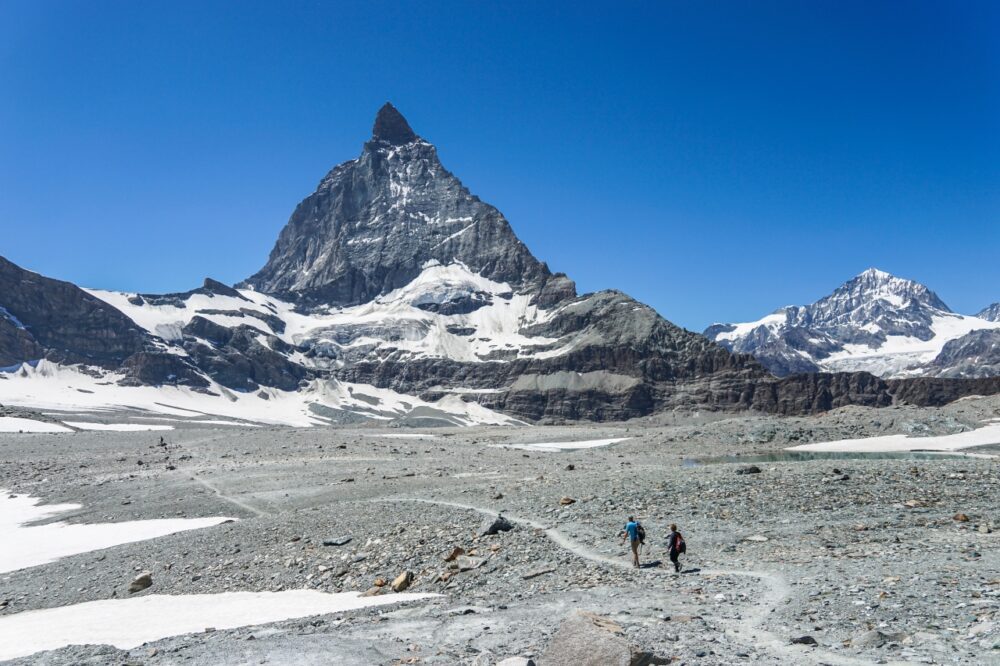
Zermatt has some of the best hiking in Switzerland. The Five Lakes Walk is the classic route, and it passes Stellisee, Grindjisee, Grünsee, Moosjisee and Leisee. Stellisee is the famous one, because on a calm morning the Matterhorn reflects in the water. The walk starts at Blauherd, and the Sunnegga and Blauherd lifts close in early October, so check dates before you plan it. Pack a picnic and plenty of water, because the lakeside spots have little shade. Start early, since the path gets busy by midday.
In autumn, the larch trees turn gold, and the slopes glow against the white peaks. I also hiked to Riffelsee from Rotenboden, which is a 40-minute downhill walk from the Gornergrat line. If you want to ride, this guided e-bike tour in Zermatt lasts three hours and follows forest trails to Matterhorn viewpoints. For something wilder, a tandem paragliding flight lasts two hours.
6. Alpine Food and Mountain Huts
The food in Zermatt is hearty, and after a day outside, it’s exactly what you want. Raclette, cheese fondue and rösti (crispy fried potatoes, often topped with an egg) are on almost every menu. I had a bubbling fondue on my first night, and it warmed me up straight away. A main course costs CHF 30 to 45 (£26 to £39), so it’s not cheap, but the portions are generous.
The mountain restaurants are the real treat. Many sit on terraces with the Matterhorn straight in front of you, and a plate of rösti with that view is hard to forget. Plan lunch around your hike, and order a hot chocolate with your meal. In the village, try a local Valais wine, such as a Fendant or a Dôle. Most of the huts close for the season in autumn, so ask before you set out.
7. Day Trips From Zermatt
Zermatt is a great base for day trips. The Matterhorn Gotthard Bahn runs the Glacier Express from here, and it’s one of the most famous scenic rail journeys in the world. You can also take the train to Visp and branch out to the Valais valleys. Saas-Fee, another car-free village, is a short trip away. In winter, you can ski from Zermatt across the border to Cervinia in Italy.
For a different kind of outing, this Europa suspension bridge hike is a full-day guided walk from Randa, a 20-minute train ride from Zermatt. The bridge is almost 500 metres long and 85 metres above the ground. It’s an easy trail, but it’s not for anyone afraid of heights. Check the weather first, because strong wind can close the bridge. The Glacier Express is a long ride, so most people take only a section as a day trip. Reserve seats ahead in busy months!
Cons of Visiting Zermatt
1. Very High Prices
Zermatt is one of the most expensive places in Switzerland. A coffee costs around CHF 6 (£5), a beer is CHF 8 (£7) and a simple lunch is CHF 25 to 30 (£22 to £26). Mountain tickets add up fast, with the Gornergrat and Glacier Paradise each costing over CHF 130 (£113) return in summer. Hotels are pricey too, especially in July, August and over Christmas.
There are ways to save. Supermarkets like Coop sell sandwiches, fruit and snacks for a picnic. The Swiss Travel Pass gives you 50% off the Gornergrat railway, and the Glacier Paradise afternoon return is cheaper. Staying in Tasch cuts your hotel bill a lot. Free things like wandering Hinterdorf and the Riffelsee walk cost nothing. Zermatt isn’t a budget destination, but you can control the cost and it’s still worth it.
2. Weather and Seasonal Closures
Mountain weather changes fast. The Matterhorn can disappear behind cloud for days, and that’s a real risk if you only have a day or two. Many lifts and restaurants also close in autumn. The Sunnegga and Blauherd lifts shut in early October, and the Gornergrat railway has a maintenance break in early November. Some hotels close between seasons too.
Check the forecast, and book mountain tickets that you can change if the weather turns. I kept my plans flexible and swapped days around, so my clearest morning went to the Gornergrat. On cloudy days, the Matterhorn Museum and a long lunch are good backups. The Glacier Palace at Glacier Paradise is inside the ice, so it works in any weather. Check the lift operating dates before you book, especially in shoulder season.
3. Long Journey to Get There
Zermatt isn’t close to a big airport. From Geneva or Zurich, the trip takes three to three and a half hours by train (with a change at Visp). After that, the last stretch runs along a valley on a slow mountain line. If you only have a weekend, a lot of your time goes on the journey. And you can’t drive into the village.
My trip felt shorter because I planned it as a proper stay. I took the train, watched the valley close in and used the time to read. If you don’t want to change trains with bags, a private transfer from Geneva Airport to Tasch takes about 140 minutes. A car takes you to Täsch station, then you hop on the shuttle train. Give yourself at least three days, and the trip is well worth the journey!
Where to Stay
Village Centre: I stayed here, and I’d pick it again. Everything is close, from the station to the Matterhorn Museum to the restaurants on Bahnhofstrasse, and the view from the main street is superb. It’s also the most expensive area, and it’s busy in summer. Hotel Alpina is a budget-friendly 2-star in the Englischer Viertel with a restaurant, a garden and a sun terrace. Hotel Antika is a mid-range 3-star on Kirchstrasse with a sauna, a steam room and a spa with massages. Schweizerhof Zermatt is an upscale 4-star on Bahnhofstrasse with an indoor pool, a spa and a restaurant.
Riedstrasse and the East Side: A short walk from the station, this area is quieter and a little cheaper. You’ll lose a bit of the buzz, though, and it’s a few minutes’ walk to the main street. Mountain Apartments Zermatt Studio Nr 4 is a budget-friendly apartment on Riedstrasse with a lift and ski storage. Hotel Capricorn is a mid-range 3-star with a spa, a sauna and a sun terrace. Welschen Hotel is an upscale 4-star with an indoor pool, a spa and a fitness centre.
Winkelmatten and Steinmatten: This quiet residential area sits south of the centre, near the Matterhorn Express lift. It’s peaceful and has good Matterhorn views, but you’ll walk 10 to 15 minutes to the main street. Hotel Jägerhof is a budget-friendly 3-star with a restaurant, a fitness centre and a free shuttle. Matterhorn FOCUS Design Hotel is a mid-range 4-star with indoor and outdoor pools, a spa and a free shuttle. Suitenhotel Zurbriggen is an upscale 4-star with an infinity pool, a spa and a hot tub.
Tasch: Tasch is the cheapest option. This small town sits 12 minutes down the line by shuttle train, and prices are far lower. You’ll lose evenings in Zermatt, and the shuttle ends at night. Petit Paradisli is a budget-friendly apartment with a terrace and free parking. Matterhorn Inn is a mid-range 3-star at the shuttle station with a restaurant, a sauna and a fitness centre. Hotel Porta Cervino is an upscale 4-star with a restaurant, a bar and an airport shuttle.
Best Things to Do
These are the tours and tickets I’d book for a trip to Zermatt.
- Matterhorn Glacier Paradise Cable Car Ticket: A return ride on heated gondolas across the Theodul Glacier to Europe’s highest mountain station. It includes the viewing platform, the Glacier Palace and the cinema lounge.
- Gornergrat Cogwheel Train Ticket: A one-day, self-guided ticket on the cogwheel train from Zermatt to Gornergrat. It includes entry to the ZOOOM exhibition.
- Gornergrat Small Group Tour: A 4-hour guided trip to the summit with train tickets, an English-speaking guide and ZOOOM entry. It starts in front of the tourist information centre by the station.
- Tandem Paragliding Flight: A 2-hour flight with a certified pilot, a safety briefing and all equipment. No experience is needed, and the meeting point is at the Gornergrat railway entrance.
- Guided E-Bike Tour: A 3-hour ride with a local guide through forest paths and Matterhorn viewpoints. It includes the e-bike, helmet, safety briefing and photo stops.
- Europa Suspension Bridge Hike: A full-day guided hike from Randa to the longest pedestrian suspension bridge in the Alps. The walk is easy and family-friendly, with an optional lunch at a hut.
- Matterhorn Village Photo Shoot: A 40 to 90-minute shoot through Hinterdorf and Kirchbrücke with a local photographer. You get up to 75 edited photos in a private online gallery.
- Five Lakes Walk: A classic half-day hike from Blauherd past five alpine lakes, with the Matterhorn reflected in Stellisee on calm days. You only pay for the lifts up to the start.
- Matterhorn Museum: A museum in the village that covers the first ascent, early climbers and Zermatt’s history. It’s a good rainy-day plan.
Best Time to Visit
Autumn: I visited in autumn, and it’s my favourite time for Zermatt. The crowds are smaller, the larch trees turn gold and the air is crisp. Hotels cost less than in summer, and the Matterhorn is often clear. The downside is that some lifts and restaurants close from October, and snow is possible at higher levels. Pack layers and check which lifts are running.
Summer: Summer is the busiest season. All the lifts and trails are open, the days are long and hikers fill the Five Lakes Walk. The Furi to Riffelberg gondola runs, and the weather is usually warm in the village. It’s also the most expensive time, and hotels fill up early. Book ahead, and start your mountain trips early to beat the cloud.
Winter: Winter is ski season. Most lifts reopen in early December, and Zermatt links with Cervinia in Italy for a huge ski area. Glacier skiing runs on the high slopes, and the village has a cosy Christmas atmosphere. It’s cold, and prices are high over the holidays. Even if you don’t ski, the Gornergrat is stunning in the snow.
Spring: Spring is quiet. Many lifts close in April and May for maintenance, and some restaurants shut for a break. Snow melts on the lower trails, and flowers start to appear in late May. It’s the cheapest time to visit, but your options are limited. If you want mountain trips, summer or autumn is a better choice.
How Long to Spend
1-2 Days: Two days covers the main sights, but it feels rushed. Spend one day on the Gornergrat and the village, then go up to Matterhorn Glacier Paradise on the second. A Swiss Travel Pass halves the Gornergrat fare, which helps. Start early on both days, because the morning light is the clearest and the cloud usually builds after lunch.
3-4 Days: Three days was perfect for me. I did the village and Matterhorn Museum on the first day, the Gornergrat and Riffelsee on the second and Glacier Paradise on the third. A fourth day gives you time for the Five Lakes Walk or a paragliding flight. I’d spread the mountain trips across different days, so one cloudy morning doesn’t ruin your plans!
5-7 Days: A week lets you slow down. You could add the Europa suspension bridge, a day in Saas-Fee and a few long hikes. In winter, a week gives you plenty of time on the slopes. A slower pace also means you can wait for clear weather before you commit to the big trips. For a broader Switzerland itinerary, give Bern and Lucerne separate stays rather than trying to visit them from Zermatt.
Getting Around
On foot: Zermatt is small, and walking is the best way around. The station, church square and main street are all within about 10 minutes of each other. I walked everywhere in the centre, and my feet were happy.
Electric buses: Two electric bus lines, Green and Red, run through the village every 10 to 20 minutes during the day. They link the station, hotels and lift stations. They’re handy if you’re staying in Winkelmatten or carrying bags, and many hotels run a free shuttle too.
Electric taxis: Small electric taxis wait outside the station. A short ride costs around CHF 20 to 30 (£17 to £26), so use them for luggage and late nights. Agree the fare before you start.
Mountain railways and cable cars: The Gornergrat railway, Sunnegga funicular and Matterhorn Express lifts all start in or near the village. Tickets are sold at each station, and you can pre-book a Swiss Travel Pass for 50% off many lifts and free travel on the Matterhorn Gotthard Bahn line to Zermatt.
To and from the airport: Zermatt has no airport of its own. From Geneva or Zurich, take the train via Visp, then the Matterhorn Gotthard Bahn up to Zermatt. For a door-to-station option, a private transfer from Geneva Airport to Tasch runs in a Mercedes V-Class for up to six people, and the Tasch to Zermatt shuttle train takes about 12 minutes. Line up your journey back before you leave, and leave a little extra time for the connection!
Final Thoughts: Is Zermatt Worth Visiting?
Yes, Zermatt is worth visiting. It’s one of those places that lives up to the photos. The Matterhorn, the quiet car-free streets and the cable cars that take you to glaciers made it one of my favourite trips in Switzerland. The Gornergrat railway and Glacier Paradise were the highlights.
The cons are real. It’s expensive, the weather can ruin your views and it takes a while to get there. But you can plan around them. Stay in Tasch if you’re on a budget, travel with a Swiss Travel Pass and keep your days flexible. With three days, you’ll see far more than a quick stop.
If you love the mountains, Zermatt is a great option. Autumn is a beautiful time, with golden larches and smaller crowds. Use the hotel and tour links above to plan your trip, and bring a camera.