Where to Stay in Sarajevo: Best Areas and Hotels (2026)

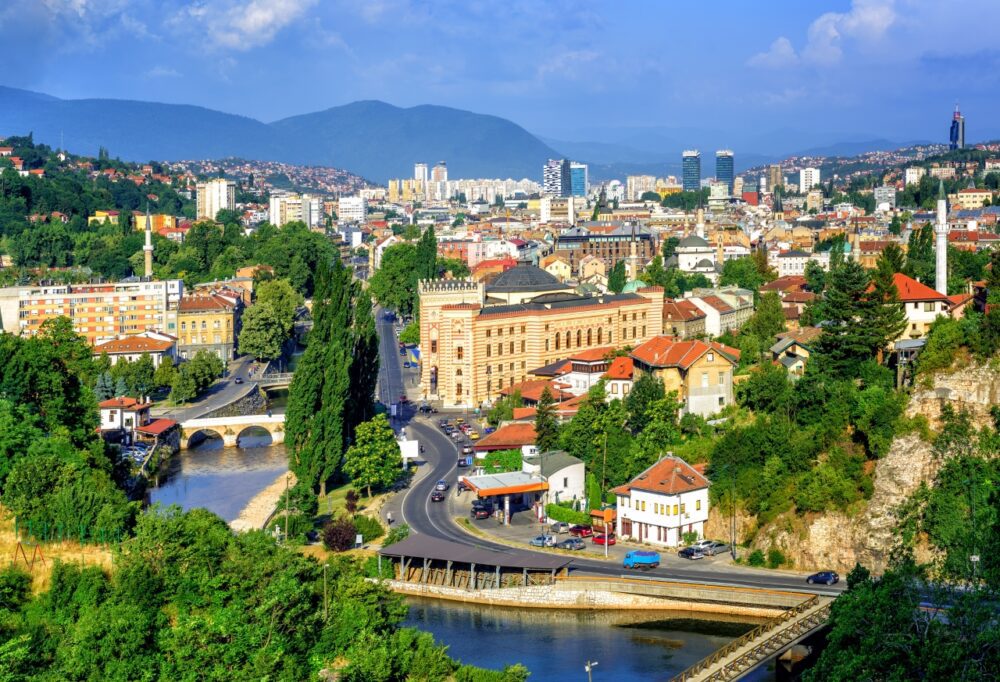
Sarajevo is the kind of capital where you can hear the call to prayer, church bells and a tram bell inside the same minute. It sits in a narrow valley with mountains on every side, and the city has been shaped by Ottoman, Austro-Hungarian and Yugoslav rulers in turn. Choosing where to stay in Sarajevo matters more than it does in most cities, because the neighbourhoods change character from one street to the next, and a few of them climb steeply uphill.
I had three days in the capital of Bosnia and Herzegovina one autumn and based myself in Baščaršija, right beside the Sebilj fountain. I walked out of my door into the smell of coffee and fresh bread each morning, and I could reach almost every sight on foot. The city is small, so even the outer neighbourhoods are only a short tram ride from the old bazaar.
For most visitors, I’d book Baščaršija. It’s the heart of the old town, it’s packed with cafés and cheap grills, and you won’t need a tram once you’ve arrived. The four other areas below suit different trips, from riverside apartments to quiet villas near the springs. Below I’ve set out what each area is like, the trade-offs and three hotels worth booking, plus tips for getting around.
Best Areas to Stay in Sarajevo
- Baščaršija – Best area for a first visit and walking everywhere
- Ferhadija and the Centre – Best area for shops, restaurants and riverside walks
- Marijin Dvor – Best area for value and transport links
- Koševo – Best area for quiet streets and free parking
- Ilidža – Best area for fresh air and the airport
Map of Hotels
Baščaršija
I stayed in Baščaršija, and it’s the part of Sarajevo I’d send anyone to first. The Ottoman bazaar dates back to the 15th century, and the streets around the Sebilj, the wooden fountain built in 1753, are still named after the crafts once practised there. You’ll find coppersmiths tapping out trays, jewellers, slipper sellers and café terraces spilling onto the cobbles. I walked through every morning before the shops opened, when the pigeons had the square to themselves. The Gazi Husrev-beg Mosque and Baščaršija’s market streets sit within a couple of minutes of each other, and the Trebević cable car, which climbs from the edge of the old town, is a short stroll away at 15 KM (£6.50) one way or 20 KM (£8.60) return.
The great advantage is how little you need transport. Vijećnica, the old City Hall, is a few minutes away, and the Latin Bridge is only a little further along the river. Dinner is easy, too. Bravadžiluk Street is lined with grills serving ćevapi, and a plate costs around 10 KM (£4.30). You’ll also find bakeries open from early morning for burek and strong coffee, which makes it simple to start the day without searching for breakfast. Most hotels are small and family-run, so you often get helpful advice from the person at the front desk.
The downside is noise and crowds. The terraces stay busy late, and the lanes around the main square can feel packed in the middle of the day. Several streets on the northern edge are steep and cobbled, which is hard work with a suitcase, so ask your hotel about the easiest route in. Book a room away from the main lanes if you’re a light sleeper. If you want to step out of the door and be in the middle of everything, nowhere else comes close.
Pros and Cons of Baščaršija
| Pros | Cons |
|---|---|
| Sebilj, Vijećnica and the Latin Bridge within a few minutes’ walk | Terraces and lanes stay busy and loud |
| Cheap grills, bakeries and coffee houses on every street | Steep, cobbled streets on the northern edge |
| Small family-run hotels with local advice | Crowded in the middle of the day |
| Tram and taxis close by | Few supermarkets or everyday shops |
Best Hotels in Baščaršija
- Pigeon Square Rooms – A budget-friendly choice about a minute from the Sebilj, with soundproofed rooms, a shared kitchen, lockers and a minimarket downstairs. Some rooms share a bathroom, and breakfast isn’t included. It suits solo travellers who care more about location than frills.
- Hotel Sana – A four-star on Mula Mustafe Bašeskije, around two minutes from the Sebilj. There’s a bar, a terrace and a coffee house, and breakfast is included. Rooms are soundproofed and air-conditioned, and the concierge can organise an airport shuttle for a fee.
- İsa Begov Hamam Hotel – An upscale four-star at Bistrik 1, about two minutes from the Latin Bridge and four from the Sebilj. It has its own hammam, a sauna and a hot tub, and a Turkish breakfast is included. It’s the best pick here for couples who want a spa stay.
Ferhadija and the Centre
Ferhadija and the Centre is where Sarajevo’s two halves meet. Walk west from the bazaar along the pedestrian street of Ferhadija and the Ottoman domes give way to the ornate façades the Austro-Hungarian administrators built, with the Eternal Flame marking the middle. You’ll pass mosques, a cathedral and shopping streets in the space of a few minutes, and Hotel Europe, which opened in 1882, stands close by, and the Austro-Hungarian period is still easy to read in the architecture. The riverside walks along the Miljacka are pleasant, with plenty of benches and bridges, and you can reach the Latin Bridge from here in about ten minutes. Vijećnica, the red-and-cream City Hall completed in 1896, is a landmark you’ll pass again and again, and it’s worth stepping inside to see the stained-glass ceiling above the central hall.
This is the area I’d choose if you want a bit more breathing space than the old town offers. The streets are wider, and the pace is calmer in the evenings. There are more everyday restaurants, bakeries and shops, and you’ll see far more locals than tourists. Many places here are apartment-style, so you can cook breakfast and save money, and the tram runs along the river. Hotel prices are broadly in line with the old town, but you often get more space for the same money. Fresh produce stalls and supermarkets are easy to find, which suits longer stays.
The trade-offs are traffic and atmosphere. A few streets carry heavy traffic through the day, so it’s worth checking which side of the building your room faces. The area also feels less atmospheric after dark than Baščaršija, with fewer lanterns and terraces. You’ll walk ten to fifteen minutes to get back to the bazaar, and a couple of the apartment buildings are a little further from the centre than the listings suggest. If you’d like to be central without the crowds, it’s an easy compromise.
Pros and Cons of Ferhadija and the Centre
| Pros | Cons |
|---|---|
| Ottoman and Austro-Hungarian sights on one pedestrian street | Heavier traffic on some streets |
| Calmer evenings than the old town | Less atmospheric after dark |
| Apartments with kitchens and room to spread out | Ten to fifteen minutes’ walk to the bazaar |
| Tram and riverside walks close by | Fewer small hotels with local character |
Best Hotels in Ferhadija and the Centre
- Enjoy Apartments – Spacious apartments on Skenderija, about ten minutes from Ferhadija and 15 from Baščaršija. There’s a garden, a terrace and soundproofed rooms, and breakfast can be served in your room for an extra charge. The one- and two-bedroom apartments suit families and small groups.
- Boulevard Apartments – Modern apartments on Obala Kulina bana, right beside the river, with a tram stop outside. You’re about eight minutes from Ferhadija, and each apartment has a kitchen and a washing machine. The hosts can arrange airport transfers, and breakfast isn’t included.
- Hotel Europe – An upscale five-star on Vladislava Skarića, a few minutes from the bazaar. The spa has a sauna and an indoor pool, and there’s a fitness centre, a restaurant and a bar. Book it when you want a treat close to the main sights.
Marijin Dvor
Marijin Dvor sits west of the centre, around the National Museum and the wide avenue of Zmaja od Bosne. The buildings are a mix of Austro-Hungarian blocks and socialist-era towers, and the broad pavements make it feel very different from the old town. The museum is the main reason to come, because it holds the Sarajevo Haggadah, a handmade Jewish manuscript from around 1350. The avenue was also the stretch known as Sniper Alley during the siege, and you’ll see memorials along it, so it’s a place that quietly teaches you about the city’s recent history. Trams 1 and 4 run along the avenue between the centre and the train station, which suits anyone coming in by rail.
It’s the best area for travellers who want value and good transport. Hotels and apartments cost less than in the old town, and the tram runs along the avenue to Baščaršija in about ten minutes. Supermarkets, pharmacies and cafés line the main road, and you’ll find a lot of locals having lunch at the bakeries. You’ll usually get a bigger room than you would in the bazaar, and parking is easier. The Miljacka river is only a few minutes’ walk away if you want a breath of air.
The downside is that it lacks the charm of the bazaar. After dark the streets are quiet, with few terraces and only a handful of restaurants, so you’ll head east for dinner. The avenue is busy and loud with traffic, and the buildings are functional rather than pretty. A longer walk into the old town takes around 25 minutes, so most people use the tram. If you can accept a plainer neighbourhood in exchange for lower prices, Marijin Dvor makes a smart base.
Pros and Cons of Marijin Dvor
| Pros | Cons |
|---|---|
| Lower prices than the old town | Plain, functional streets |
| Tram to Baščaršija in about ten minutes | Quiet in the evenings |
| National Museum and the Sarajevo Haggadah nearby | Busy avenue with constant traffic |
| Supermarkets and cafés on the main road | About 25 minutes’ walk to the bazaar |
Best Hotels in Marijin Dvor
- M Dvor 88 – A budget-friendly apartment on Fra Anđela Zvizdovića, in the middle of Marijin Dvor with a tram stop close by. It has air conditioning, free WiFi and contactless check-in. It’s a good fit for solo travellers and couples who want a simple base.
- The Green Place in the City Center – A mid-range apartment on Zmaja od Bosne, close to the museums and the main avenue. Free parking on site, air conditioning and family rooms make it a practical choice for small groups.
- Hotel Holiday – An upscale four-star on Zmaja od Bosne, in the heart of Marijin Dvor. Downstairs there’s a restaurant and a bar, with a garden and a terrace outside, along with a coffee house, a children’s playground and round-the-clock reception. It’s the most comfortable option in the area.
Koševo
Koševo is the hillside district north of the old town, and it’s the quietest of the five areas. The streets here climb gently up from the centre towards the stadium that opened the 1984 Winter Olympics, with the main hospital campus nearby. Most of what you’ll see is residential, with apartment blocks, bakeries, small parks and neighbourhood cafés. You won’t find the lanterns and coppersmiths of the bazaar, but you will find a Sarajevo that works the way it does for locals, and the views over the valley from the upper streets are lovely at sunset.
It’s an excellent choice if you’re driving or you want somewhere peaceful to return to. Parking is free at many of the apartments, which is rare in the centre, and rates are lower than in Baščaršija. Some hotels have a trolleybus stop outside, and getting to the old town on foot takes 15 to 25 minutes depending on where you stay, mostly downhill on the way in. Hotels here include modern places with restaurants and breakfast buffets, plus plenty of apartments with kitchens, so you can pick between a full hotel stay and a self-catering one. Local bakeries open early, which makes a quick burek breakfast easy. It’s also handy for hikes and day trips by car, because you can reach the mountain roads without crossing the city.
The main drawback is the climb home. The walk into town is easy, but the walk back is uphill, and some streets are steep enough to make you pause. Evenings are very quiet, with few restaurants beyond the main roads, and you’ll take a taxi or trolleybus after dinner. The area also lacks sights of its own. If you’d rather return to a calm street than stay among the crowds, Koševo suits a longer stay well. Ask for an upper-floor room if you want the valley views, and check how steep the street looks on the map before you book.
Pros and Cons of Koševo
| Pros | Cons |
|---|---|
| Quiet residential streets away from the crowds | Uphill walk back from the old town |
| Free parking at many apartments | Few restaurants and bars nearby |
| Lower rates than Baščaršija | No major sights in the district |
| Trolleybus stops near some hotels | Walk of 15 to 25 minutes to the bazaar |
Best Hotels in Koševo
- Hotel Colors Inn – A four-star on Koševo, with a restaurant, soundproofed rooms and a buffet breakfast included. The stroll to Baščaršija takes roughly a quarter of an hour, and some rooms look out over the city. It suits business travellers and couples who like a quiet stay.
- Apartments R Sport Boutique – A three-star on Patriotske lige with a trolleybus stop right outside. It has a fitness room, a bar, a terrace and a minimarket, and parking is free. Breakfast isn’t included, though there’s a coffee shop on site. It works well for families and drivers.
- Hava 2 – One-bedroom apartments on Alipašina, roughly a 20 to 25 minute stroll from the bazaar. Guests share a garden, a sunny terrace and a barbecue area, and each apartment has a kitchenette. Parking is free and breakfast isn’t included, so it’s ideal for self-caterers.
Ilidža
Ilidža is a spa town on the western edge of Sarajevo, about 12 km from the old town. It has a different feel from the rest of the city, with green avenues, villas and the springs of Vrelo Bosne at the end of the line. You walk or take a horse-drawn carriage along the Velika Aleja, a 3.5 km avenue lined with plane trees planted in 1892, to reach the park where the Bosna river begins. Ilidža also has a Roman bridge and plenty of relaxed riverside cafés, and few places in Bosnia and Herzegovina’s capital feel as green or as calm, with air that’s noticeably fresher than in the valley.
It’s the best choice for families, drivers and anyone flying in or out. The airport is a short drive away, and the tram runs straight to Baščaršija, so you aren’t cut off from the centre. Villas and guesthouses here often have gardens, barbecues and parking, and a few have private pools. The Roman bridge near the springs is a popular spot for an afternoon picnic, and you can finish a walk with a coffee at one of the cafés by the river. Rates are lower than in the old town, and the streets are peaceful at night. It’s also a natural base for walks into the hills and for day trips to the mountains, since the roads out of town start right here.
The downside is the distance. The tram into the old town takes around half an hour, so you’ll plan your evenings around the last service. There are fewer restaurants than in the centre, and many of the best guesthouses sit well beyond the tram stops, which means you’ll want a taxi or a car. You also miss the early-morning and late-night atmosphere of the bazaar. If you value peace, green space and an easy airport run above being close to the nightlife, Ilidža is a good fit.
Pros and Cons of Ilidža
| Pros | Cons |
|---|---|
| Vrelo Bosne springs and the Velika Aleja on your doorstep | About half an hour by tram to the old town |
| Close to the airport | Fewer restaurants and bars |
| Villas with gardens, parking and sometimes pools | Many guesthouses are far from tram stops |
| Quiet, fresh air at night | Little of the bazaar’s atmosphere |
Best Hotels in Ilidža
- Bulevar Stup near airport, tram and city center – A budget apartment on Džemala Bijedića with free parking and a terrace. The tram line and the airport are both close, so it works well before an early flight. Air conditioning is included.
- Nadiaa Wood House – A mid-range guesthouse in the quiet hills outside Ilidža. The grounds hold a lawn, a terrace and a barbecue area, parking is free, and hiking and horse riding are close by. It suits families who want space and fresh air.
- Orange Villa with private pool – An upscale villa with an infinity pool, a sun terrace and a garden. It has free parking, family rooms and an outdoor fireplace, and the hosts can arrange airport pick-up for a fee. It’s the best choice for groups who want a private retreat.
Getting Around
Sarajevo is compact for a capital in Bosnia and Herzegovina, and the old town and centre are easy to cover on foot, with a bike-share scheme (Nextbike) that gives you the first 30 minutes free each day, though the hills limit how far you’ll want to ride. Trams, trolleybuses and buses handle the rest, and they connect the outer areas with the bazaar for very little money. Whichever area you choose, you’ll rarely need a taxi for anything except late nights and the airport.
Walking and trams – Baščaršija, Ferhadija and Vijećnica sit within about 15 minutes of each other on flat ground, but the hillside streets north of the river are steep, so wear shoes with good grip. Tram 1 runs from Baščaršija to the train and bus station, and tram 3 goes to Ilidža. Trolleybuses and buses fill the gaps.
Tickets and payment – A ticket costs 1.60 KM (£0.70) from a kiosk and 1.80 KM (£0.80) from the driver, so buy yours from a kiosk when you can. Validate it as soon as you board, because inspectors do check. Keep small notes and coins handy, as cash is still the easiest way to pay for transport, taxis and market snacks. Cards work in hotels and bigger restaurants, but small cafés, bakeries and market stalls often take cash only, so it’s worth withdrawing some KM from an ATM in the centre when you arrive.
To and from the airport – Sarajevo Airport is about 12 km from the centre. The airport bus costs 5 KM (£2.15) one way or 8 KM (£3.45) return, and a taxi into town is around 20 KM (£8.60). If you want someone holding your name at arrivals, a private airport transfer shared by up to four people starts at around £21, and a meet and greet transfer for up to three costs about £25. Both take roughly 30 minutes. Sort out your journey to the airport the day before you fly, because fog can delay early flights and you won’t want to hunt for a taxi at dawn.
Night transport – Regular services wind down around midnight, so check the last tram before a long dinner. After that, taxis are the easiest way home, and they’re cheap. If you’re staying in Koševo or Ilidža, ask your hotel to call a car for you before you head out.
Taxis – Taxis are plentiful and inexpensive. The meter starts at 1.5 KM (£0.65), and each kilometre adds 1 KM (£0.45). Sarajevo Taxi (1515) and Red Taxi are two of the main companies, and your hotel can book one for you. Make sure the meter is running before you set off, or agree on the fare in advance, and carry cash because many drivers don’t take cards.
Summary of Where to Stay in Sarajevo
If I had to pick a single area, it would be Baščaršija. You’ll be a minute from the Sebilj, surrounded by cafés and bakeries, and within a short walk of Vijećnica and the Latin Bridge. It made my three days simple, and I never needed a tram. Pigeon Square Rooms is the best budget option, and İsa Begov Hamam Hotel is my choice for a more relaxed, comfortable stay.
Each remaining area suits a different kind of traveller. Ferhadija and the Centre gives you more space and calmer evenings, while Marijin Dvor is the best value, with the National Museum nearby. Koševo is the quietest choice for drivers and families, and Ilidža works best if you want green space and an easy airport run. If you’re travelling in a group, the apartments in the centre and Marijin Dvor usually work out cheapest per person.
Sarajevo is cheap, friendly and full of stories, so you’ll get more from it by sleeping close to the action. Wherever you stay in Bosnia and Herzegovina, a tram or a short taxi ride will take you back to the old bazaar in minutes.