

Coimbra isn’t a city most first-time visitors to Portugal put on their list, and that’s exactly why I went. I’d already done Lisbon and Porto, and a friend who studied there kept telling me I was missing the country’s most underrated stop. I took the train down between the two bigger cities on my second Portugal trip, planning to stay one night. I stayed three.
Coimbra sits on a hill above the Mondego River, and it’s built almost entirely around its university, one of the oldest in the world, founded in 1290. That history shapes everything about the place. Black-caped students still walk the same steep streets between lectures, fado here is sung in a completely different, more melancholic style than in Lisbon, and the old town climbs upward in narrow alleys that eventually open onto one of the more striking university complexes I’ve seen in Europe. It felt smaller and slower than Lisbon or Porto, but not in a way that meant less to do.
A lot of people skip Coimbra entirely, treating it as a drive-through stop between the two big cities, or they ask if it’s really worth visiting when there’s a whole country to see in a short trip. Having now spent proper time there across two visits, I think that’s a mistake if you have any interest in history, architecture, or seeing a version of Portugal that isn’t built around tourism. Here’s what stood out, and what to plan around.
Table of Contents
Pros – Reasons Coimbra is Worth Visiting

1. The University Is One of the Most Impressive in Europe
The University of Coimbra, and specifically the Joanina Library inside it, left more of an impression on me than most museums I’ve visited in Portugal. The library’s gilded, multi-tiered wooden shelving is stunning, and it still houses a colony of bats that come out at night to protect the books from insects, a detail the guide told me that I haven’t stopped repeating to people since. Entry is timed and limited, so I’d book ahead rather than risk missing it.
2. It Gives You a Real, Unpolished Version of Portugal
Unlike Lisbon or Porto, Coimbra doesn’t feel built for tourists. Locals and students go about daily life around you, shops cater to residents rather than souvenir hunters, and I had entire streets in the old town almost to myself even in shoulder season. If you want to see Portuguese daily life rather than a curated version of it, Coimbra delivers that in a way the bigger cities can’t anymore.

3. Fado Here Sounds Completely Different
I’d heard fado in Lisbon and assumed I knew what to expect. Coimbra fado is different: sung only by men, traditionally students, in a style that’s more restrained and melancholic than Lisbon’s. I caught a small performance at a student-run venue near the university, and it felt far more intimate and unrehearsed than anything I’d seen in a bigger city’s tourist-oriented fado houses.
4. The Old Town Is Genuinely Beautiful to Walk Through
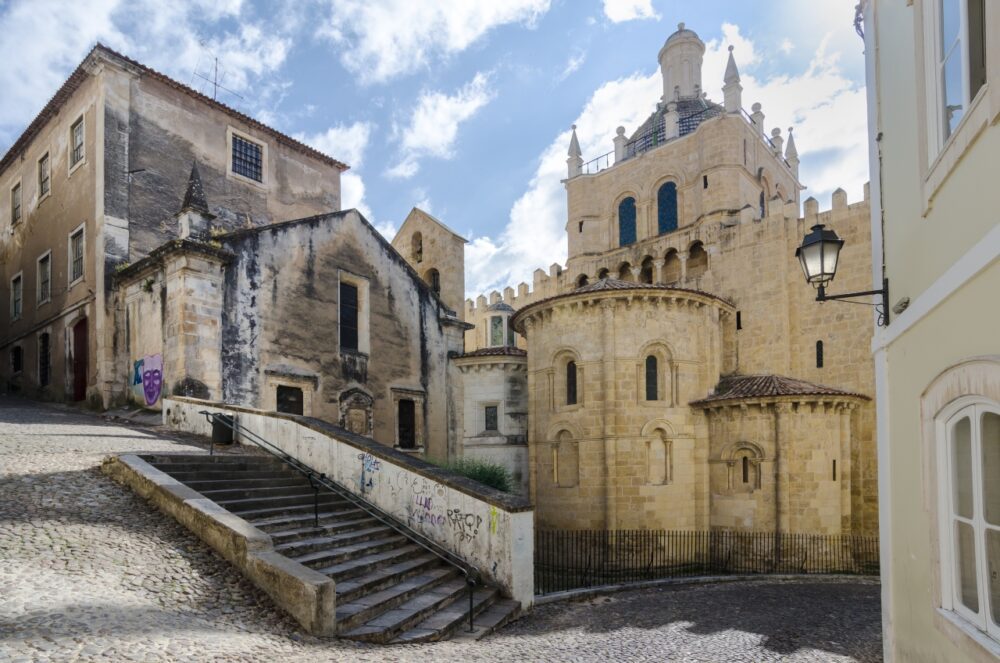
The climb from the river up through the old town, past Sé Velha (the old cathedral) and up toward the university, is steep but constantly rewarding. Narrow stone alleys, faded yellow and blue facades, and small squares with almost no crowds made this one of the more enjoyable walking cities I’ve visited in Portugal, on par with parts of Alfama in Lisbon but with a fraction of the foot traffic.
5. It’s Cheap, Even by Portuguese Standards
As a university town, Coimbra’s prices reflect a large student population rather than tourist demand. Meals, coffee, and accommodation all came in noticeably cheaper than what I paid in Lisbon or Porto on the same trip. A full meal near the university district cost me less than a coffee and pastry did in a touristy part of central Lisbon.
6. It’s an Ideal Stop Between Lisbon and Porto
Coimbra sits almost exactly halfway between the two, and it’s an easy train stop to add without much detour. On my most recent trip, I broke up a Lisbon-to-Porto journey with two nights here, and it turned what would’ve been a straightforward transit day into one of the better parts of the whole trip.

7. The Mondego River Adds a Different Kind of Scenery
Unlike the dramatic coastline of Lisbon or Porto’s river gorge, the Mondego is calmer and more pastoral, lined with parks and walking paths. Renting a small rowboat near Parque Verde and paddling along the river gave me a completely different, quieter perspective on the city than the steep, busy streets of the old town above.
Cons – Things to Consider Before Visiting Coimbra
1. There’s Less to Do Than in Lisbon or Porto
Coimbra rewards a couple of days, not a week. On my first visit, I’d planned for four days and found myself running out of new things to do by day three, outside of day trips. If you’re the type of traveller who wants constant variety, this might not be the city to base a long stay in, though it works very well as a shorter stop.
2. The Hills Rival Lisbon’s
The climb from the riverside up to the university is steep and constant, more so in places than what I experienced in central Lisbon. There’s no metro or funicular to help here, and I found myself stopping to catch my breath more than once on the way up in summer heat. If you have mobility concerns, this is worth factoring in seriously before committing to a stay in the old town itself.
3. Fewer English Speakers Outside the University Area
Because Coimbra sees far less international tourism than Lisbon or Porto, English is less consistently spoken outside the university district and main sights. I had a few conversations that relied on basic Portuguese phrases and a lot of pointing at menus. It’s not a major obstacle, but it’s a different experience from the more tourist-fluent bigger cities, and worth knowing a few basic phrases before you go.
Things to Do in Coimbra
- Tour the University of Coimbra and Joanina Library – Book timed tickets ahead; the library alone justifies a stop in the city.
- Visit Sé Velha (Old Cathedral) – A striking Romanesque cathedral in the heart of the old town, quiet and rarely crowded when I visited.
- Watch a fado performance – Seek out a student-run venue near the university for the more traditional, male-only Coimbra style.
- Walk the old town alleys below the university – Steep but scenic, with far fewer tourists than comparable streets in Lisbon or Porto.
- Row a small boat on the Mondego River – A relaxed way to see the city from the water, rented near Parque Verde.
- Visit the Machado de Castro National Museum – Built over a Roman cryptoporticus you can walk through beneath the museum itself.
- Day trip to the Roman ruins at Conímbriga – About 30 minutes away by bus or car, and one of the best-preserved Roman sites in Portugal.
- Explore Parque Verde do Mondego – A riverside park good for a slower afternoon after a morning of steep walking.
- Browse the shops near Praça 8 de Maio – A good spot to see everyday Coimbra life away from the main tourist sights.
- Try a chanfana – A regional dish of slow-cooked goat or lamb in red wine; hearty, and different from anything I tried in Lisbon or Porto.
Where to Stay in Coimbra
- Old Town (Almedina/university area) – The most atmospheric base, walkable to the main sights, but expect steep streets and some noise from student nightlife.
- Baixa (lower town, near the river) – Flatter and more convenient if you want easier walking, close to the train station and Parque Verde.
- Santa Clara (across the river) – Quieter, with good views back toward the old town, and a short walk or bus ride from the centre.
- Near the train station (Coimbra-B) – Practical if you’re passing through between Lisbon and Porto and want easy onward travel.
Getting Around Coimbra
Coimbra is small enough to walk almost everywhere, and honestly, walking is the best way to experience the old town’s alleys and viewpoints, hills included. I didn’t use any public transport during my time in the historic centre, but the steep climb up to the university is worth pacing yourself for, especially in summer.
For anywhere slightly outside the centre, local buses cover the city reasonably well and are cheap, and I used one to get to the train station on my way out. If you’re planning the day trip to Conímbriga, a bus runs a few times a day, though a rental car or organised tour gives you more flexibility if you want to time it around opening hours rather than a fixed schedule. Trains connect Coimbra easily to both Lisbon and Porto, and that rail link is really the backbone of how most visitors, myself included, get in and out of the city.
Conclusion
So, is Coimbra worth visiting? For anyone with even a passing interest in history or architecture, yes, without much doubt. The university and the Joanina Library alone make it worth the stop, and the fact that it still feels like a real, lived-in Portuguese city rather than a tourist set piece made it one of the more memorable parts of my trip, even after seeing Lisbon and Porto first.
It’s not a place to build an entire week-long trip around, and the hills and lighter tourist infrastructure are worth planning for. But as a two- or three-day stop between Lisbon and Porto, or a dedicated short trip for anyone interested in a quieter, more academic side of Portugal, Coimbra earns its place. I’d go in with a bit of Portuguese vocabulary ready, book the library tickets ahead, and give yourself enough time to actually sit by the river once you’ve made the climb up to the university and back down.