Is Krakow Worth Visiting? Pros, Cons and Travel Tips (2026)

Krakow is the Polish city everyone tells you to visit, so I arrived expecting a pretty Old Town and a few good photos. I first came in summer, when the Main Square was packed with outdoor tables and the whole place felt like one big street party. I liked it so much that I went back again the following winter, just to see it in the cold and under the Christmas lights.
If you’re wondering whether Krakow is worth visiting, my answer is a firm yes. It’s the former royal capital of Poland and the country’s second-largest city, and it escaped the wartime destruction that flattened Warsaw. That means you get a medieval Old Town, a castle on a hill, a lively Jewish quarter and some of the most important World War II sites in Europe, all close together. It’s also cheap, easy to get around and a great base for day trips.
This guide covers the pros and cons of Krakow, the best time to go, the best things to do and where to stay. I’ll also cover how to get around and how long to spend there. I’ll be honest about what I loved and what I didn’t, so you can decide whether Krakow suits the kind of trip you want.
Pros – Reasons Krakow is Worth Visiting
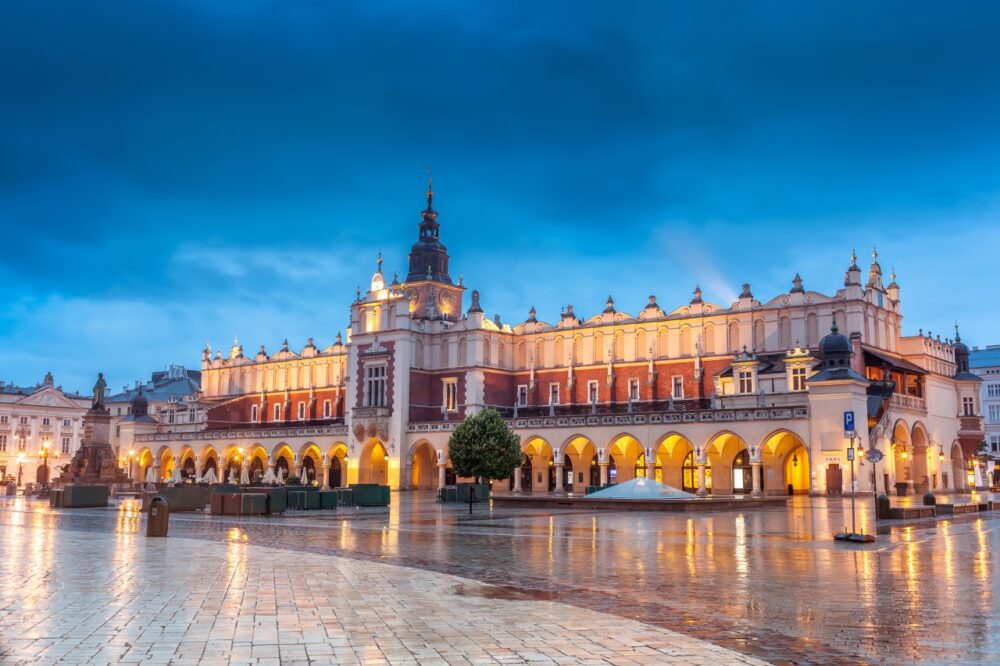
1. A Main Square That Lives Up to the Hype
The Main Market Square (Rynek Główny) is one of the largest medieval squares in Europe, and it’s the heart of a UNESCO-listed Historic Centre. The Cloth Hall (Sukiennice) sits in the middle, St Mary’s Basilica rises at one corner, and horse-drawn carriages clip past the cafés. Every hour, a trumpeter plays a short call from the taller tower of St Mary’s, and the tune stops mid-note on purpose.
I kept coming back to the square at different times of day. It’s quiet and golden early in the morning, and buzzing after dark. If you want the stories behind the buildings, the Rynek Underground guided tour starts with the square’s highlights before heading below ground. Walk a few streets away as well. The Barbican and Florian Gate at the top of the Royal Route are two of the best-preserved pieces of the old city walls.
2. Wawel Hill and Its Royal Castle
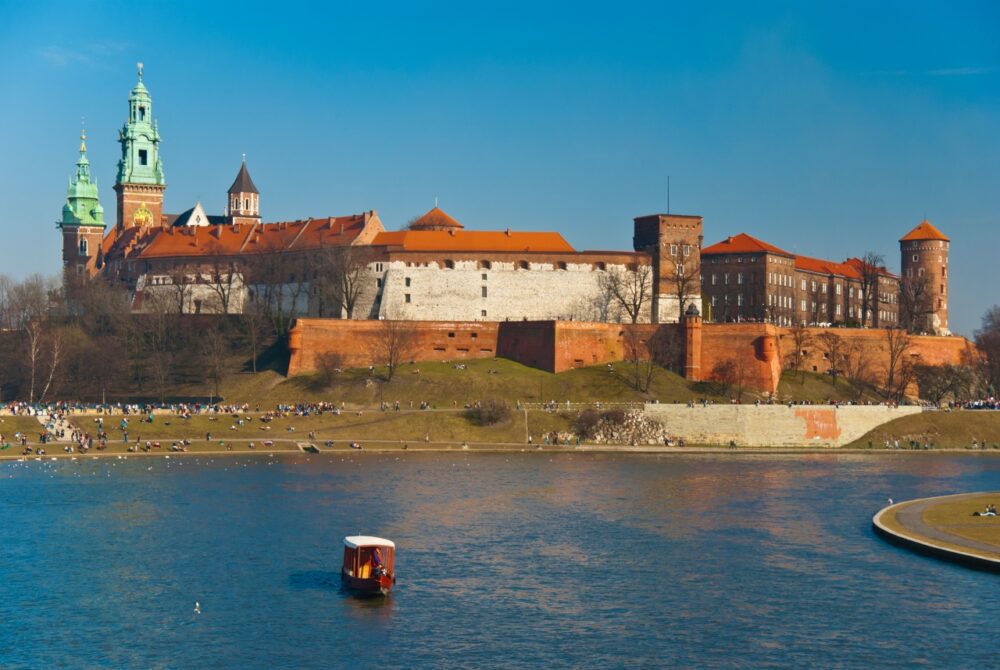
Wawel Hill was the seat of Polish kings for centuries, and it still feels like the country’s historic heart. The castle, the cathedral and the courtyards sit on a rocky hill above the Vistula. The hill and courtyards are free to walk around. The castle exhibitions need timed tickets, and the State Rooms on the second floor are the ones most people want. Tickets for each castle floor are 57 zł (about £11), and you book them directly with Wawel Royal Castle.
The cathedral is run separately, and its tickets aren’t sold at the castle. That trips up a lot of people. It’s where Polish kings were crowned and buried, and you can climb up to the Sigismund Bell for the views. If you’d rather not sort the tickets yourself, the Wawel Castle and Cathedral guided tour covers both with a guide. Don’t miss the Wawel Dragon statue at the bottom of the hill, which breathes real fire every few minutes.
3. Kazimierz, Krakow’s Jewish Quarter
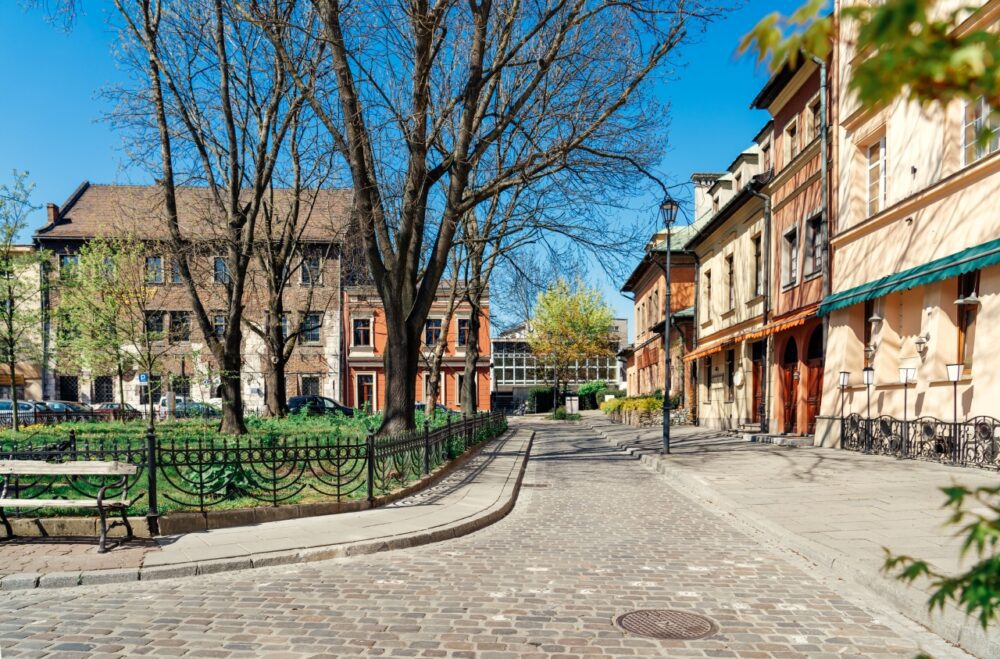
Kazimierz is the neighbourhood I’d happily live in. It was the centre of Jewish life in Krakow for centuries, and the Old Synagogue on Szeroka Street is the oldest preserved synagogue in Poland. Today it’s also the city’s coolest district, with vintage cafés, courtyard bars, galleries and street art. Plac Nowy, the square in the middle, is where you go late at night for a zapiekanka (a toasted baguette with mushrooms and cheese).
It’s a great place for an evening. Klezmer concerts are everywhere in Kazimierz. For an easy one to book, the Klezmer concert on Sławkowska Street is a one-hour show in a 15th-century tenement house, just over the border in the Old Town. If you want the history as well, the Kazimierz and Schindler’s Factory guided tour is a good idea. It’s a guided walk through the district that lasts about three and a half hours and finishes inside Schindler’s Factory, with the ticket included. The Jewish Culture Festival usually fills the streets with music in late June or early July.
4. Pierogi, Zapiekanki and Milk Bars
Polish food is hearty, and Krakow does it very well. Start with pierogi (dumplings), żurek (sour rye soup), bigos (hunter’s stew) and obwarzanek, the chewy bread ring sold from blue street carts all over the Old Town. Milk bars (bary mleczne) are the cheapest place to eat. These no-frills canteens are a leftover from the communist era, and a full lunch usually costs around 20 to 30 zł (roughly £4 to £6).
I ate my way around Kazimierz on both trips. If you’d like a guide, the Kazimierz food tour is a three-hour walk with around a dozen tastings, two Polish vodkas and a craft beer. It starts at the Three Musicians fountain on Plac Wolnica, and it isn’t suitable for gluten or lactose intolerance.
5. Your Money Goes a Long Way
Poland uses the złoty (zł), not the euro, and your money goes a long way. A half-litre of beer in a normal pub is usually somewhere around 15 to 20 zł (roughly £3 to £4), and Old Town bars sit at the top of that range. A main course in a sit-down restaurant is often 40 to 70 zł (£8 to £14). Museum tickets are reasonable as well, and most have a free day each week.
Public transport is cheap too. A 60-minute ticket costs 8 zł (about £1.60). If you plan to pack in several museums, the Kraków Card bundles entry to a long list of them, and one version includes unlimited public transport. You collect a physical card in the city. It only covers permanent exhibitions, so it pays off if you’re going to be busy.
6. Museums and Hidden Corners Underground
Krakow has more museums than you’ll get through, and some of them are a real surprise. The Rynek Underground sits beneath the Main Square and shows what the medieval market looked like, with the remains of old stalls and streets under glass. It costs 45 zł (about £9), and entry is free on Tuesdays, although free tickets can only be collected on the day and the number is limited. On every other day, you can book ahead at the Rynek Underground.
For art, the Czartoryski Museum is home to Leonardo da Vinci’s Lady with an Ermine. Tickets are timed, and it’s free on Tuesdays if you pick up a timed ticket at the Czartoryski Museum on the day. Both the Rynek Underground and the Czartoryski Museum are on the list of sights covered by the Kraków Card, so it’s worth a look if you like museums.
7. Schindler’s Factory and Podgórze
Across the river from Kazimierz, Podgórze was the site of the Krakow Ghetto during the war. Oskar Schindler’s enamel factory is now a museum about Krakow under Nazi occupation, and it’s one of the best museums I’ve visited anywhere. It tells the story of the city and its people, both Polish and Jewish, rather than only the story of Schindler himself. Allow a minimum of two hours.
The museum is free on Mondays, but tickets are limited and can’t be booked in advance. Online tickets need photo ID on the day, and it’s closed on the first Tuesday of the month. Check the current opening hours at Schindler’s Factory before you go. A ticket also covers the Eagle Pharmacy and Pomorska Street within seven days. The Kraków Card only includes Schindler’s Factory with one of its options, so check which version you’re buying.
8. Day Trips That Go Well Beyond the City
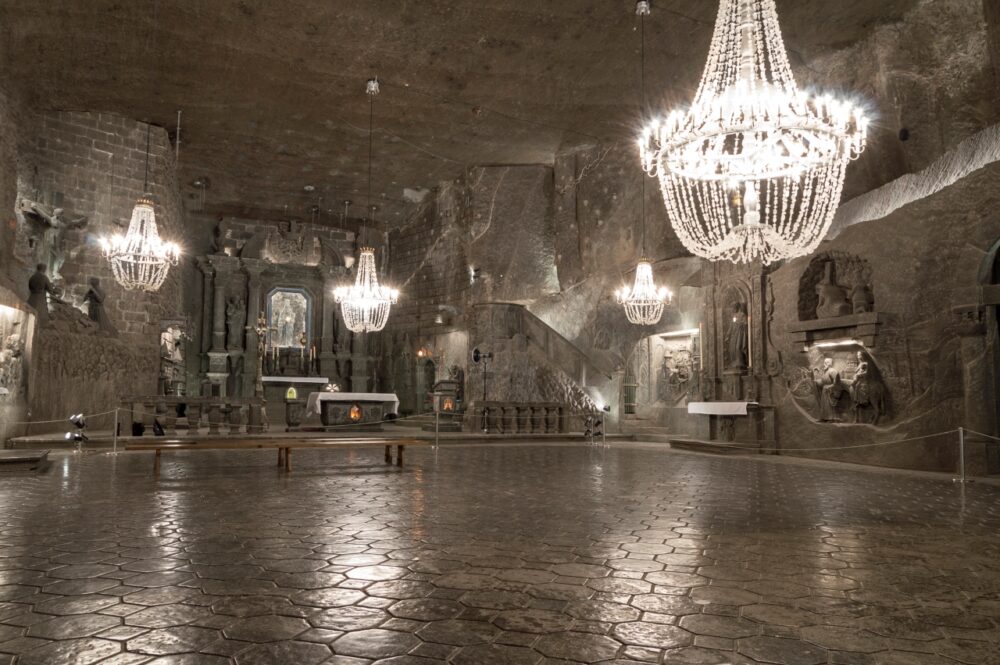
Krakow is one of the best day-trip bases in Europe. The two big ones are Wieliczka and Auschwitz-Birkenau, and they couldn’t be more different. The Wieliczka Salt Mine is about half an hour away by train, and it’s a huge underground world of chapels carved from salt. The route goes down 135 metres, and the temperature stays at 14 to 16°C all year. The Wieliczka tourist route is open from 8:00 am to 6:00 pm, and the Wieliczka Salt Mine tour adds a guide and skip-the-line entry.
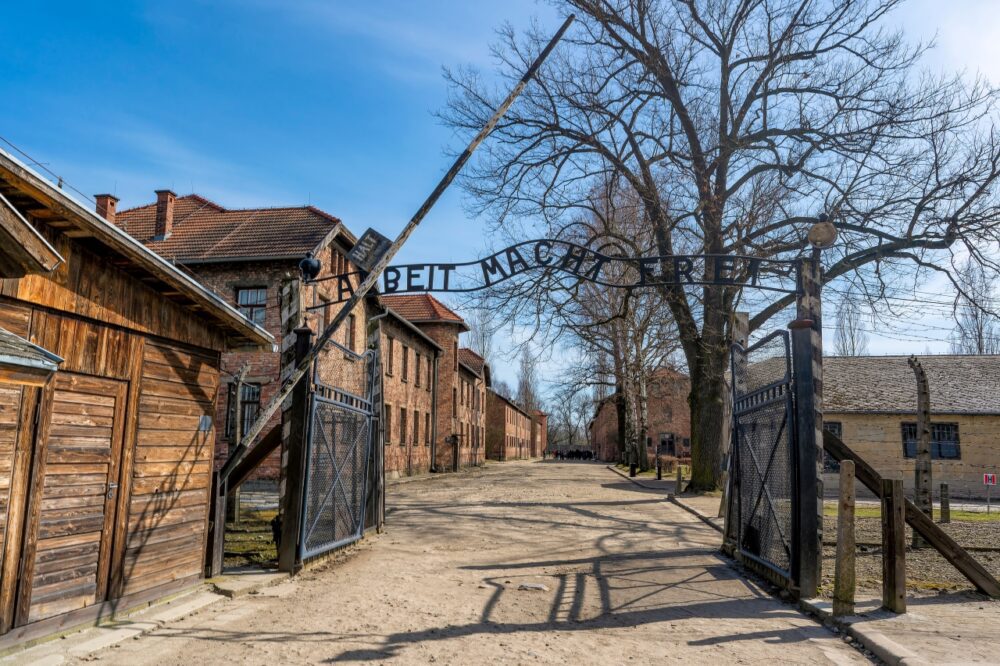
Auschwitz-Birkenau is about 65 km away. It’s a heavy day, but an important one. Entry passes can only be booked online through the Auschwitz Memorial, so book early, or let a tour like the Auschwitz-Birkenau guided tour sort the transport and admission. Zakopane and the Tatra Mountains are a very different kind of day out. It’s a long trip, but the Zakopane and thermal baths day trip mixes mountain scenery with a soak in the thermal baths, which is a proper change of pace from the city.
9. A Compact City Made for Walking
Most of what you’ll want to see in Krakow is within a 30-minute walk of the Main Square. The Old Town, Wawel and Kazimierz all sit within a couple of kilometres. A ring of green park called the Planty runs around the Old Town where the medieval walls used to stand, and it’s a lovely way to get from one side to the other. The Vistula boulevards are a great place for a walk in the evening.
That also makes it a great city for bikes. The Highlights of Krakow bike tour is a four-hour small-group ride past the Jagiellonian University, Wawel and the Jewish quarter, with a stop for a traditional Polish lunch. It’s a good way to cover more ground than you’d manage on foot, without needing a tram.
10. Nowa Huta and the Communist Side of Krakow
Nowa Huta is the strangest part of Krakow. It’s a planned socialist city built in the 1950s next to a huge steelworks, with wide boulevards, monumental housing blocks and a central square laid out like a giant wheel. It’s about 10 km from the Old Town, and it feels like a different country.
The best way to see it is on the Nowa Huta communism tour. It’s a private tour in a Trabant, a Polish Fiat or a Soviet Lada, partly driving and partly walking, with a local guide. It runs for around two and a half hours. It’s fun, but it’s also a serious look at how ordinary people lived under communism.
Cons – Things to Consider Before Visiting Krakow
1. The Main Square Gets Very Crowded
Krakow is popular, and the Old Town shows it. The Main Square and the streets around it are full of tour groups for most of the day. The restaurants right on the square are the most expensive, and many of them are aimed squarely at tourists. The food isn’t always great, and you’ll often pay a lot more than you would a few streets away.
The workaround is simple. Do the big sights early in the morning, then eat in Kazimierz or on the side streets. A milk bar a couple of streets from the square will cost you a fraction of the price of a café on it. I’d also try to visit the Old Town on a weekday if you can.
2. Weekend Party Crowds Can Be Loud
Krakow is a popular city for stag and hen weekends. On Friday and Saturday nights, parts of the Old Town and Kazimierz can get loud. Streets close to the Main Square and the busiest bars around Plac Nowy are the noisiest, and it can go on until the early hours.
If you’re a light sleeper, check where your room is before you book. A room facing a courtyard is much quieter than one facing the street. I’d also stay a little away from the busiest bar streets. Podgórze and the area near the main station are calmer, and both are only a short tram ride or walk from the centre.
3. The History Is Heavy
Krakow’s history isn’t all castles and legends. Schindler’s Factory, the former ghetto and the trip to Auschwitz are all powerful, and they can be draining. It’s easy to underestimate how much a full day at Auschwitz takes out of you, especially after a busy morning of travel.
So, is Krakow a good option if you want a light city break? It can be, but I’d pace yourself. Give the heavy sights their own day, and don’t stack them. Balance a serious morning with something lighter, like a walk in the Planty or a food tour in Kazimierz. It’s a city you feel as much as see, and I think that’s a good thing.
4. Winters Are Cold and Air Quality Can Dip
Krakow’s winters are cold and grey, with short days. On still days, the city can also have a smog problem, because of the surrounding hills and the way people heat their homes. It’s not every day, but it’s worth knowing about if you’re sensitive to air quality.
The good news is that a lot of the best things to do are indoors. Museums, cafés and the Wieliczka Salt Mine (which stays at a steady 14 to 16°C) all make good cold-day options. Pack a warm coat and good boots, because the cobbles get slippery. If you’re going in winter, check the air quality forecast before you plan your outdoor days.
5. Popular Sights Need Booking Ahead
Krakow’s top sights run on timed tickets, and they sell out. Schindler’s Factory, the Wawel State Rooms and the Czartoryski Museum all use timed entry, and Auschwitz can only be visited with a pre-booked pass. Free days save money, but tickets are limited and you have to collect them on the day, so they’re the busiest.
The simple fix is to book the big ones as soon as you know your dates. I’d also plan around closing days, because they differ from museum to museum. A guided tour with the entry included, like the Wawel Castle and Cathedral tour, is a good way to take the stress out of it. I’d also keep a couple of free things in reserve, like the Wawel courtyards and the Planty, for the days when you can’t get in.
Best Time to Visit Krakow
I’ve been to Krakow in summer and in winter. In summer, the days are long and the Main Square fills with outdoor tables. The Vistula boulevards are lively in the evenings, and Kazimierz is at its best, especially when the Jewish Culture Festival takes over the streets around late June or early July. It also gets properly busy, so I did the big sights early and left the afternoons for cafés. In winter, the days are short and cold. The Old Town looks beautiful with its Christmas lights, and there’s usually a Christmas market on the Main Square from late November. I spent a lot of time in museums, milk bars and cosy cafés. Krakow is still worth it in winter, as long as you pack a warm coat and plan some indoor activities.
I haven’t been in spring or autumn, but I’d bet they’re the best of both worlds. May and June should give you mild weather, green parks and open terraces, without the peak summer crowds. September and early October should be similar, with softer light and thinner crowds. The coldest weeks are in January and February, so I’d only go then if the hotel prices are tempting. If I were planning another trip, I’d aim for one of the shoulder seasons.
Best Things to Do in Krakow
Here’s what I’d book first in Krakow. Most of it is easy to arrange in advance.
- Wawel Castle and Cathedral guided tour – A licensed guide takes you round the hill in about two hours. It includes skip-the-line entry to one castle exhibition (subject to availability) and admission to the cathedral. Book the Wawel tour here.
- Rynek Underground guided tour – This 90-minute tour starts with the highlights of the Main Square, including the Cloth Hall and St Mary’s Basilica, before heading into the underground museum. Entry is included. Book the Rynek Underground tour here.
- Kazimierz and Schindler’s Factory guided tour – A guide leads you through the Jewish quarter for about three and a half hours and finishes with an in-depth tour of Schindler’s Factory. The ticket is included, and you meet on the steps of the Old Synagogue. See the Kazimierz and Schindler’s tour here.
- Auschwitz-Birkenau guided tour – This is a long and emotional day of about seven hours, with hotel pick-up or a meeting point in the city. Admission is included, with about two hours at Auschwitz I and about an hour and a half at Birkenau. See the Auschwitz tour here.
- Wieliczka Salt Mine tour – Walk through 20 chambers, down 135 metres, with a licensed guide and skip-the-line entry. You can add transport from Krakow or meet at the mine. Book the Wieliczka tour here.
- Zakopane, Gubałówka and thermal baths day trip – This full-day trip includes hotel pick-up, a funicular ride up Gubałówka Hill, free time in Zakopane and tastings of highlander cheese and local spirits. It finishes with entry to the Chochołowskie Thermal Baths. Check the Zakopane trip here.
- Nowa Huta communism tour – Ride around the socialist district in a Trabant, Polish Fiat or Soviet Lada with a local guide. It’s a private tour of about two and a half hours. See the Nowa Huta tour here.
- Kazimierz food tour – Taste your way through the Jewish quarter over three hours, with a dozen or so bites, two Polish vodkas and a craft beer. It’s a small group of up to 12 people. Book the food tour here.
- Vistula river cruise – Drift past Wawel, the Church on the Rock and the Kościuszko Mound on a catamaran with an English audio guide. It lasts about an hour and starts from the Vistula Boulevards. See the Vistula cruise here.
- Klezmer concert – Hear traditional Jewish folk music for an hour in a 15th-century tenement house on Sławkowska Street. Arrive about ten minutes early, because the hall is on the second floor. Book the Klezmer concert here.
- Czartoryski Museum – This is where you’ll find Leonardo da Vinci’s Lady with an Ermine. Tickets are timed, and it’s free on Tuesdays. It’s also one of the sights covered by the Kraków Card, so it’s worth a look if you plan to visit a few museums. Check Czartoryski Museum tickets here.
- Highlights of Krakow bike tour – A small-group ride of about four hours past the Jagiellonian University, Wawel and the Jewish quarter, with a stop for a traditional Polish lunch. See the bike tour here.
Where to Stay in Krakow
Old Town (Stare Miasto) – This is the most atmospheric place to stay, with the Main Square, Wawel and the Royal Route all on your doorstep. I stayed here on my first trip and loved being able to step out onto the Main Square early in the morning, before the tour groups arrived. The downside is that it’s the busiest and most expensive area, and the streets around the square can be loud at weekends. Budget rooms are hard to find right on the square, so I’d look near the station instead. Hotel Wyspiański is a solid mid-range choice about five minutes from the Main Square, with a Polish breakfast buffet. For a treat, Hotel Saski Krakow is half a block from the square and has a spa and an indoor pool.
Kazimierz – This is my favourite area, and it’s where I stayed on my second trip. I wanted a change from the Old Town, and it was the perfect spot, with great restaurants, bars and cafés, and Schindler’s Factory within walking distance. It’s also an easy walk back to the Old Town and Wawel. It can be lively at night, especially around Plac Nowy. Hotel Kazimierz is a basic but comfortable budget option on Miodowa Street, with a breakfast buffet. Hotel Rubinstein is a good mid-range choice in a 15th-century building on Szeroka Street. If you want to splurge, PURO Kraków Kazimierz has a spa, terraces and bikes to borrow when the weather is good.
Podgórze – This area sits across the river from Kazimierz, and it’s quieter and more local. You’re close to Schindler’s Factory and the Ghetto Heroes Square, and the walk over the Father Bernatek footbridge is lovely. The downside is that it’s a bit further from the Main Square. Qubus Hotel Kraków is a 4-star riverside hotel with a rooftop pool and jacuzzi. Lwowska 1 is an aparthotel with spacious rooms and a small spa, close to the Factory.
Near the Main Station – This is the most convenient base if you’re arriving by train or heading out on day trips. You’re next to Galeria Krakowska, and the Old Town is a short walk away. It’s less charming, but it’s often cheaper. ibis budget Krakow Stare Miasto is an easy budget pick right by the station. PURO Kraków Stare Miasto is a stylish, modern hotel a short walk from the Main Square.
Getting Around Krakow
Krakow is easy to walk, so most visitors only need public transport for a few trips. The trams and buses use the same tickets, and ZTP Kraków keeps the fares simple. A 15-minute ticket costs 4 zł (about 80p), a 30-minute ticket is 6 zł (about £1.20) and a 60-minute ticket is 8 zł (about £1.60). A 24-hour ticket for the city zone is 20 zł (about £4), and a 72-hour ticket is 55 zł (about £11). You can buy tickets on apps like jakdojade, mPay, moBiLET and SkyCash, at ticket machines or on many buses by card. Validate any paper ticket as soon as you board.
Krakow doesn’t have a short-term bike-share you can just tap and ride. The city’s LajkBike scheme is a long-term rental for residents, so I’d use a bike hire shop or a guided ride, like the Highlights of Krakow bike tour. Bolt and Uber both work well for late nights. The airport is about 11 km west of the centre, and the train to Kraków Główny takes around 20 minutes and costs about 20 zł (£4). You’ll find flight and transport details at Kraków Airport. Wieliczka is easy by train from the main station, and the 70-minute combined tram and train ticket costs 10 zł (about £2). My tip is to walk in the Old Town and Kazimierz, then use a tram for anything further out. If you’re planning a museum-heavy trip, the version of the Kraków Card with public transport rolls both into one.
How Long to Spend in Krakow
For most people, three days is the ideal amount of time in Krakow. That gives you enough time for the Old Town, Wawel, Kazimierz and Podgórze without rushing, with room for one big day trip. Krakow is still worth it for a short trip, but with two days you’ll have to pick and choose.
With one day, focus on the Main Square, Wawel Hill and an evening in Kazimierz. Two days lets you add Schindler’s Factory and the Rynek Underground. Three days gives you time for a day trip to Wieliczka or Auschwitz, or a slower pace with the food tour and the river cruise. With a week, use Krakow as a base for Zakopane, Nowa Huta and the more relaxed parts of the city. If you’re planning two or three busy days of museums, the Kraków Card is worth a look. I’d only spend a whole week here if you love history and museums.
So, is Krakow Worth Visiting?
Having been twice, my answer is yes. Krakow has a medieval Old Town, a royal castle, a great Jewish quarter and some of the most powerful history in Europe. It’s cheap and easy to walk around, and it has some of the best day trips in Poland. If you want a city break with real depth, Krakow is a great choice.
Krakow isn’t perfect. The Main Square is crowded, the weekend party scene can be loud, the history is heavy and winters can be cold and smoggy. Each of those has an easy workaround, though, and none of them stopped me going back. Visitors who book the big sights early and eat away from the square tend to leave very happy, and I certainly did.
If you’re still undecided, plan three days in Krakow. Climb Wawel Hill, spend an evening in Kazimierz, eat pierogi at a milk bar and visit Schindler’s Factory. If you have more time, add Wieliczka or a trip to Zakopane. By the end of it, I think you’ll agree Krakow is worth visiting.