Is Graz Worth Visiting? Honest Pros and Cons (2026)

Most people fly straight to Vienna and never think about Graz. That’s a mistake, and I’m glad I didn’t make it. I spent three days here one summer, and I kept finding red rooftops, hidden courtyards and a glowing blue-glass museum around every corner.
Graz is the capital of Styria and the second-largest city in Austria. Its Old Town has been a UNESCO World Heritage Site since 1999, and the city was European Capital of Culture in 2003. It also has a huge student population, a famous food scene and a hill in the middle of town with a clock tower on top. Graz is worth visiting if you want a relaxed city break with great architecture and good food, and it works best over a long weekend.
I loved the mix of old and new, but a few things caught me out. Here’s what I enjoyed, what I’d warn you about and which hotels I’d book. You’ll also find the best tours, the right season to go, how long to stay and the easiest ways to get around.
Pros of Visiting Graz
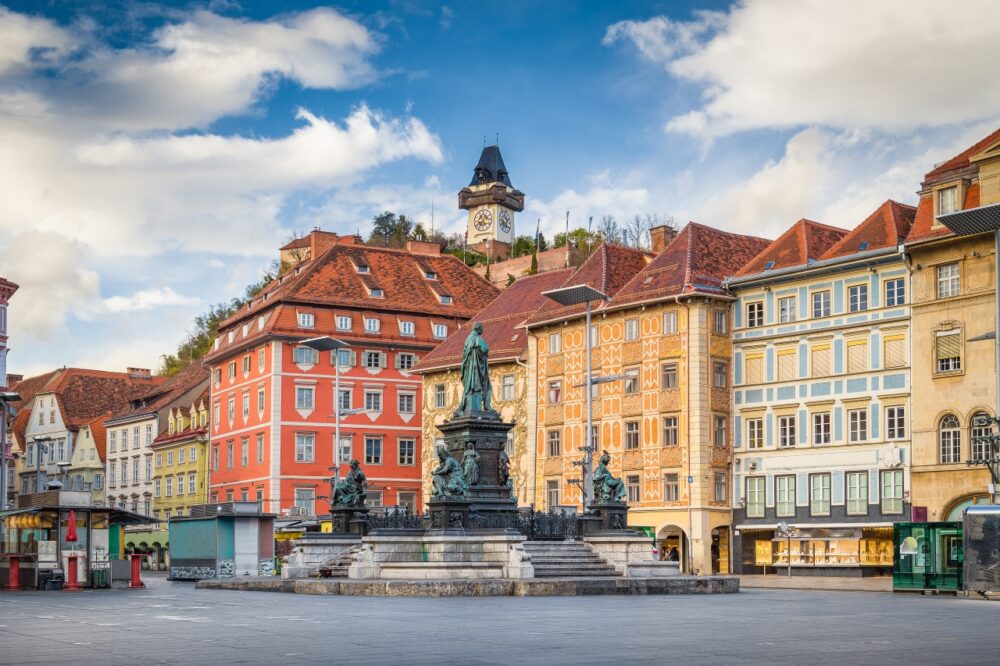
1. UNESCO Old Town
Graz has one of the best-preserved old towns in Central Europe. The streets mix Gothic, Renaissance, Baroque and modern buildings, and nothing feels staged. Red tiled roofs stack up beneath the Schlossberg, and courtyards open off almost every lane. I stayed right in the middle, so everything was a few minutes’ walk away, and the evenings were calm and lovely. Even on a busy summer weekend, the lanes never felt overwhelming, and I could always find a quiet bench.
Start on Hauptplatz, the main square, then walk up Herrengasse and into the arcaded Landhaus courtyard. The Graz tourism site has maps and walking routes if you like a plan. A private Old Town highlights walking tour lasts anywhere from two to six hours, and the guide fits it to your pace. Go early in summer, before the squares fill up. Look through the passageways, because the best courtyards hide behind plain doors. Take your time here, and let yourself get a little lost.
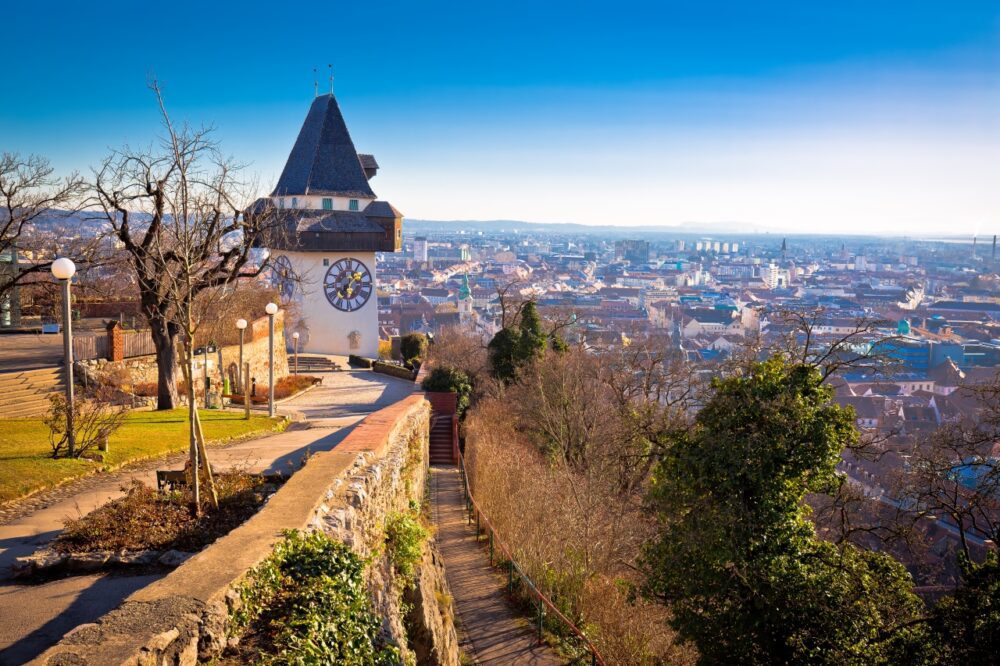
2. Schlossberg and the Clock Tower
The Schlossberg is the green hill that rises right out of the Old Town, and it’s the symbol of Graz. At the top, the Clock Tower is the city’s trademark, and its hands are reversed, with the big hand showing the hours. I climbed up in the early evening, and the view over the red rooftops was the best of my trip. The old fortress was torn down in the Napoleonic era, but the tower survived.
You can walk up the steps, take the funicular or ride the lift through the rock. The Schlossberg private guided tour with Schlossbergbahn includes a licensed guide and a one-way funicular ride. The park around the summit has shady paths and a café with a terrace. Bring water in summer, because the climb is warm. Allow two hours, and walk down by a different route to see the whole hillside.
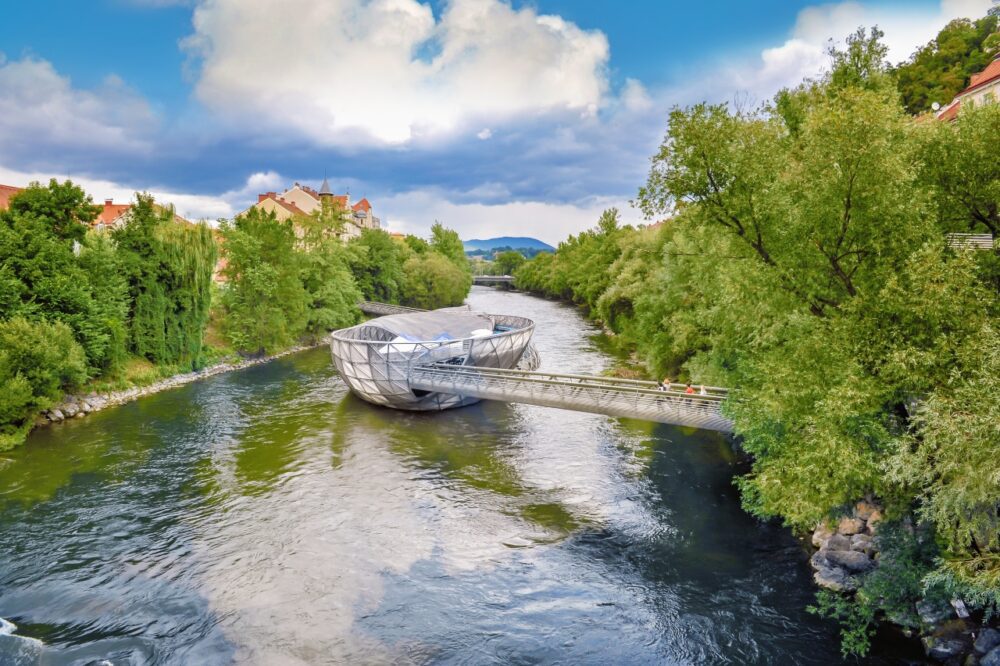
3. Kunsthaus and the Murinsel
Graz proves that a historic city can still be daring. The Kunsthaus Graz is a blue, blob-shaped gallery that locals call the Friendly Alien. It opened in 2003, and it looks like a spaceship that landed beside the river. The building is as interesting as the contemporary art inside it, and the glass façade lights up at night.
A few minutes away, the Murinsel floats in the middle of the Mur. It’s a curved steel platform with a café and a small playground, and you cross it on a footbridge. I sat on the steps in the evening with a cold drink and watched the river slide by. Both sights are free to look at from outside, so you can pass by even if you skip the museum. They’re only a short stroll apart, which makes them an easy pairing. Check the opening hours before you go in, because exhibition changes can close some galleries.
4. The Landeszeughaus Armoury
The Landeszeughaus is the largest historic armoury in the world, and it’s one of the most surprising sights in Austria. The Landeszeughaus holds around 32,000 objects from the 15th to the 18th century. Suits of armour, swords, helmets and muskets fill four floors, all lined up as they were when the building was a working arsenal.
I’m not usually a museum person, but I stayed for over an hour. The sheer scale is the draw, and the old wooden floors creak under your feet. From April to October, it’s open Tuesday to Sunday from 10:00 am to 6:00 pm. In winter, you can only enter on a guided tour, and the English tour runs at 12:30 pm. Allow 60 to 90 minutes. It’s a good choice on a hot afternoon, because the rooms stay cool. Kids and adults both seem to enjoy the sheer number of helmets.
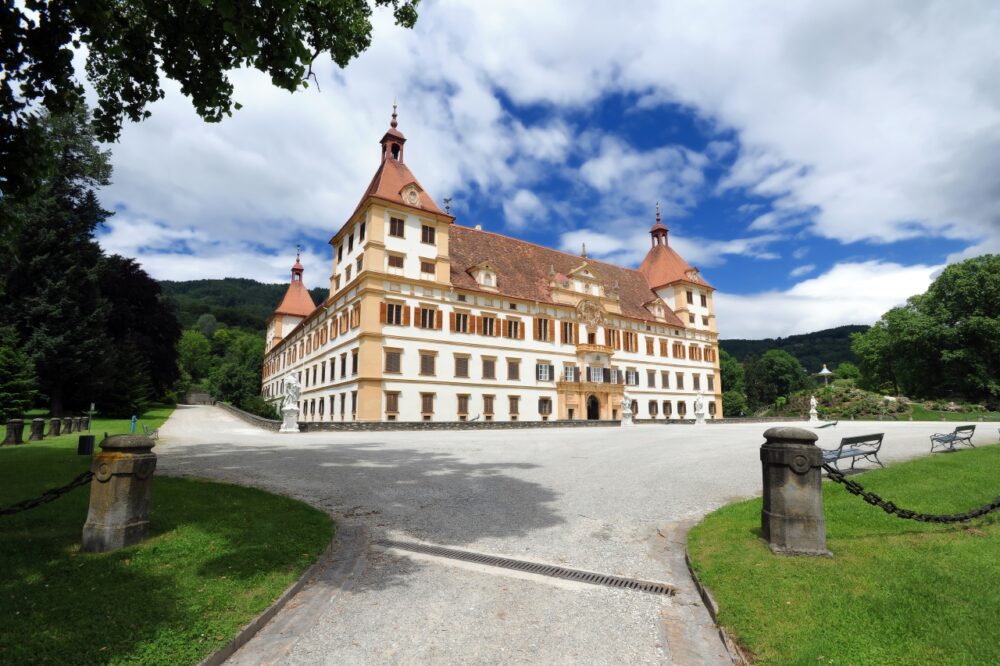
5. Eggenberg Palace
Schloss Eggenberg sits on the western edge of the city, and it’s the most impressive palace in Styria. Schloss Eggenberg was built in the 17th century, and it’s now part of the UNESCO listing alongside the Old Town. Its State Rooms are decorated with painted ceilings, and the whole layout is based on the heavens, with planets and the cycle of the year.
The gardens are the real summer treat. Peacocks wander the lawns, and the park has plenty of shade. It’s a short tram ride from the centre, so the trip is easy. The State Rooms are open by guided visit, so check the times before you go. The city and Old Town tour including the Joanneum Quarter covers the palace as one of its stops. Allow half a day if you want to see both the rooms and the park. Visit in the morning, when the light is soft and the grounds are quiet.
6. Styrian Food and Wine
Graz calls itself a city of culinary delights, and it earns the title. Styria is famous for pumpkin seed oil, the dark green oil that gets drizzled on salads, soups and even vanilla ice cream. Other local dishes include Backhendl (fried chicken), Käferbohnen salad and hearty Styrian pork. The hills south of the city produce crisp white wines, and Schilcher, a pink local wine, is the speciality.
For a taste of the wine country, the Schilcherland e-bike tour with wine tasting lasts about four and a half hours. It starts in St. Stefan ob Stainz, west of Graz, and the e-bikes make the hills easy. In town, I spent a long lunch on the Kaiser-Josef-Platz farmers’ market, where stalls sell cheese, bread and smoked meats. Order a spritzer with a Styrian white wine, and you’ll fit in with the locals. Many wine taverns, called Buschenschanken, serve cold platters of local meat and cheese, and they’re worth seeking out.

7. Rivers, Parks and Green Space
Graz is a very green city, and the Mur river runs right through the middle of it. The riverbanks are lined with paths, benches and beer gardens. The Stadtpark sits at the edge of the Old Town, with big shade trees, a pond and a café. After a morning of sightseeing, I lay in the grass here and watched the students go by. It’s the perfect spot for a picnic lunch.
If you want to be on the water, the beginner kayak tour on the Mur lasts two hours. You paddle through the city, and the Old Town looks completely different from the river. No experience is needed. In summer, the Mur banks fill up in the evening with people having a drink. Bring a swimsuit or a spare t-shirt, because you may get splashed. If paddling isn’t your thing, a riverside bench and a cold drink works just as well.
8. Compact and Walkable
The centre of Graz is small, flat and easy to walk. You can cross the Old Town in about 15 minutes, and most of the main sights sit within a few streets of Hauptplatz. I didn’t use public transport once in the centre. Trams are there if you need them, and Eggenberg Palace and the outer districts are a short ride away.
The Graz tourism information lists trails and trips for every kind of visitor. The pace of the city is slow and friendly. Cafés spill onto the squares, and nobody is in a rush. It also feels very safe, even late in the evening. If you like to explore without a plan, Graz is perfect. Pick a street, follow it and see where it takes you. You’ll bump into a courtyard or a quiet church soon enough. Even the walk between sights is a pleasure here, and you’ll rarely feel rushed.
9. Student Energy and Café Culture
Graz is a university city, and you can feel it. Tens of thousands of students keep the cafés busy, the bars lively and the prices fair. The streets around the university quarter have cosy coffee houses, bookshops and bakeries. The mood is young and relaxed, and it makes Graz feel less formal than Vienna.
I made a habit of an afternoon coffee and a slice of cake, and I never ran out of places to try. Summer evenings are especially good. Terraces stay open late, and live music drifts out of the courtyards. For something different, the Kepler’s Code and Landhaus courtyard guided tour uses a phone-based kit and a guide. It lasts two hours, and it tells the story of the astronomer Johannes Kepler, who lived in Graz. It’s an easy way to fill a slow afternoon. Afterwards, grab an iced coffee in the courtyard, and enjoy the shade.
10. Easy Day Trips
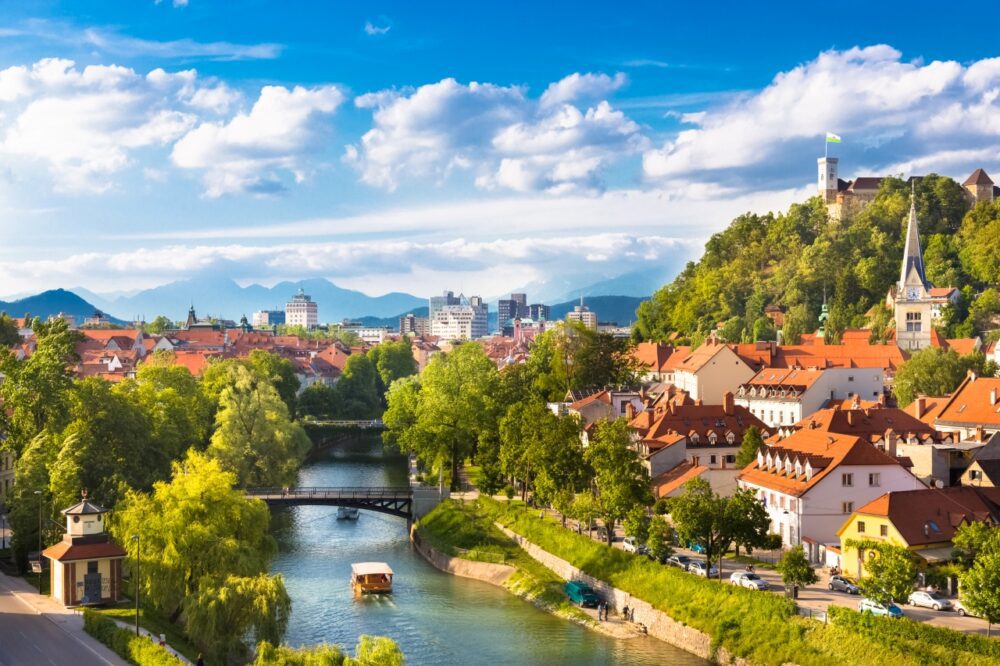
Graz is a great base for the south of Austria and the countries beyond. Slovenia is close, and Maribor is only a short drive across the border. Ljubljana is a longer day, but it’s doable by train or bus. Vienna is about two and a half hours away, and the Styrian wine road is right on your doorstep. Riegersburg Castle and the Lipizzaner stud farm at Piber are popular half-day outings.
The easiest one to book is Ljubljana. The Ljubljana Castle entry ticket with optional funicular ride gives you something to aim for once you arrive. Check the train times in advance, and leave early, because it’s a long day. Also look at the return times before you book, so you don’t miss the last connection. Pack snacks and a charger, and you’ll have a smoother trip. For something closer to home, the Styrian wine hills are an easy half-day by bike or car.
Cons of Visiting Graz
1. Hot Summer Days
Graz gets properly warm in summer. In July and August, the highs often sit in the high 20s Celsius, and some afternoons climb into the 30s. The narrow Old Town streets trap the heat, and thunderstorms can roll in with little warning. I found the Schlossberg climb tiring in the middle of the day, and I was glad of every shady courtyard.
Plan your outdoor sights for the morning or early evening, and keep the middle of the day for museums and long lunches. The Landeszeughaus and the Kunsthaus are both good cool-down stops. Carry a refillable bottle, wear a hat and book a hotel with air conditioning. A kayak tour on the Mur is a fun way to cool off. It’s easy to work around, and Graz is still well worth visiting in summer.
2. Quiet Sundays and Mondays
Austria keeps strict shop hours, and in Graz you notice them. Most shops close on Sundays, and many supermarkets shut completely. Several museums close on Mondays too, including the Landeszeughaus. On a Sunday afternoon, the Old Town can feel very still, with only the café terraces doing real business.
I fixed this by planning my days around the closures. Do your shopping on Saturday, and save outdoor sights, parks and the Schlossberg for Sundays. Cafés, restaurants and the main squares stay open, so you won’t go hungry. A private Graz walking tour works on any day, because it’s all outdoors. Check opening days before you leave your hotel, and Sunday and Monday become relaxed days instead of problems. I spent my Sunday on a long riverside walk, and it turned out to be one of my favourite days.
3. Fewer Headline Sights
Graz doesn’t have a single mega-attraction like Schönbrunn Palace or the Hohensalzburg Fortress. Its charm is in the mix: the Old Town, the Schlossberg, the armoury and the modern art. If you want one big photo stop, you may feel the city is a little low-key. Some visitors see it all in a day and wonder what to do next.
I think that’s a strength, but it’s worth knowing. Spread the highlights over two or three days, and leave time for cafés and long walks. A guided tour helps you connect the dots, because the stories behind the buildings are half the fun. Add Eggenberg Palace or a day trip to Slovenia if you want more. Graz rewards slow travel, and it’s still worth the trip.
4. A Small Airport
Graz Airport is small, and it has fewer routes than Vienna or Salzburg. Many visitors will need a connection, or they’ll fly to Vienna and continue by train. The airport is a little outside the city, so you can’t just walk to your hotel on arrival. If your flight times are awkward, the journey can feel longer than expected.
The fix is simple. Trains from Vienna take about two and a half hours, and the ride is comfortable and scenic. The Graz Airport website lists current routes, and the airport connects to the city by bus and train. See the Getting Around section for the options. Book your onward travel in advance, and it takes the stress out of arrival day. Once you’re in the Old Town, the extra journey feels like a distant memory, and a day in Graz makes the trip well worth it.
5. Seasonal Opening Hours
Some Graz sights change their hours with the season. The Landeszeughaus runs on a fixed summer schedule from April to October, but in winter you can only enter on a guided tour. Palace interiors and some smaller museums also have limited slots. A few galleries close on Mondays, and public holidays can throw off your plans.
Check each site before you go, and group your days around the ones with tight hours. I picked one big sight per day and filled the rest with walks and cafés. A private Old Town tour can include the armoury in its longer versions, so the guide handles the timing. Summer has the widest opening hours, so it’s an easy season to plan. A quick check saves you from a wasted trip.
Where to Stay
Old Town (Altstadt): I stayed in the Old Town for all three days, and I’d do it again. You can walk to Hauptplatz, the Landhaus, the Schlossberg and the cathedral in minutes. The streets are quiet at night, and the cafés start early. The downsides are the prices and the lack of parking. NH Graz City is a four-star on Karmeliterplatz, with a coffee house, a fitness centre, a sun terrace and air conditioning. Palais-Hotel Erzherzog Johann sits on Sackstraße, with a sauna, a fitness centre, a bar and family rooms. Aparthotel Lavilo City Center is right on Hauptplatz, with air conditioning, family rooms and a parking garage.
Along the Mur (Kai and Gries): This stretch runs beside the river, a short walk from the Old Town. It’s calmer than the centre, and the views of the Schlossberg are lovely. The Kunsthaus and the Murinsel are close by. Schlossberghotel is a charming riverside hotel with a seasonal outdoor pool, a sauna, a garden and a terrace. Kai 36 is a stylish option with a rooftop pool in season, a bar and massage. Grand Hôtel Wiesler is a historic four-star with a spa centre, a sauna, a restaurant and a terrace.
Jakominiplatz and Burggasse: This is the eastern side of the centre, around the main tram hub. It’s about five to ten minutes on foot from Hauptplatz, and it’s handy for trams. The streets are busier than the Old Town. Motel One Graz is a budget-friendly choice on Jakominiplatz, with a bar, soundproof rooms and air conditioning. Limehome Graz – Argos by Zaha Hadid offers serviced apartments with contactless check-in on Burggasse. Grazerhof is a simple aparthotel on Stubenberggasse with a shared kitchen.
Hauptbahnhof and Lend: These districts sit around the main station, about 15 minutes on foot from the Old Town, or a short tram ride. They suit train arrivals and early starts. The area feels more practical than pretty, but Lend has a growing arts scene. Austria Trend Hotel Europa Graz Hauptbahnhof is next to the station, with a restaurant, a sauna, a bar and soundproof rooms. IntercityHotel Graz has a fitness centre, a terrace, a bar and family rooms. Radisson Hotel Graz offers a fitness centre, a bar and soundproof rooms.
Best Things to Do
Graz has more to offer than three days can cover, from castle hills and kayaks to wine country and cross-border day trips. These are the experiences I’d book first.
- Schlossberg private guided tour with Schlossbergbahn: A licensed guide takes you up the hill for two to three hours. The ticket includes a one-way funicular ride, and the longer version adds a museum visit.
- City and Old Town tour including the Joanneum Quarter: A two-hour private tour that covers the Schlossberg, the Clock Tower, the Kunsthaus, Eggenberg Palace and the Old Town.
- Old Town highlights private walking tour: Choose a two, three, four or six-hour version. The longer options add the cathedral, the Landeszeughaus and the Burggarten.
- Kepler’s Code and Landhaus courtyard tour: A two-hour guided experience that uses a phone kit and a guide, and tells the story of the astronomer Johannes Kepler.
- Beginner kayak tour on the Mur: A two-hour paddle through the heart of the city. It suits first-timers, and you can book a private or small-group slot.
- Schilcherland e-bike tour with wine tasting: A four-and-a-half-hour ride through the hills west of Graz, with an exclusive wine tasting along the way.
- Wooden souvenir workshop: A hands-on 90-minute workshop where you make your own keepsake from Graz.
- Private photoshoot walk in the Old Town: A one-hour session with a local photographer. It’s a good pick for couples and solo travellers who want proper holiday photos.
- Smashbox rage room experience: A 45-minute session where you smash things in a safe room. It’s quirky, and it’s a fun rainy-day option for groups.
- Ljubljana Castle entry ticket with optional funicular ride: Entry to the hilltop castle in Slovenia’s capital, with an optional funicular ride and audio guide. It works as a long day trip from Graz.
Best Time to Visit
Summer – This is when I went, and I’d go back. Graz is at its liveliest, with terraces open late, long days and plenty of events. Highs sit in the high 20s Celsius, and afternoon thunderstorms are common. The Landeszeughaus runs its full schedule from April to October. Start early, and keep the middle of the day for museums.
Spring – Spring is a lovely time to visit. April and May are mild and green, and the parks start to bloom. Showers are common, so pack a light waterproof. Crowds are small, and the Old Town feels relaxed. It’s a good time for walking tours and cheaper rooms.
Autumn – Autumn is the food season. September and October bring clear days, the grape harvest and pumpkin dishes on every menu. The hills around Graz turn gold, and the wine villages are at their best. By November, the weather turns cool and grey, so aim for September or early October.
Winter – Winter is cold and quiet, but the Advent markets bring the Old Town to life. Days are short, and some sights run on reduced schedules. The Landeszeughaus is open by guided tour only, with an English tour at 12:30 pm. Pack warm layers, and plan for indoor sights in the afternoon.
How Long to Spend
1-2 Days – Two days cover the highlights. Spend the first morning in the Old Town, with Hauptplatz, the Landhaus and the Landeszeughaus. Climb the Schlossberg in the afternoon, then finish with dinner on a courtyard terrace. It’s tight, but doable.
3-4 Days – This is the sweet spot, and I spent three days. I used the first for the Old Town and the Landeszeughaus, the second for the Schlossberg, the Kunsthaus and the Murinsel, and the third for Eggenberg Palace and the Stadtpark. With a fourth day, add the Styrian wine hills or a kayak trip.
5-7 Days – Plenty of time to explore the wider region. You can add Maribor, Ljubljana, Riegersburg Castle or the Lipizzaner stud farm. Vienna is an easy train ride. Linz, Salzburg and Innsbruck are all further along the line, so they work well as the next stop on a longer Austria trip. It’s more than most visitors need for the city itself, but Graz makes a relaxed base for southern Austria.
Getting Around
On foot – The Old Town is small and flat, and walking is the best way to see it. You can cross the whole centre in about 15 minutes. Wear comfy shoes for the cobbles and the Schlossberg steps.
By bike – Graz is a flat, cycle-friendly city, and bike lanes run through the centre and along the river. Your hotel can usually point you to a rental shop. A guided Schilcherland e-bike tour is a fun way to see the hills. Lock your bike properly, and avoid the busiest pedestrian squares.
Trams and buses – Holding Graz runs the city’s trams and buses. Tram lines 1, 4, 6 and 7 serve the main station. An hourly ticket costs €3.30, and a 24-hour ticket costs €7.20. Children up to age six travel free. You can buy tickets in the GrazMobil app. The Graz Card covers 24, 48 or 72 hours of public transport and gives free entry to many attractions. The Altstadtbim, a free tram service, covers the Old Town.
Taxis – Taxis wait at the main station and the central squares, and you can book one by phone or app. They’re handy with luggage or after a late dinner. Rides within the centre are short. For longer trips, public transport is cheaper.
To and from the airport – Graz Airport is a short trip south of the city. Bus 630 stops in front of the terminal and runs to Puntigam station, where you change to tram 5. The S1 suburban train stops about 500 metres from the terminal and runs to the main station. Taxis are the simplest option with heavy bags. Many visitors arrive by train from Vienna, and you can plan the journey on the ÖBB website. From the main station, trams reach the centre in about 10 minutes. Verbundlinie has full details on arrival. Line up your journey back the day before, so you aren’t scrambling on the morning you leave.
So, is Graz Worth Visiting?
Graz is easy to love. It has a UNESCO Old Town, a hill with a clock tower on top and a blue-glass museum beside the river. The food is excellent, the cafés are relaxed, and the whole city feels walkable and safe. It suits couples, friends, families and solo travellers, and it works in every season.
The summer heat is real, Sundays are quiet, and the airport is small. There’s no single blockbuster sight either. None of that put me off. A morning start, a flexible plan and a long lunch in the shade sort out most of it, and I left already wondering when I could come back for the wine harvest.
If you’re still deciding, book three days and go. Walk the Old Town on your first morning, climb the Schlossberg at golden hour and finish with pumpkin seed oil on something unexpected. I’d be surprised if you left thinking Graz wasn’t worth the trip.